





 Portuguese
  English
  Spanish
 4 min of reading
  0 comments


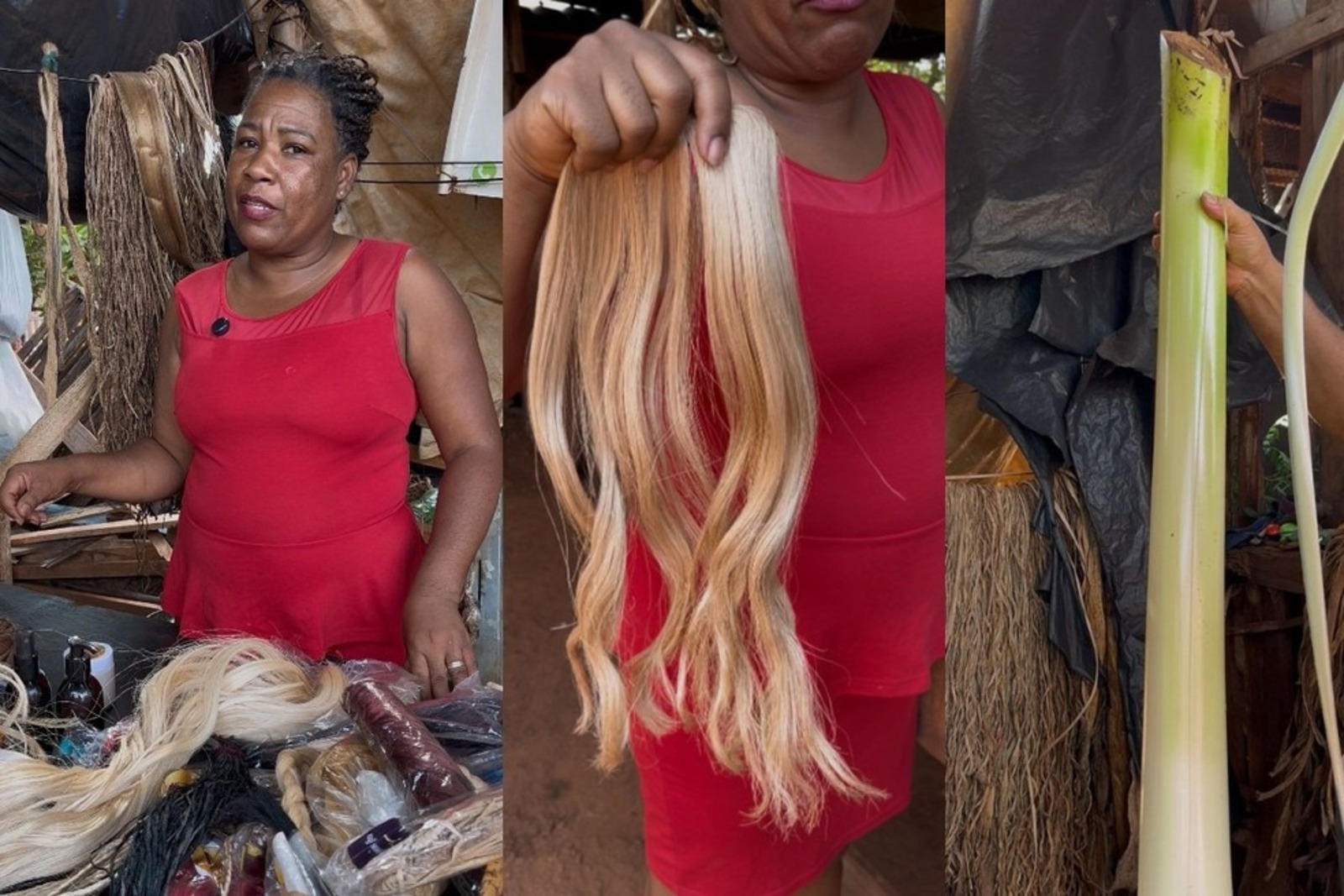
The Trajectory Of Marilza Eleoterio, Who Started With Home Tests And Evolved Into An Artisanal Production Of Up To 20 Kilograms Per Week, Reveals How Banana Fiber Became A Sustainable Alternative
Marilza Eleoterio de Barcelos Silva recalls that she tried to straighten her hair using a homemade mixture of soda and banana when she was just 12 years old. The experiment worked in the sense of stretching the strands, but it hurt her scalp and that of others who agreed to try it. The memory has become a joke, but it shows how her relationship with hair has always driven her searches.
Today, at 49 years old, living in Campo Grande, in a simple wooden house in the Lagoa Park community, she celebrates that a personal project has gained traction.
The reason is the development of a sustainable hair made with banana fiber, produced artisanally and at a lower cost compared to traditional alternatives.
-
Embrapa’s discovery reveals an unexpected advancement by allowing the production of seedlings from the caatinga using brackish water, opening a new frontier for farmers to face drought more efficiently.
-
6 sources of free fertilizer that you are throwing away every day and can transform your garden without spending anything.
-
With a water crisis on the radar, Sabesp invests in reclaimed water for data centers and transforms sewage treatment into a solution that saves millions of liters and protects public supply.

-
Foresea achieves 100% offshore waste reuse in 2025, eliminates landfill disposal, and consolidates sustainable strategy with 1,500 tons recycled.

The Production That Started Small And Grew With An Improvised Machine
The work was born slowly. Marilza, who has worked as a hairstylist for two decades, always sought something that catered to her own hair type.
She says she could not find definition because, according to her, her hair looked more “wild” than just rebellious. Because of this, she began testing different materials.
First, she tried sisal, but found it too thick. Then she experimented with bulrush, but the material proved too fragile.
In 2018, in her backyard, while cutting a bunch of bananas with a worn-out knife, she noticed that the trunk of the banana tree unraveled and revealed fine strands. This simple detail sparked an immediate idea.
From that discovery, she conducted tests. The fibers, according to Marilza, withstood both the straightener and the curling iron. Even so, they lacked softness because the available products did not deliver the desired finish.
The process was halted in 2021 due to the pandemic. Only in 2024 did she resume the project, now accompanied by the Inova Cerrado Program from Sebrae/MS.

The Role Of Technical Learning And The Evolution Of The Manual Process
With the support received, she better understood the types of fiber, which dyes lasted longer, how to shape curls, and how to make strands fine or thick.
The downside was that the manual work was exhausting. She and her husband could only extract 100 grams daily using a knife and a spoon.
To solve this, a neighbor helped build a wooden contraption equipped with three saw blades and a pedal that sped up the shredding process.
The change expanded production to up to 20 kilograms per week. After shredding, the strands go through detangling, dyeing, and hydrating. Wigs and extensions are created on a table that serves as an improvised loom.
The Use Of Fibers And The Experience With Volunteer Models
The banana fiber hair can be braided, used in ponytails, or styled in curls. Tests are ongoing to adapt it to the format of hair extensions.
A strand of extension is ready in one day, while a wig takes up to 15 days. The material does not cause discomfort on the skin.
Marilza has about ten women using the strands for free in her area. They help by reporting the product’s performance and promoting her work.
The hairstylist herself wears long, light braids made from the plant material and jokes that it is already time for a touch-up.

From The Neighborhood To The Internet And Increasing Orders
In June, she created a moisturizer based on a fruit from the cerrado, whose identity she prefers not to reveal. She claims to have developed 17 products with this same fruit.
The decomposition of discarded plant hair takes eight days, with no environmental damage, reinforcing its sustainable appeal.
In August, Sebrae/MS promoted the project on social media, and the reach has increased significantly. What was once sold mostly among neighbors began to generate larger orders.
She sought a chemist to formulate the cream in a standardized way, as she plans to sell everything together. For this year, the forecast is to deliver 80 kilograms.
Brand, Patents And Price Adjustments
Lawyer Nyllávia Ramalho explains that Marilza has a brand registration “My Hair, My Strands” and applied for patents in 2021.
The processes are currently under evaluation by INPI, with two of them already formally assessed. The 250 ml shampoo costs R$ 16 and the 150 g moisturizer is priced at R$ 90, amounts that are subject to review, though without significant changes.
Marilza says she already has orders for two months, and that the current consultancy helps to recalculate expenses.
With information from Folha de São Paulo.








-

-

2 pessoas reagiram a isso.