





 Portuguese
  English
  Spanish
  4 min of reading
  0 comments


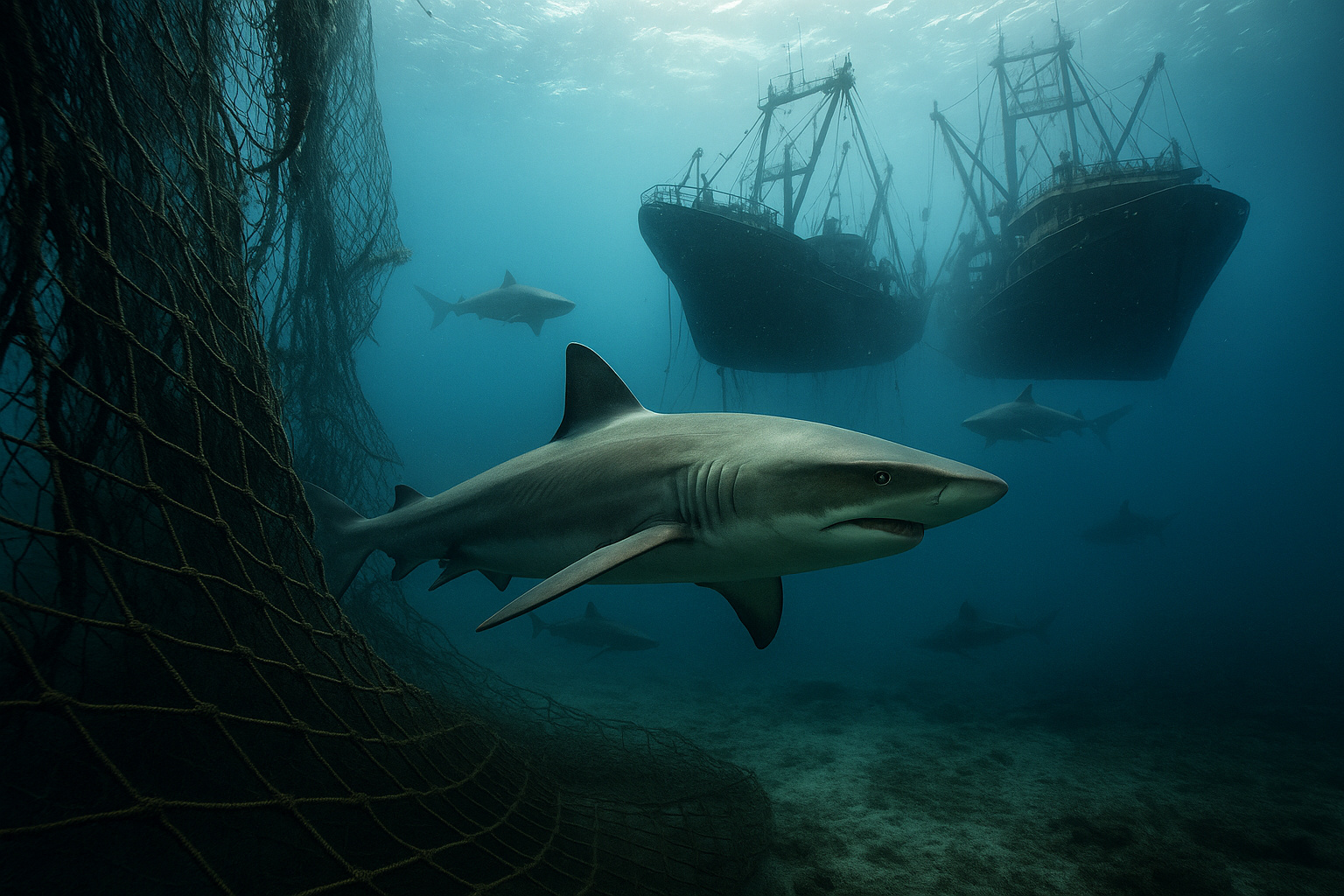
The Continuous Decline of Sharks Since 1970 Worries Experts and Reveals a Critical Scenario for Marine Biodiversity
A large-scale environmental crisis has been recorded since 1970, when international studies began to point to a significant decline in the presence of sharks in the oceans.
According to analyses published in 2021 in Nature, more than 70% of shark, ray, and chimera populations have decreased over the past decades, which has heightened global alerts regarding marine conservation.
Scientists emphasize that overfishing and bycatch remain among the main causes of the decline, a fact that intensifies global ecological risk.
Overfishing, strengthened in various countries since the 1980s, still represents the central driver of population decline.
According to experts from the University of Queensland, aggressive fishing techniques and excessive removal of predators alter the functioning of oceanic ecosystems.
The continuous decline is cited by researchers as one of the largest environmental alerts ever documented.

Studies Reveal Continuous Decline Driven by Overfishing
The reduction of sharks has been confirmed by technical studies conducted between 2019 and 2021 by international research groups.
According to the report released, overfishing removes sharks at a rate faster than natural replenishment, which keeps populations declining for decades.
Researchers also remind that many species have slow reproduction, a characteristic that further increases the vulnerability of the animals.
-
Mars is accelerating, and scientists have discovered that the planet’s day is getting shorter, revealing surprising signs of internal activity.

-
Artemis 2 is set to launch on April 1 at 7:24 PM to orbit the Moon with four astronauts, but a class X solar flare and coronal mass ejection could interfere with communications and threaten the launch.

-
The largest deposit of Vale was discovered by accident and today represents almost all the ore produced by the company.

-
The Brazilian Army takes F-5 fighters out of the garage and stars in an air combat with support from the KC-390.


The teams analyzed historical catch series over the years, and technicians from the IUCN point out that non-selective exploitation continues to affect fragile species, compromising ecological balance.
Several research groups highlight that overfishing remains the most determining factor of global decline.
Incidental Capture Aggravates Population Risk
The phenomenon of bycatch, recorded more frequently since the 1990s, drives significant losses.
Reports from the NOAA in 2020 indicate that non-selective gear captures sharks that were not the target of fishing, stressing marine habitats.
Researchers also observe that the impact mainly affects rare species, elevating the risk of extinction.
In light of this scenario, experts assert that bycatch remains one of the main threats, even with recent advances in international regulations.
Climate Change Modifies Habitats and Increases Pressures
Climate change, observed with greater intensity since 2017, also affects sharks.
Studies from the University of Miami in 2019 indicate that the increase in ocean temperature displaces sharks to less favorable areas, reducing survival rates.
The acidification of oceans, reported in international documents, damages teeth and compromises feeding, affecting reproduction and population growth.
Researchers confirm that climatic impacts compound fishing pressures, creating an even more unfavorable environment for various species.

Rare Species Are Among the Most Threatened
Rare sharks with specific ecological functions rank among the most vulnerable.
According to analyses published in 2021, species with unusual teeth or specialized behaviors face a heightened risk of extinction.
Researchers point out that the loss of these predators reduces diversity and alters entire ecological processes, compromising food chains.
Recent studies reinforce that the extinction of rare species generates profound impacts, requiring urgent attention.
Experts Advocate for Stricter Fishing Policies
Although some regulations have progressed since 2016, experts assert that fishing policies remain insufficient.
Reports from the FAO highlight that retention bans, quotas, and restricted areas need to be expanded, as these measures help recover populations.
Technicians also advocate for the use of less lethal gear and constant oversight to reduce incidental catches.
Managers emphasize that the effectiveness of policies will determine the future of species in the coming years.
Decline of Sharks Affects the Entire Food Chain
The disappearance of sharks, noted in the False Bay in 2019, brought about direct changes to the food chain.
South African researchers reported that the decline of great white sharks increased the number of seals and smaller sharks, a change that reduced small fish in the region.
Scientists explain that the absence of top predators causes deep imbalances, threatening entire ecosystems.
Studies indicate that protecting sharks is essential for preserving the stability of the oceans.
Given this global scenario, what should be the priority to ensure marine balance in the coming decades?










Seja o primeiro a reagir!