





 Portuguese
  English
  Spanish
  4 min of reading
  16 comments


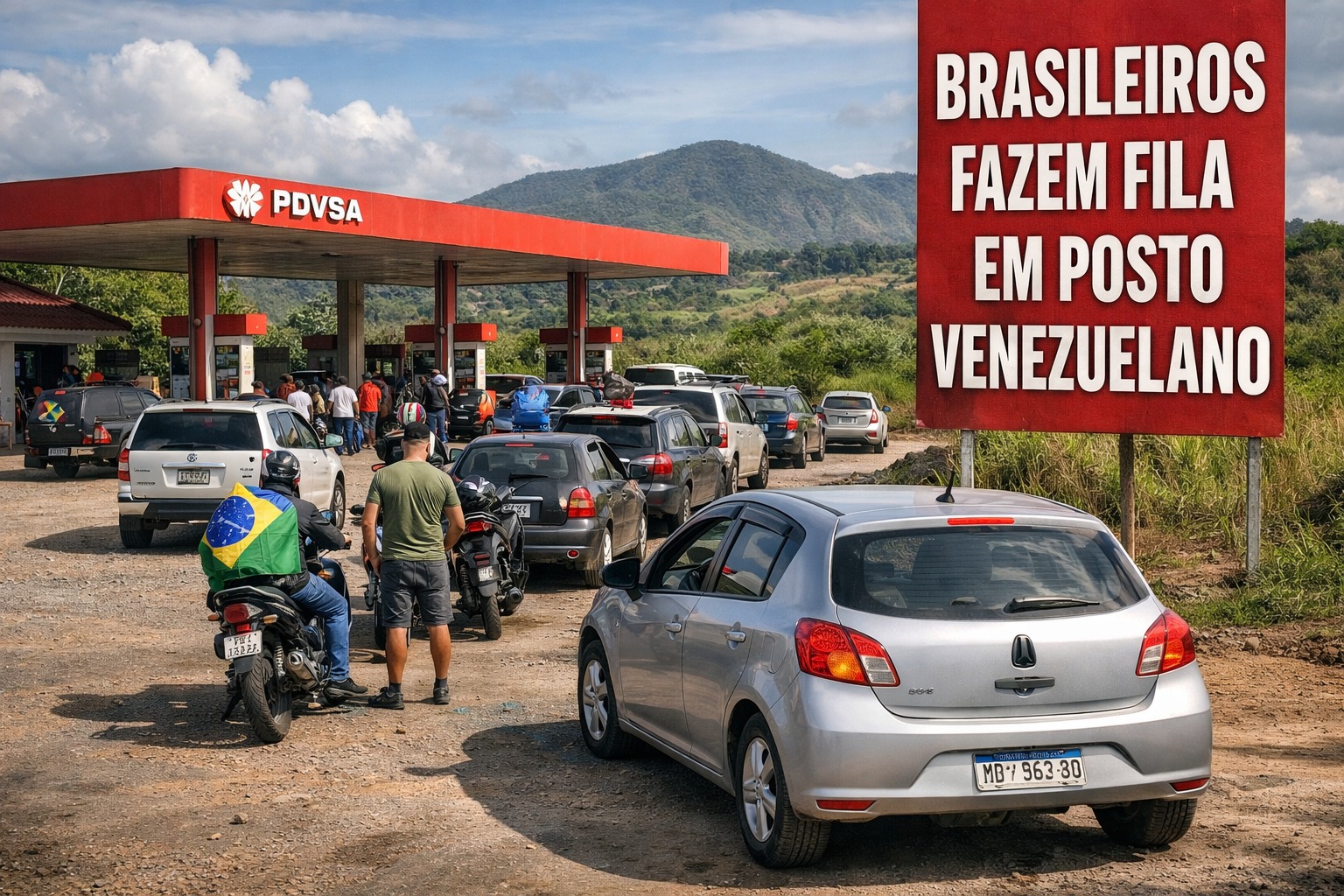


Venezuelan Gas Station Becomes Attraction For Brazilian Drivers And Exposes Contrast Between State Subsidy, Venezuelan Energy Policy, And Prices Tied To The International Market In Brazil
According to an article from G1, Brazilian drivers have been crossing the border into Venezuela in search of relief on their wallets. A gas station located in Santa Elena de Uairén started selling gasoline at R$ 6.30 per liter this Friday (30), a price R$ 1.50 lower than what is charged in Pacaraima, in Northern Roraima.
The movement drew attention and led G1 to consult experts who closely follow the economic dynamics between the two countries.
The significant difference in prices is a result of a combination of structural and political factors.
-
“No one will make us change the Pix,” says Lula after the US report.

-
Lula responds directly to Trump and says that Pix is from Brazil and will not change under pressure from anyone, after a report from the United States pointed out the Brazilian payment system as an American trade barrier.

-
Amazon has just announced a new fee on all deliveries, and your online purchases will become more expensive starting April 17, including for those buying from the United States here in Brazil.

-
He sold his share for R$ 4 thousand, saw the company become a giant worth R$ 19 trillion, and missed the opportunity of a lifetime.


Venezuelan Gas Station Becomes Point Of Attraction
The sales occur at a station equipped with four fuel pumps bearing the name of PDVSA, Venezuela’s state oil company.
On the day of its reopening, the liter was priced at just R$ 3, nearly three times lower than what is charged in Pacaraima. Since then, the location has received Brazilian customers eager to take advantage of the price difference.
Venezuela holds the largest proven oil reserves in the world, accounting for about 17% of global reserves, equivalent to over 300 billion barrels.
This situation helps explain why the country can maintain pricing policies so distinct from those of other nations.

High Production And State Subsidy
According to the economist from the Federation of Trade in Goods, Services, and Tourism of the State of Roraima (Fecomércio), Fábio Martinez, two factors explain the lower fuel price: the high production of oil and the subsidy maintained by the Venezuelan government.
In practice, PDVSA receives government incentives and sells gasoline to refineries and distributors at prices below the international market.
This means that the lower cost at the source reflects on the final price to consumers. In other words, the government covers part of the gasoline price to keep it affordable.
“In the past, when Venezuela was not undergoing this economic crisis, gasoline there cost cents per real. Over time, the subsidy has decreased, but there is still a strong subsidy from the Venezuelan government,” summarized Martinez to G1.
Political Weight In Price Definition
The professor and researcher of International Relations at the Federal University of Roraima, João Jarochinski, adds that the price of gasoline in Venezuela follows parameters aimed at the domestic market and carries political weight associated with the discourse of sovereignty.
“The Venezuelan government keeps domestic prices at levels lower than those practiced in the international market, including those that the country itself uses for external sales of oil and derivatives,” he stated to G1.
The strategy aims to prevent gasoline from acting as an additional vector for inflation in a country that has faced high inflation levels in recent years.
International Market And Brazilian Logic
While Venezuela ignores global pricing, Brazil adopts a pricing policy based on the international market.
According to the lawyer and master in International Law from the University of São Paulo (USP), Victor Del Vecchio, the price paid at the pump follows the logic of supply and demand, considering production costs, taxation, and the international price of oil.
“In Brazil, despite having robust state investments in the fuel industry, the price still follows market parameters,” he highlighted to G1.
Included in the final price are taxes such as the Contribution for Intervention in the Economic Domain (Cide) and the Tax on Circulation of Goods and Services (ICMS).
Cheap, But Unstable
Del Vecchio notes that, despite the lower price in Venezuela, there are serious problems with local production and distribution.
“It is very common for gas stations to run out of fuel for days, and when there is restocking, long lines form,” he explained to G1.
The Venezuelan Brazilian Chamber of Commerce and Industry in Roraima is monitoring the reopening of the station in Santa Elena de Uairén.
The expectation is for a continuation in supply, but everything depends on road conditions and the regular arrival of fuel trucks at the location, which has been drawing the interest of Brazilian drivers.
With information from G1.







É…
Tem uns que se dizem de direita. Mas, a única coisa que sabem é: FALAR DO GOVERNO DE LULA. Ignora todo o resto. Fiel ao ****, não leem…
Ainda tem ignorante que defende o ex-presidiário Lula, que explora seu povo, enganando com pequenas baixas no valor do
combustível, endividando cada vez mais o Brasil. Se não fosse a corrupção dessa esquerda maligna o Brasil teria preços em relação ao mercado internacional. Cadê nossas refinaria que começaram a ser construídas, o governo de esquerda roubou todos os recursos paralisando as obras.
Pergunta pra Bolsonaro. Ele vendeu a BR Distribuidora. Não darei mais detalhes, só procura no google e se informe **** de teta.
Distribuição nao e refinaria
Charles, vc é um bom homem.
Ô Charles, quando o teu Presidiário INELEGÍVEL, cortou o ICMS dos combustíveis para tentar ganhar as eleições quebrando os Estados,tu achou ótimo, não se importando com às consequências, aí teve que o ex Presidiário pagar um rombo bilionário aos Estados.
Agora quanto a corrupção, se tu tiver tempo pra ler, em quase totalidade a direita está presente, como sempre, no governo do seBOZO a corrupção não ficou escancarada por não haver investigação, trocava os delegados e trocou até o ministro para que sua família e seus próximos não fossem investigados. Memória curta.
O”****” vai Voltar; o Povo gosta de votar em EX-Presidiario!
Um ótimo motivo pra vc Eduardo Boato
Vai morar na Venezuela, seria um patriotario
**** a menos
Falou filho do Lula, deve ter uma Porsche na garagem
Tá precisando se informar melhor, lêia busque a informação segura, lêia bastante o conhecimento liberta.