





 Portuguese
  English
  Spanish
  3 min of reading
  0 comments


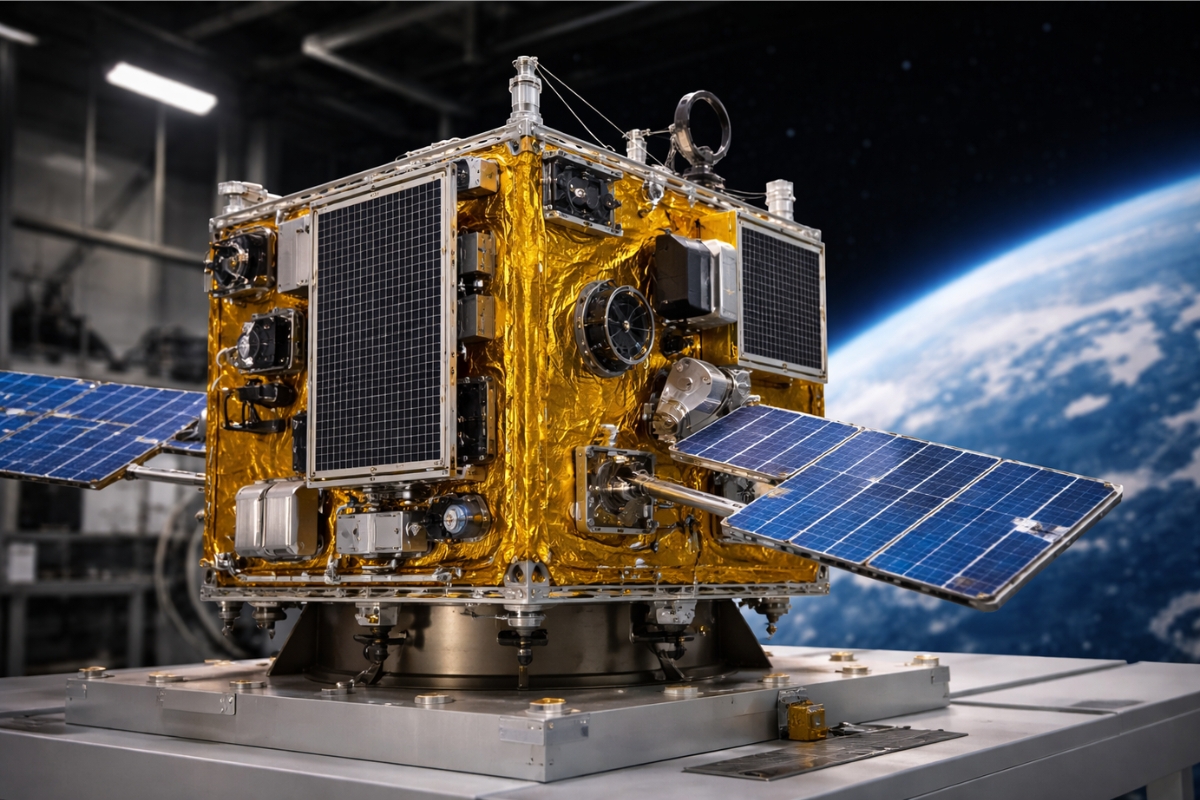
A Space Forge Advances in Space Manufacturing and Aims for Materials for Chips with Applications in Electronics, Communications, Computing, and Transportation
A Space Forge has placed a microwave-sized factory in orbit and confirmed that the equipment can operate with a furnace reaching 1,000 °C.
The mission paves the way for producing materials aimed at semiconductors in an environment where gravity has minimal impact on the process.
The proposal is to bring these materials for use on Earth in areas like electronics, communications infrastructure, computing, and transportation.
-
The Himalayas continue to grow to this day, with tectonic plates advancing 5 cm per year, mountains rising up to 10 mm annually, and the 2015 earthquake that killed 9,000 people may have increased the risk of an even larger seismic mega-event.

-
At an altitude of 400 km by astronauts from the International Space Station, Paris transforms at night into a golden mesh so precise that it reveals the outline of the Seine River, avenues, and entire neighborhoods like a luminous map drawn over the Earth.

-
iPhone 17 reaches historic low price with 256 GB, 120 Hz display, and drops to R$ 5,703 on Shopee, featuring A19 chip, dual 48 MP cameras, battery life of up to 30 hours, and advanced AI features.

-
Trip to Mars getting closer: Pulsar Fusion, from the UK, advances with plasma ignition in fusion engine and could drastically reduce space travel time, making crewed missions faster, safer, and economically viable.


What Happened and Why It Caught Attention
A compact factory was sent to space and has already undergone important tests in orbit, including the activation of the furnace.
The system managed to reach temperatures around 1,000 °C, a crucial milestone for enabling the planned manufacturing stage.
The goal is to transform space into a production environment for high-quality materials, focusing on semiconductors.
Why Space Favors Semiconductor Production

Without gravity, the arrangement of atoms tends to occur more regularly during the material’s formation.
This helps create a more orderly three-dimensional structure, a decisive characteristic for the performance of a semiconductor.
The vacuum of space also hinders the entry of contaminants, contributing to cleaner materials.
The Promised Impact for Chips and Everyday Technologies
Manufacturing in orbit can produce semiconductors up to 4,000 times purer than those produced on Earth today.
The greater the purity and organization of the material, the better the performance tends to be in technological applications.
The goal is to meet uses in 5G towers, car chargers where an electric vehicle is connected, and more modern aircraft.
How the Furnace Was Tested in Orbit

The launch took place on a SpaceX rocket during the summer, and since then, the systems have been operated from a control center in Cardiff.
An image sent from the satellite showed the interior of the furnace with plasma glowing intensely.
The plasma is a gas heated to about 1,000 °C, indicating that the critical component of the process managed to function under real conditions.
What Could Happen From Now On
The next step involves building a larger space factory, capable of producing semiconductor material for 10,000 chips.
In addition to manufacturing, the plan also depends on a decisive stage: bringing the material back safely.
A future mission envisions using a thermal shield called Pridwen, which should protect the craft during reentry into Earth’s atmosphere.
Why Other Companies Are Also Looking at Space Manufacturing
Manufacturing in space is already generating interest for producing items such as pharmaceuticals and artificial fabrics.
The advancement is likely to occur first on a small scale while technologies and cargo return routines are tested.
As the process is validated, the possibility of an economically viable model grows, with production in orbit and use on Earth.
A Space Forge has already shown that a compact factory can operate in orbit with a furnace reaching 1,000 °C.
If the next steps confirm on-scale production and safe return, space manufacturing could gain traction as a route for purer semiconductors and direct applications in daily life.










-

-

-

-

4 pessoas reagiram a isso.