





 Portuguese
  English
  Spanish
  6 min of reading
  0 comments


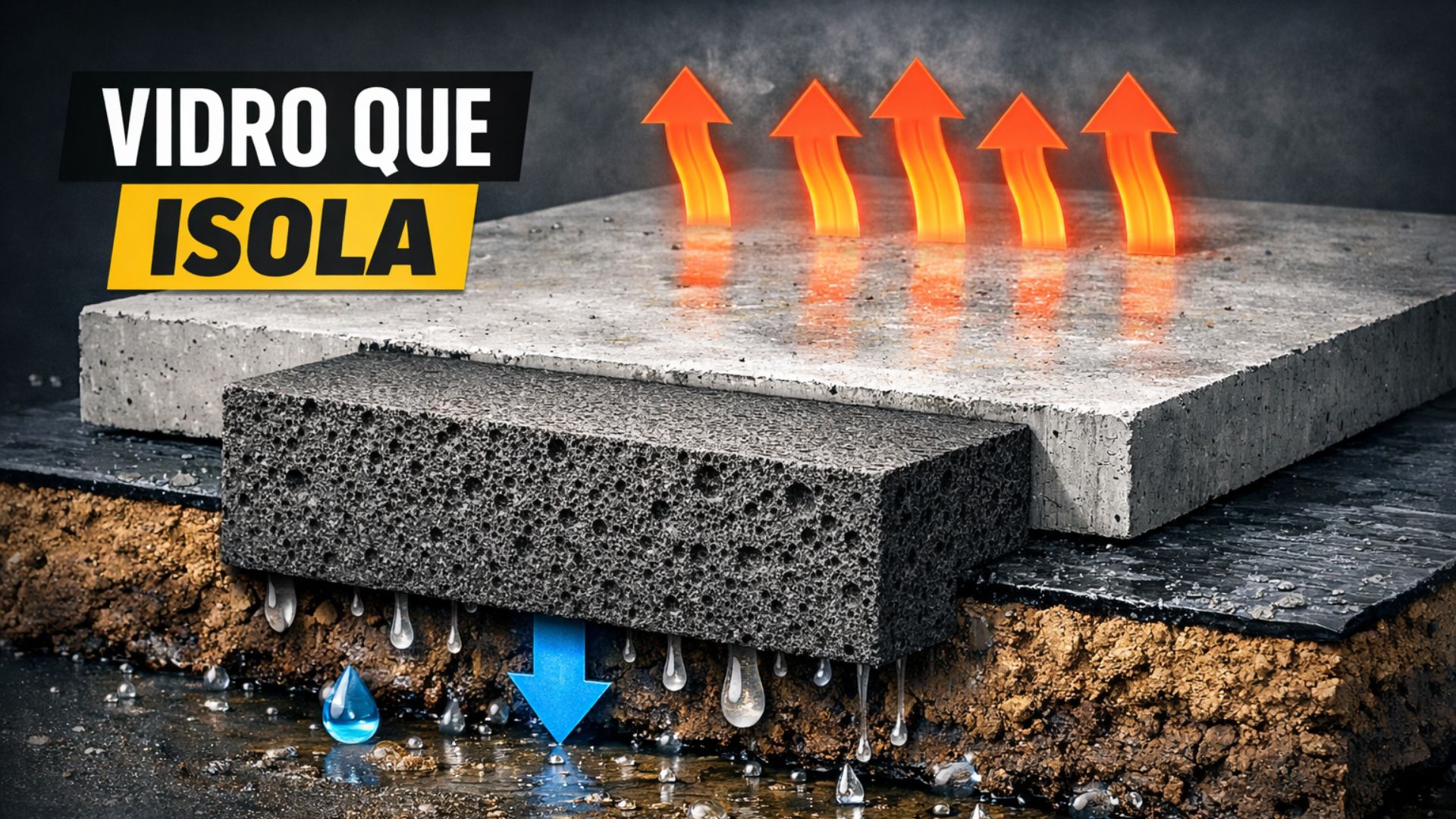
Little-Known Insulation Outside The Technical Field Gains Space In Construction By Unifying Mechanical Resistance, Waterproofing, And Thermal Stability, Changing The Logic Of Use In Slabs, Roofs, And Basements Where Moisture And Failures Often Generate Rework, High Maintenance Costs, And Performance Loss Over Time.
Builders seeking greater predictability in the schedule and performance of construction have been dealing for decades with the limitations of the most common thermal insulation systems.
When the material loses efficiency due to moisture, deformation, or degradation over time, the impact appears in the form of infiltrations, the need for repairs, and increased indirect costs.
In this scenario, a type of insulation that is not widely known outside technical circles is being considered for specific projects.
-
While Brazil wants to end the 6×1 work shift, the president of Argentina wants 12 hours for his workers, increasing political tension in the country.

-
The village where two rivers run side by side without mixing in Santarém and Alter do Chão reveals some of the most beautiful freshwater beaches on the planet.
-
Mars is accelerating, and scientists have discovered that the planet’s day is getting shorter, revealing surprising signs of internal activity.

-
Artemis 2 is set to launch on April 1 at 7:24 PM to orbit the Moon with four astronauts, but a class X solar flare and coronal mass ejection could interfere with communications and threaten the launch.


This is cellular glass, also known as foam glass, a rigid insulation produced from glass with a porous internal structure formed by closed and sealed cells.
Glass That Insulates Without Absorbing Water
The function of this material is directly related to its internal structure.

Instead of organic fibers or foams, cellular glass features a rigid mineral matrix that, according to manufacturers and technical publications in the field, does not absorb water, does not rot, and does not serve as a substrate for fungi or microorganisms.
According to technical specifications, one of the key characteristics of the product is its low permeability to water and vapor, as long as it is installed according to the system outlined in the project.
This condition alters the use of the material in critical points of the building, such as basements, slabs, roofs, and areas subject to thermal variations and constant moisture presence.
How Glass Becomes “Foam” In The Industry
The manufacturing process starts with crushed glass, often with a portion of recycled material.
This glass is heated in controlled conditions until it expands, forming a rigid structure composed of millions of closed cells.
The result is panels or blocks that combine two functions described in standards and technical sheets.
Thermal insulation and dimensional stability in environments where water typically compromises the performance of other materials.
In practice, this combination influences the construction detailing.
In some systems, the need for additional layers for moisture control is reduced, and the design of vapor barriers is simplified, always according to the project’s requirements.
Fire Behavior Influences Specifications
Another aspect frequently cited in technical documents is the behavior of cellular glass in case of fire.
As it is a mineral-based material, it is not classified as combustible, according to performance sheets and international standards.
This characteristic comes into play in projects that require greater control over fire reaction.
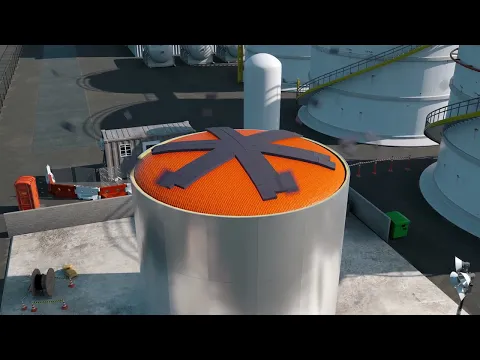

In buildings with stricter safety standards, the type of insulation used can directly influence approval requirements, insurance, and compartmentalization solutions.
Mechanical Resistance And Load Application
Mechanical resistance is another factor considered in specifications.
Insulations used under slabs, floors, or inverted roofs need to maintain thickness and integrity even when subjected to permanent load or occasional traffic.
If deformations occur, thermal performance is affected, and cracks or pathologies may appear in the upper layers.
Cellular glass is indicated, according to manufacturers and technical manuals, for situations where compression, weight, and thermal variations are part of the conditions of use.
For this reason, it appears in roofing projects with heavy protection, technical areas, industrial floors, and systems where dimensional stability is a requirement of the construction assembly.
Cost Evaluation Considers The Complete System
In comparison with more widely used insulations, cellular glass is rarely evaluated solely by the unit cost of the material.
The analysis usually considers the overall cost of the system, including durability, the need for additional protection, and the risk of failures over the product’s lifespan.
Fibrous materials, for example, may require extra layers of protection against moisture.
Organic foams may require complementary solutions to meet fire safety requirements.
Insulations that absorb water tend to lose thermal performance under certain conditions.
When insulation also needs to act as a vapor barrier, the combination of properties of cellular glass starts to be considered in specific projects.
Use In Basements And Buried Structures
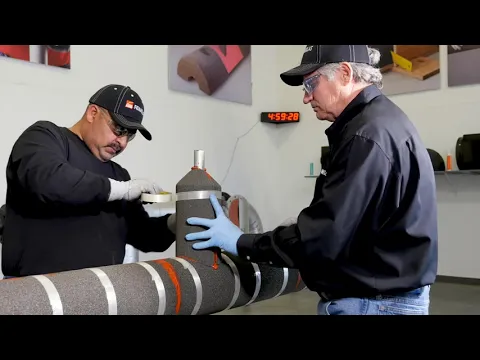
The application in basements is one of the most commonly cited situations in technical publications.
In buried walls, the constant presence of moisture, soil pressure, and thermal cycles increase the risk of material degradation.
Some construction systems opt for insulations with lower permeability to reduce the need for multiple corrective layers.
In this context, cellular glass is described as a material that maintains form and thermal properties even in aggressive environments, provided it is correctly specified and installed.
Performance In Slabs And Roofs
Slabs and roofs encompass another application front.
These areas combine direct exposure to climatic variations and frequent contact with water, whether from rain, condensation, or maintenance.
In flat roofs, joint failures or installation passages may allow moisture entry.
When the insulation absorbs water, the system loses efficiency and may require replacement.
Cellular glass is used in systems that aim to minimize this type of deterioration and preserve thermal performance over time.
Installation Depends On Project And Compatibility
The installation follows specific technical criteria.
The material is supplied in panels or blocks, and the final performance depends on the treatment of joints, the fixing method, and compatibility with waterproofing and finishes.
In thermal insulation systems, poorly resolved details can lead to thermal bridges, condensation, or infiltrations.
For this reason, cellular glass is often specified as part of an integrated construction system, rather than applied in isolation.
Thermal Comfort And Energy Consumption

From the perspective of building use, the goal remains the same as other insulations.
To reduce heat exchange between environments and contribute to greater internal thermal stability.
According to technical publications in the field, the difference lies in the ability to maintain this performance even in humid conditions, which is relevant in humid regions or coastal areas.
In buildings where air conditioning represents a significant portion of energy consumption, the performance of the thermal envelope directly influences thermal load and consumption peaks.
Durability And Environmental Aspects
Another argument associated with cellular glass is durability.
The long lifespan reduces the need for replacement and interventions over time.
Additionally, the use of recycled glass as raw material appears in technical documentation as a factor considered in projects seeking specific environmental criteria.
An Uncommon Material On The Construction Site
On site, the material stands out for its unusual appearance.
Glass, normally associated with rigidity and fragility, appears as a rigid and lightweight mineral foam, with a porous texture.
This characteristic explains why the product is more frequently found in projects with high technical requirements, such as buildings with complex roofing, industrial installations, and structures subject to constant moisture.
If thermal insulation stopped being treated as a secondary item of construction and was primarily evaluated for durability and performance over the years, which aspect of construction would require more attention at the time of material choice?








-

Uma pessoa reagiu a isso.