





 Portuguese
  English
  Spanish
  4 min of reading
  0 comments


A Selection of Eight Buildings That Catch the Eye for Unusual Shapes, Unexpected Inspirations, and Projects That Challenge Traditional Architecture Standards Around the World
Buildings around the world do not always follow the traditional forms that tend to dominate the urban landscape. In many cases, architects choose to experiment with bold ideas, creating structures that become landmarks precisely by challenging common standards.
Among examples that reference animals, objects, or futuristic concepts, eight buildings stand out for their ability to surprise any observer.
They range from government buildings to monuments, residential towers, and abandoned projects that unexpectedly gained fame.
-
With over 14 million baskets of earth moved, an ancient North American metropolis built a monumental pyramid of 30 meters and established a city with 20,000 inhabitants nearly a thousand years ago.

-
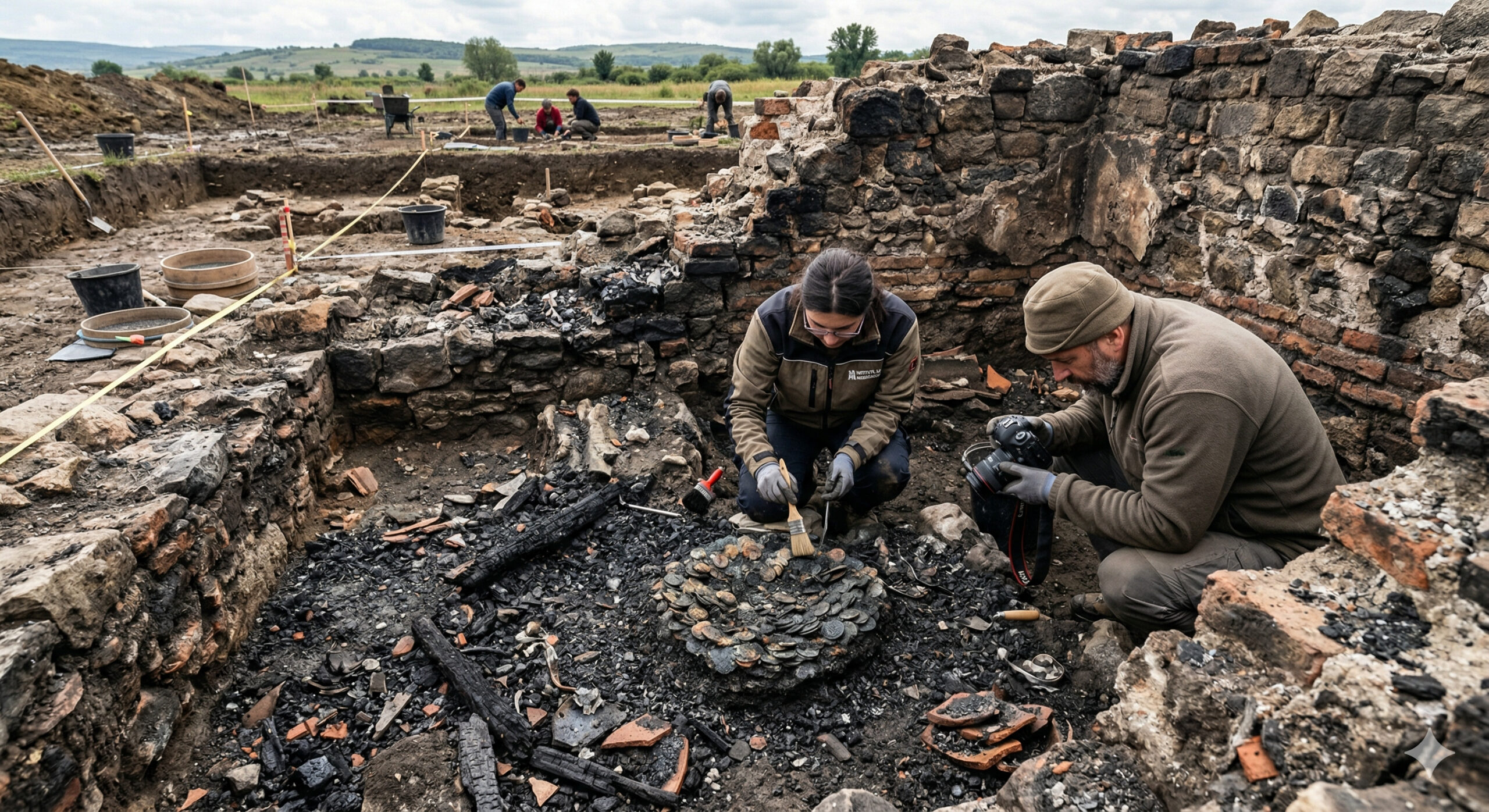
A 1,900-year-old treasure emerges from a Roman house destroyed by fire and sealed since antiquity in Romania, with coins and metals fused among the ashes.
-
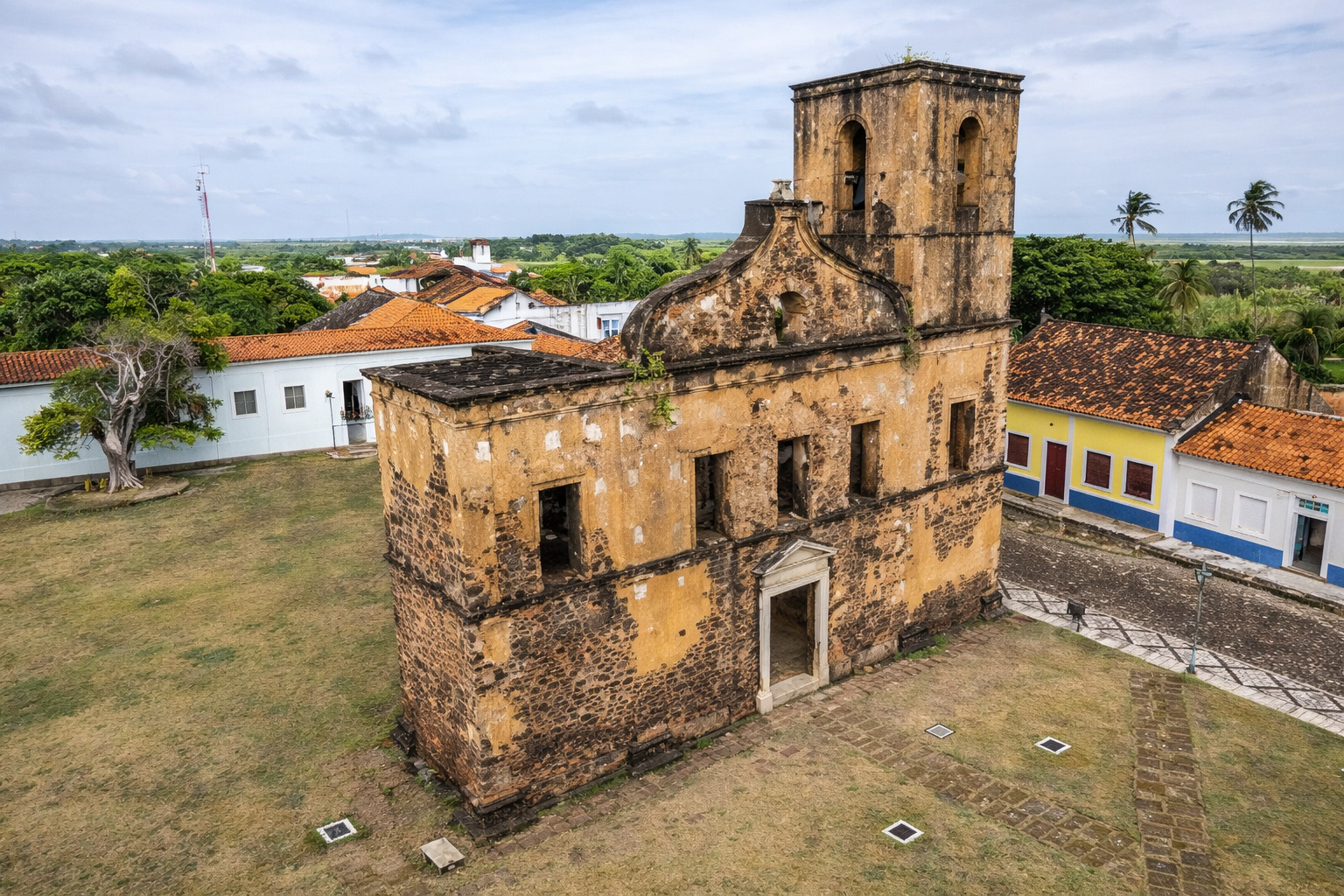
The Brazilian colonial city that stopped in time and shares territory with a rocket launch base.
-
79-year-old woman challenges limits, visits 193 countries in the world after 56 years of planning and reveals the behind-the-scenes of a global journey that few have managed to accomplish.


The Fish-Shaped Building in India
The Fisheries Department of India, in Hyderabad, is one of the most literal cases of mimetic architecture ever built. Its shape reproduces the appearance of a giant silver fish, with metallic scales, circular eyes, and curvy fins that create an immediate visual effect. The headquarters of the National Fisheries Development Board was completed in 2012 and quickly became featured on international lists of unusual architecture.
Despite its eccentric appearance, the building houses a conventional government office. Still, its aesthetics symbolically reinforce the fishing sector of the country. Few official buildings take such a direct approach, making this example particularly memorable.
The Sanzhi UFO Houses in Taiwan
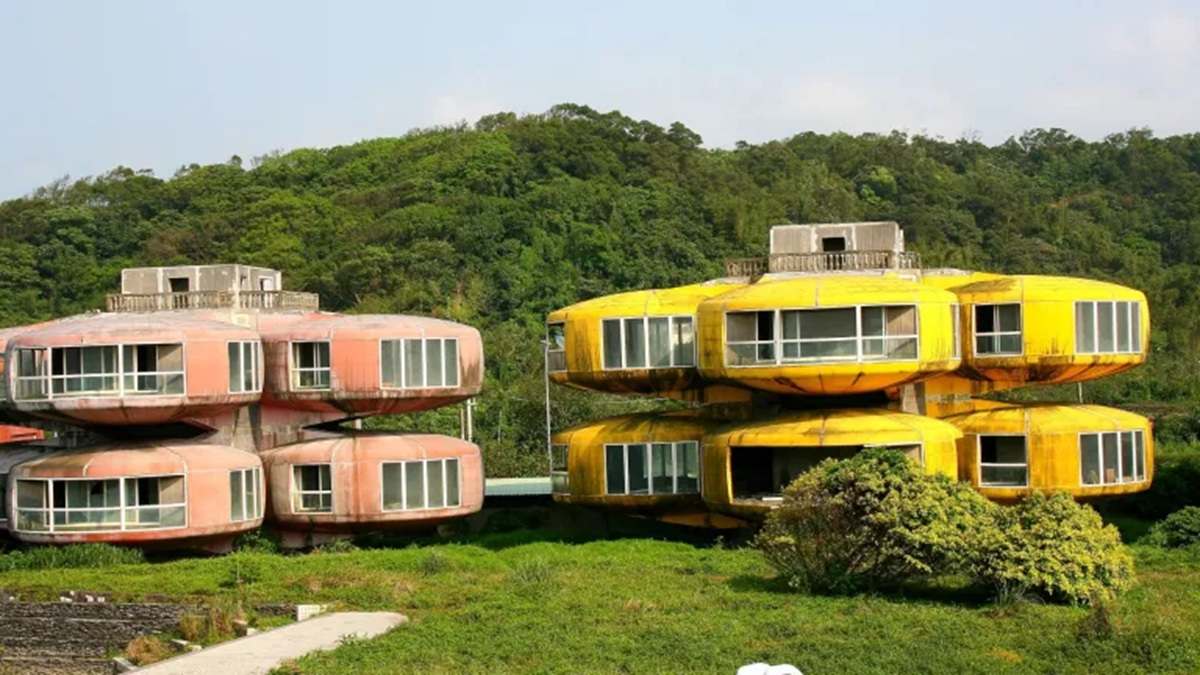
The Sanzhi UFO Houses were a tourist project made up of colorful capsules that resembled flying saucers landed on the northern coast of Taiwan. Construction began in 1978 but was halted a few years later due to financial and structural issues. The capsules remained abandoned for decades, creating a scene resembling a futuristic ghost town.
This unusual visual made the site famous internationally. Even though it was demolished in 2010, the images and the aura of mystery remain alive. Today, the Sanzhi Houses are remembered as one of the most iconic examples of quirky architecture in Asia.
The Guangzhou Circle in China
The Guangzhou Circle is a 138-meter tall circular skyscraper located on the banks of the Pearl River. Designed by Joseph di Pasquale and completed in 2013, it features a bronze facade and a large central void that gives it a disc-like appearance. Its symbolic shape references Chinese cosmology and the region’s commercial heritage.
Institutions such as the BBC and ArchDaily frequently cite it as one of the most distinctive buildings in China. Although it is sometimes called the tallest circular skyscraper in the world, a more accurate description is that it is among the tallest and most prominent ever built in a circular shape.
The Nakagin Capsule Tower in Japan
Completed in 1972, the Nakagin Capsule Tower was a landmark of the Japanese Metabolist movement. Each prefabricated capsule was designed to function as an individual living or working unit, featuring the characteristic round window that marked its aesthetic. The original proposal envisioned the periodic replacement of the capsules, like parts of a machine.
This replacement never occurred, but the tower became a cult icon. The MoMA and The Economist have recognized its importance for modular architecture. In 2022, the building was dismantled, and several capsules were preserved by museums and collectors. Even without its original structure, the tower remains one of the most influential experiences in the field of modular design.
The Crooked House in Poland
The Krzywy Domek, known as the Crooked House, creates the impression of a building that has melted or been distorted by some non-existent effect in reality. Completed in 2004, it is inspired by the illustrations of Polish artist Jan Marcin Szancer, resulting in wavy walls, curved roofs, and seemingly caricatured proportions.
Despite its playful appearance, the building functions as a commercial property in the shopping district of Sopot. Its facade creates such a striking optical illusion that it seems to be from a dream. The Crooked House demonstrates that architecture can provoke unexpected sensations when it strays from the conventional.
The Sluishuis in the Netherlands
Completed in 2022 by BIG and Barcode Architects, the Sluishuis is a residential complex built over Lake IJ in Amsterdam. Its highlight is the large void excavated in the center of the structure, allowing boats to pass underneath and creating the effect of a massive block with part removed.
The complex combines tiered terraces, reflective aluminum cladding, and walkways directly connected to the water. The result is a work that unites sustainability, residential function, and sculptural aesthetics. The Sluishuis stands as a building, portal, and sculpture simultaneously, leveraging its relationship with the aquatic environment.
The Batumi Tower in Georgia
The Batumi Technological University Tower features a distinctive embedded Ferris wheel in its facade.
The combination of the large circular structure and the white cladding with golden details creates a visually dramatic silhouette along the Black Sea.
Completed in 2012, the tower was planned to use the Ferris wheel as a tourist attraction. However, reports indicate that it received little to no use, and the building remained largely unused for years. Still, the boldness of combining a typical amusement park element with a skyscraper keeps the building among the most mentioned when it comes to unusual architecture.
The Ilinden Memorial in North Macedonia
The Ilinden Memorial was completed in 1974 to honor the Ilinden Uprising and the struggle for independence of Macedonia. The white concrete structure features rounded shapes and protrusions that simultaneously reference a spacecraft and an abstract sculpture.
Located on top of a hill near Kruševo, the memorial has a striking presence in the landscape. Its stained glass, smooth surfaces, and organic curves reinforce the impression that it belongs to another world. Among European monuments, it stands out for combining historical symbolism and deeply unusual aesthetics.








-

-

-

-

-

7 pessoas reagiram a isso.