





 Portuguese
  English
  Spanish
  3 min of reading
  0 comments


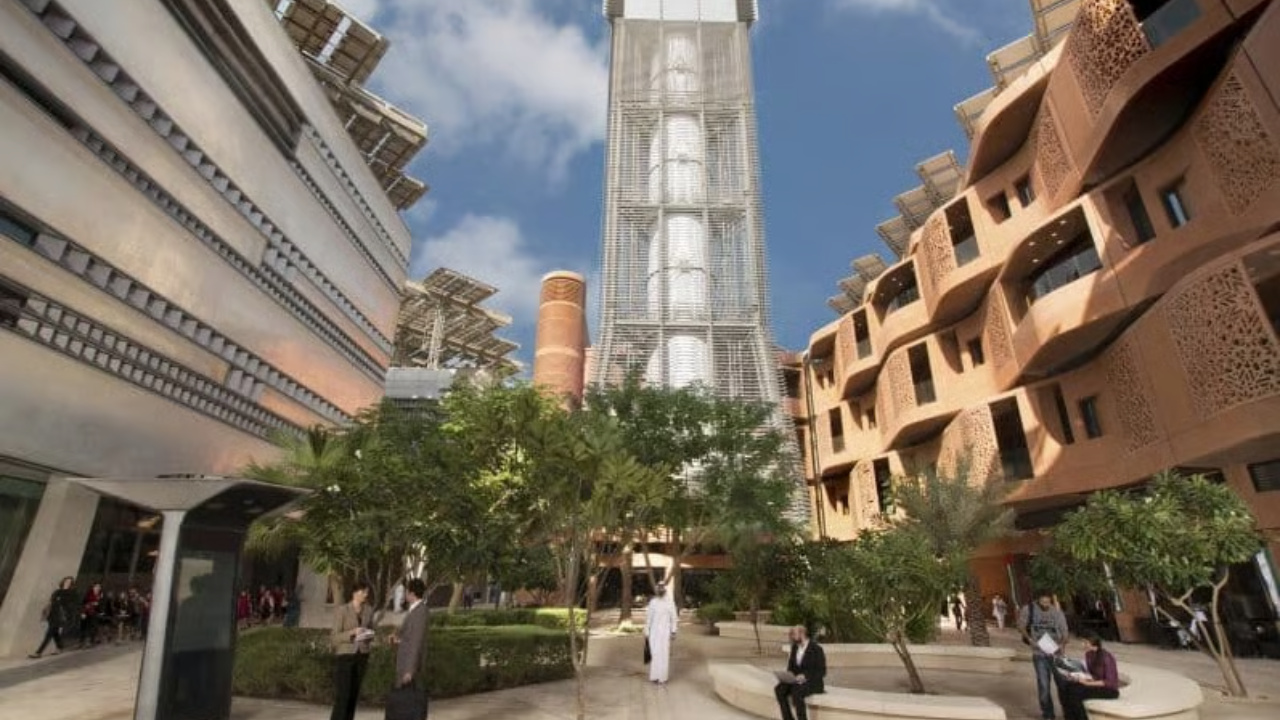
Masdar City In Abu Dhabi Emerges As A Symbol Of The Transition From Oil To Clean Energy. The Sustainable City In The Desert Attracts Companies, Universities, And Draws The Attention Of The World.
For decades, oil has been the engine of the wealth of Middle Eastern countries. However, amid global pressure for sustainability, a city built in the desert has come to represent a symbolic turnaround in this model.
Located in Abu Dhabi, United Arab Emirates, Masdar City emerged as an urban laboratory to prove that it is possible to grow, create jobs, and attract investments without solely relying on oil.
The project began to take shape in the 2000s, just as the debate over climate change intensified. Thus, the local government decided to invest in an urban model capable of reducing carbon emissions, saving energy, and testing innovative solutions.
-
While Brazil wants to end the 6×1 work shift, the president of Argentina wants 12 hours for his workers, increasing political tension in the country.

-
The village where two rivers run side by side without mixing in Santarém and Alter do Chão reveals some of the most beautiful freshwater beaches on the planet.
-
Mars is accelerating, and scientists have discovered that the planet’s day is getting shorter, revealing surprising signs of internal activity.

-
Artemis 2 is set to launch on April 1 at 7:24 PM to orbit the Moon with four astronauts, but a class X solar flare and coronal mass ejection could interfere with communications and threaten the launch.

At the same time, the initiative also aimed to diversify an economy historically sustained by oil.
A City Created To Reduce Impacts And Rethink Oil
From the very beginning, Masdar City was designed as a different urban space. Instead of reproducing traditional models, the creators opted to create a compact, efficient city integrated with technology.
As a result, energy and water consumption remained well below the standard observed in conventional cities of similar size.


While oil continues to be an economic pillar of the region, Masdar City serves as a warning sign: the future may demand fewer fossil fuels and more clean sources.
Therefore, the project has become an international showcase for governments and companies interested in energy transition.
In addition, the location houses research centers, startups, universities, and offices linked to sustainable innovation. Thus, the city has become not only an urban space but also a hub for technological development.
Urban Planning That Reduces Energy Consumption
One of the major differentiators of Masdar City is its urban design. Unlike sprawling cities that depend on cars, the area was designed to facilitate walking and reduce the need for vehicles powered by fossil fuels.

The streets are narrow, shaded, and oriented to favor the circulation of wind. As a result, the internal temperature of buildings stays cooler, reducing reliance on air conditioning — one of the biggest energy consumers in hot regions.
Moreover, the buildings were constructed with materials that reflect heat and keep indoor environments cooler.
This combination allows for a drastic reduction in electricity demand, an essential point in a global scenario still heavily dependent on oil.
Technology In The Control Of Every Resource
Another noteworthy factor is the intensive use of data. Sensors spread throughout the city monitor, in real-time, water consumption, energy use, and waste production. Thus, managers can identify waste and adjust systems quickly.
These smart networks also help plan continuous improvements. As a result, Masdar City transforms into a true open-air laboratory. Everything that works there can be replicated in other cities, including those still heavily linked to oil.
The heart of Masdar City lies in renewable energy generation. Right at the entrance, a large photovoltaic solar park provides a significant portion of the electricity. Moreover, solar panels have been installed on the rooftops of various buildings.
This way, the city reduces the need for traditional sources, such as thermoelectric plants powered by oil or gas. Among the main solutions adopted, the highlights include:
- Photovoltaic solar plants for electricity generation;
- Solar thermal systems for water heating;
- Energy storage technologies;
- Public lighting with low-consumption LED lamps.
Additionally, companies located in the city develop projects related to green hydrogen, smart electrical grids, and energy efficiency. This reinforces Masdar City’s role as a global reference in clean energy.
Do you think cities like Masdar City can prove that it is possible to live well without depending so much on oil?








-

Uma pessoa reagiu a isso.