





 Portuguese
  English
  Spanish
 5 min of reading
  0 comments



With a Focus on Inclusion and Decent Work, the CNH Social Program from Detran RS Offers 3,000 Spots with Total Fee Waiver, Free Classes, and Priority for Those Registered in CadÚnico, Transforming Licensing into a Concrete Tool for Mobility, Income, and Project Resumption for Families in the Countryside and Capitals
The CNH Social program from Rio Grande do Sul returned in 2025 with 3,000 spots and a clear promise to remove one of the biggest barriers for those who depend on individual transportation to work: the cost of licensing. Instead of adding fees, reports, and classes to an already tight budget, the state fully covered the costs for a selected audience based on social criteria.
More than just a one-time benefit, the CNH Social has established itself as a policy for productive inclusion. By directing spots to those registered in CadÚnico, with a minimum residency of two years in RS and a family income limited to three minimum wages, the program makes the driver’s license a tool for accessing jobs, formalizing income, and mobility in regions where public transport does not meet all needs.
Who Could Compete for the CNH Social Spots in 2025
The registrations for CNH Social in RS were open from May 12 to July 10, 2025, with clearly defined entry points for the target audience. To enter the selection, candidates needed to:
-
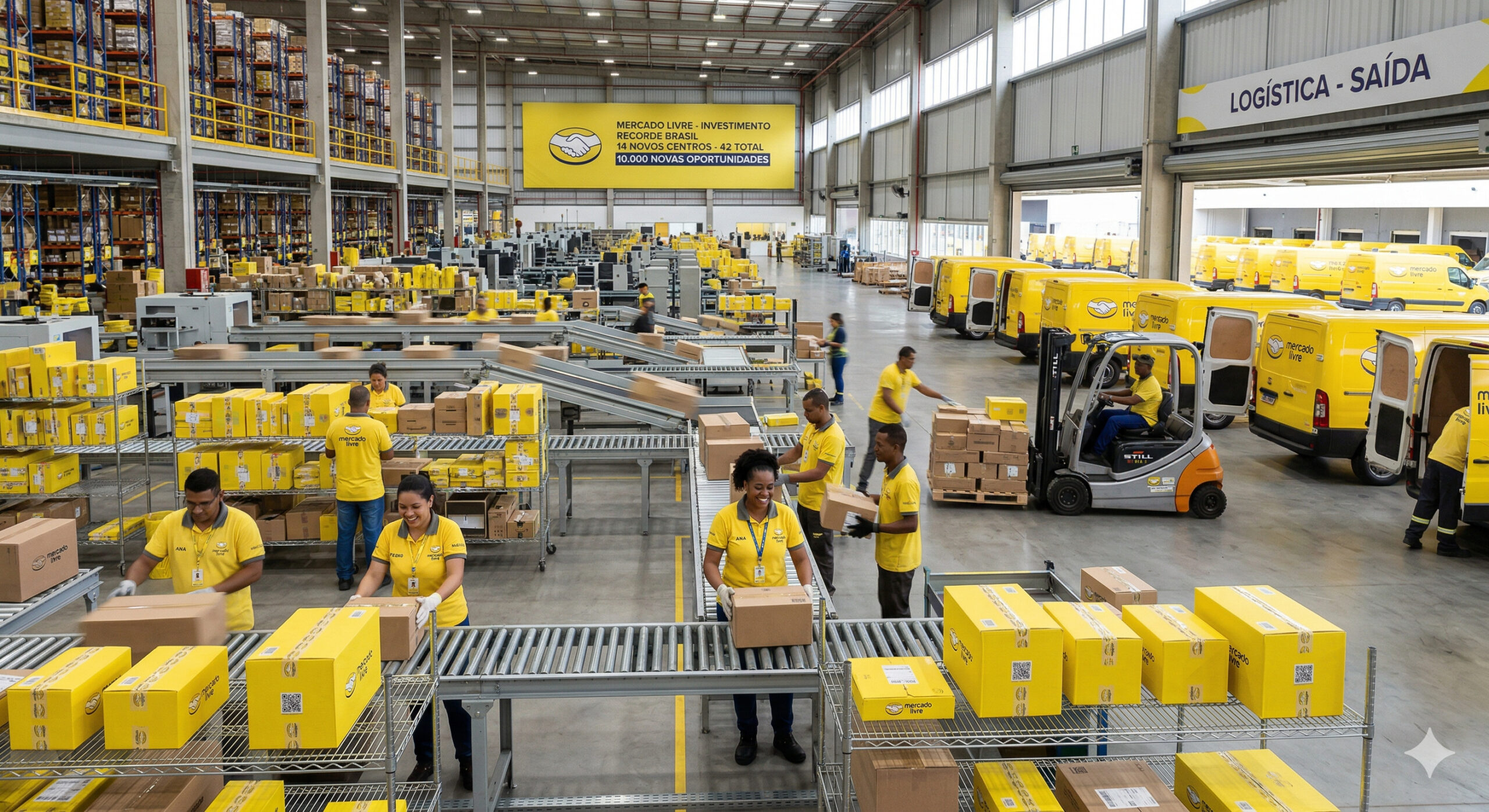
Mercado Livre “opens the vault” and announces a record investment of R$ 57 billion in Brazil in 2026, a value 50% higher than the previous year, with an expansion plan that includes 14 new logistics centers, totaling 42 units in the country and hiring an additional 10,000 employees.
-
How investment in technology can revolutionize the national economy and enhance industrial gains, according to a study that highlights the direct impact on productivity, innovation, and wealth retention within Brazil.

-
The largest food company on the planet, JBS, has just opened a 4,000 square meter laboratory in Florianópolis to develop customized proteins that modulate muscle mass gain, immune response, and metabolic performance.

-
After nearly 30 bids and competition among industry giants, a Spanish company purchases one of the largest airports in Brazil for almost R$ 3 billion and takes over the management of Galeão in a concession that will last until 2039.


Be registered in CadÚnico by February 2025
Have resided in Rio Grande do Sul for at least two years
Have a family monthly income of up to three minimum wages
These filters work as a prioritization funnel, ensuring that CNH Social reaches families who, in practice, cannot afford fees, exams, and lesson packages from a traditional licensing process.
The central idea is simple and objective: provide the CNH to those who need it as a work tool, not as a luxury.
What Costs Does the CNH Social Fully Cover
One of the most sensitive points of the program is the total elimination of expenses that, when added up, usually make the dream of obtaining a driver’s license unfeasible.
In the CNH Social package, beneficiaries are exempt from:
Application fee for the licensing process
Mandatory medical exam
Psychological exam
Theoretical and practical classes at accredited driving schools
In practice, candidates approved through CNH Social complete all mandatory stages of driver training without incurring costs to Detran or for supplementary evaluation services.
This completely changes the equation for informal workers, the unemployed, and low-income youth who view the CNH as a differentiator for securing jobs in transportation, logistics, services, and commerce.
How the 3,000 Spots Were Distributed Among Candidate Profiles
The design of CNH Social in RS also took into account distinct profiles of driver’s license usage.
Half of the spots were reserved for training new drivers, while the other half prioritized those already on the road needing to expand professional opportunities:
50% of spots for first-time licensing in categories A and B
50% of spots for category change or addition, such as C, D, or E
This balance allows CNH Social to serve both the young person seeking their first formal opportunity and the driver attempting to transition to freight transport, passenger transport, or larger fleets.
The same public policy serves both those starting out and those trying to make a significant income leap within their profession.
Who Was Excluded from the Program Even After Meeting Some Requirements
To preserve the social purpose and credibility of CNH Social, Detran RS established additional restrictions. The following individuals were excluded:
People who were already in an active licensing process at the time of selection
Candidates with a history of suspension or revocation of their CNH
Drivers with severe penalties that contradict traffic safety logic
By imposing these limits, the program filters profiles that could distort the central goal of CNH Social: to expand access to the driver’s license for those who have never been able to afford the complete process or need a category change to reposition themselves in the market.
CNH Social as a Policy for Mobility and Work in RS
The impact of CNH Social goes beyond document issuance.
In regions where public transportation is limited, driving means reaching employment, accepting night shifts, working on-call, or commuting to neighboring cities.
In sectors such as logistics, passenger transportation, urban deliveries, and technical services, the CNH is practically a prerequisite.
By combining free access, social criteria, and a balanced division between first-time licensing and category change, the CNH Social of RS strengthens a social-focused mobility agenda.
It not only “gives the license,” but reconnects workers to the market, opens space for formalization, and reduces the physical and economic distance between where jobs are located and where people live.
Other States Also Adopt Versions of CNH Social
Although the focus is on the format adopted by Detran RS, the logic of CNH Social has already inspired initiatives in other Brazilian states, with their own rules, but always guided by the same idea of inclusion.
Programs in Santa Catarina, Alagoas, and Ceará, for example, also offer fee waivers for specific audiences, such as low-income youth, informal workers, and the unemployed.
This expansion shows how CNH Social has established itself as a public policy tool in different regional realities, always with a common thread: to use licensing not as a privilege, but as an entry point to employment, income, and mobility autonomy.
CNH Social in RS as a Symbol of Productive Inclusion
Overall, CNH Social in Rio Grande do Sul reinforces three central axes of public policy aimed at low-income populations:
Elimination of financial barriers to access licensing
Focus on those who depend on the CNH to work and generate income
Selection with clear social criteria, supported by CadÚnico and family income
In a scenario of unemployment, informality, and irregular public transportation in many regions, programs like CNH Social function as structural shortcuts: they bring workers closer to real job openings, facilitate daily commuting, and create conditions for the driver’s license to cease being an unreachable cost and become a public investment in mobility and work.
And you, looking at your reality or that of your city, do you think that CNH Social should have even more spots and modalities or that the current focus of the program is already the right size?








-

-

-

-

-

-

46 pessoas reagiram a isso.