





 Portuguese
  English
  Spanish
  5 min of reading
  0 comments


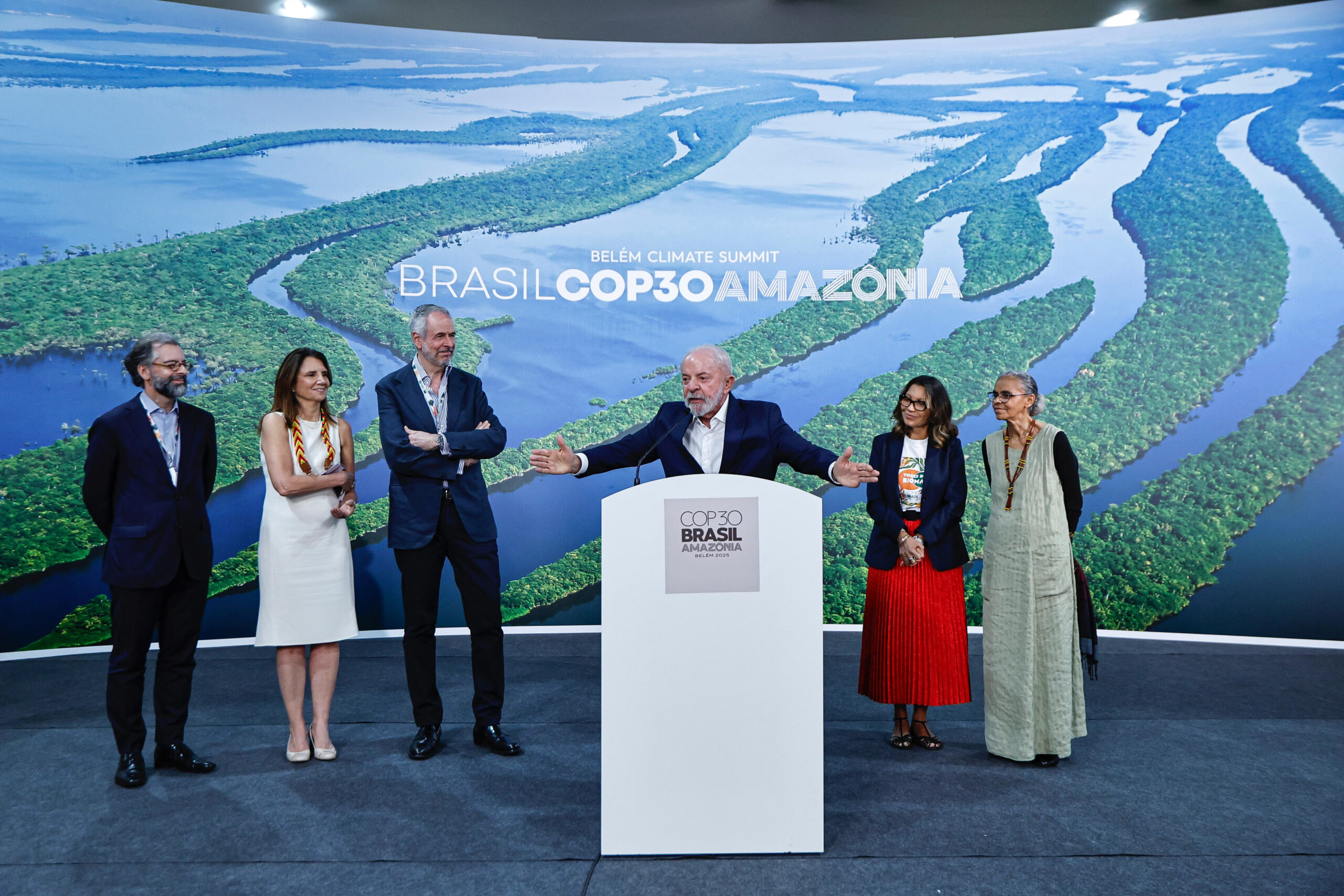
During the COP30, held in Belém, a draft of the final document sparked strong criticism: it does not present a clear roadmap to abandon oil and other fossil fuels, according to reporting by Terra. This omission reveals a significant impasse between nations advocating for energy transition and those still dependent on the oil industries.
A Historic Chapter of Fossils in Climate Negotiations
Historically, climate conferences like the COP have faced a persistent dilemma: reconciling the urgency of decarbonization with the economic influence of oil-producing nations. At the COP28, for example, countries had affirmed their commitment to a “transition” from fossil fuels, but without establishing deadlines or a concrete plan for the gradual phase-out of fossil fuels.
In 2025, COP30 seemed to be the moment to turn this commitment into effective action. However, the draft of the “Decision Mutirão,” the central document of the negotiations, included only mild mentions, according to Terra. The tone and wording of the text frustrated many activists and delegations who were hoping for a firm advancement.
-
Mars is accelerating, and scientists have discovered that the planet’s day is getting shorter, revealing surprising signs of internal activity.

-
Artemis 2 is set to launch on April 1 at 7:24 PM to orbit the Moon with four astronauts, but a class X solar flare and coronal mass ejection could interfere with communications and threaten the launch.

-
The largest deposit of Vale was discovered by accident and today represents almost all the ore produced by the company.
-
The Brazilian Army takes F-5 fighters out of the garage and stars in an air combat with support from the KC-390.


The Content of the Draft and the Gaps About Oil
According to Terra, the draft from the presidency of COP30 presents a “moderate” version regarding the transition of fossil fuels, including oil, but without imposing concrete goals. Terra There is a proposal to convene a ministerial group to develop national roadmaps for a “just transition,” but there is no clear requirement for phase-out.
Instead of an ambitious plan, the text suggests that countries voluntarily cooperate “to overcome dependence on these pollutants,” mentioning oil only as one of the fossils to be reduced. For environmentalists, this wording represents a defeat: the document does not guarantee significant changes in any binding timeline.
This less incisive version contrasts with what approximately 80 countries were advocating, according to Terra, which supported a more vigorous proposal to abandon fossil fuels.
International Reactions and Diplomatic Pressure
The omission of a robust plan for phasing out oil generated reactions among various nations. According to The Guardian, at least 29 countries threatened to block the final resolution if the fossil phase-out roadmap was not included. These countries view a fair and organized transition as a red line in the negotiations and demand that the text reflects this urgency.
According to The Guardian, the main resistance came from economies heavily dependent on oil — such as Saudi Arabia and Russia — which pressed to remove explicit mentions of abandoning fossil fuels. This contrast between negotiating blocs signals a deep divide within the conference regarding the future of global energy.
Additionally, the draft released by Agência Brasil also advocates for cooperation to reduce the use of coal, gas, and oil, but without setting clear targets for their elimination. Agência Brasil This flexible wording leaves open what the actual ambition of COP30 will be.
The Role of Oil in the Current Climate Crisis
Oil remains one of the main sources of greenhouse gas emissions in the world. Its combustion in transportation, industries, and power plants is one of the vectors that most contributes to global warming. Climate negotiators and scientists argue that without a clear and effective plan to reduce the use of these fuels, commitments to keep warming at safe levels are seriously compromised.
In the draft, although there is a reference to “substantial reduction” of oil and gas, some critics say this language is too vague to ensure an ambitious transition. For many environmentalists, without firm targets and accountability mechanisms, the promise of decarbonization loses its strength.
There is also concern that diplomatic rhetoric — which speaks of “transition” — might mask a practical continuation of fossil fuel dependence, especially if producing countries continue to extract oil on a large scale.
Financing and Just Transition
Another important part of the final COP30 draft addresses the just transition, a fundamental theme when discussing oil. According to Agência Brasil, the document proposes the creation of international cooperation mechanisms to support countries whose economies are heavily dependent on the fossil fuel industry.
This support would include technical assistance, technology transfer, and funding to diversify local economies. However, many activists argue that the proposed resources are still insufficient to ensure a transition without causing unemployment in oil-dependent regions.
The debate over climate financing is prominently featured in the draft, which advocates for increasing resources for adaptation, mitigation, and support for the most vulnerable communities. Agência Gov+1 Still, the lack of a clear line for phasing out fossil extraction leaves doubts about how far the commitment of wealthier countries goes.
Pressure Strategies and Global Coalitions
Behind the scenes of COP30, several countries formed coalitions to advocate for the inclusion of an ambitious climate roadmap. The Guardian reports that these nations view the removal of mentions of abandoning oil as a setback following commitments made at COP28. The Guardian+1
Groups of island countries, for example, led diplomatic protests. They argue that the omission of a concrete plan undermines the credibility of the conference. They insist that without clear targets, COP30 could be seen as a conference of empty rhetoric, incapable of fulfilling the commitments of the Paris Agreement.
Meanwhile, oil-producing countries argue that a rapid abandonment of fossil fuels would jeopardize their economic stability. They advocate for a gradual transition and more intense cooperation, without mentioning mandatory deadlines for abandoning oil.
The Future of Negotiation: Possible Scenarios
In light of the controversy, the negotiations could take several paths. If countries push for a more ambitious text, the draft could be revised before the final writing. In practice, the current omission may not be definitive, especially if there is consensus among blocs advocating for transition.
On the other hand, if the draft maintains mild language, there could be a weakening of global commitment to reducing fossil fuels. This could jeopardize the goal of limiting warming to 1.5°C, according to the IPCC, and undermine the credibility of future COPs.
It is also possible that COP30 will decide on a document with “voluntary and flexible” commitments, without binding targets for oil. If that is the case, the symbolism will be strong — but the practical effectiveness may remain limited.
Reflection on the Importance of a Crucial Plan
The absence of a clear roadmap to abandon oil in the draft of COP30’s final letter demonstrates the enormous political challenge of climate transition. The economic power of fossil fuel-dependent nations continues to shape negotiations, which may hinder structural progress.
Nonetheless, the pressure from various countries and pro-transition coalitions indicates that this issue will remain central in future conferences. The fact that 80 nations support a more ambitious plan suggests that there is global will to realize a departure from oil.
Thus, COP30 may become a decisive moment — not only to reaffirm symbolic commitments but to define how the world will actually leave oil behind. This path will require political courage, massive financing, and unprecedented international coordination to ensure that the transition is just, effective, and global.









-

Uma pessoa reagiu a isso.