





 Portuguese
  English
  Spanish
  5 min of reading
  0 comments


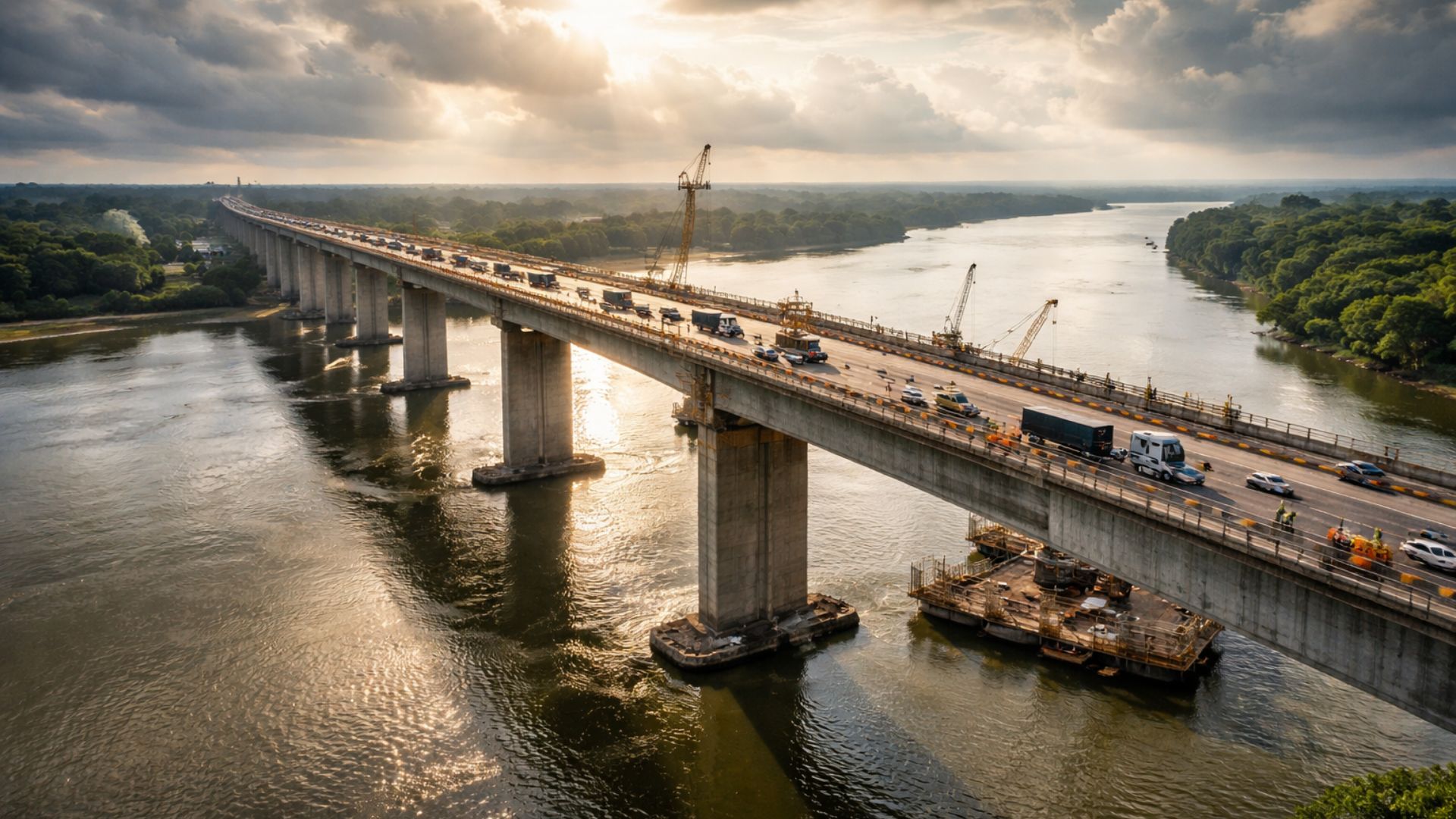
80% Progress on One of the Main Crossings of BR-293 Highlights Project Involving Reinforcement of Beams, Widening, and New Signage, with Half-Track Operation and Stop-and-Go Control, in Addition to Federal Investment Estimated at R$ 15.7 Million.
The bridge over the Ibicuí River on BR-293 has entered the final phase of a structural rehabilitation that has already achieved about 80% physical progress, according to the National Department of Transportation Infrastructure.
The intervention is taking place in the Western Frontier of Rio Grande do Sul, in the stretch between Santana do Livramento and Dom Pedrito, and includes reinforcement, restoration, and widening services in a project classified by the agency as a Special Art Work.
The DNIT informs that the federal investment allocated for the set of improvements is approximately R$ 15.7 million.
-
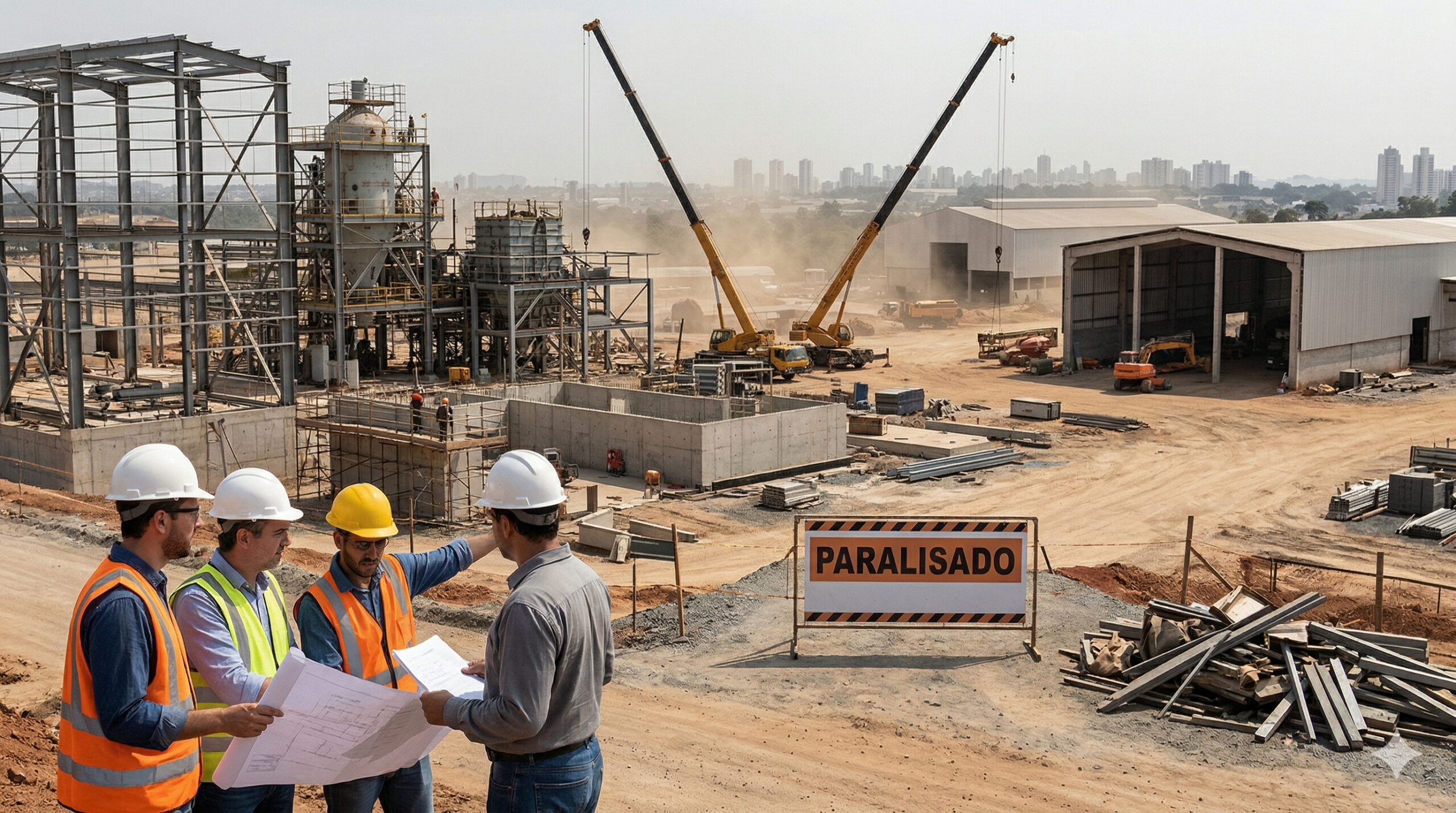
The lack of welders, electricians, and operators becomes a structural threat in 2025, with the construction industry and manufacturing already suffering from delays, cost pressures, and labor shortages in Brazil.
-
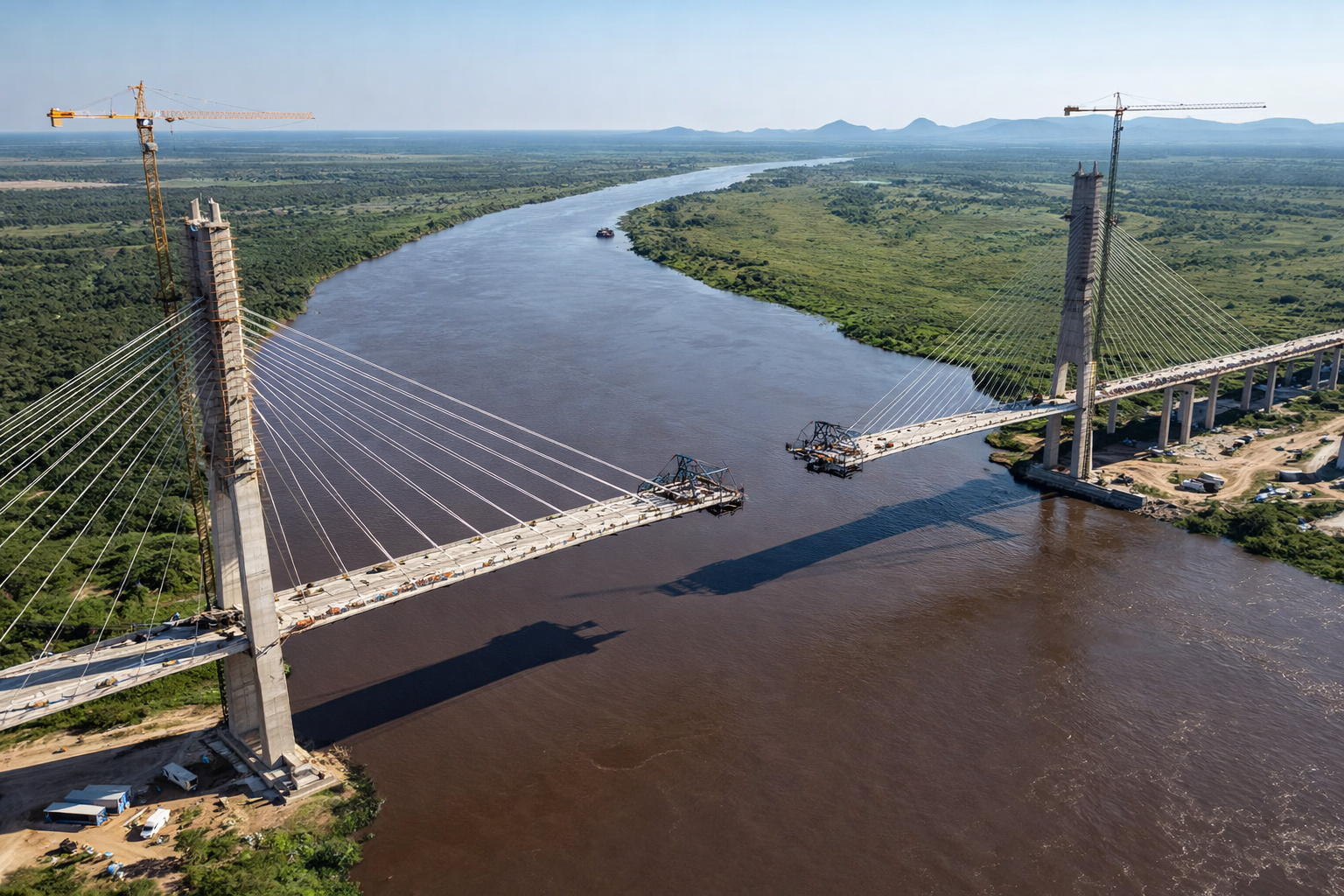
Brazil and Paraguay are just 46 meters away from a historic union on the bioceanic bridge that promises to revolutionize trade between the Atlantic and the Pacific.
-
With 55 km over the sea, a cost of US$ 20 billion, and enough steel to build 60 Eiffel Towers, China’s largest project has connected Hong Kong, Zhuhai, and Macau in a colossal bridge that defies the logic of engineering.

-
A trick with joint compound transforms a Styrofoam ceiling into a plaster-like ceiling: leveled panels, wires and mesh at the joints, sand, paint, and change the environment while spending little today.

The work is managed under the Program for Maintenance and Rehabilitation of Structures, known as PROARTE, aimed at eliminating structural and functional deficiencies in bridges, tunnels, overpasses, and walkways through preventive, corrective, and rehabilitation maintenance, focusing on extending the lifespan and load capacity of these structures.
Reinforcement of Beams, Widening, and Road Safety on the Job Site
On the job site, work has already progressed through stages considered critical to the integrity of the crossing.
According to the DNIT, repairs and adjustments have been made to the infrastructure and mesoscale structure, with emphasis on the replacement and reinforcement of existing beams, one of the most sensitive components in bridges that receive heavy traffic.

At the same time, the work fronts have shifted to activities that directly impact the experience of those crossing the river, such as pavement renewal, sidewalk construction, and lateral protection installation, measures associated with road safety.
The decision to rehabilitate, reinforce, and widen the bridge instead of replacing it entirely is presented by the DNIT as an economically and environmentally efficient solution.
The logic, according to the agency, is to recover structural capacity and adapt the work to current standards, preserving durability against current and future traffic demands while reducing the need for more invasive and lengthy interventions, which often raise costs and increase impacts on circulation.
Final Stages: Expansion Joints, Drainage, and Final Signage
In practice, the work combines recovery and reinforcement techniques to extend the lifespan of a structure that needs to respond to more demanding loads over time.
Among the next steps listed by the DNIT are the concreting of the reinforcement of the beams, the implementation of prefabricated slabs and drip edges, the reinforcement of the deck, the installation of expansion joints, the execution of asphalt paving, and the final signage.
Services are also planned for drainage devices and other complementary activities, which are critical for pavement conservation and the bridge’s performance during rainy periods.
Half-Track, Stop-and-Go, and 40 km/h Limit in the Work Section
As the schedule progresses, the operation of BR-293 in the area requires increased attention from drivers and transporters.
To maintain traffic flow and reduce risks during the works, the DNIT states that the highway operates in half-track throughout the day, with vertical signage to organize traffic flow and control through the Stop-and-Go system.
The speed in the section is limited to 40 km/h, a measure aimed at reducing the potential for accidents in an area with workers, equipment, and temporary changes in circulation geometry.
Strategic Corridor of the Gaúcha Campaign and Grain Flow
The relevance of this crossing goes beyond the work section.
The DNIT describes BR-293 as a strategic corridor of the Gaúcha Campaign, a region associated with agricultural activities, and highlights the road’s role in facilitating the flow of grains and products from the sector, as well as the daily connection between municipalities for access to services, commerce, health, and education.
On a route that connects long-distance movements with regional movements, any operational restriction is usually felt by both truck drivers and residents who depend on the road for daily commitments.
Bridge Engineering: Loads, Long Beams, and Lateral Protection
From a technical standpoint, a bridge rehabilitation typically focuses on elements that determine structural performance and user safety.
By mentioning the replacement and reinforcement of beams, the DNIT indicates that the intervention has reached components responsible for transferring loads from the deck to the supports, as well as redistributing stresses caused by heavy vehicles and temperature variations.
The presence of new sidewalks and lateral protection also indicates a functional update, improving circulation and containment conditions, particularly relevant in river crossings, where the margin for error in corrections in case of an incident is smaller.
The finishing phase, despite seeming less “impressive” than beam replacement, is crucial for long-term performance.
Expansion joints, drainage, and the asphalt layer directly influence water infiltration, concrete durability, and ride comfort, and are often factors that determine the frequency of future maintenance.
The final signage, in turn, tends to consolidate the expected safety standard after a project of this size, especially in a section with a high presence of freight vehicles.
Official Update from the DNIT and the Challenge of Maintaining Crossings in Service
The stage of 80% reported by the DNIT was informed in a statement published on January 15, 2026, with an update on physical progress and a description of ongoing fronts.
The announcement emphasizes that the work has entered a transition period, in which part of the more complex tasks has already been completed and the teams are focusing on final reinforcements and the complete resurfacing of the roadway and protective elements.
In a country with thousands of bridges on federal highways, interventions like that of the Ibicuí River help highlight a challenge that is less visible to those who only notice the problem when restrictions or closures occur: keeping old structures compatible with modern traffic, with larger loads, intense flow, and current safety demands.
When this type of rehabilitation is executed without completely shutting down the corridor, the outcome depends on a delicate balance between engineering, construction logistics, and the discipline of drivers in the half-track section.
If a serviceable bridge can be reinforced and widened to gain years of useful life, which other strategic crossings of BR-293 should be prioritized with the same level of technical detail and transparency of progress?








-

-

-

-

7 pessoas reagiram a isso.