





 Portuguese
  English
  Spanish
 5 min of reading
  0 comments


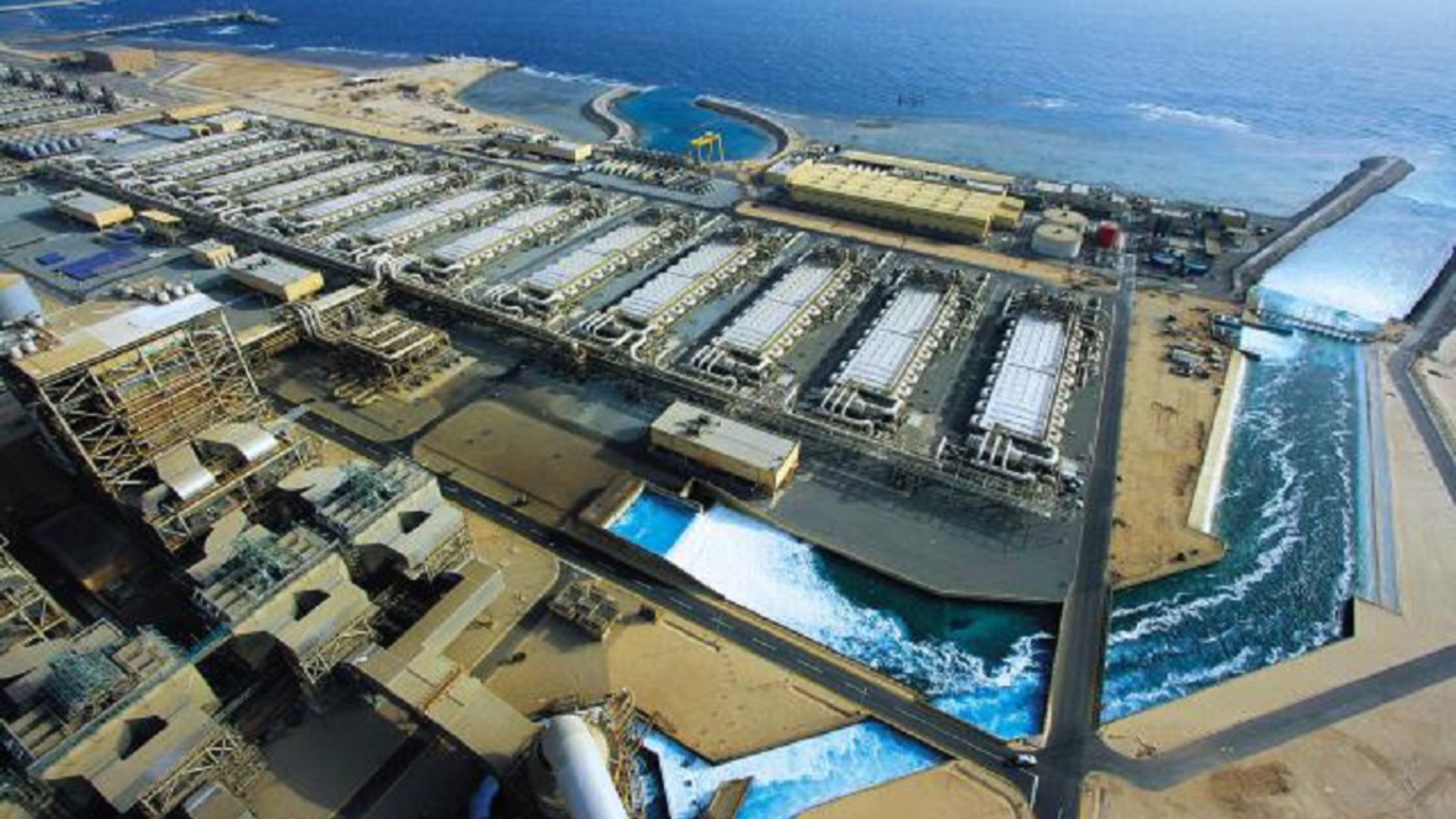
Plant in Abu Dhabi Expands Desalination with Solar Energy and Strengthens Water Strategy in Arid Region.
The Al Taweelah desalination plant, in Abu Dhabi, United Arab Emirates, has been operating since March 2024 as the largest seawater reverse osmosis plant in operation, according to data from local energy and water authorities.
The facility has the capacity to generate about 909,200 cubic meters of drinking water per day, an amount equivalent to 909 million liters, part of which is associated with a dedicated solar park of approximately 70 megawatts (MW).
This combination is presented by the emirate government as a way to increase urban supply with less dependence on fossil sources.
-
These living root bridges and ladders are over 700 years old and help indigenous people survive in one of the rainiest regions in the world.

-
From sertanejo star to international investor: Ana Castela invests millions in a mansion in the USA, creates a themed accommodation in Orlando, and shows that the “boiadeira” also wants to grow away from the stage.

-
The 10 most stunning motorhomes in the world: a $3 million trailer with a rooftop nightclub and garage for a Ferrari, “palaces on wheels” with Italian marble, private cinema, and five-star hotel luxury for billionaires.

-
Trump wanted to spend $400 million on the White House, but the courts prohibited the million-dollar construction.


Al Taweelah and Its Global Leadership in Desalination
Located in the Khalifa industrial zone, the plant is part of the country’s independent water project (IWP) model and has a long-term purchase agreement with the Emirates Water and Electricity Company (EWEC).
The operation is led by Taweelah RO Desalination Company, with 40% ownership by ACWA Power, while TAQA and Mubadala make up the rest of the consortium.

The reference investment disclosed is approximately US$ 874 million, according to public market reports.
The implementation occurred in phases.
The first began operation in June 2022, with about half the capacity, gradually increasing the supply to the Abu Dhabi grid.
By 2023, the project reached approximately 90% of the contracted production.
In March 2024, the plant received certification for full commercial operation, confirming production close to 200 million imperial gallons per day, equivalent to 909,000 cubic meters daily.
With this progress, estimates presented by the EWEC indicate that the share of desalination by reverse osmosis in Abu Dhabi’s water system would increase from about 13% to approximately 30%.
Overall, official data from the United Arab Emirates indicate that about 42% of drinking water comes from desalination processes.
Reverse Osmosis Technology and Treatment Stages
The technology adopted is seawater reverse osmosis (SWRO), which uses semipermeable membranes and high pressure to separate salts and impurities from the captured water.
In projects of this scale, pressure typically reaches values close to 60 bar, sufficient to force water through the membranes and retain most dissolved solids.
According to manufacturers of equipment used in the sector, state-of-the-art membranes achieve retention levels above 99% for salts.

The water intake occurs through submerged intakes near the coast, which reduce the entry of larger organisms.
It then undergoes pretreatment with filtration and controlled chemical dosing, a step considered essential by experts to avoid scaling and preserve operational efficiency.
Within the reverse osmosis modules, thousands of membrane elements operate in high recovery arrangements, aided by energy recovery devices that utilize residual pressure from the brine before disposal.
Technical documents released by involved companies indicate that the specific energy consumption of the plant is around 2.81 kWh per cubic meter, a value mentioned in industry publications as one of the lowest in projects of this scale.
After separation, the permeate undergoes remineralization, with controlled addition of calcium and magnesium for pH stabilization.
Subsequently, it receives disinfection and undergoes continuous quality analyses before being directed to the reservoirs and aqueducts that supply Abu Dhabi and nearby industrial areas.
Renewable Energy and Monitored Environmental Impacts
Part of the energy used in the process comes from a solar park of about 70 MWp installed near the plant.
According to information provided by authorities and project partners, the initial goal is to supply about 30% of electricity demand during the first years of operation, with the possibility of gradual expansion.
Desalination experts state that membrane technology consumes less energy than thermal methods, helping to reduce emissions associated with water production.
Studies cited by industry institutions mention reductions that can exceed 40% in projects that replace thermal processes with reverse osmosis, especially when supported by renewable sources.

The global expansion of desalination also poses environmental challenges.
International organizations estimate that the approximately 16,000 to 23,000 plants worldwide produce about 95 million cubic meters of water per day, a volume accompanied by an even greater amount of concentrated brine.
Disposal of Brine and Environmental Control in the Gulf
The generated brine has a salinity approximately twice that of the captured water.
At Al Taweelah, this effluent is mixed with water currents used in other industrial processes in the region, reducing the concentration before discharge into the Persian Gulf.
Diffusers installed in specific areas help disperse it and follow environmental parameters set by the local regulatory authority.
Sensors installed in the discharge area monitor salinity, temperature, and dissolved oxygen.
According to the responsible authorities, this data supports operational adjustments to prevent sudden changes in the marine environment, especially in areas near mangroves and coral formations.
Financial Structure and Continuous Operation
The Al Taweelah contract follows the model in which the concessionaire builds, operates, and maintains the plant, while EWEC purchases the water at agreed tariffs.
Information disclosed to investors indicates that the project uses financial leverage exceeding 80% in long-term debt.
The construction mobilized thousands of workers and various international suppliers.

In the operational phase, the plant maintains specialized technical teams in automation, maintenance, and water quality control.
For Abu Dhabi, authorities point out that the additional capacity strengthens water security during a period of population growth and industrial expansion.
Subterranean reservoirs replenished with desalinated water are also part of the emirate’s long-term strategy.
Relevance for Brazil and the Northeast
The performance of Al Taweelah is cited by analysts as a benchmark for countries facing water scarcity and having extensive coastlines.
Market studies project significant expansion of desalination in the coming years, concentrated in semiarid regions.
In Brazil, the Dessal Ceará project in Fortaleza is pointed out by the state government as the country’s first large-scale plant, with an estimated capacity of 1 cubic meter per second (86,400 cubic meters per day).
The initiative uses reverse osmosis and aims to strengthen supply to the Metropolitan Region of Fortaleza.
Discussions on the use of renewable energy in future operations are ongoing.
Experts consulted by state agencies state that the combination of desalination and clean sources can reduce operational costs and emissions, a trend observed in ventures in the Middle East.
In light of this scenario, to what extent can desalination projects supported by renewable energy gain traction along the Brazilian coast as a complement to traditional supply sources?







-

-

-

-

-

-

89 pessoas reagiram a isso.