





 Portuguese
  English
  Spanish
  5 min of reading
  0 comments


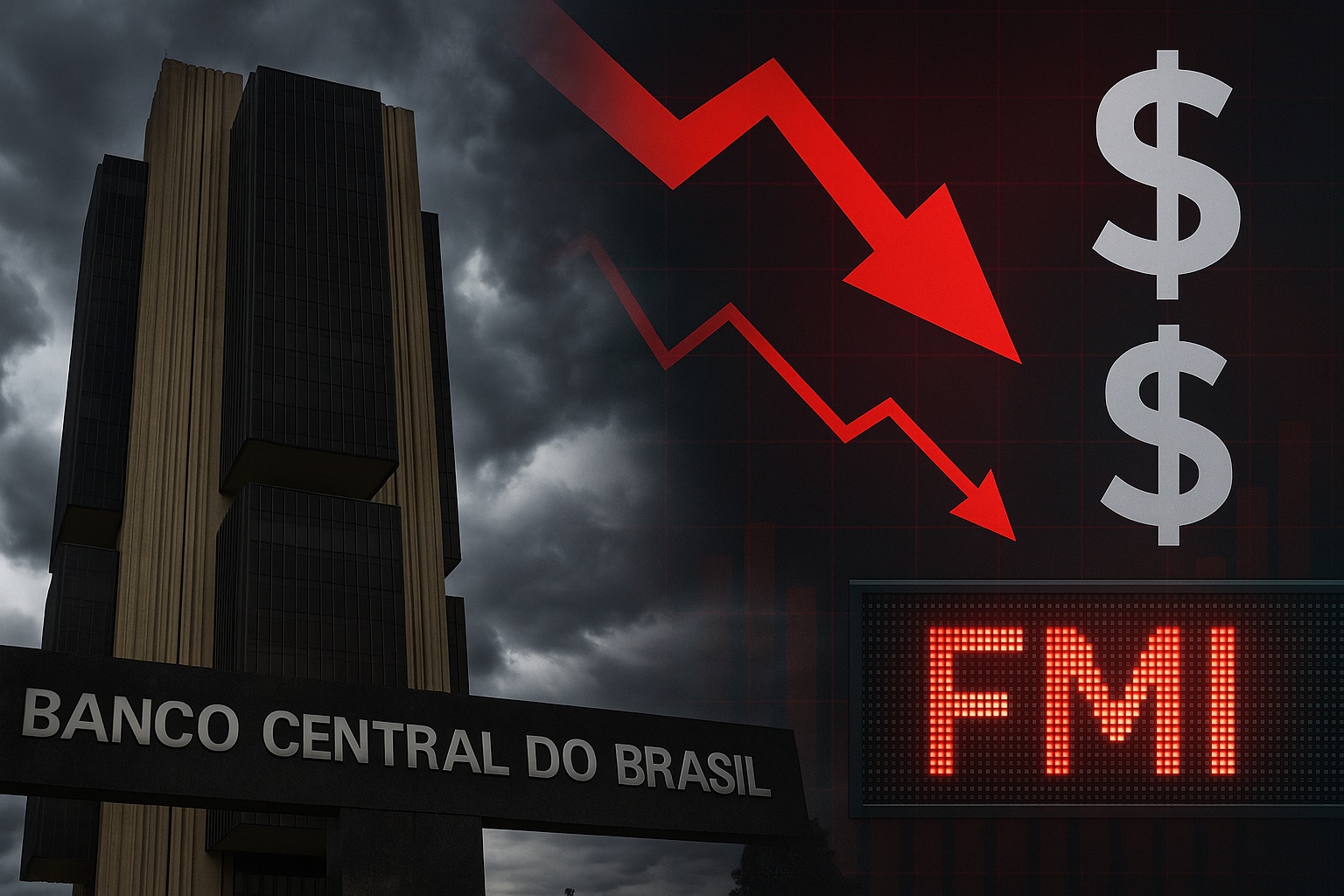
Central Bank and IMF Warn: Brazil’s Debt Could Reach 84% of GDP by 2028.
The year 2025 began with a double warning coming from the places the market least likes to hear: Central Bank and International Monetary Fund (IMF). Both project that Brazil’s gross public debt, which is currently approaching 78% of Gross Domestic Product (GDP), could leap to 84% by 2028 if nothing is done. The number is more than just an accounting figure: it means the country faces fiscal risk, with a direct impact on interest rates, inflation, exchange rates, and international confidence.
Investors reacted immediately to the report: debt securities rose, the dollar began to climb, and analysts are already mentioning a concrete threat of downgrading Brazil’s credit rating, which would jeopardize the capital flow and leave the country even more vulnerable in a global slowdown scenario.
The Escalation of Debt
Brazilian public debt is a chronic issue. Since the 2010s, when it hovered around 50% of GDP, it has advanced rapidly, driven by recurring fiscal deficits, high interest rates, and increased mandatory spending. By 2025, the debt stock is nearing R$ 8 trillion, and each month new records are announced by the National Treasury.
-
“No one will make us change the Pix,” says Lula after the US report.

-
Lula responds directly to Trump and says that Pix is from Brazil and will not change under pressure from anyone, after a report from the United States pointed out the Brazilian payment system as an American trade barrier.

-
Amazon has just announced a new fee on all deliveries, and your online purchases will become more expensive starting April 17, including for those buying from the United States here in Brazil.

-
He sold his share for R$ 4 thousand, saw the company become a giant worth R$ 19 trillion, and missed the opportunity of a lifetime.


The problem is not just the size, but the speed at which it grows. In 2024 alone, Brazil spent more than R$ 700 billion on debt interest, an amount greater than the entire budget for health and education combined.
Now, with IMF projections pointing to 84% of GDP by 2028, the risk of losing fiscal control has ceased to be a distant hypothesis and has become a real threat.
Why 84% of GDP Is So Serious
In absolute terms, public debt is not necessarily a problem. Developed countries like Japan and the United States operate with much higher levels, but the difference lies in the investors’ confidence and the currency in which the debt is issued.
Brazil, being an emerging economy, does not enjoy the same privilege. The higher the debt, the greater the perception of risk, and this forces the country to pay higher interest rates to finance itself.
The result is a vicious cycle: the more debt, the more interest; the more interest, the more debt. The IMF’s warning is therefore clear: without consistent fiscal adjustment, the country could face a collapse of confidence.
Risk of Credit Rating Downgrade
Credit rating agencies are already monitoring the situation closely. Today, Brazil is still rated as speculative grade by major international agencies, and any new deterioration could push institutional investors further away, who are required to invest only in investment-grade securities.
A potential downgrade would have a cascading effect: capital flight, devaluation of the real, inflationary pressure, and the need for even higher interest rates to contain instability.
This is the scenario that frightens investors and led the Central Bank to reinforce, along with the IMF, the warning that the time to act is running out.
The Pressure on the Government
The report arrives at a delicate moment. The federal government is trying to balance promises of increased social and infrastructure investments with the need to meet the fiscal target approved in Congress.
The economic team talks about a “sustainable debt trajectory,” but the market is already calling for tougher measures, such as cuts in mandatory spending and structural reforms to ease the pressure on public accounts.
Among the most critical points is the accelerated growth of pension expenses, which consume more and more of the budget. Another bottleneck is the budget rigidity, since more than 90% of federal spending is mandated by law or the Constitution. In this scenario, there is minimal room for maneuver.
The Parallel with Other Emerging Countries
The comparison with international peers reinforces the warning. Mexico, for example, maintains public debt around 48% of GDP, with much more solid fiscal credibility.
India, although with larger numbers, shows an accelerated growth trajectory and capacity to attract foreign investments.
Brazil, on the other hand, faces economic stagnation, low per capita GDP growth, and some of the highest interest rates in the world. This makes the debt, even at levels seemingly lower than those of developed countries, weigh much more heavily on its economy.
What Could Happen If Nothing Changes
If the trajectory pointed out by the IMF is confirmed, with debt reaching 84% of GDP by 2028, the consequences would be harsh:
- Permanent rise of the dollar, with a direct impact on fuel and food prices.
- High interest rates for a longer time, suffocating credit, consumption, and investment.
- Resilient inflation, eroding the purchasing power of the population.
- Reduction in economic growth, moving the country further away from global averages.
- Capital flight, in search of safer markets.
Is There a Way Out?
Experts argue that Brazil still has time to reverse the trajectory. Reforms that address mandatory spending, a credible fiscal rule, and measures to stimulate growth can prevent debt from spiraling out of control.
The problem, according to analysts, is not the lack of diagnosis, but the political difficulty in implementing solutions that involve painful choices.
Among them is the administrative reform, the revision of fiscal subsidies amounting to more than R$ 450 billion per year, and the pursuit of greater efficiency in the public sector. Some also advocate for speeding up the energy transition and exploring new export frontiers to ensure extra revenue.
The Clock Is Ticking Against Brazil
The warning triggered by the Central Bank and the IMF in 2025 is not rhetorical: it is an urgent call for Brazil to adjust the course of its public accounts.
The projected debt of 84% of GDP by 2028 could become a snowball, dragging down credibility, investments, and growth.
The country has already experienced currency and fiscal crises in the past, and knows the cost of instability: high inflation, unemployment, and loss of social well-being. The difference now is that, in a globalized and hyperconnected world, investors’ patience is increasingly limited.








Seja o primeiro a reagir!