





 Portuguese
  English
  Spanish
  4 min of reading
  0 comments


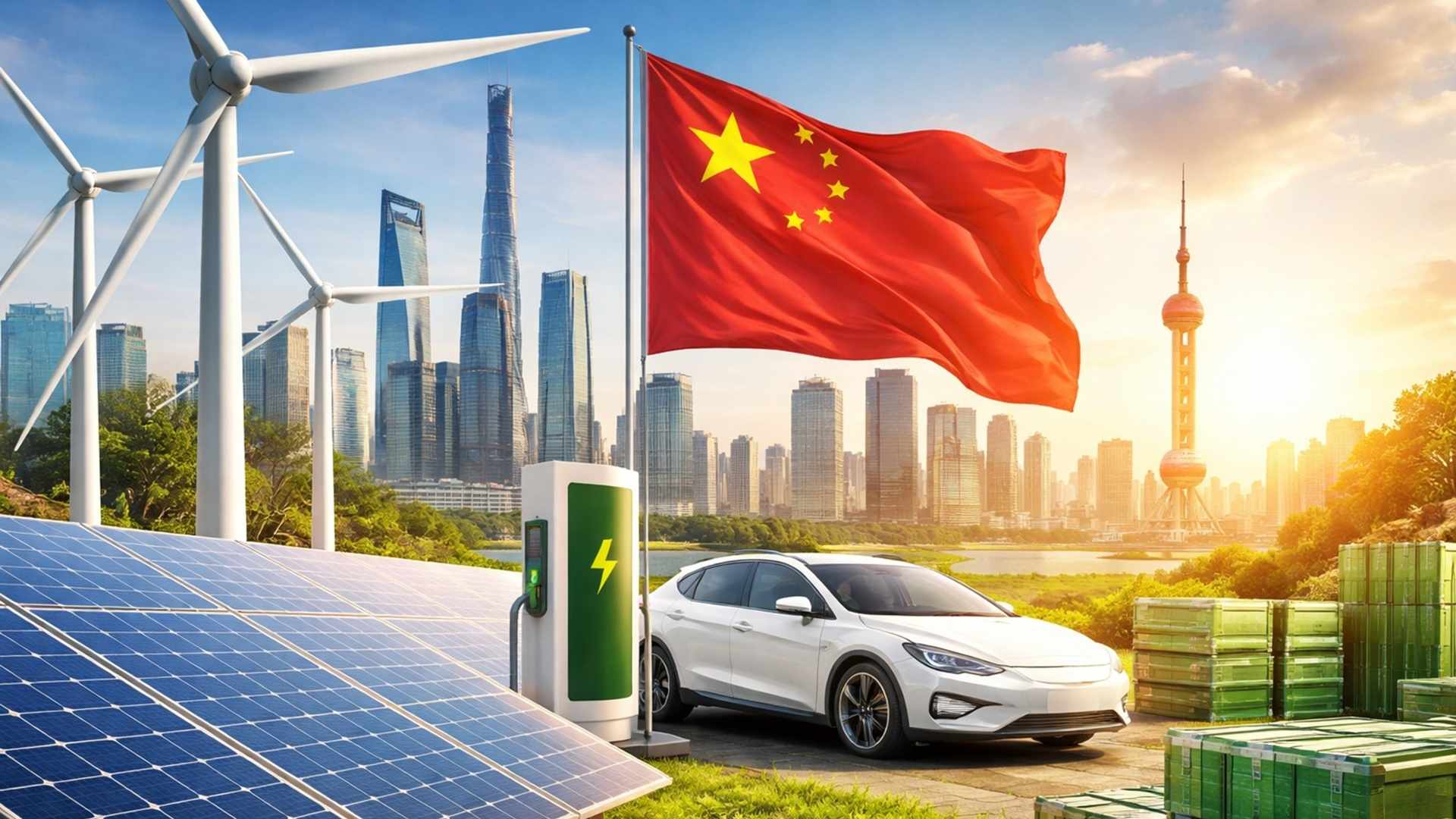
International Study Indicates That China’s Clean Energy Sector Reached 15.4 Trillion Yuan in 2025, Accounted for 11.4% of GDP, and Achieved an Economic Scale Comparable to Countries Like Brazil and Canada, Supporting China’s Official Growth Target.
China’s clean energy was responsible for more than one-third of the country’s economic growth in 2025 and for over 90% of the investment increase, according to a study from the Clean Energy and Air Research Center, which analyzed the recent performance of the sector.
The survey indicates that China’s clean energy industries produced 15.4 trillion yuan, equivalent to US$ 2.1 trillion, throughout 2025. This volume accounted for 11.4% of the country’s gross domestic product, representing an unprecedented level for the sector.
According to the report, if China’s clean energy were considered the economy of an independent country, it would rank eighth in the world. The generated value would be close to the GDP of national economies like Canada or Brazil, as noted by the think tank based in Helsinki.
-
Embrapa’s discovery reveals an unexpected advancement by allowing the production of seedlings from the caatinga using brackish water, opening a new frontier for farmers to face drought more efficiently.

-
6 sources of free fertilizer that you are throwing away every day and can transform your garden without spending anything.

-
With a water crisis on the radar, Sabesp invests in reclaimed water for data centers and transforms sewage treatment into a solution that saves millions of liters and protects public supply.

-
Foresea achieves 100% offshore waste reuse in 2025, eliminates landfill disposal, and consolidates sustainable strategy with 1,500 tons recycled.


The analysis states that, without the contribution of clean energy industries, China would have recorded economic growth of 3.5% in 2025. With the sector’s presence, the country achieved the official expansion target of around 5.0% during the period.
Accelerated Growth of China’s Clean Energy Surpasses Average Economic Growth
The study shows that China’s clean energy grew at a significantly faster pace than the overall economy. The annual growth rate of the sector accelerated from 12% in 2024 to 18% in 2025, reinforcing its centrality in recent economic activity.
Between 2022 and 2025, the real economic value of the clean energy sector nearly doubled. This progress was described as a direct result of the financial and industrial prioritization adopted by the Chinese government in the energy transition.
The report classifies this strategy as a large-scale economic and financial bet. The move aligns with the country’s official goals of reaching peak carbon emissions by 2030 and achieving carbon neutrality by 2060.
The accelerated expansion also indicates that the sector has begun to exert structural influence on Chinese macroeconomic performance, moving beyond being just a complementary segment of the national industry.
Electric Vehicles, Batteries, and Solar Concentrate Value and Investments
The main drivers of China’s clean energy were the so-called “three new” industries: electric vehicles, batteries, and solar energy. Together, these areas accounted for approximately two-thirds of the total added value of the sector.
Additionally, these segments attracted more than half of all investment directed toward clean energy industries in the country, consolidating their position as the central axis of China’s industrial strategy.
In 2025, total investment in clean energy reached 7.2 trillion yuan, around US$ 1 trillion. This amount was nearly four times higher than the US$ 260 billion allocated to fossil fuel extraction and coal power generation.
This imbalance highlights a clear shift in resource allocation, with China’s clean energy vastly outpacing investments in traditional sources during the same analyzed period.
Domestic Market, Price Pressure, and Uncertainties for Solar Energy
Despite the significant growth of clean energy technology exports in 2025, the domestic market remained considerably larger in value for Chinese companies, according to the CREA report.
The study highlights, however, that the intensification of price wars reduced profitability in parts of the sector. This development raised official concerns about the long-term financial health of the involved industries.
The introduction of a new market-based pricing system for solar and wind energy contributed to a slowdown in new installations. There is uncertainty about future performance, especially in the solar segment, the document points out.
Projections from the China Photovoltaic Industry Association indicate an addition of between 180 and 240 gigawatts of solar capacity in 2026, below the record of 315 gigawatts installed the previous year.
Installed Capacity, Official Targets, and Projections for 2026
A prolonged slowdown could turn the sector into a barrier to economic growth, as well as exacerbate industrial overcapacity and trade tensions, the report warns.
Still, the study emphasizes that targets set by local governments and state-owned enterprises may sustain relevant advances, even if the central government’s objectives are more modest in the upcoming five-year plan.
According to predictions from the China Electricity Council, solar energy is expected to surpass coal as the country’s primary source of energy in installed capacity for the first time in 2026.
The National Energy Administration reported that renewable sources will account for over 60% of China’s total installed power generation capacity in 2025, reinforcing the structural weight of China’s clean energy in the national energy system.
This article was prepared based on information published by the website scmp.com and data from the Clean Energy and Air Research Center (CREA).










Seja o primeiro a reagir!