





 Portuguese
  English
  Spanish
  5 min of reading
  0 comments


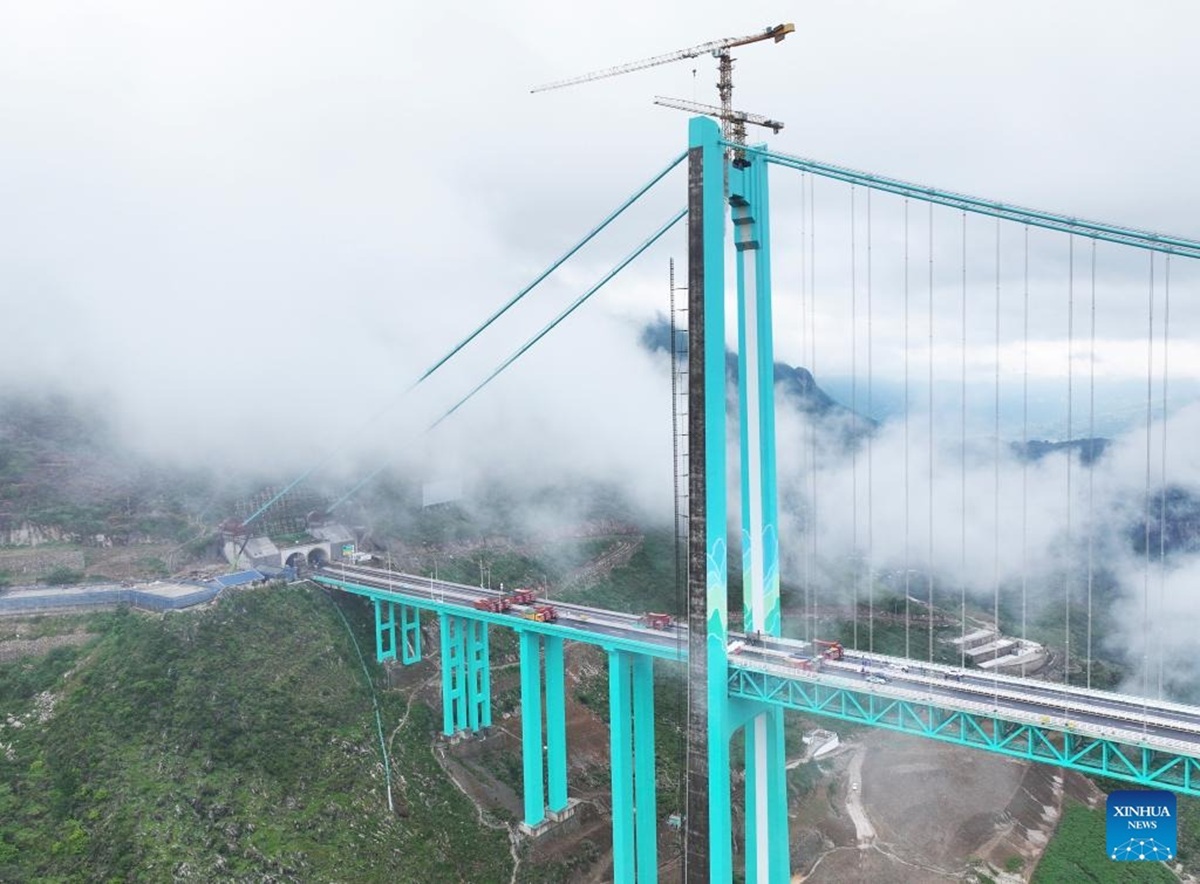
Structure Connects The Counties Of Guanling And Zhenfeng And Reduces Travel Time From Two Hours To Just Two Minutes.
The world’s highest bridge, called the Huajiang Grand Canyon, located in Guizhou province in southwestern China, will be inaugurated this month, consolidating China’s strategy of massive investments in infrastructure.
Standing 625 meters above the ground and spanning 2.9 kilometers, the structure crosses a deep canyon locally known as the “Earth’s Fissure” and sets a new global height record.
Structure And Dimensions Of The Huajiang Grand Canyon Bridge
The Huajiang Grand Canyon Bridge was designed to withstand extreme geographical and climatic conditions. Rising 2,050 feet (625 meters) above the canyon floor, it is nearly twice the height of the Eiffel Tower in Paris and nine times taller than London’s Tower Bridge.
-
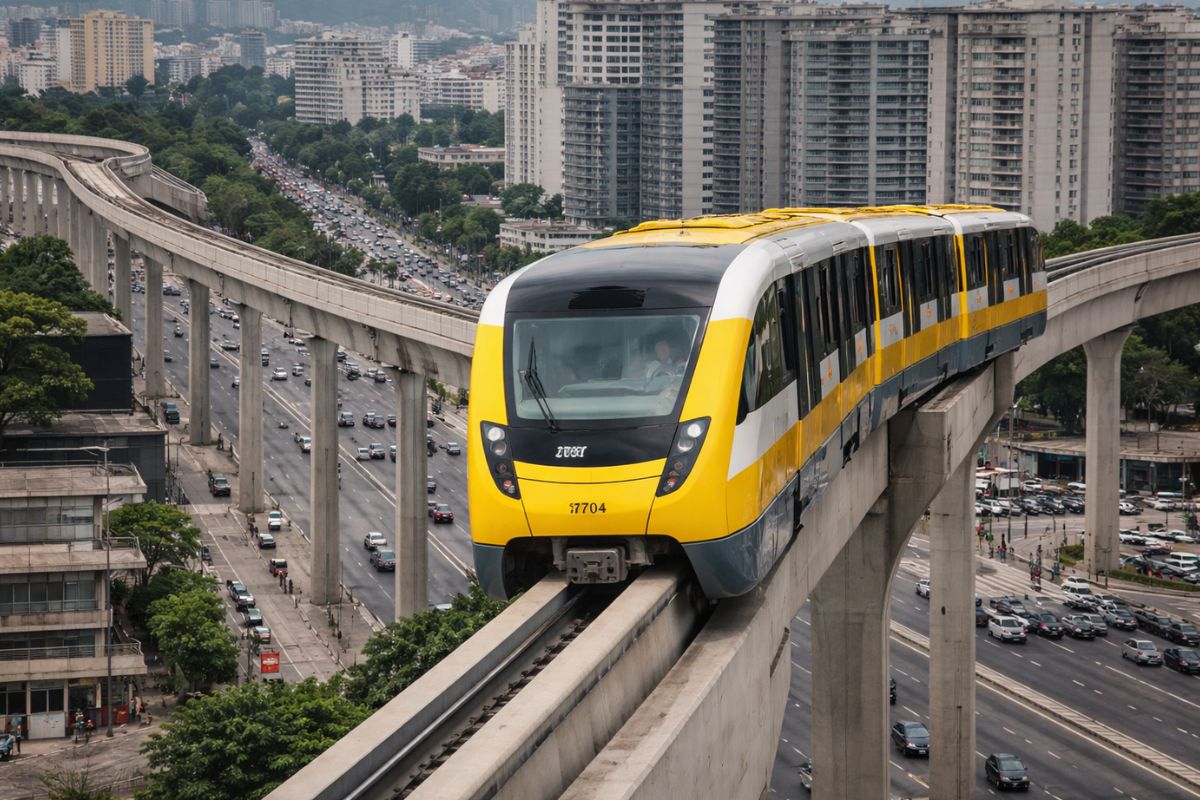
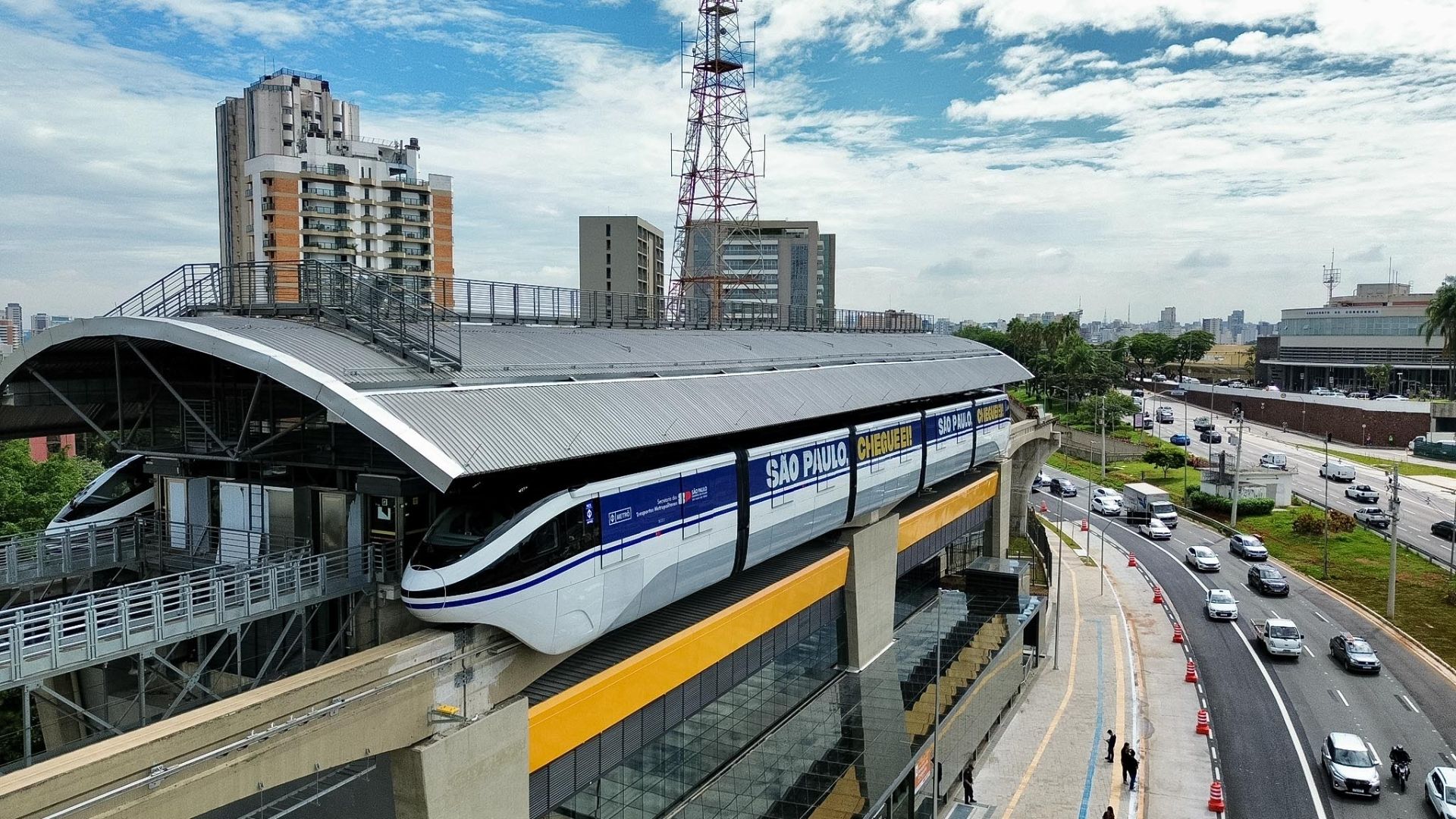
The project that was supposed to be ready for the 2014 World Cup in Brazil debuted with a 12-year delay and nearly R$ 6 billion invested: the Line 17-Gold of the São Paulo monorail opened with reduced hours and is only expected to operate fully in October.
-
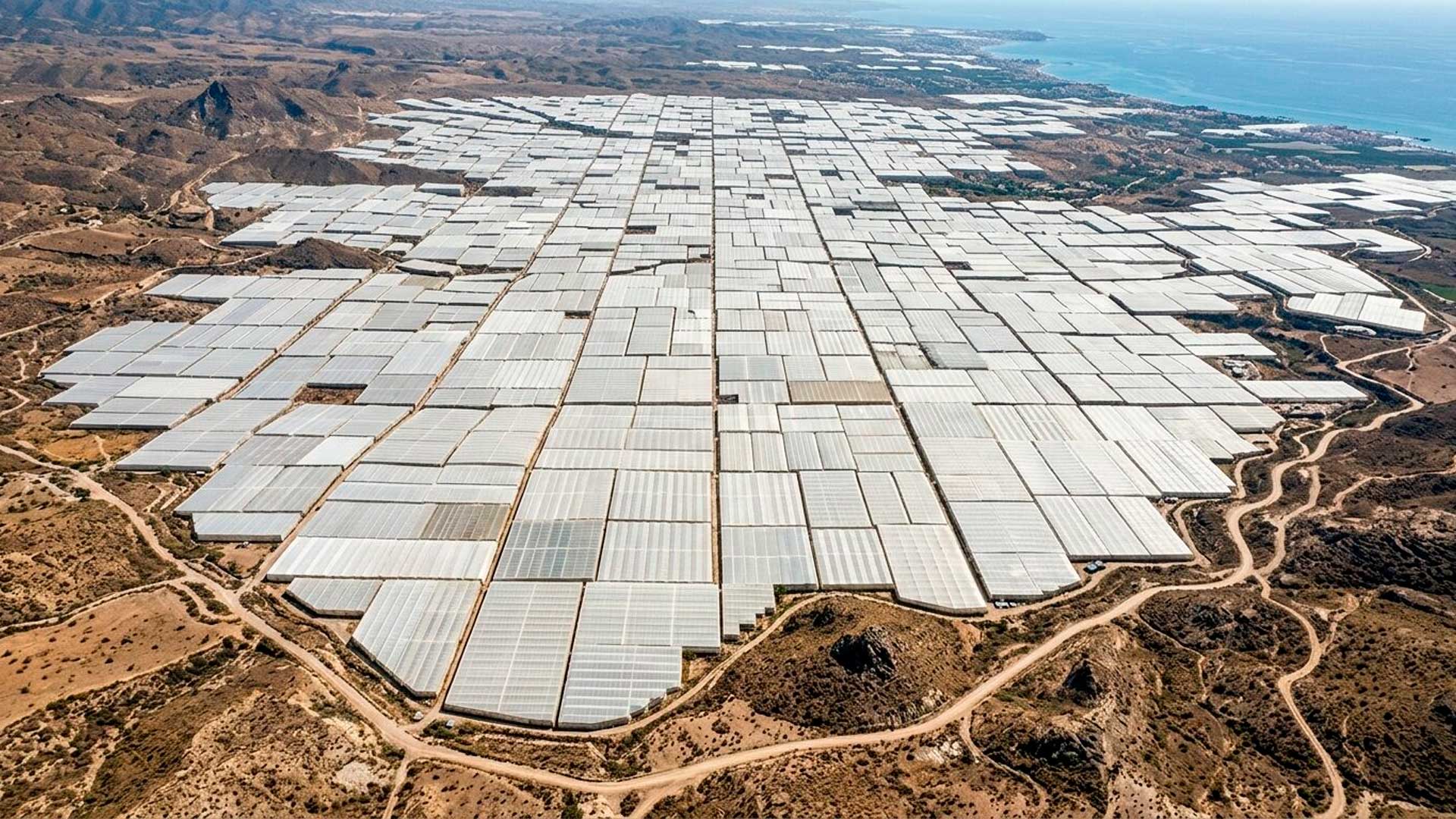
Neither the Pyramids nor the Great Wall of China, this gigantic construction in Spain is the human mark on planet Earth that intrigues the most when seen in images from space.
-
Surrounded by cliffs, mist, and chilling stories, the ancient Hotel del Salto has been reborn as a museum while still unable to shake off its reputation as a haunted place.

-
This star-shaped fortified construction, hidden near the border of Spain, may be the largest fortress on the planet.


The main span was built with a lighter arch, allowing for a 30% reduction in the total weight of the structure and mitigating the effects of strong winds.
The project began in January 2022 and was completed in a record time of three years, at a cost of US$ 283 million. Guizhou province, which houses the work, is known as “the museum of bridges in the world,” with over 30,000 structures, including three of the tallest ever built. The new bridge reinforces this title by establishing the world record in mountainous areas.
Load Testing And Safety Certification
Prior to its inauguration, the Huajiang Grand Canyon Bridge underwent a rigorous safety verification process. Between August 21 and 25, it was subjected to a five-day load test, considered the final stage before opening to traffic.
According to the Xinhua agency, around 96 heavy trucks, each weighing approximately 35 tons, were positioned at strategic points to assess the integrity of the structure.
More than 400 sensors were installed along the main span, towers, cables, and suspenders to monitor displacements and minimum movements during the test of 3,360 tons.
The BBC reported that the success of this stage confirmed the bridge’s stability, allowing for an official opening to be anticipated by the end of September.
Expected Logistical And Touristic Benefits
The Huajiang Grand Canyon Bridge will drastically reduce travel time between the counties of Guanling and Zhenfeng, which together have about 600,000 inhabitants. The journey, which currently takes two hours, will be completed in just two minutes. It will also shorten the route between the cities of Liuzhi and Anlong on the same road corridor.
In addition to its logistical function, the project incorporates tourism elements. A panoramic elevator of 213 meters will take visitors to an observation tower atop the bridge, and a nearly one-kilometer glass pathway will allow pedestrians to walk across the canyon.
The state broadcaster CCTV highlighted that the work was planned to boost regional tourism, adding a major attraction to the interior of China.
Integration Into China’s Infrastructure Policy
The inauguration of the Huajiang Grand Canyon Bridge fits into a broader context of expanding China’s infrastructure. According to researcher Dan Wang from the Hoover Institution, “the Communist Party believes in erecting massive projects to boost the economy and strengthen political prestige.”
The official newspaper People’s Daily classified the work as a new “Chinese miracle,” symbolizing the “speed and wisdom of Guizhou” and a new phase in the development of the sector.
Professor Li Mingshui from Jiaotong University in Chengdu stated that regions in the west of the country still have low road connectivity and that the goal is to “fill these gaps and strengthen weak points.”
According to him, “these are not bridges to nowhere,” arguing that the long-term economic benefits outweigh the immediate costs.
Technical Pride And Construction Challenges
The chief engineer of the project, Liu Hao, stated that “countless engineers like me have been fortunate to live in the golden age of transportation infrastructure in China.” At 42 years old, he has already supervised six other mega bridges in Guizhou and expressed his intention to show the new work to his daughter as a milestone in his career. Among the main technical challenges, Liu cited the steep slopes of the canyon and the strong winds in the area.
Wu Zhaoming, project manager at Guizhou Transportation Investment Group Co., reported that the team faced challenges such as temperature control during large concrete pours and the protection of unstable slopes.
According to him, the solutions implemented ensured the project’s safe execution even under adverse conditions.
Continuity Of The Mega Project Strategy
The Huajiang Grand Canyon Bridge follows other iconic infrastructure works in China. The country already held the world height record with the Beipanjiang Bridge, inaugurated in 2016 at 565 meters, and also has the longest bridge over open water, the Hangzhou Bay Bridge, at 35 kilometers long.
Despite recent accidents—such as the collapse of a bridge under construction in Qinghai that resulted in the deaths of 12 workers—the pace of construction remains high.
A 2023 report by McKinsey consultancy indicated that China’s economic growth over the past four decades has been strongly supported by local government-funded infrastructure investments, resulting in high levels of indebtedness.
Even so, President Xi Jinping advocates a “comprehensive offensive” in this sector to sustain post-pandemic recovery, and Premier Li Qiang stated in August that mega projects should serve as “exemplars and engines” for investment and consumption.
Guizhou As A Hub For Strategic Works
Guizhou province occupies a central position in this policy. Despite the mountainous geography and low average income, the region currently has 11 airports, an extensive network of modern roads, and various major bridges.
The Huajiang Grand Canyon Bridge expands this portfolio, reinforcing the province’s role as a showcase of Chinese engineering capability.
For researcher Dan Wang, the decision to prioritize monumental works reflects a preference of the central government: “Instead of directly distributing resources to the population, leaders in Beijing prefer to channel them into constructing monumental projects.”
The inauguration scheduled for this month summarizes this approach, symbolizing both the technical ambition and the political dimension of China’s infrastructure.






-

-

-

-

-

31 pessoas reagiram a isso.