





 Portuguese
  English
  Spanish
  5 min of reading
  0 comments


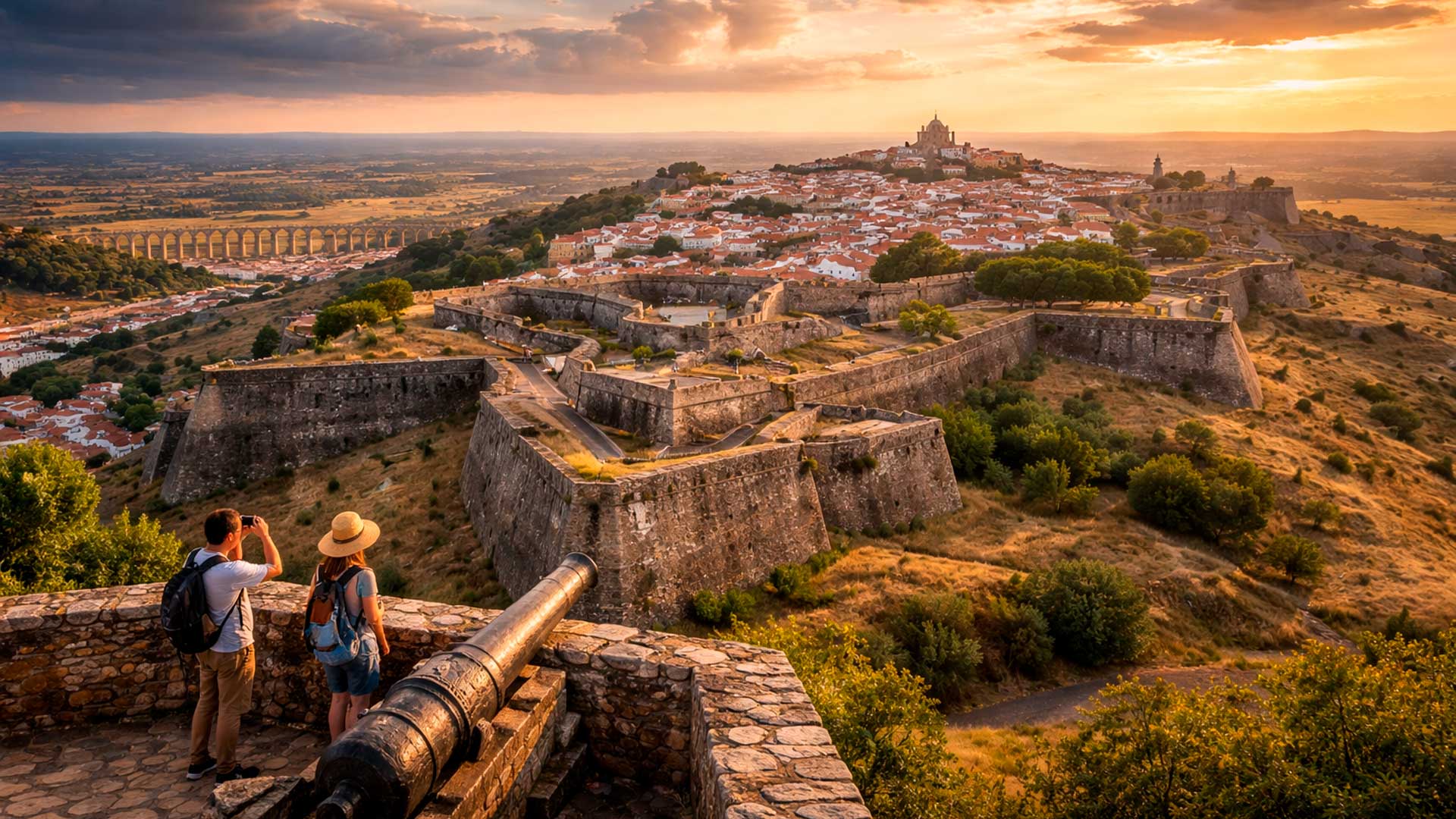
Recognized by UNESCO since 2012, Elvas preserves a monumental defensive system in Alentejo and brings together forts, walls, a historical center, and an aqueduct that helped sustain the city during long sieges.
Elvas, in the Portuguese Alentejo, is one of those places where geography helped write history. Close to the Spanish border, the city grew as a strategic defense point and was shaped by successive military needs, something that can still be perceived today in the urban layout and the scale of its fortifications.
This past transformed the municipality into a rare case of almost didactic preservation of European war architecture. The international recognition came in 2012, when the ensemble of Elvas and its fortifications became part of the World Heritage list, consolidating the city as a reference for those studying defense, historical urbanism, and territorial formation in Portugal.
More than a beautiful destination, Elvas draws attention because its structure still allows understanding how a fortified square functioned in practice. The walls, external forts, military buildings, and the internal urban fabric show how civilian life had to adapt for centuries to a permanent logic of vigilance and resistance.
-
A new 30-meter-high bridge will cross one of Brazil’s largest rivers and create the largest permanent road connection in the Lower São Francisco; the R$ 207 million Novo PAC project has already reached 50% completion and is scheduled for delivery in December 2026, ending decades of reliance on ferries and boats.

-
The 13.3 km Sunkoshi Marin Tunnel broke through the Himalayas 11 months ahead of schedule with a 6.4-meter TBM, paving the way to irrigate 122,000 hectares in Nepal, generate 31 MW, and transform a dry region into a new agricultural frontier.
-
China excavated 664 km through the mountains of Yunnan, placed 612 km of tunnels in the country’s largest water diversion project under construction, and opened a new route to bring water from the Jinsha River to cities, industries, and agricultural areas choked by drought.

-
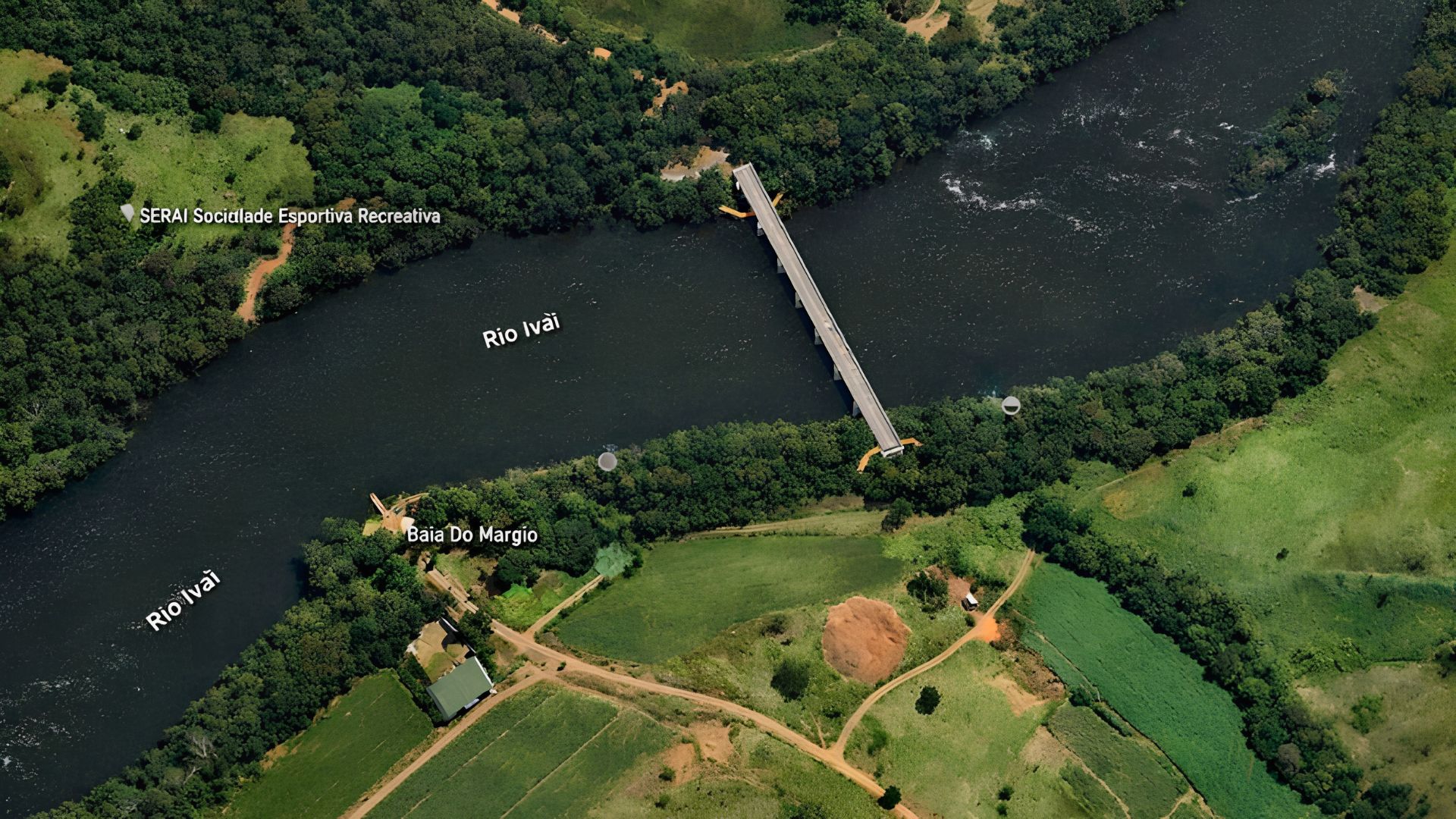
A 242-meter and R$ 27.8 million bridge, promised since 1992, could eliminate a 55 km detour, reduce a 1h20 trip to just 25 minutes, and change the routine of thousands of residents in the interior of Paraná.

Today, this ensemble helps explain why Elvas often appears in historical tourism and military heritage itineraries. What was once an instrument of defense for Portuguese sovereignty has also become a visible memory of the border, preserved on a large scale and with a relatively accessible reading for the common visitor.
How Elvas Became a Decisive Fortress on the Portuguese Border

The importance of Elvas was consolidated especially when Portugal regained its independence in 1640. From that moment on, the city began to receive extensive and systematic fortifications, designed to meet the new demands of modern warfare between the 17th and 19th centuries.
The geographical position was decisive. Elvas guarded a sensitive passage between Portuguese and Spanish territories, which made the city an essential point for military control, supply, and observation of the surroundings.
It was this condition that gave rise to the image of a garrison city. Instead of growing only as a commercial or religious hub, Elvas began to be organized also as a defensive piece, with works planned to withstand attacks, prolonged sieges, and changes in combat tactics.
Star-shaped Walls and Forts Make Elvas a Rare Case of Military Engineering
The most impressive fact is the scale of the ensemble. Official tourism in Portugal presents Elvas as the largest star fortification in the world, with about 10 kilometers of perimeter and an approximate area of 300 hectares, integrating a castle, walls, two main forts, small outposts, and the Amoreira Aqueduct.
On a technical level, the city brings together elements that help understand the evolution of European military architecture. UNESCO itself describes Elvas as the largest bastioned system with a dry moat in the world, while documents related to the site’s candidacy highlight that the fortifications designed by the Dutch Jesuit Cosmander are considered the best-preserved example of the Dutch school of fortification.

Among the most emblematic structures is the Fort of Santa Luzia, built in 1641 on a hill just a few hundred meters from the 17th-century walls. The Fort of Graça, located in an elevated position to the north of the city, is pointed out by the municipality and Portuguese heritage bodies as a remarkable work of 18th-century military architecture and one of the most powerful bastioned fortresses in the world.
This defensive network was not built to impress tourists, but to dominate the landscape and hinder enemy advancement. Precisely for this reason, Elvas preserves a rare historical value, as it allows observation of how relief, long-range vision, and engineering were combined to transform the entire city into a mechanism of territorial protection.
The Aqueduct, Churches, and Historical Center Show That Elvas Goes Beyond War
Although the military heritage is the most well-known face of the city, Elvas is not limited to cannons and bastions. Within the walls, the historical center brings together churches, convents, fountains, palaces, and historic houses, forming an urban route where different architectural styles coexist from Romanesque to Baroque.
One of the great symbols of this civil heritage is the Amoreira Aqueduct. The construction began based on the design of Francisco de Arruda and was completed in 1622, making it possible to reinforce the city’s supply, a decisive point for resistance during siege periods.
The official Portuguese tourism portal informs that the aqueduct is about 7 kilometers long and has 843 arches, numbers that help explain why the work has become one of the most striking images of Elvas. It is not just a scenic monument, but a vital infrastructure to sustain a fortified city subject to long periods of military tension.
This intersection of defense, supply, and daily life gives the city an unusual historical density. In Elvas, the urban landscape shows that the survival of a border depended not only on walls but also on water, internal circulation, religious buildings, and constant adaptation of the inhabited space.
Historical Tourism Reinforces Elvas’s Value on the European Cultural Map
The preservation of the ensemble makes Elvas a particularly strong destination for those seeking heritage, architecture, and military history tourism. Visitors find there not only isolated monuments but an entire system still legible, capable of showing how Portugal defended one of its most sensitive borders over the centuries.
This is one of the reasons why the city gains relevance beyond the regional circuit of Alentejo. Instead of offering just a beautiful old center, Elvas delivers a complete narrative about war, sovereignty, engineering, religion, and urbanism, all concentrated in a relatively compact space with a strong visual impact.
In practice, Elvas today functions as an open-air classroom on the formation of the Iberian borders. And as international interest in authentic destinations rich in heritage grows, so does the attention on a city that has managed to transform its military past into a cultural asset of great significance.





Be the first to react!