





 Portuguese
  English
  Spanish
  5 min of reading
  0 comments


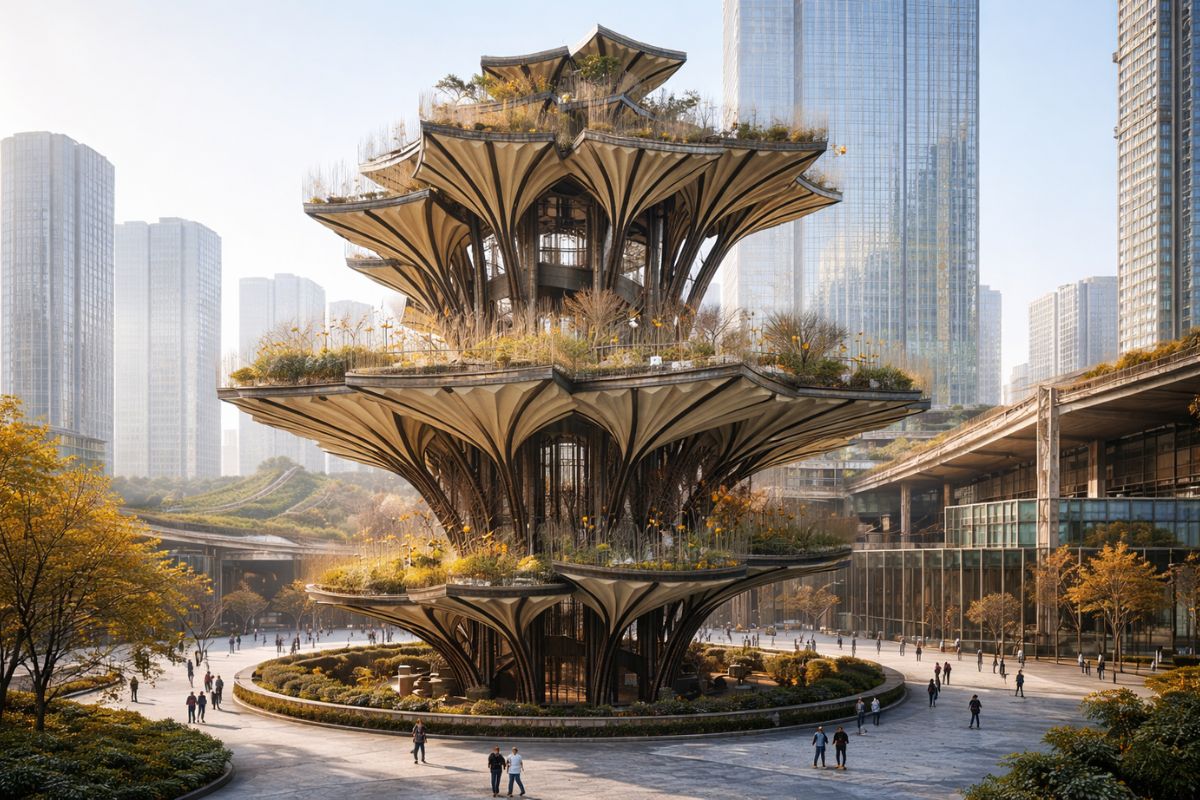
China Reveals In Xi’an A Monumental 57-Meter Steel Tree Structure Inspired By The Historic Ginkgos Of The Silk Road, An Architectural Project Created To Represent Centuries Of Trade, Cultural Exchange, And Connection Between Peoples Of Europe And Asia.
The China has constructed a gigantic 57-meter tall steel tree in Xi’an inspired by the ancient ginkgo trees associated with the Silk Road, creating an architectural landmark that blends modern engineering, historical memory, and cultural symbolism.
The structure was designed to visually represent the legacy of the ancient trade route that connected the East to the West for centuries. More than an urban sculpture, the project seeks to translate into architecture the idea of connection between peoples, cultures, and landscapes.
A New Urban Landmark Created By China In A Historical City
Xi’an holds a special place in China’s history. For centuries, the city was one of the capitals of the country and also the starting point of the ancient Silk Road, a network of trade routes that connected Asia to Europe.
-
Only 46 meters remain for Brazil and Paraguay to connect via the Bioceanic Route bridge, the project that will link the Atlantic to the Pacific by land and change the logistical map of four countries in South America.

-
The bridge that holds the largest stone railway arch in the world: built over 100 years ago, destroyed in the war, and rebuilt to continue operating to this day, it still carries trains over the Soča River in Slovenia.

-
Italian giant of 130 tons arrives at the Senna Tower construction site and accelerates foundations: Mite CFA 3436 drills up to 50 m, 750 hp engine, investment of R$ 20 million, unique in Latin America.
-
The adobe house in Monteiro Lobato takes shape with bamboo and clay from the land, a stone foundation, and a roof for the wind; cracks are normal, and finishing with lime turns it into a “common house.”

It was precisely in this historically rich setting that the proposal emerged to create a new urban landmark capable of engaging with the past without losing sight of the future.
The solution found was a gigantic metal tree inspired by ginkgos, species considered symbols of resilience and longevity in Chinese culture. The choice of shape was not merely aesthetic but deeply symbolic, as these trees have endured centuries witnessing the evolution of cities and trade routes.
The structure, standing 57 meters tall, was designed to become a striking presence in the urban landscape. The goal was to create something that was simultaneously a sculpture, architecture, and a historical narrative, connecting visitors to the memory of the ancient Silk Road.
The Inspiration From Ginkgo Trees And The Ancient Silk Road
The idea for the tree stemmed from the symbolic importance of ginkgos in China’s history. There are accounts of such trees that were supposedly planted over a thousand years ago during the height of the Silk Road.
These trees ultimately became silent witnesses to a period marked by intense cultural, commercial, and technological exchange between civilizations.
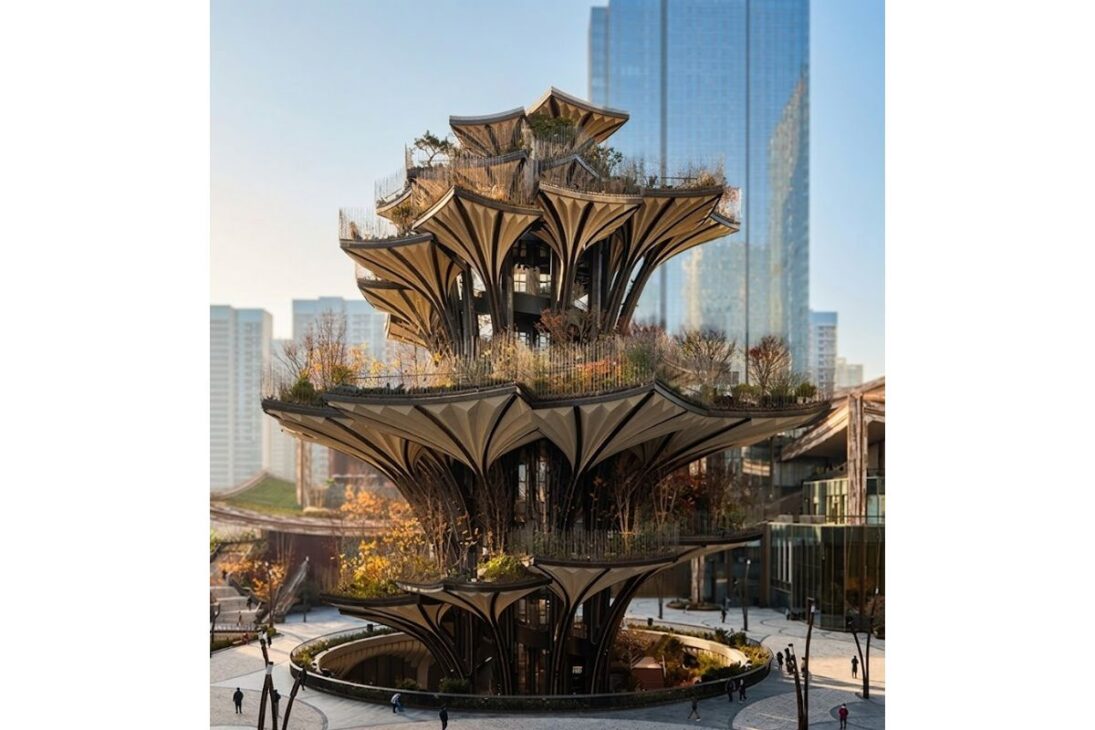
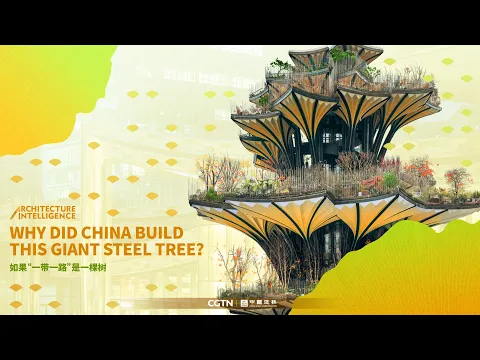
The steel tree in Xi’an was envisioned as a contemporary version of this living memory. Instead of natural roots and branches, the structure utilizes interwoven metal beams that form a kind of monumental canopy suspended in the air.
The architectural proposal seeks to condense different landscapes associated with the ancient trade route. Elements that evoke deserts, plains, and mountains are symbolically represented on the platform built around the structure.
Thus, the work functions as a visual metaphor of the Silk Road itself, where different territories and cultures met on the same path.
Complex Engineering To Transform Steel Into Organic Shape
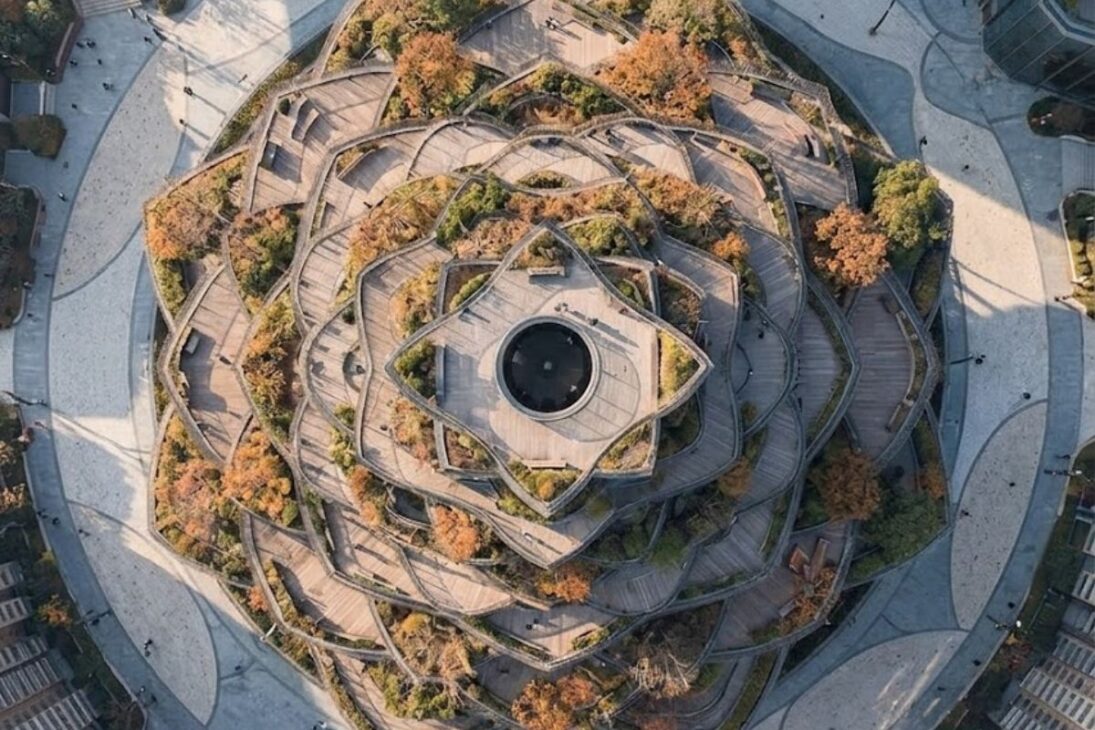
Transforming the idea of a tree into a gigantic metal structure was one of the greatest challenges of the project in China. Unlike natural materials, steel does not easily adapt to complex organic shapes.
To replicate the appearance of branches expanding in space, engineers had to carefully calculate every structural element.
Nearly a thousand metal beams were designed to interweave in the construction of the tree. Each piece underwent detailed structural calculations to ensure stability and precision, avoiding deformations that could compromise the entire work.
During the engineering process, specialists also had to address structural variations that could reach tens of centimeters. These deformations needed to be controlled with extreme precision to maintain the final design of the tree.
The result was a structure that appears organic at first glance, even though it is formed by a complex system of metal beams.
Architecture As A Symbol Of Cultural Connection

In addition to engineering and visual impact, the project seeks to convey an important cultural message. The steel tree represents the continuity of connections between peoples that began with the ancient Silk Road.
For centuries, this network of trade routes allowed the flow of goods, ideas, religions, and technologies between different regions of the world.
By constructing this monument in Xi’an, China aimed to reinforce the historical role of the city as a meeting point between civilizations.
The work also resonates with contemporary initiatives that seek to recreate new routes of economic and cultural cooperation among countries in Asia, Europe, and other regions.
Thus, the tree functions not only as an urban sculpture. It symbolizes the idea that the connection between cultures continues to evolve over time, even with different technologies and contexts.
A Monument That Blends Historical Memory And Contemporary Architecture
Monumental architectural projects usually have a purpose beyond aesthetics. In the case of the steel tree in Xi’an, the objective was to create a structure capable of transforming history into a visual experience.
When visiting the site, the public finds a platform where different plants and symbolic landscapes coexist. Species that would normally grow in separate environments appear together, representing the cultural diversity that marked the ancient trade route.
This concept reinforces the idea that architecture can be used to tell complex stories visually.
The metal tree thus becomes a kind of narrative constructed on an urban scale.
The gigantic steel tree built by China in Xi’an shows how architecture, history, and engineering can come together to create a striking urban symbol.
Inspired by ginkgo trees associated with the Silk Road, the structure transforms historical memory into a contemporary monument that represents centuries of trade, cultural exchange, and connection between continents.
More than an architectural landmark, the work visually translates the idea that the routes that connect people never completely disappear; they simply transform over time.
And you, what do you think of this type of symbolic architecture that blends history, engineering, and culture?
Do you believe that monuments like this help preserve the memory of great historical routes, or do you see them merely as modern works? Share your opinion in the comments.










Seja o primeiro a reagir!