






 Portuguese
  Spanish
  3 min of reading
  0 comments


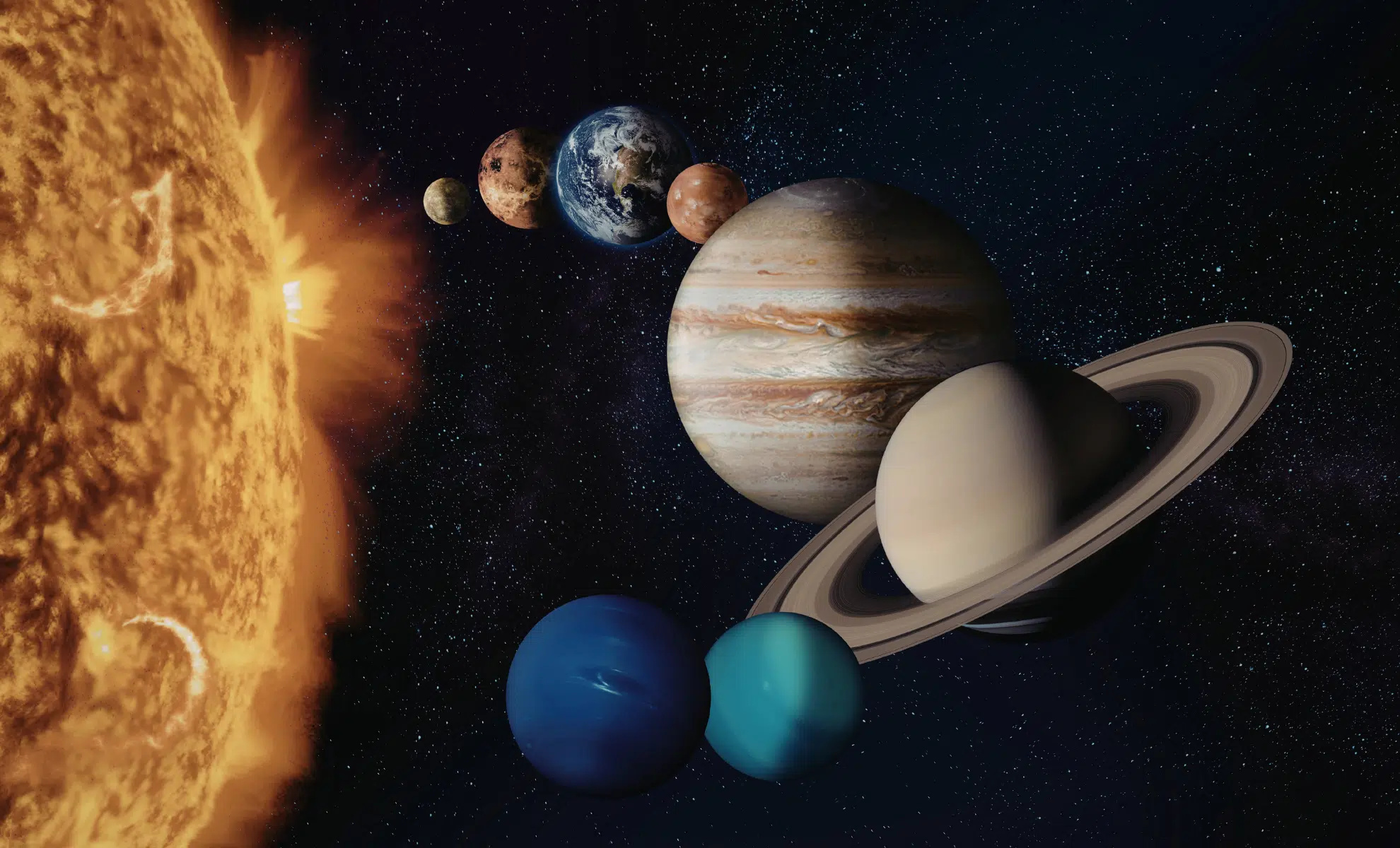
New study published in the journal Monthly Notices of the Royal Astronomical Society identifies the best exoplanets for the search for extraterrestrial life based on energy criteria and strategic orbital location.
A new scientific study has narrowed down the list of thousands of known worlds to a select group of priority targets in the search for biological beings beyond Earth. The research, published in the journal Monthly Notices of the Royal Astronomical Society, focuses on specific characteristics that make a planet habitable.
By filtering data on location and energy, experts have established a roadmap for future space exploration. The central goal is to optimize technological resources, directing scientific attention to where extraterrestrial life has real chances of existing.
Habitability criteria and the planetary energy balance
The team of researchers examined various fundamental factors, such as the location of the planet within the so-called habitable zone and its orbital eccentricity. Planets located at the inner and outer edges of this zone are considered prime targets, as they present conditions for the existence of liquid water. Gillis Lowry, co-author of the article and a student at San Francisco State University, emphasized that identifying where to look is the first crucial step for modern astronomy.
-
In the USA, thousands of people are being paid to wash dishes and clean the house with body cameras, every movement turning into data to train robots to imitate humans, in a new “digital gig” that could redefine the future of domestic work.

-
At 22 years old, a young person from Recife creates an artificial intelligence startup with a team barely over 25, serves giants like Bayer and Ipiranga, earns millions without taking a cent from investors, and transforms a young company into a national AI phenomenon.
-
The invisible danger inside the house: plugging too many devices into the same outlet and spreading extensions throughout the rooms can overload the electrical network, silently heat wires, and turn a common habit into one of the leading causes of house fires.

-
Goodbye traditional laundry: Roborock launches washer and dryer with super hydrolysis, microbubbles, 99.99% sterilization, low-temperature drying, automatic detergent, app control, and cycles to remove stains, odors, mites, and bacteria from clothes.





The study also analyzed how the energy levels received from their stars influence the maintenance of life over time. Excess or lack of energy can make a world uninhabitable, and understanding this balance helps predict which planets remain viable. Through this analysis, scientists seek to understand not only where extraterrestrial life may be now but also when the habitability of a system is lost or never even reached.
The technological role of the James Webb Space Telescope
The detailed observation of these worlds directly depends on advanced technologies, particularly the James Webb Space Telescope (JWST). This equipment has the capability to detect atmospheres in exoplanets and analyze their chemical compositions meticulously. According to Professor Kaltenegger, the use of these telescopes allows for the study of the most observable targets, revealing signals that could support forms of extraterrestrial life.
The research draws a parallel with the versatility of life presented in science fiction, suggesting that it may be more diverse than we imagine. By concentrating the observational power of the JWST on just a few of the more than 6,000 known exoplanets, the chances of innovative discoveries increase significantly. This strategy avoids the dispersion of efforts on worlds with low probabilities of biological success.
Planning for future missions and intergalactic exploration
The discoveries serve as a strategic guide that could inform future long-distance space missions. Should humanity develop ships capable of undertaking interstellar journeys, this study will have already mapped the most promising destinations in the universe. Professor Kaltenegger emphasizes that the article reveals where science should travel if the goal is to efficiently find extraterrestrial life.
In addition to pointing out paths, the research highlights that the search for other worlds requires an expansion of the limits of scientific imagination. The focus on eccentric planets and irregular orbits demonstrates that the conditions for life may be broader than the terrestrial model. Thus, mapping these critical targets represents a definitive advance in the organization of cosmic exploration.
With information from: Daily Galaxy







Be the first to react!