





 Portuguese
  English
  Spanish
  5 min of reading
  3 comments


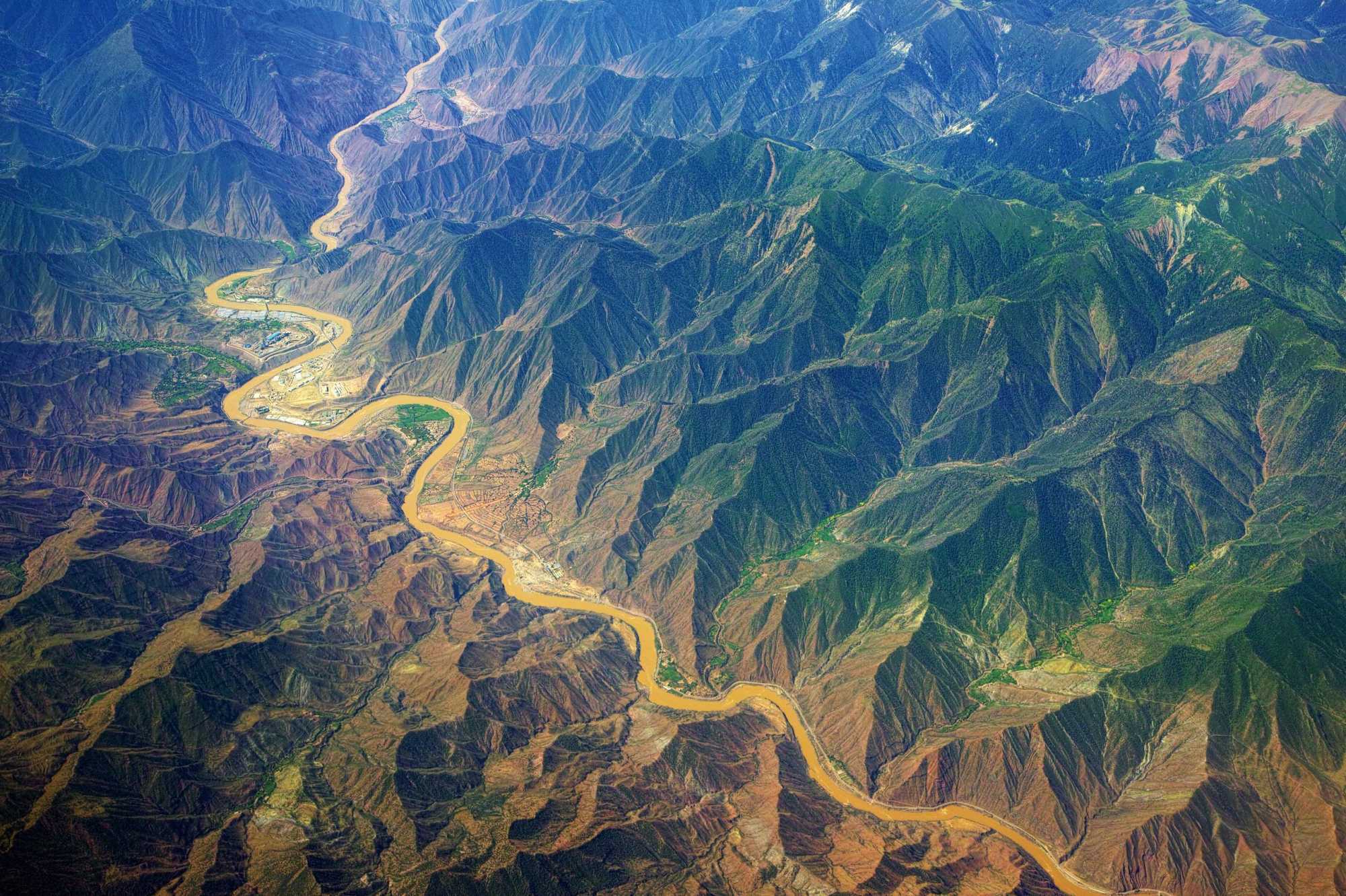


China Built 11 Dams on the Lancang River, With Walls Up to 292 M and Over 21 GW, Transforming the Upper Mekong Into a Controlled Hydroelectric System.
According to official data from the Chinese electric sector, technical reports from state energy operators, and international hydrological studies on the Mekong River, China has promoted, over the last few decades, one of the most profound interventions ever made in a major international river. In the stretch of the Mekong known as Lancang, still within Chinese territory, a planned cascade of 11 large hydroelectric dams was implemented, concentrated mainly in the mountainous province of Yunnan, transforming a river with a highly seasonal flow into a system rigidly controlled by concrete, tunnels, and turbines.
Unlike isolated projects, the Lancang cascade was conceived as a single system, in which each dam directly influences the operation of the next. The result is not just energy generation, but the artificial regulation of the flow of a river that crosses six countries and sustains tens of millions of people downstream.
The Lancang River: A Mountainous Mekong Before Crossing Borders


The Mekong begins in the Tibetan Plateau and flows about 4,350 km until it drains into the South China Sea. Within China, in the section called Lancang, the river traverses deep valleys, steep gradients, and narrow canyons in Yunnan, with natural altitude drops ideal for large-scale hydroelectric generation.
-
Architects are burying plastic pipes 2 meters deep and using ducts up to 30 meters long to cool homes without electricity, with low-consumption fans and natural heat exchange that drastically cuts the electricity bill.

-
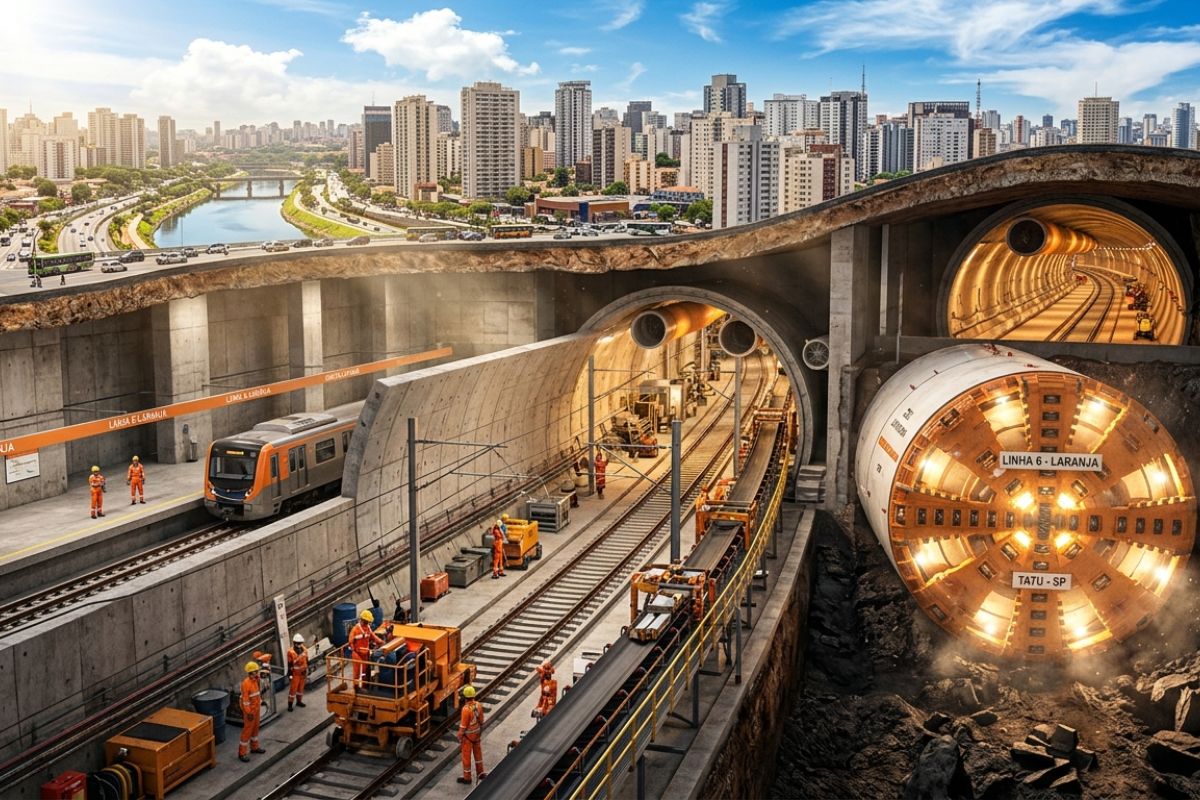
Under São Paulo, Line 6-Orange reaches 15.3 km and 15 stations, promising 23 minutes from Brasilândia to the Center and 633,000 passengers per day; with autonomous trains, it will open a partial section in October 2026.
-
Created by George Lucas with over $1 billion, a futuristic museum in the shape of a spaceship with 1,500 curved panels is about to open in Los Angeles and will house one of the largest private collections of narrative art in the world.

-
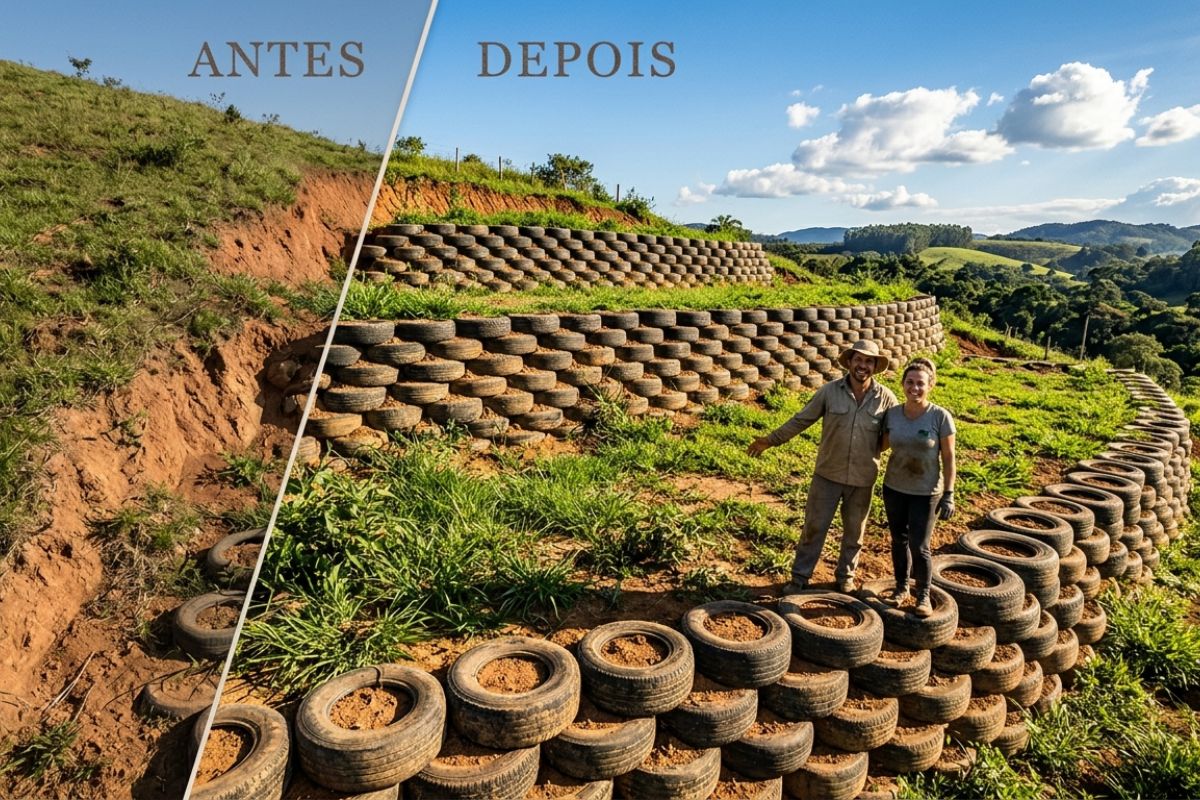
Couple shows how they built a retaining wall on their property using 400 old tires: sloped land turned into plateaus, tires are aligned, filled, and compacted with layers of soil, with grass helping in support and at almost zero cost.

Before the dams, this section exhibited:
- extremely irregular flows,
- violent floods during the monsoons,
- strong sediment transport,
- difficult navigability.
These characteristics made the Lancang a priority target for hydrological regulation and cascade energy utilization projects.
The Cascade of 11 Large Dams in Sequence
China implemented along the Lancang a sequence of 11 large dams, positioned in a staggered manner to maximize the utilization of the river’s potential energy. Among them are Manwan, Dachaoshan, Jinghong, Xiaowan, Nuozhadu, among others.
Although not all have the same size, they all meet international criteria for large dams, whether by height, reservoir volume, or installed capacity.
Together, they turn hundreds of kilometers of the river into an artificial hydraulic ladder, where the water released by one plant immediately feeds the next.
Xiaowan: One of the Tallest Dams on the Planet
The most impressive point of the cascade is the Xiaowan Dam, a concrete arch structure about 292 meters high, placing it among the tallest dams ever built in the world.

In addition to its extreme height, Xiaowan has:
- an installed capacity of approximately 4,200 MW,
- a reservoir capable of storing enough volumes to seasonally regulate the flow of the Lancang,
- a central role in buffering floods and supporting downstream plants.
From an engineering perspective, its construction required deep foundations in rock, strict control of arch stresses, and operation in an extremely narrow valley.
Nuozhadu: Power and Volume on a Continental Scale
Another colossus of the cascade is Nuozhadu, a rock-fill dam with a concrete face, about 261 meters high and an installed capacity of nearly 5,850 MW, making it the largest power plant on the Lancang.
Its reservoir contains tens of billions of cubic meters of water, playing a strategic role in interannual regulation of the river, something that few dams in the world can achieve at this magnitude. In practice, Nuozhadu acts as a “hydraulic lung” for the system.
Over 21,000 MW Concentrated in One River
Together, the 11 dams of the Lancang deliver over 21,000 MW of installed capacity, a volume comparable to that of large national hydroelectric systems.
This energy supplies Yunnan, neighboring provinces, and integrates into the electric system of southwestern China, reducing dependence on coal-fired power plants in mountainous regions.
This concentration of power in a single river is rare and was made possible due to the combination of:
- high natural elevation,
- proximity between dams,
- long-term centralized planning.
Engineering in Deep Valleys and Seismic Areas
The stretch of the Lancang in Yunnan presents extreme challenges:
- narrow and deep valleys,
- hard rock with fractures,
- high seismicity,
- limited logistical access.
Each dam required long diversion tunnels, slope stabilization, permanent geotechnical monitoring, and works carried out in remote regions, often without prior infrastructure. Construction was not only vertical but subterranean, with kilometers of auxiliary tunnels dug into rock.
The Control of the Flow of an International River
Technically, the cascade allows China to control water release in the upper Mekong, reducing flood peaks and increasing flows during the dry period. From a hydraulic perspective, this enhances the predictability of the river.
However, this control occurs before the Mekong crosses borders, which means that Laos, Thailand, Cambodia, and Vietnam now receive a river whose natural regime is largely defined upstream.
The Mekong is one of the most sediment-rich rivers in Asia, essential for:
- fertilizing agricultural plains,
- sustaining fisheries,
- maintaining delta stability in Vietnam.
The Lancang dams retain a significant portion of this sediment in their reservoirs, altering the river’s natural balance. This effect does not immediately appear in energy generation but manifests over the years in bank erosion, nutrient reduction, and ecological changes downstream.
A River Transformed Into Strategic Infrastructure
Ultimately, the Lancang cascade represents something greater than a set of power plants. It is the transformation of an international river into strategic infrastructure controlled by heavy engineering, where concrete, turbines, and reservoirs replace the natural regime of floods and droughts.
It is an extreme example of how modern engineering can reprogram entire rivers, concentrate energy on a colossal scale, and at the same time, shift hydrological control to those who dominate the upper reaches of the basin.








Só estas hidroelétricas geram + energia q n/Itaipu e q ainda divide a metade g/Paraguai.
O pior é q estamos entregando n/Sistemad ao capital privado, principalmente o internacional s/nenhum controle.
O q estão fazendo é um crime. Os sistemas são aéreos, além de criarem sérios probkemas na qualidade dos serviços, enfeiam as nossas cidades.
O q deveriam fazer era q as concessões fossem para as redes, tanto de energia quanto de telefonia/comunicações; serem subterrãneas, afinal, as empresas mandam os lucros p/seus países e o povo e o Brasil, ficam a ver navio. É o q avontece c/essa tal de ENEL, q é uma estatal italiana e deixa uma das maiores metrópoles do mundo sem energia p/ + de um mês. Isso é inconsebível!!!
…agira veja se a China para “juros” da dívida?… auditoria, anteontem!!…
Eles estão fazendo o q o Brasil deveria continuar a fazer, só q eles não são **** de vender as usinas pra INICIATIVA, será? Privada como o Brasil faz. China dando um show pro mundo inteiro