





 Portuguese
  English
  Spanish
  2 min of reading
  0 comments



Scientists in Beijing created a spy satellite with laser camera technology capable of identifying faces from more than 100 km away. The system, tested in Qinghai Lake, uses synthetic aperture lidar (SAL) to capture high-resolution images, even at night and under adverse weather conditions. This innovation raises global concerns about security and privacy.
China has developed a spy satellite with an advanced camera that can identify faces from more than 100 km above the surface. The technology, created in Beijing, uses an innovative laser system and can be installed on military satellites or the Tiangong Space Station, which orbits Earth at about 450 km altitude.
How Does This Spy Satellite Work?
The camera, which will be placed on the satellite, uses synthetic aperture lidar (SAL), a remote sensing system that emits light pulses and measures the reflected energy. This allows for detailed 2D and 3D images to be created, even at night or in adverse weather conditions.
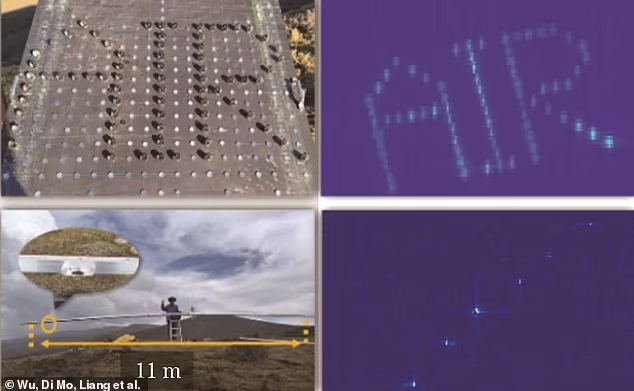
In the first test, conducted at Qinghai Lake in northwest China, scientists managed to capture high-resolution images at a distance of 101.8 km. The system identified minute details, such as objects 1.7 mm in size.
-
With a cost per shot close to zero, the DragonFire laser could change naval warfare in 2027 and provide British ships with nearly unlimited defense against drones.

-
A British startup creates tires that generate electricity in electric vehicles when passing over potholes, speed bumps, and cracks.

-
Scientists have created robots made with living cells that have their own nervous system, swim on their own, explore the environment, and self-organize without any genetic engineering, and now they want to do the same with human cells.

-
Students create a solar-powered ambulance that operates without a plug, without fuel, and still keeps medical equipment running in remote areas.


What Concerns Specialists?
The new technology could be a breakthrough in global espionage. Robert Morton, from the Association of Former Intelligence Officers (AFIO), labeled the discovery as a “huge security concern.”
China already operates around 300 surveillance satellites in low orbits. In December 2023, the country launched Yaogan-41, capable of tracking vehicles across the Indo-Pacific region.
Julia Aymonier, a technology expert, commented on LinkedIn:
“The future of space surveillance has arrived, and it is more powerful than we imagined.”
When Will This Technology Be Launched?
There is still no official date for the launch, but project details were published in the Chinese Journal of Lasers. The Chinese government also faces criticism for using spy balloons, facial recognition cameras, and even a social scoring system that tracks citizens.
If the spy satellite becomes operational, China could elevate surveillance to a new level. The world is watching this advancement and its potential implications for global privacy.








Seja o primeiro a reagir!