





 Portuguese
  English
  Spanish
  4 min of reading
  0 comments


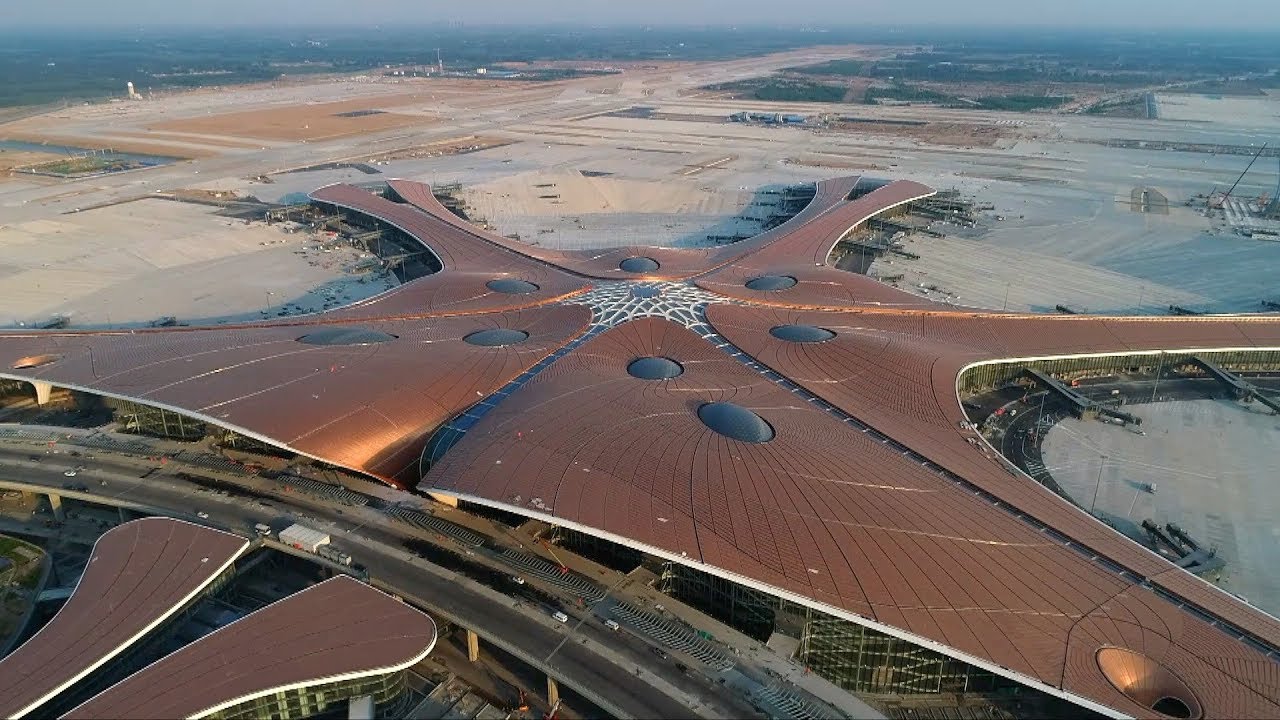
The Beijing-Daxing International Airport Used About 1.6 Million m³ of Concrete in a Continuous Industrial Site, with Foundations and Slabs Executed Simultaneously on an Unprecedented Scale.
According to international technical reports, engineering analyses published by major outlets, and the architectural documentation of the project, the Beijing-Daxing International Airport was conceived from the outset as a mass construction project, where the main challenge was not just to erect a gigantic building, but to control concrete volumes on the scale of a small dam, within a rigid schedule imposed by the Chinese state.
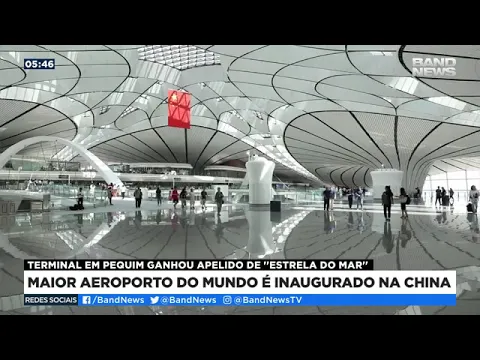
Inaugurated in 2019, the airport was born with a clear strategic objective: to alleviate the saturation of the old capital airport and create a new aviation hub capable of handling tens of millions of passengers per year. To achieve this, an architectural concept of a continuous single terminal was adopted, with a built area close to 1 million square meters, which automatically required a structural solution beyond the conventional standard.
A Construction Site Treated as a Concrete Factory
The most impressive data of the project is the total volume of concrete used, estimated at around 1.6 million cubic meters throughout the construction. In engineering terms, this equates to producing, transporting, pouring, and curing concrete without significant interruptions for several months, something impossible on traditional job sites.
-
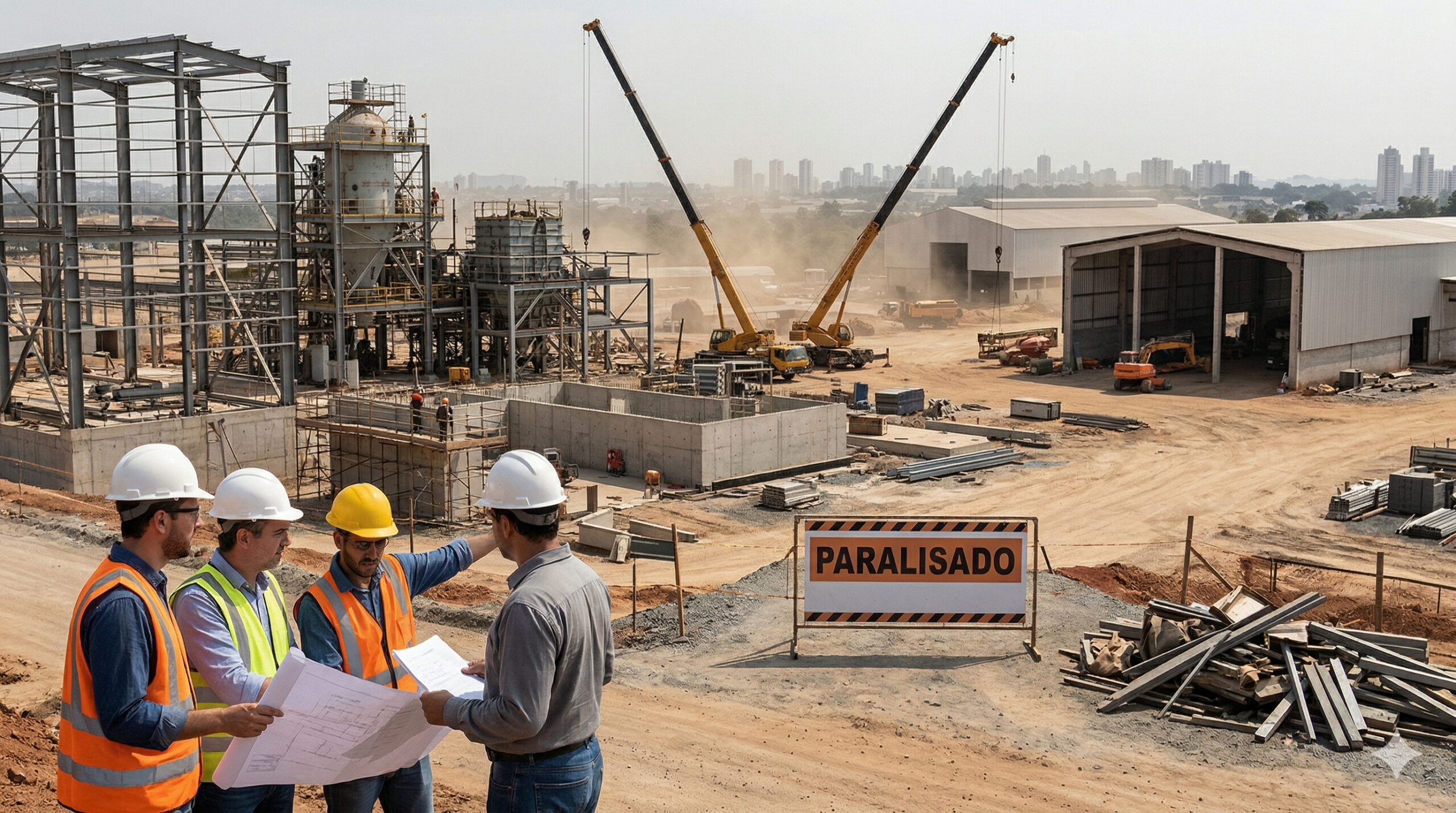
The lack of welders, electricians, and operators becomes a structural threat in 2025, with the construction industry and manufacturing already suffering from delays, cost pressures, and labor shortages in Brazil.
-
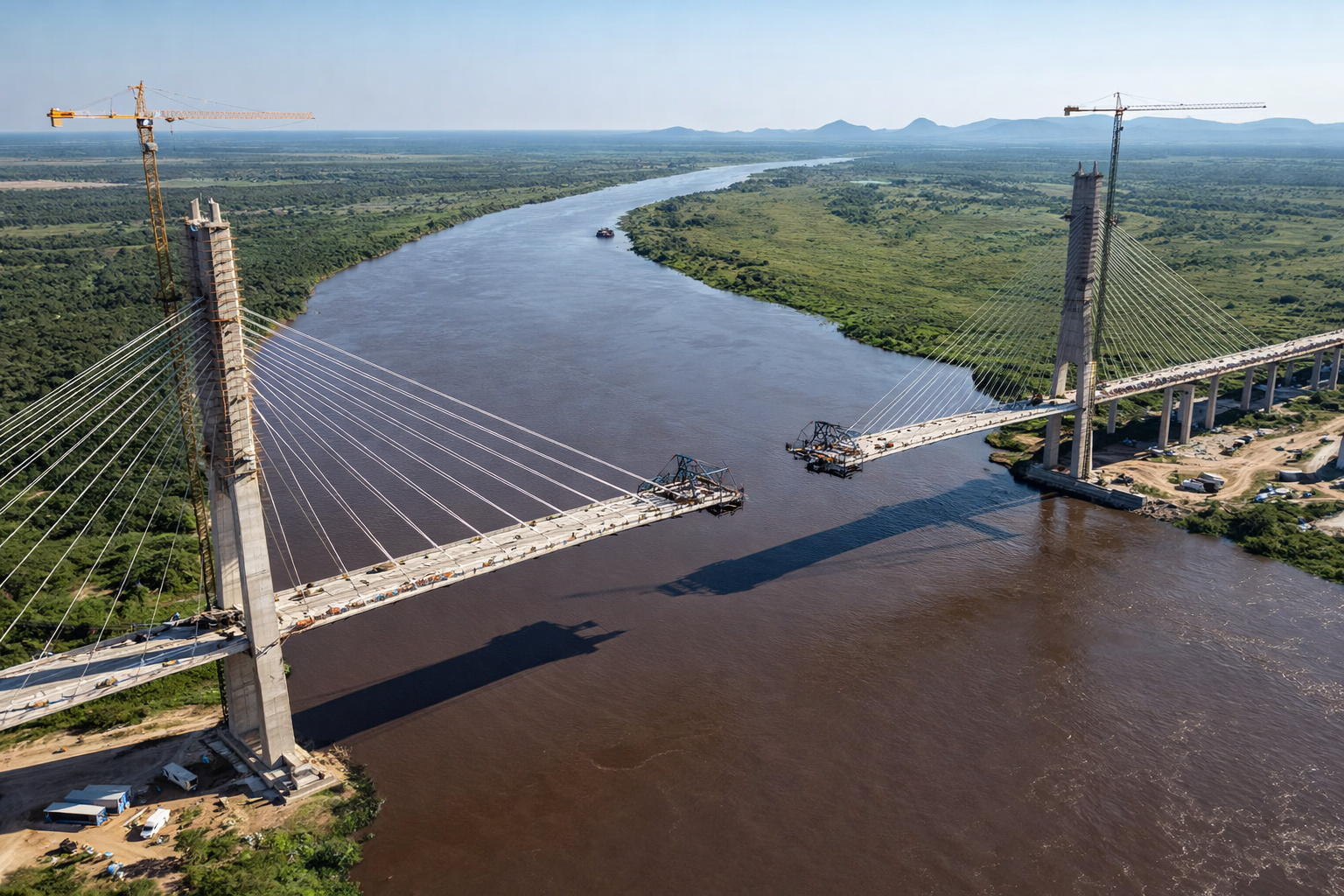
Brazil and Paraguay are just 46 meters away from a historic union on the bioceanic bridge that promises to revolutionize trade between the Atlantic and the Pacific.
-
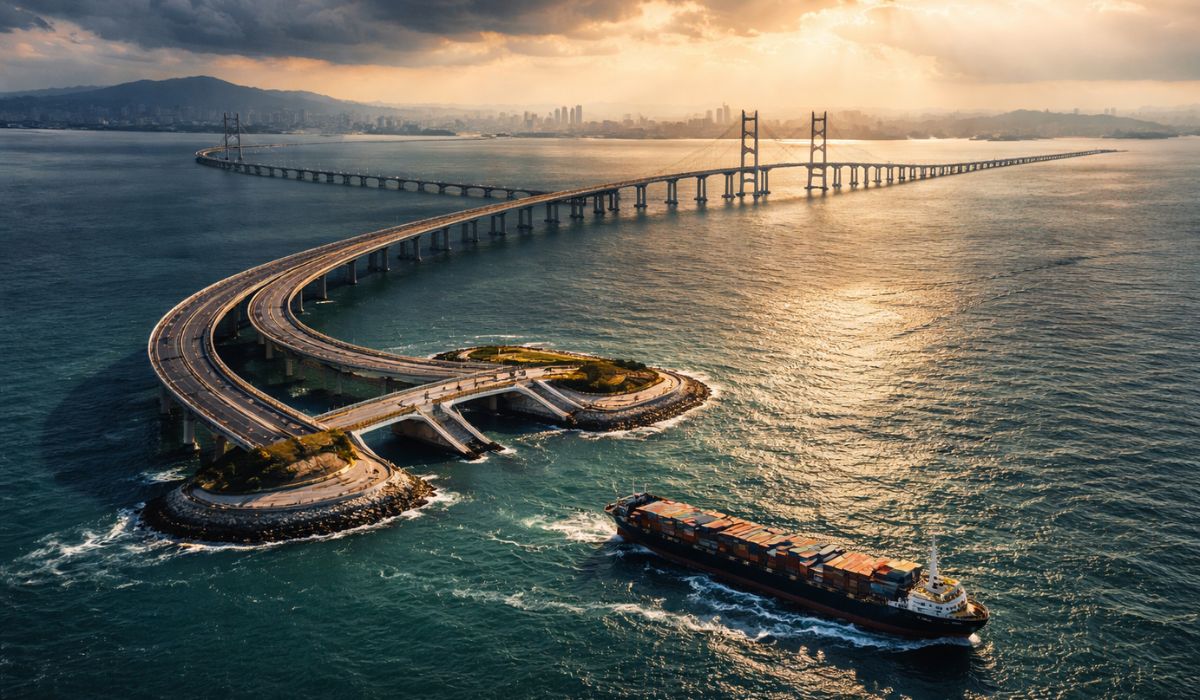
With 55 km over the sea, a cost of US$ 20 billion, and enough steel to build 60 Eiffel Towers, China’s largest project has connected Hong Kong, Zhuhai, and Macau in a colossal bridge that defies the logic of engineering.
-
A trick with joint compound transforms a Styrofoam ceiling into a plaster-like ceiling: leveled panels, wires and mesh at the joints, sand, paint, and change the environment while spending little today.


To handle this volume, the construction site was structured as a temporary industrial plant, with:
- dedicated concrete plants installed on site,
- permanent internal logistics for aggregates, cement, and additives,
- and pouring schedules planned to avoid cold joints in large continuous slabs.
In practice, the airport was “printed” on the ground in successive layers of concrete.
Foundations and Slabs Executed Simultaneously
Unlike the classic sequential method, where foundations are completed before starting superstructures, Daxing adopted a strategy of parallel execution.
Large areas of deep foundations, blocks, and piles advanced simultaneously while floor slabs and structural platforms were already being poured in adjacent sectors.
This approach drastically reduced the total construction time but required:
- strict control of concrete curing,
- continuous monitoring of deformations and settlements,
- and extreme coordination between foundation, structural, and installation teams.
An error in a single section could compromise thousands of square meters already executed.
Concrete Pumped on an Unprecedented Scale
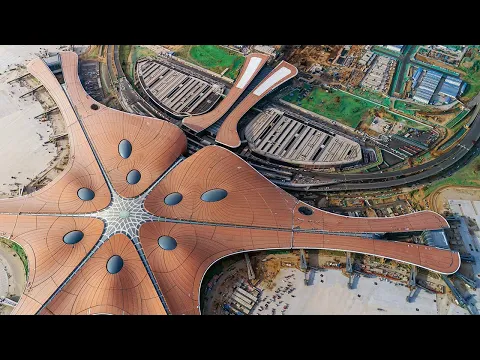
Another critical technical aspect was the pumping of concrete over long horizontal and vertical distances. The radial shape of the terminal required that the material be distributed to structural arms extending hundreds of meters from the central core.
To achieve this, high-capacity pumping systems operated continuously, ensuring:
- sufficient flow to maintain industrial pace,
- homogeneity of concrete throughout the route,
- and rheological stability even in long transport cycles.
This type of operation is common in skyscrapers but rare in horizontal buildings of this extent.
A Single Terminal Supported by a Monolithic Base
The option for a single terminal — instead of several separate buildings — concentrated structural loads in a continuous area. This led to the creation of a monolithic concrete base, where foundations, blocks, and slabs function almost as a single structural body.
From an engineering perspective, this solution improves:
- the distribution of loads,
- the control of differential settlements,
- and long-term structural durability.
On the other hand, it requires concrete volumes far exceeding those of traditional modular airports.
Political Schedule Transformed into Technical Challenge
The Daxing construction was executed under a strict political deadline, with an inauguration date set years in advance. This eliminated margins for weather delays, logistical failures, or project revisions during execution.
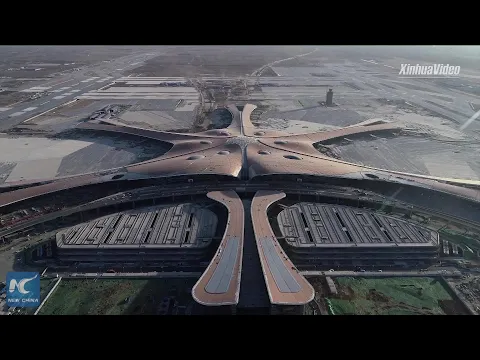
The result was a site that operated 24 hours a day, with continuous shifts, meticulous pouring planning, and real-time technical decisions made to maintain the production flow.
When a Building Becomes Heavy Infrastructure
Although classified as a building, the Beijing-Daxing International Airport behaves, from a construction perspective, like a heavy infrastructure project. The volume of concrete used is not typical of common civil architecture but rather of:
- large plants,
- industrial platforms,
- or medium-sized dams.
This scale explains why the project is frequently cited in studies about the industrialization of construction in China.
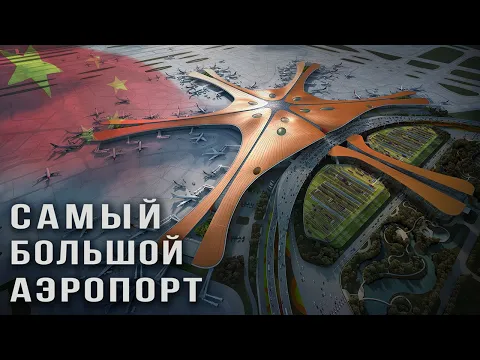
The Daxing has not only become a landmark due to its futuristic design or operational efficiency but has also demonstrated that it is possible to treat gigantic buildings as continuous industrial processes, where concrete, steel, and logistics are managed with the same logic as a production line.
Pouring about 1.6 million m³ of concrete was not a side effect of the project — it was the very construction method chosen to make viable, in just a few years, one of the largest airport terminals ever built on the planet.







-

Uma pessoa reagiu a isso.