





 Portuguese
  English
  Spanish
  5 min of reading
  2 comments


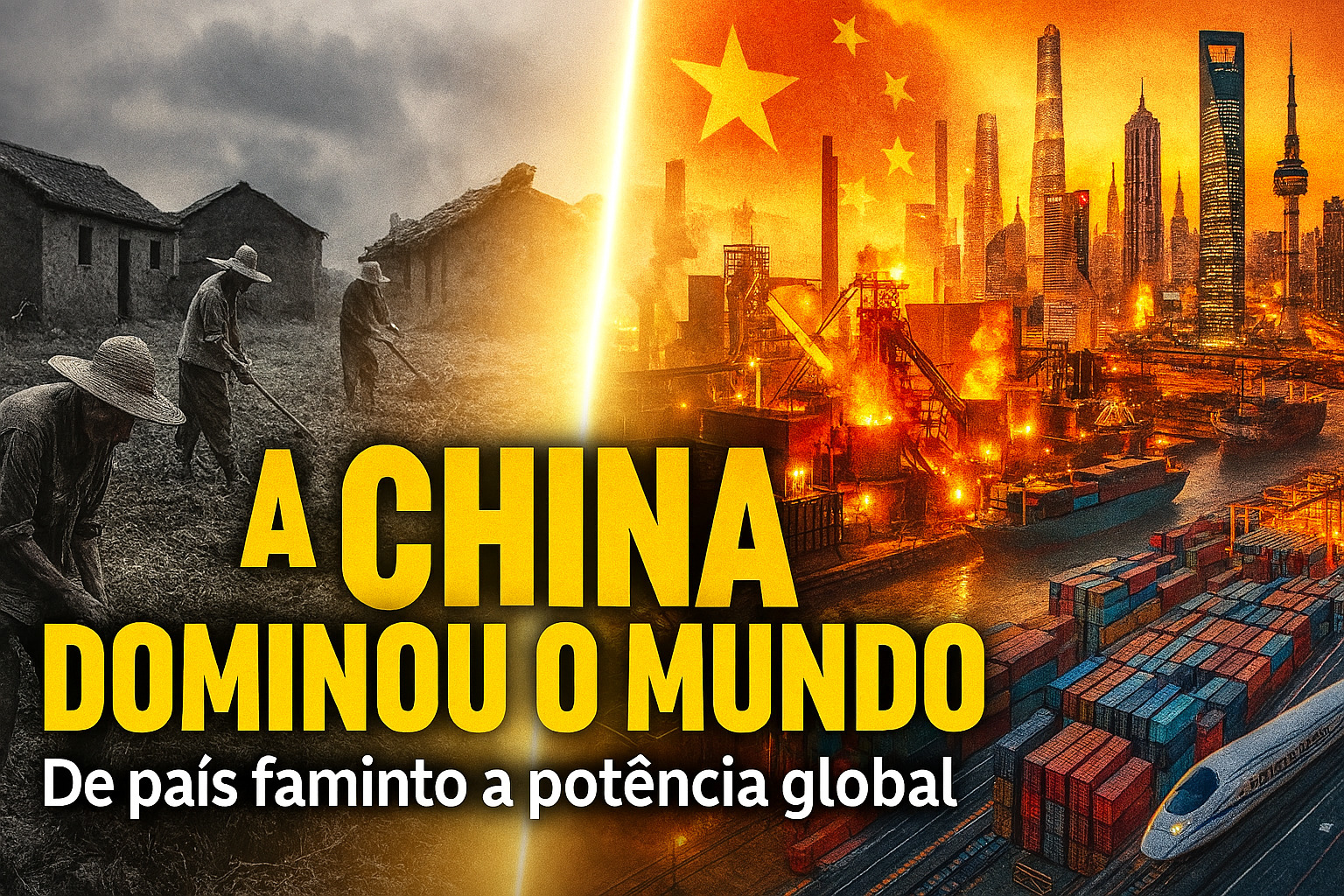


From Hunger to Industrial Leadership: China Transformed Rural Poverty into Global Domination of Steel, Energy, Ports, Batteries, and Exports in Just Five Decades.
For much of the 20th century, China was associated with mass hunger, technological backwardness, an agrarian economy, and international isolation. By the 1970s, over 80% of the population lived in the countryside, per capita income was comparable to that of extremely poor African countries, and industrial production was insufficient to meet even domestic demand. In just a few decades, this same country transformed into the largest industrial power in the history of humanity, dominating global chains of steel, energy, logistics, batteries, solar panels, machinery, chemicals, and virtually all strategic sectors of the modern economy.
Today, China not only participates in global trade: it organizes, supplies, and regulates a large part of it. No other country, at no other historical period, concentrated such a large share of global industrial production.
China From Hunger, Isolation, and Rural Poverty Until the 1970s
Until 1978, China lived under a rigidly centralized economic model. Agricultural production was collectivized, industry was state-owned, foreign trade was minimal, and the country practically did not participate in global chains.
-
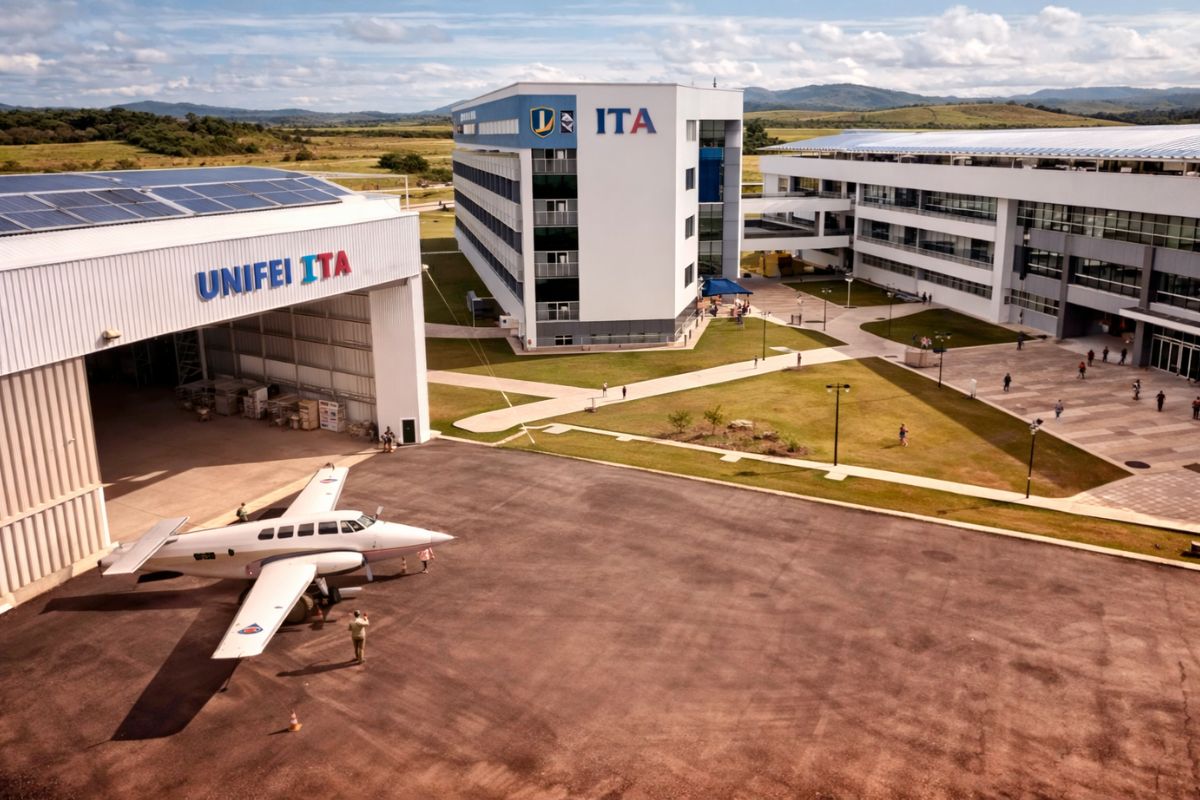
The institute that trained the greatest aerospace engineers in Brazil has just opened its first campus outside São Paulo after 75 years: ITA Ceará will have R$ 445 million, new courses in energy and systems, and classes are expected to start in 2027.
-
Luciano Hang, owner of Havan, goes to Juiz de Fora after the tragedy in February, brings R$ 1 million, hands out R$ 2,000 cards, and donates up to R$ 15,000 to victims in the region.

-
The Brazilian passport allows legal residence in dozens of countries without the need for a prior visa, and most Brazilians are unaware that they can apply for residency directly upon arriving in nations in South America, Africa, and even Europe.
-
Petrobras sends a message to Brazilian truck drivers after fuel collapse and reveals plan to have 100% domestic diesel.

The result was a sequence of productive crises, culminating in one of the greatest food tragedies in history, the famine of the early 1960s, which killed tens of millions of people.


Even after this period, the country remained isolated, with low agricultural productivity, inadequate infrastructure, insufficient energy, low urbanization, and almost no relevant export presence. At that moment, China was a giant in population but tiny in economic power.
The Economic Turn with Reforms and the Opening to Productive Capitalism
The transformation decisively began in 1978, with the reforms led by Deng Xiaoping. The new model maintained centralized political control but opened space for productive capitalism, foreign investment, special economic zones, limited private property, and strong export incentives.
The state began to act as an industrial planner, directing capital, infrastructure, credit, and technical education to sectors deemed strategic. Instead of complete liberalization, China created its own model: state capitalism oriented towards export and heavy industry.
Starting in the 1980s, the country began to attract factories, technology, joint ventures, and productive transfers from Western companies. In return, it offered cheap labor, a vast consumer market, and integrated logistics.
Industrial Explosion and Domination of Entire Sectors of the Global Economy
In less than 40 years, China constructed an unprecedented industrial complex. Today, it accounts for:
– more than 50% of global steel production;
– about 60% of solar panel production;
– more than 70% of global lithium-ion battery production;
– approximately 80% of terrestrial rare earth refining;
– significant leadership in cement, chemicals, consumer electronics, industrial machinery, and electrical equipment production.
In the port sector, China controls the largest ports on the planet in terms of cargo volume, with Shanghai, Ningbo-Zhoushan, and Shenzhen operating volumes greater than entire countries.
In the export sector, China holds the absolute global leadership, accounting for trillions of dollars in industrial products shipped every year.
Steel as the Ultimate Symbol of Chinese Industrial Power
Steel may be the best thermometer of this turnaround. In the 1980s, China produced just over 30 million tons per year. Today, production exceeds 1 billion tons annually, a feat that no other country even comes close to.
This means that more than half of all the steel produced on the planet comes from Chinese mills. This steel supports everything from buildings, bridges, tracks, ships, cars, turbines, power plants, and even the factories that continue to expand the country’s industrial park.
Energy, Coal, Hydropower, and the New Leadership in Renewables
To sustain this industrial machine, China built the largest energy system on the planet. The country is the largest consumer of electricity, the largest producer of coal, the global leader in hydropower plants, and at the same time, the largest investor in solar and wind energy in history.
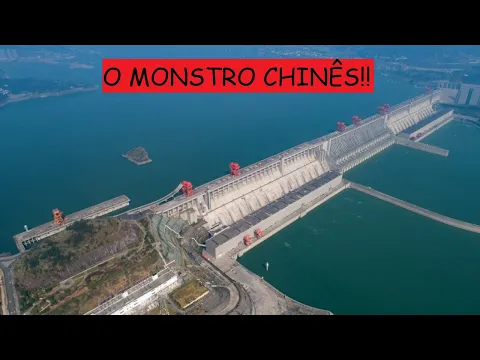
The Three Gorges Dam, alone, produces more electricity than several entire nations. At the same time, the country has also built the largest solar panel factories in the world, dominating the silicon, photovoltaic cells, and modules supply chain.
This combination gives China something rare: simultaneously massive fossil energy and absolute leadership in renewables.
Battery Industry and the Heart of the Global Energy Transition
Chinese dominance over battery production has transformed the country into the backbone of the electric vehicle revolution. China controls most of the processing of lithium, cobalt, nickel, and graphite, in addition to housing the global giants in the sector.
Without Chinese batteries, the Western energy transition simply doesn’t happen. Much of the electric vehicles sold in Europe, the United States, and Latin America rely directly or indirectly on components produced in Chinese territory.
Ports, Logistics, and the Invisible Gear of Global Trade
China does not only dominate factories. It also dominates the routes along which production circulates. Its ports are the busiest in the world. Its shipyards lead in shipbuilding. Its logistics companies operate strategic terminals on various continents.
Internally, the country built the largest high-speed railway network in history, integrating productive regions to export centers in record time.
Externally, the Belt and Road Initiative connects Chinese industry to dozens of countries through railways, ports, highways, and logistical corridors.
The Exit of Hundreds of Millions from Poverty and the New Industrial Middle Class
Between 1980 and 2020, more than 800 million Chinese escaped poverty, according to international organizations. Per capita income multiplied several times. The population migrated from the countryside to industrial cities. A new urban middle class emerged, supported by jobs in factories, technology, services, and trade.
What was once an army of peasants has turned into the largest contingent of industrial workers on the planet.
The Risks of the Model: Global Dependence, Geopolitical Tensions, and Overcapacity
This absolute dominance also generates tensions. The excess of Chinese industrial capacity pressures international prices, disrupts industries in other countries, and creates constant trade disputes. Tariffs, embargoes, technological restrictions, and trade wars have become a permanent part of the geopolitical landscape.
At the same time, the world finds itself in a paradoxical situation: it criticizes China but is structurally dependent on it to supply vital sectors of the modern economy.
No country in history has moved from a state of widespread rural poverty to become the center of global industry in such a short time. The Chinese leap was not just economic. It was technological, urban, logistical, educational, and energetic.
China has not only integrated into the global market. It reconfigured the market itself.
If the 20th century was marked by the industrialization of the United States, Europe, and Japan, the 21st century begins under the symbol of China as the planet’s productive core.
Everything indicates that, regardless of geopolitical disputes, this protagonism will continue to shape prices, production chains, technology, and global economic balance for decades.










A China simplesmente adotou o modelo econômico nacional socialista da Alemanha derrotada na II GM, e similar ao da Itália ****. Tanto funcionava para a Alemanha que o país suportou 6 anos de guerra contra o resto do mundo. Militarismo, racismo pela etnia majoritária hahn (só se elege para o Congresso quem for da etnia), meritocracia e nada de cotas raciais ou de qualquer outro tipo, economia capitalista dirigida pelos interesses do estado (na Alemanha, Ferdinand Porsche passou a fabricar o carro do povo – Volkswagen – por ordem de Hitler), existência de inúmeros bilionários, tolerância a desigualdades, repressão a opositores, partido único e muitas outras características não são meras coincidências.
É impressionante a mudança de um povo, a revolução de uma cultura e as consequências internas e para o mundo, que a China fez e se transformou.