





 Portuguese
  English
  Spanish
  5 min of reading
  0 comments


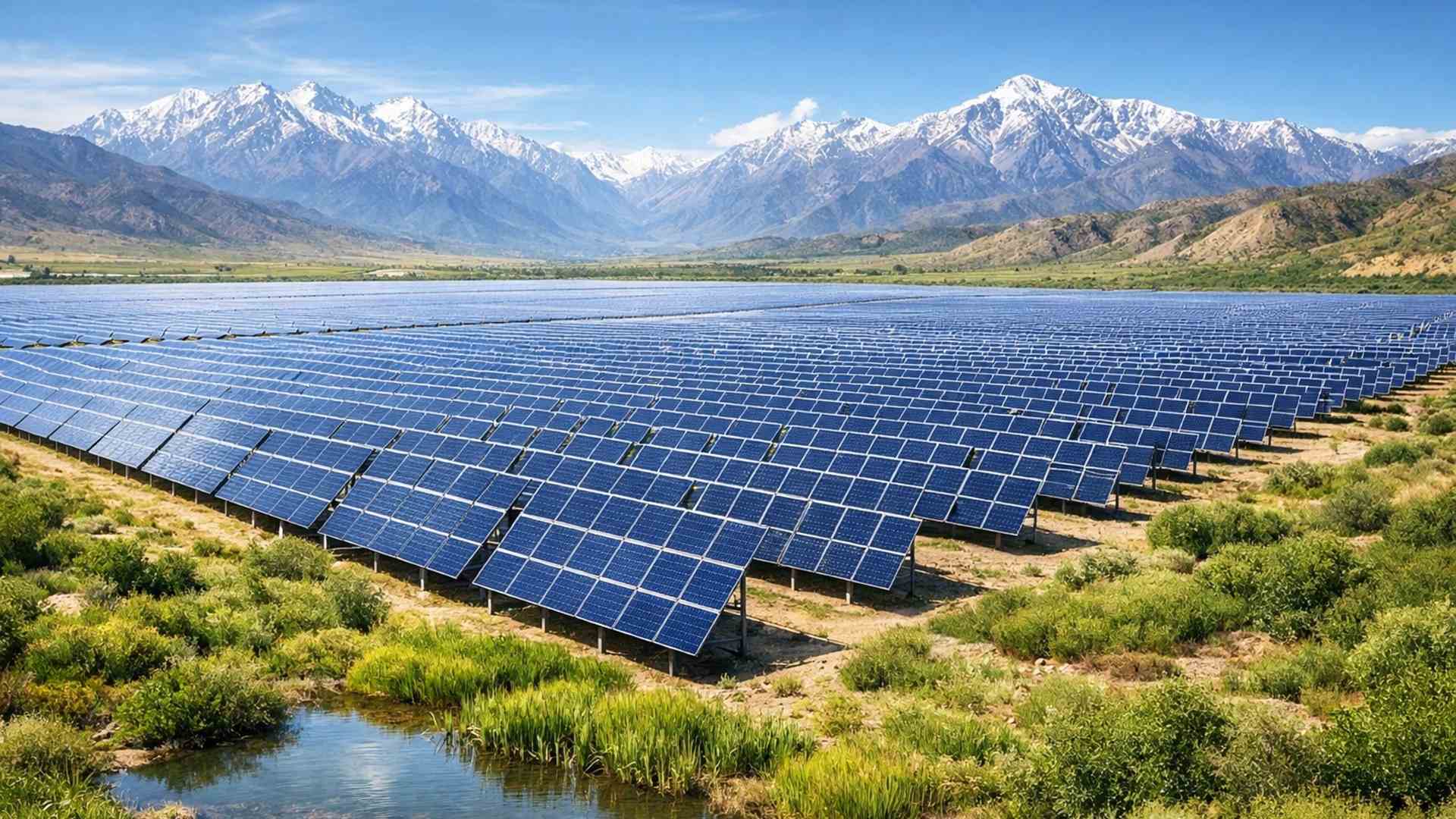
Ecological Study in One of the Largest Solar Complexes in the World, on the Tibetan Plateau, Points Out That 64 Square Kilometers of Photovoltaic Panels Increased Soil Moisture, Vegetation Cover, Microbial Diversity, and Environmental Indicators in a Desert Area of Qinghai Over More Than a Decade.
With 16 to 17 Gigawatts Distributed Over 64 Square Kilometers, Solar Complex on the Tibetan Plateau Records Ecological Index of 0.439 and Reveals Increase in Moisture, Vegetation, and Biological Activity in Desert Area of Qinghai Since 2012
On the Tibetan Plateau, the Talatan and Gonghe solar complex in Qinghai, with an estimated capacity between 16 and 17 gigawatts, began to show measurable ecological changes after the installation of panels, indicating increased moisture, vegetation, and biological activity, according to a recent study published in the journal Nature.
The photovoltaic cluster is among the largest in the world and occupies a vast area previously characterized by extreme arid conditions, constant winds, and frequent sandstorms. The central part of this complex, the Qinghai Gonghe Photovoltaic Park, covers 64 square kilometers and has become the subject of a detailed ecological analysis conducted by scientists from various Chinese institutions.
-
With a cost per shot close to zero, the DragonFire laser could change naval warfare in 2027 and provide British ships with nearly unlimited defense against drones.

-
A British startup creates tires that generate electricity in electric vehicles when passing over potholes, speed bumps, and cracks.

-
Scientists have created robots made with living cells that have their own nervous system, swim on their own, explore the environment, and self-organize without any genetic engineering, and now they want to do the same with human cells.

-
Students create a solar-powered ambulance that operates without a plug, without fuel, and still keeps medical equipment running in remote areas.


Ecological Study Evaluates Impacts Inside and Outside the Solar Park
The research assessed how the presence of millions of solar panels altered the environmental conditions of an alpine desert. To do this, the scientists applied the Impact Response Model of the Driving Pressure Status, comparing internal areas of the park, transition zones, and untreated neighboring lands.
The method resulted in the creation of an index composed of 57 indicators, covering plant diversity, soil nutrients, air moisture, microbial composition, and local economic activity. These data allowed for a quantitative comparison between the different environments analyzed.
Within the operation area of the solar park, the overall ecological score reached 0.439, classified by the study as “general.” The immediate surrounding area recorded about 0.28, classified as “poor,” highlighting consistent differences between the environments.
Vegetation, Microorganisms, and Moisture Increase Under the Panels
The results indicated greater diversity of plant species under the solar panels, as well as richer bacterial and archaeal communities compared to external areas. Soil and air moisture also proved to be slightly higher within the park, creating more favorable conditions for biological life.
Sensors installed in the Gonghe Park detected finer soil particles and greater moisture retention in areas shaded by the panels. These factors contribute to the growth of vegetation and the storage of carbon in the soil, enhancing local biological activity.
The study also recorded higher values of aerial biomass, available phosphorus, potassium, and carbon sequestration in the soil within the park compared to control plots. This combination indicates the formation of a new ecological dynamic adapted to the irregular shading created by the photovoltaic rows.
Changes Noticed by Residents and Local Socioeconomic Impact
The transformations were not limited to scientific indicators. Livestock breeders in the Talatan region report that, before construction began in 2012, the area was practically barren and frequently hit by intense sandstorms.
Currently, the soil under the panels supports enough grass growth to allow for controlled grazing of sheep. This use serves a dual purpose: it generates local income and prevents vegetation from growing to the point of shading the solar modules, preserving energy efficiency.
Local authorities report that vegetation cover has reached about 15% within the park. Furthermore, the operation of the complex has created new jobs related to the periodic cleaning of the panels and monitoring of the area, introducing economic activity in a previously unproductive region.
Shading and Water Explain the Formation of a Micro Oasis
The mechanism responsible for the observed changes is described as relatively simple. The solar panels intercept a large part of the intense solar radiation of the plateau, reducing direct warming of the soil and decreasing water loss due to evaporation.
Another relevant factor is the monthly washing of the panels, necessary to maintain energy efficiency. The water used in this process seeps into the soil, further raising the moisture available for plants and microbes, boosting biological activity in the area.
With the increase in vegetation cover and microbial life, there is greater retention of organic matter and nutrients in the soil. This process favors carbon sequestration, transforming previously degraded areas into modest, yet significant, reservoirs of this element.
Limits and Risks of Expanding Solar Farms in Deserts
Despite the positive results in Qinghai, researchers emphasize that not every solar farm automatically generates ecological benefits. An independent study on photovoltaic plants in the Qinghai-Tibet Plateau showed that 56% of the analyzed locations exhibited increased vegetation cover, while 44% recorded loss.
Soil moisture explained approximately 62% of this variation. More than half of the restoration observed was associated with the additional use of water for cleaning the panels, indicating that the water balance is a decisive factor for environmental outcomes.
In even drier regions, increased vegetation may elevate transpiration and pressure already limited water resources. If water availability decreases or maintenance practices are altered, the observed ecological balance could rapidly reverse.
Relevance for China and Global Implications
The topic has strategic importance for China, where deserts cover about a quarter of the territory and desertification affects approximately 400 million people. Projects capable of generating large-scale electricity, containing environmental degradation, and creating local jobs spark immediate interest.
For other countries, the case of Qinghai suggests that large solar parks can, under certain conditions, function less as industrial interventions and more as controlled micro oases. This depends on careful land use planning and water management.
The study concludes that the integration between clean energy production and environmental preservation is possible, but not automatic. The Qinghai Gonghe Photovoltaic Park demonstrates that, when well-managed, solar panels can alter not only the energy matrix but also the local climate, soil biology, and the landscape of arid regions.
This article was based on an ecological study conducted at the Qinghai Gonghe Photovoltaic Park, in the Talatan and Gonghe solar complex, in Qinghai Province, China, published in the scientific journals Nature and Scientific Reports, as well as data and reports presented by the researchers and local authorities involved in the research.








-

-

-

-

-

7 pessoas reagiram a isso.