





 Portuguese
  English
  Spanish
  4 min of reading
  1 comment


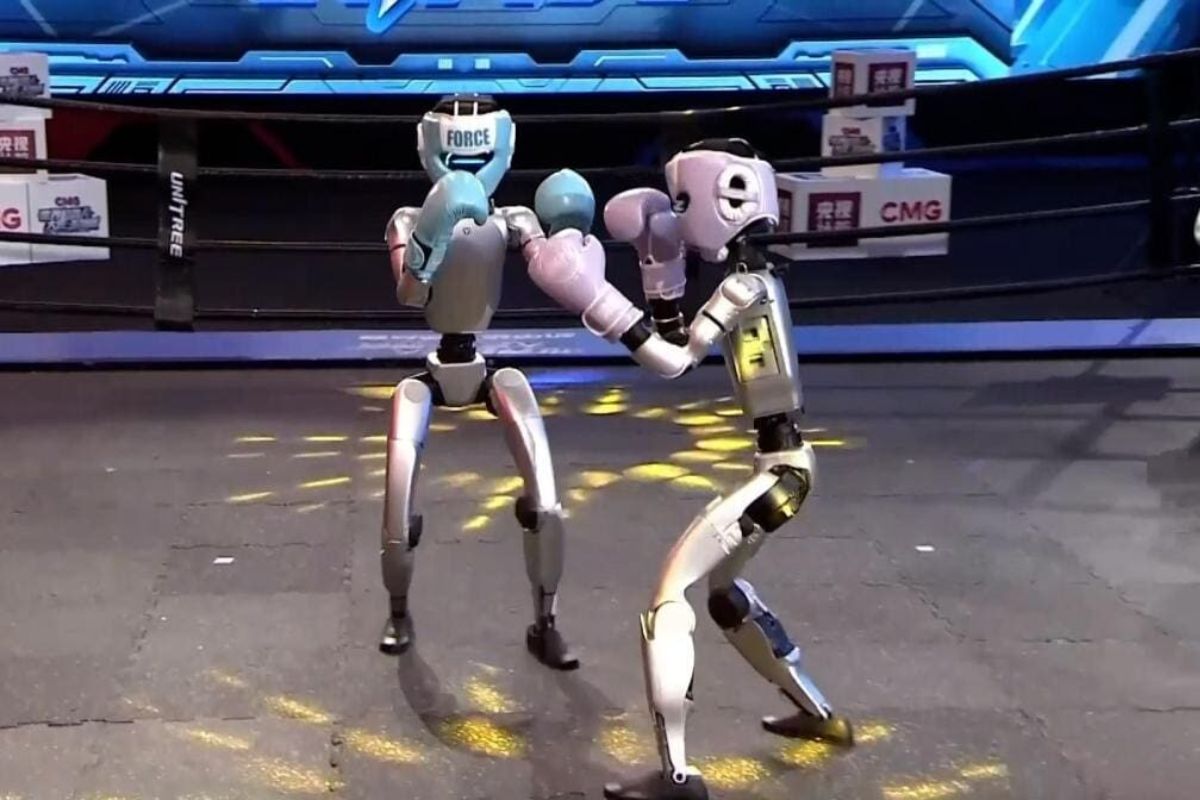

They Weigh 35 Kg, Stand Up by Themselves, and Punch with the Force of a Hydraulic Motor! The Fighting Robots Have Invaded China
If someone told you that humanoid robots are already punching it out in a ring, controlled by humans, you might think it’s a script for “Real Steel” or a new futuristic series. But no. This happened in real life, and it was broadcast as if it were a UFC fight. Only with robots.
Welcome to The Ring of The Future
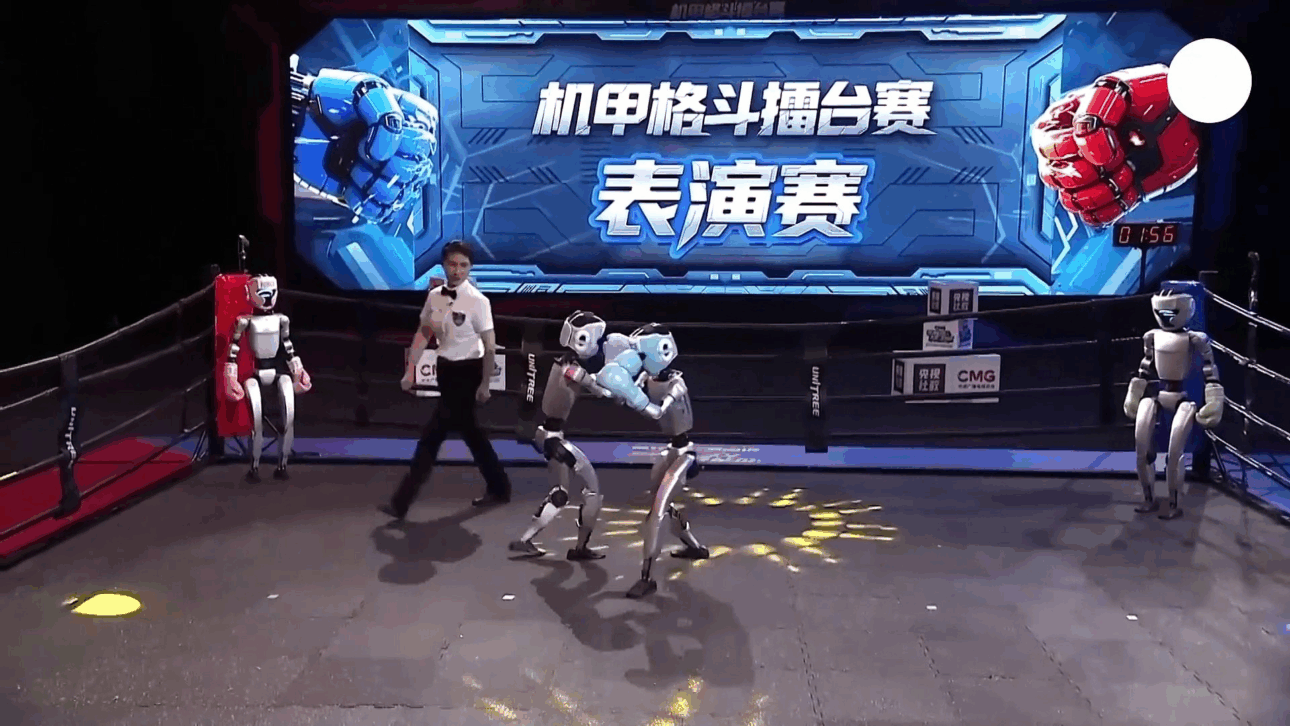
On May 25, 2025, in Hangzhou, China, the first world championship of boxing between humanoid robots took place. The event, grandly named CMG World Robot Championship – Mech-Fighting Arena, gathered a curious crowd, engineers, tech fans, and even those who just came to see mechanical brawling.
But don’t think they were those slow machines from a science fair. The G1 robots, from the company Unitree Robotics, looked like they came straight out of a Michael Bay movie secret lab. They stand 1.35 meters tall, weigh 35 kg, and move with an agility that would make many humans envious.
-
How an innovative city combines high technology, well-being, and sustainability to become the largest reference in clean energy on the planet.

-
Couple buys 1846 church in ruins for R$ 660,000, invests R$ 3.2 million in renovations, transforms it into a millionaire mansion, and even preserved a historic cemetery with over 300 graves.

-
He started running at 66 years old, broke records at 82, and is now a subject of study for having a metabolic age comparable to that of a 20-year-old, in a case that is intriguing scientists and inspiring the world.

-
Oldest tree on the planet reappears after 130 years of searches: Wattieza, 385 million years old, was 10 meters tall and had no leaves or seeds; Gilboa fossils in New York solved the mystery in 2007.



The Fighting Robots: Small but Brave
Despite their modest size, the G1s are true punching machines. Each joint can rotate with a force of 120 newton-meters. In plain English: they can throw a right hook that, if it hit someone made of flesh and bone, would give an orthopedic surgeon a hard time.
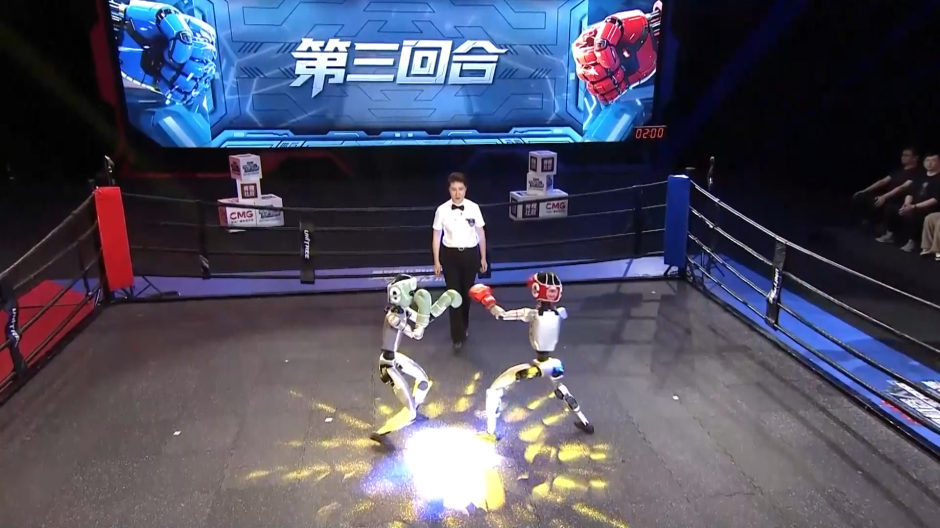
And it wasn’t just jabs or crosses. They kicked, spun, fell, and got back up. It was clear that the folks at Unitree didn’t just focus on making a walking robot. They made robots that fight with style.
Total Control: Humans in Command of The Fight
One of the most interesting parts of the event was the control system. Forget that talk about autonomous robots making decisions on their own. Here, humans are literally in charge with the control in hand. No voice commands or gestures. It’s a joystick, just like in a video game — only the consequence is a punch in another robot’s face.
According to the organizers, this choice had a very clear reason: response time. In fights, every millisecond counts. So, letting the robots think for themselves could disrupt the rhythm and make the fight slower and less exciting. With humans behind the controls, the action was intense from start to finish.
AI Strategist vs Energy Guardian: The Fight of The Century (Robotic)
The final was between two heavyweight names: AI Strategist and Energy Guardian. It sounds like a superhero name, but they were two robots piloted by operators with sharp reflexes. After many exchanged punches, AI Strategist prevailed with a quick sequence that left the rival unable to react. It was like a technical knockout, but in digital form.
It’s worth noting: even when they fell, the robots got back up by themselves with an elegance that left the audience in awe. It was like watching a professional fighter rolling to get back on their feet. A blend of mechanical precision with a dancer’s balance.
Much More Than Just A Fight
Behind the show, this event showed that China is putting the pedal to the metal in the race for humanoid robots. While in other countries they are still a lab attraction, over there they are already being put to fight, dance, run, and (who knows soon) work.
This type of technology is not just for entertainment. It also serves to test engine durability, response speed, real-time control, and even cooperation skills between humans and machines. In the future, these technologies could be applied in rescue operations, hazardous environments, and even in the virtual sports industry.
It Seems Like Black Mirror, But It’s Just The Beginning
Those who watched the event live — or saw the footage later on YouTube — were left with the feeling that science fiction is not that distant. The technology of these robots has already surpassed that clumsy stage where they could barely walk. Now, they are stepping into the ring and punching like grown-ups (controlled, of course).
The broadcast included sports commentary, with replays, slow-motion cameras, and even a cheering crowd. At certain moments, you almost forgot that it was all controlled by humans. It felt like the robots had a mind of their own, given the fluidity of their movements.
And What Comes Next?
According to CMG and Unitree Robotics, the success of the event paved the way for an official league of fighting robots. Like an UFC, only with chips, wires, and lots of algorithms. And who knows, this might turn into a new type of e-sport? Just imagine! International championships with robot fighters, packed arenas, and online betting?
It sounds crazy, but just a few years ago it also sounded crazy to think about cars that drive themselves or cell phones that answer questions. The line between fiction and reality is becoming thinner.
A Warning for Those Who Think it’s Just Fun
It might seem that this is just fun and spectacle, but the reality is that this type of event drives massive technological advances. The more challenging the use of the machine, the more robust the design needs to be. And this accelerates the development of artificial intelligence, motor control, and even better batteries.
In the end, the boxing robot championship is not just a show. It is a showcase of what cutting-edge engineering can achieve when it meets entertainment. And who would have thought that watching two robots punch each other in the ring could be so exhilarating?







Os robôs tomarão o lugar dos humanos.
Não acredito que isso será bom para a humanidade.