





 Portuguese
  English
  Spanish
  6 min of reading
  0 comments


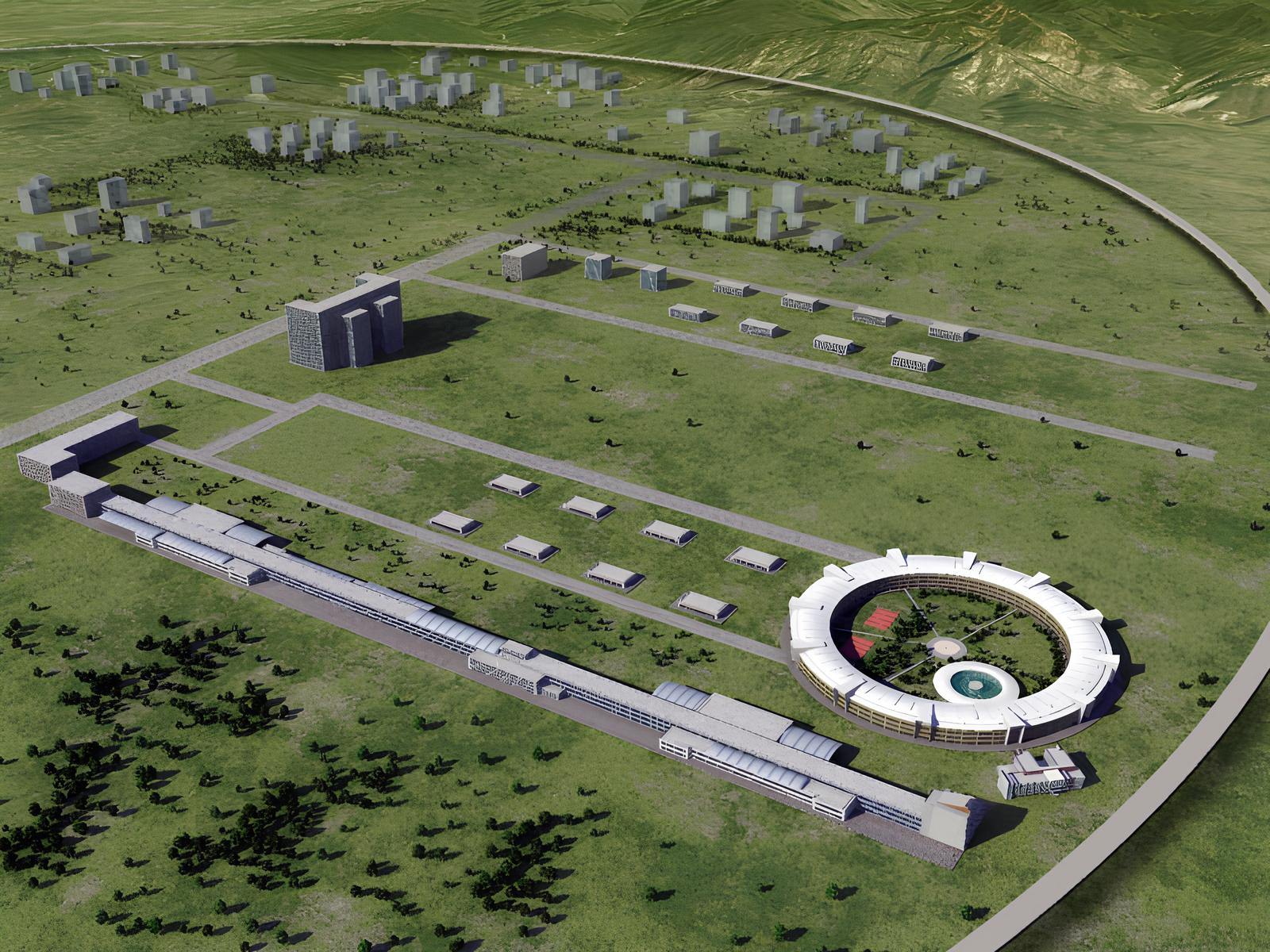
China Prepares 100 Km, 240 GeV Accelerator Project to Study Higgs Boson and Surpass CERN in High-Energy Physics.
The race to understand the innermost structure of matter has always been driven by giant machines. The 20th century was marked by the rise of CERN, Fermilab, and facilities in the US and Europe that dominated particle physics. Now, in the 21st century, the axis of this competition begins to shift. Chinese scientists are discussing one of the boldest scientific ventures ever proposed: a circular underground accelerator with a 100 km circumference dedicated to producing and studying the Higgs boson with unprecedented precision.
This project is called CEPC – Circular Electron Positron Collider, and if approved and fully funded, it will put China in command of high-energy particle physics for the coming decades.
A Tunnel the Size of a Metropolis Buried Below Ground
While the European accelerator LHC (Large Hadron Collider) at CERN has a 27 km circumference, the CEPC plans to be nearly four times larger.
-
The Himalayas continue to grow to this day, with tectonic plates advancing 5 cm per year, mountains rising up to 10 mm annually, and the 2015 earthquake that killed 9,000 people may have increased the risk of an even larger seismic mega-event.

-
At an altitude of 400 km by astronauts from the International Space Station, Paris transforms at night into a golden mesh so precise that it reveals the outline of the Seine River, avenues, and entire neighborhoods like a luminous map drawn over the Earth.

-
iPhone 17 reaches historic low price with 256 GB, 120 Hz display, and drops to R$ 5,703 on Shopee, featuring A19 chip, dual 48 MP cameras, battery life of up to 30 hours, and advanced AI features.

-
Trip to Mars getting closer: Pulsar Fusion, from the UK, advances with plasma ignition in fusion engine and could drastically reduce space travel time, making crewed missions faster, safer, and economically viable.
To visualize the physical and territorial impact of this, one would only need to imagine an underground ring that could surround entire cities like Shanghai, Beijing, Paris, London, or São Paulo, depending on the chosen region.
The basic plan envisages a 100 km ring excavated dozens of meters below the surface, forming a closed circuit through which electron and positron beams travel at nearly the speed of light. This ring would be connected to laboratories, particle injection lines, auxiliary accelerators, cryogenics, and hundreds of kilometers of superconducting cables and vacuum systems.
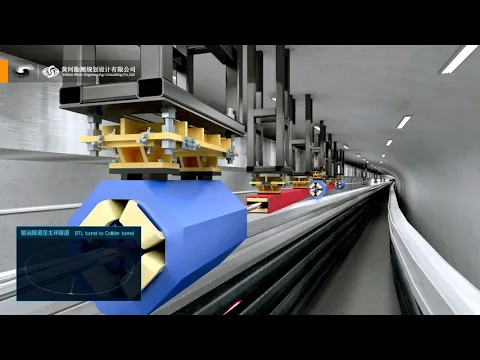

This arrangement transforms the CEPC from a “scientific machine” into something closer to a high-tech underground city, with much of the infrastructure hidden below the surface.
Why Electrons and Positrons? The “Higgs Factory”
The CEPC does not aim primarily to destroy protons, as the LHC does. It will use electrons (negative) and positrons (positive), which are elementary particles with no known internal substructure.
When they collide, the energy deposited is extremely “clean” from a physical noise perspective. This allows for something that physicists informally call a Higgs factory.

The planned collision energy will be 240 GeV, precisely in the ideal region to produce the Higgs boson with high efficiency and study its properties with precision impossible in proton accelerators.
The goal is not to discover the Higgs again; that already happened in 2012 at CERN — but to answer more sophisticated questions:
- How does the Higgs interact with other particles?
- Are there additional particles linked to the Higgs?
- Does the mass of the Higgs explain anything beyond the Standard Model?
- Can the Higgs point to extra dimensions, dark matter, or new physics?
It is here that the CEPC aims to surpass the LHC: in precision, not in brute energy.
Essential Technical Data of the Project
Although it is a developing project and not yet approved for construction, several parameters have been officially published by Chinese institutes and international groups involved in the conceptual design.
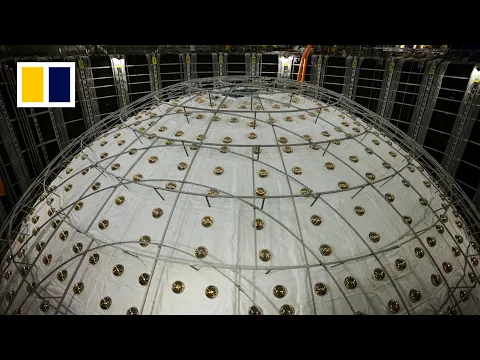
Among the data already disclosed are:
- Planned circumference: ~100 km
- Type: electron-positron collider
- Operating energy: ~240 GeV
- Central purpose: Higgs physics (Higgs factory)
- Comparison: LHC → 27 km / protons / 13–14 TeV (another category)
- Structure: underground tunnel + experimental caverns + injectors
- Auxiliary infrastructure: cryogenics, RF, superconductors, vacuum, detectors
- Future extensibility: tunnel could host SPPC (Super Proton Proton Collider)
This last point opens a second strategic layer: by building the ring now for electrons/positrons, China would leave the path clear for a future proton collider with much higher energies than the European LHC.
Why Does China Want to Lead This Project?
There are three main reasons: scientific leadership, technological hegemony, and strategic independence.
Scientific Leadership
Particle physics has always been a global prestige arena. Countries that build large accelerators:
- publish more papers
- form more PhDs
- attract international talent
- develop frontier technologies
By taking the lead in this type of infrastructure, China moves from being a user of European laboratories to owner of the largest “discovery machine” on the planet.
Technological Hegemony
Large colliders generate technologies that later migrate to the civilian sector, such as:
- advanced superconductors
- industrial cryogenics
- ultra-high vacuum gauges
- high-precision electronics
- scientific simulation software
- medical imaging
Historically, CERN has already given rise to:
- World Wide Web
- improvements in PET scanning
- advances in AI and parallel computing
China wants to capture this cycle internally.
Strategic Independence
With the LHC located in Europe and primarily funded by European countries, China and the US are dependent on the geopolitical position and scientific agenda of CERN. By building the CEPC, China establishes its own platform to:
- decide experimental programs
- form national teams
- license technologies
- control the pace of upgrades
Where the Tunnel Would Be Constructed
The project does not yet have a final location defined, but three regions are mentioned in preliminary studies:
- Qinhuangdao
- Zhangjiakou
- Shandong

The criteria for selection involve:
- stable geology (fewer seismic faults)
- logistical access
- low urban density in the ring
- proximity to universities and technological centers
The current phase is geological, environmental, and urban studies.
How Much Would the Largest Accelerator in History Cost
Estimating costs for scientific projects of this scale is risky, but conceptual studies place the value in the range of billion dollars, with ranges varying between:
- US$ 20 billion to US$ 30 billion, depending on scope
For comparison:
- LHC (CERN): ~US$ 5 to 10 billion over decades
- Superconducting Super Collider (USA): canceled after US$ 2 billion spent (estimated at US$ 20 billion total)
- ITER (France): US$ 25 billion (nuclear fusion)
In other words, the CEPC would join the select group of largest scientific instruments ever funded by humanity.
Realistic Timeline
The public roadmap is not rigid, but documents indicate:
- 2018–2025: conceptual design + feasibility studies
- 2025–2030: detailed project + licenses + funding
- 2030–2040: possible construction
- 2040+: start of scientific operation
Note: this is a study projection, not an officially approved schedule.
Comparing with CERN
The contrast between the LHC and the CEPC is not “better vs worse,” but of different categories:
| Accelerator | Type | Energy | Objective |
|---|---|---|---|
| LHC (CERN) | protons | 13–14 TeV | search for new physics, heavy particles |
| CEPC | electron-positron | 240 GeV | study Higgs with precision |
The Chinese plan also includes a future upgrade:
→ SPPC (Super Proton Proton Collider), which would use the same 100 km tunnel but with protons, aiming for ~75 TeV — almost 5x the LHC.
If this were to be confirmed, China would leave CERN behind in terms of energy as well.
Potential Scientific Impacts
The CEPC could resolve some of the deepest questions in current physics:
- Does the Higgs interact with dark matter?
- Are there multiple types of Higgs?
- Is the Standard Model complete or just an approximation?
- Why are particle masses what they are?
- Was the symmetry of the universe broken in the Big Bang?
These questions have no answers today, and the CEPC was designed precisely to investigate them.
The Frontier of Science is Changing Address
If the CEPC is approved and built, China will create the largest particle physics infrastructure on the planet, with the potential to alter:
- scientific geopolitics
- the future of high-energy physics
- global technological leadership
More than a machine, the CEPC represents a scientific and strategic declaration: that the next great discovery — whether about dark matter, broken symmetry, vacuum energy, or extra dimensions — may come from Asia, and no longer from Europe or the United States. If the 20th century was the century of CERN, the 21st century may have a different protagonist.







Seja o primeiro a reagir!