





 Portuguese
  English
  Spanish
  4 min of reading
  0 comments


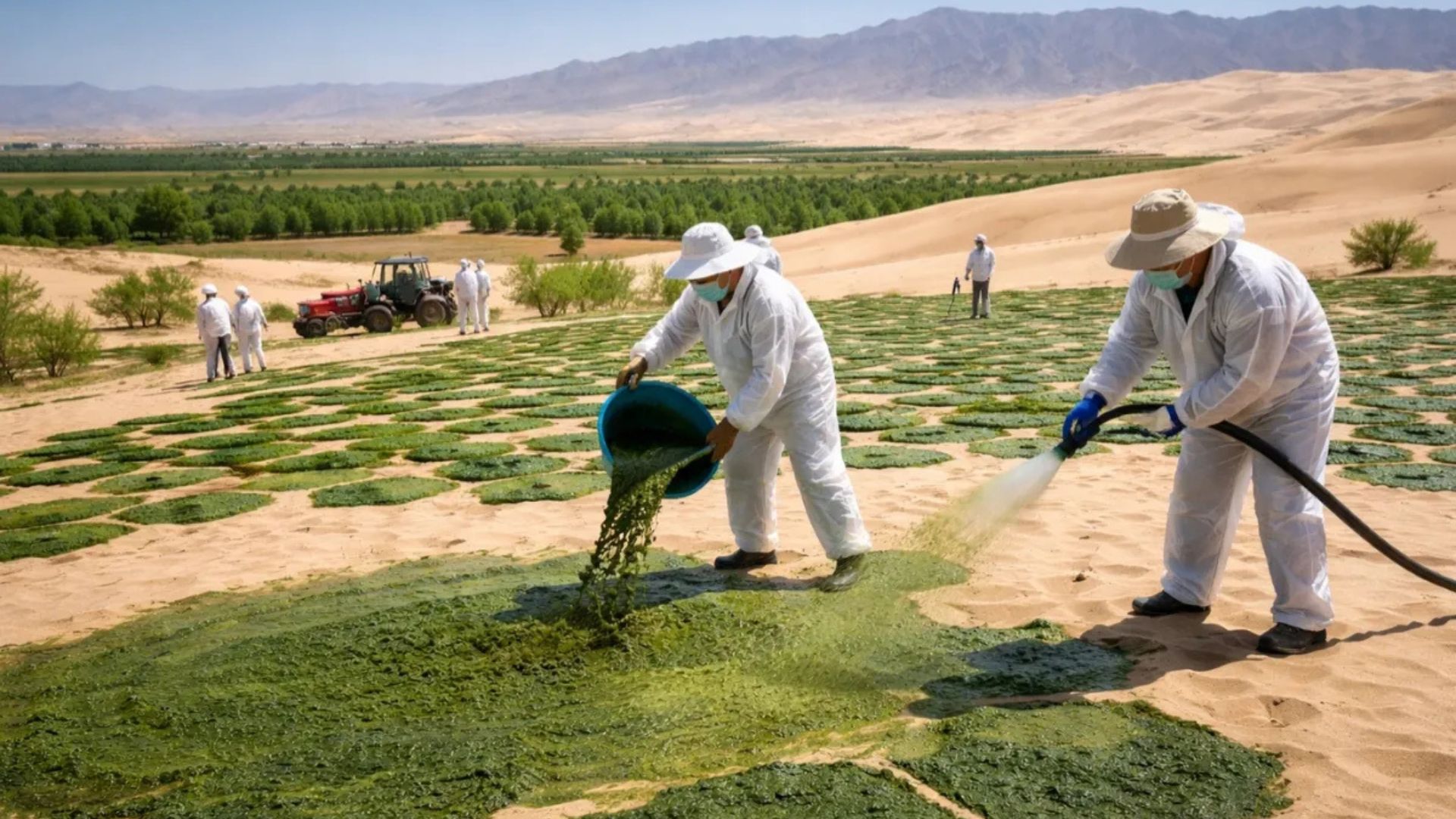
Technique Using Laboratory-Cultured Cyanobacteria Hardened the Surface of Dunes Surrounding the Taklamakan Desert in 10 to 16 Months, Forming a Biological Crust That Can Hold Sand and Retain Moisture, Significantly Reducing Erosion in Controlled Tests and Paving the Way for Grasses and Shrubs.
Researchers in China reported that laboratory-cultured cyanobacteria managed to stabilize loose sand and initiate the formation of a soil-like layer in 10 to 16 months, with a reduction of over 90% of wind erosion in controlled tests.
Taklamakan Desert and Combating Desertification
The experiments described in the material took place mainly near the Taklamakan Desert, in Xinjiang, northwest China, one of the driest areas in Asia and often exposed to seasonal dust storms.
Unlike projects involving concrete, heavy barriers, or chemical fertilizers, the strategy presented relies on ancient microorganisms, cyanobacteria, applied over dunes previously organized with straw in a “checkerboard” pattern, a technique used to reduce sand mobility.
-
A groundbreaking study in the U.S. gave $750 a month to homeless individuals to spend as they wished. The results surprised researchers because the money did not get anyone off the streets, but it changed these people’s lives in an unexpected way.

-
Meteorologists warn of a storm with heavy rain and winds of up to 110 km per hour in the North of the continent, leaving thousands without power, causing flooding, and serving as a warning for Brazil after an increase in extreme weather events.

-
Kakebo, a Japanese technique created in 1904, teaches how to save money through simple notes and monthly tracking.

-
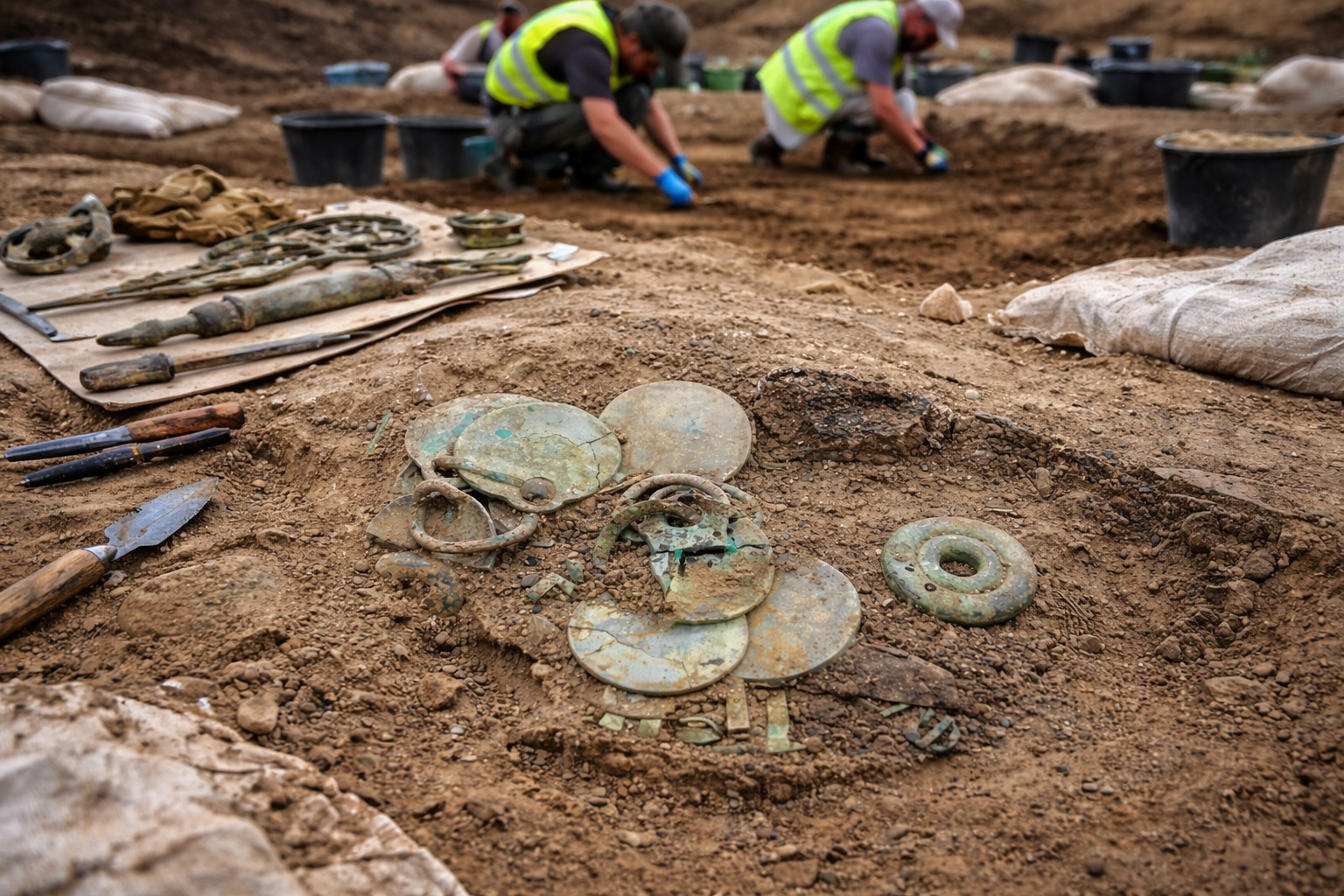
More than 500 Bronze Age objects, including pieces never seen in Western Europe, have emerged from a treasure buried 3,000 years ago in Scotland, intriguing archaeologists.

Biological Soil Crust: How the Sand Was Stabilized
After spraying, the text describes the emergence of a dark film on the sandy surface, associated with the formation of a biological soil crust, which gradually hardened until resulting in a thin, cohesive layer more resistant to wind action.

Even with extreme temperature variations, intense heat, frost cycles, and the occurrence of dust storms, the crust reportedly remained stable, with the practical goal of creating a base that facilitates the establishment of grasses and shrubs.
In the laboratory, the cited tests indicated a drop of over 90% in material loss due to wind erosion when the artificial crust was present, while, in the field, the aggregated grains remained in place after episodes of strong winds.
Cyanobacteria and Nitrogen Fixation in Soil Restoration
The material notes that cyanobacteria are organisms with a long evolutionary history that can survive using sunlight, carbon dioxide, and air, producing organic compounds that help initiate soil formation in nutrient-poor environments.
In desert areas with low fertility, some species also perform biological nitrogen fixation, converting nitrogen gas from the atmosphere into assimilable forms, which tends to inaugurate the nutrient cycling necessary for the arrival of the first plants.
Describing the microstructure, the text points out that bacterial filaments begin to surround sand grains, while cells release sticky sugars that act as “biological glue,” binding loose particles and consolidating a more stable surface.
Water and Nutrient Retention on the Treated Surface

In addition to physical stabilization, the crust reportedly altered the dynamics of water and nutrients at the surface layer, with greater retention of nitrogen and phosphorus in the first year, the formation of organic matter from mineral dust mixed with dead cells, and less nutrient loss due to wind.
After short rains, the described difference intensified: naked sand reportedly dried quickly, while the treated area retained moisture for several more days, with a rougher texture and dark pigments reducing evaporation and favoring early rooting.
Still, the report emphasizes that the crust may enter dormancy during prolonged dry periods, which keeps performance dependent on the local climate regime, particularly the occurrence of precipitation during considered opportune windows.
Accelerated Recovery Time and Historical Comparison
The text states that China has maintained a 59-year record of biological crust recovery in desert environments, and when comparing natural areas with plots treated with laboratory-cultured cyanobacteria, researchers observed a significant shortening of the process.
In this view, a stage that, without intervention, could take decades to solidify would now occur in just a few years, although the material also notes that, even in favorable scenarios, more robust maturity required two to three years.
Risks of Traffic, Grazing, and Disturbances to the Crust

Despite the described resistance to wind and harsh weather, the crust appears vulnerable to direct disturbances, such as foot traffic, vehicle tires, and intense grazing, which can break the consolidated surface and delay recovery.
Therefore, the expansion of the technique is presented as depending on the careful selection of priority areas, restriction of traffic where treatment occurs, use of local strains adapted to heat, salinity, and dryness, in addition to monitoring over extended periods.
The researchers themselves, according to the text, view the application as a complementary tool, not as a standalone solution for structural factors associated with desertification, such as overgrazing and inadequate water management.
Brazil, Semi-Arid Region, and Adaptation of Biotechnology to the Field
Spraying with cyanobacteria is described as a lower-cost structural alternative compared to heavier physical methods, with the potential to reduce sand mobility, decrease dust storms, and increase the durability of roads and infrastructure in arid regions.
In the Brazilian context, the material points out that any eventual application in the Northeastern Semi-Arid would depend on adaptations, such as isolation and cultivation of local strains, selection of areas at risk of desertification, protection against trampling and traffic, and continuous monitoring for years.
In this context, technology appears associated with a practical ecological restoration agenda and, for agribusiness in vulnerable areas, as a possibility for recovering degraded soils, as long as integrated with policies for sustainable land use.








-

-

-

-

-

13 pessoas reagiram a isso.