Portuguese
  Spanish


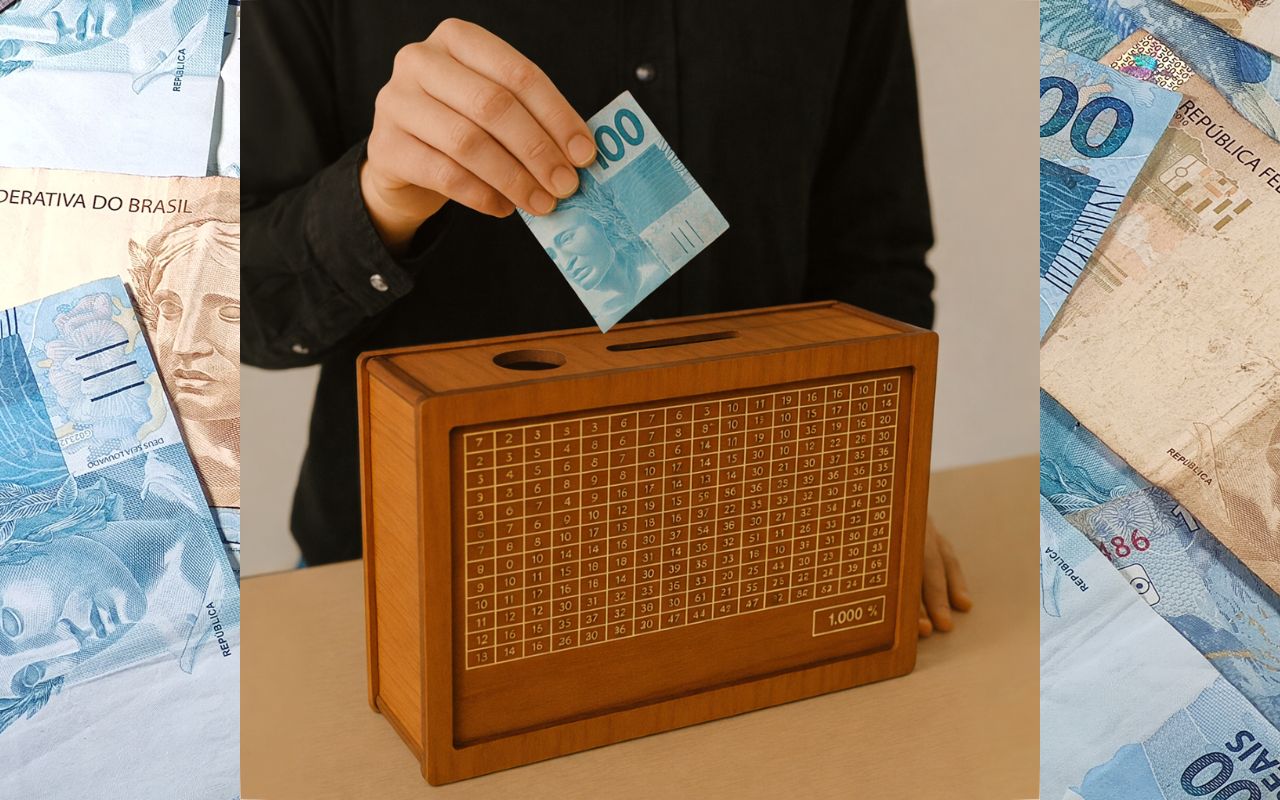

Kakebo is the Japanese technique for saving money that teaches discipline, expense control, and financial organization in daily life.
A Japanese technique created over a century ago is helping people save money and reorganize their finances practically. Kakebo, developed in 1904 by Hani Motoko in Japan, works as a financial diary where all expenses and monthly goals are recorded.
Currently, the method is being adopted in various countries, including Brazil, by those seeking more control over their money.
The proposal is simple: understand consumption habits, reduce waste, and build a more conscious financial routine.
-
Son of a truck driver who lost his income after a work accident, he grew up in a low-income family, was the first to attend college, took over a small chain of coffee shops, and transformed Starbucks into a global giant with over 38,000 stores in more than 80 countries.

-
He started with a moving van in New York, entered the real estate market in Miami, and acquired land in neighborhoods that later became targets for art, tourism, commerce, and construction.

-
Californian gives up on buying a house, purchases a roughly 1-hectare island for $31,000 in Finland, learns construction from scratch, and begins building a refuge without running water or electricity.
-
A 3-year-old deaf student received the first white belt in Jiu-Jitsu and understood the achievement because the teacher learned Libras to communicate with him, in a video that surpassed 7 million views and moved social media by showing inclusion happening on the mat.





How does kakebo help save money in practice?
The functioning of kakebo is straightforward. The person records all income and expenses throughout the month.
This habit allows for a clear visualization of where the money is going. Thus, it becomes easier to identify unnecessary expenses.
As a result, the process of saving money becomes more natural and efficient.
To facilitate control, kakebo divides expenses into categories. Among the main ones are basic expenses, leisure, unforeseen events, and investments.
This organization helps to understand priorities. Additionally, it allows for more precise budget adjustments. Therefore, the method contributes to a more balanced financial management.
The Japanese kakebo technique requires discipline to save money
One of the pillars of kakebo is discipline. Unlike automatic apps, the method relies on active participation.
Every expense must be noted, even the simplest ones. This creates awareness about money usage.
Over time, this habit changes financial behavior and makes saving money easier.
How to start using kakebo and save money?
To adopt kakebo, not much is needed. A notebook or even a spreadsheet is sufficient.
The important thing is to record all expenses and review the data at the end of the month. This analysis allows for habit adjustments.
In this way, the process of saving money becomes continuous and more effective.

More than just organizing finances, kakebo promotes profound changes. It teaches better money management in daily life.
Additionally, it helps identify growth opportunities. This may include investing in qualifications or seeking extra income.
Therefore, the Japanese technique goes beyond saving and contributes to a more stable financial life.
Is it worth using kakebo to save money?
For those seeking organization, kakebo is an excellent alternative. The Japanese technique is simple, accessible, and efficient.
Even in difficult scenarios, it can help regain financial control. This is because it offers clarity about money usage.
Thus, by adopting the method, it is possible to save money and build a more secure future.