





 Portuguese
  English
  Spanish
  10 min of reading
  1 comment


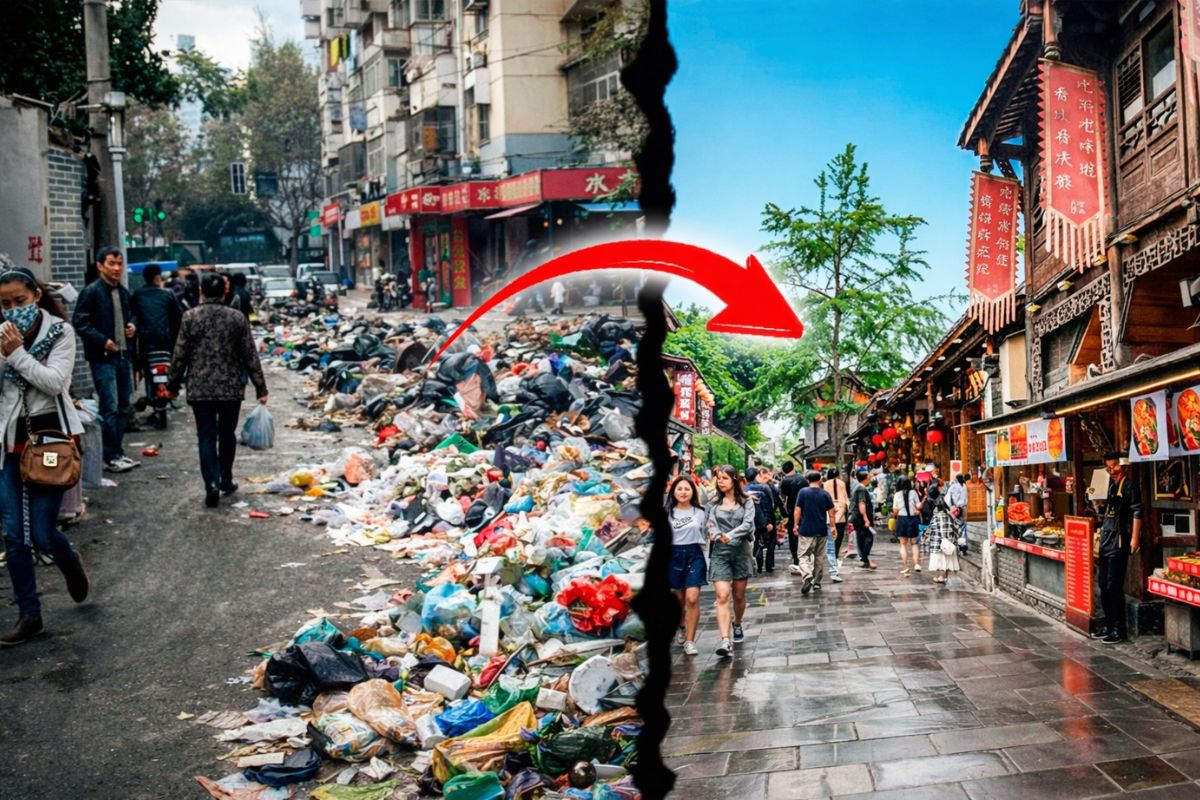


China Nearly Eliminated Landfills by Investing in Plants That Burn Waste at 850 ºC, Generate Electricity, Nearly End Landfills, and Create a Scenario Where, in Some Regions, the Challenge Is Finding Waste to Feed the Plants.
Every day, each Brazilian produces an average of 1 kg of waste. It may seem small when we look at a single household, but it becomes a huge problem when we add neighborhoods, entire cities, and millions of inhabitants. In a country the size of China, with over 1.4 billion people and some of the largest metropolises on the planet, waste management has become a matter of urban survival. In this context, China nearly eliminated landfills by changing how it handles waste and turning an environmental liability into a source of energy.
The case of the Jiang Kungu landfill in Xi’an illustrates the magnitude of the challenge. Opened in 1994 to operate for 50 years, it was supposed to receive waste until the middle of this decade. In practice, it filled up in 2019, just over two decades after it opened. What was meant to be a long-term solution became a warning about the collapse of the landfill-based model. A few years later, the scenario changed so much that China went from a waste surplus to situations where old mountains of waste are being excavated to feed power generation plants.
When the Waste Left the Sidewalk and Became a National Crisis

The problem starts in a trivial way, with a bag of waste left at the front door, but it transforms into one of the greatest challenges for public administrations. Collecting, transporting, treating, and giving proper disposal to waste requires planning, infrastructure, and a lot of money.
-
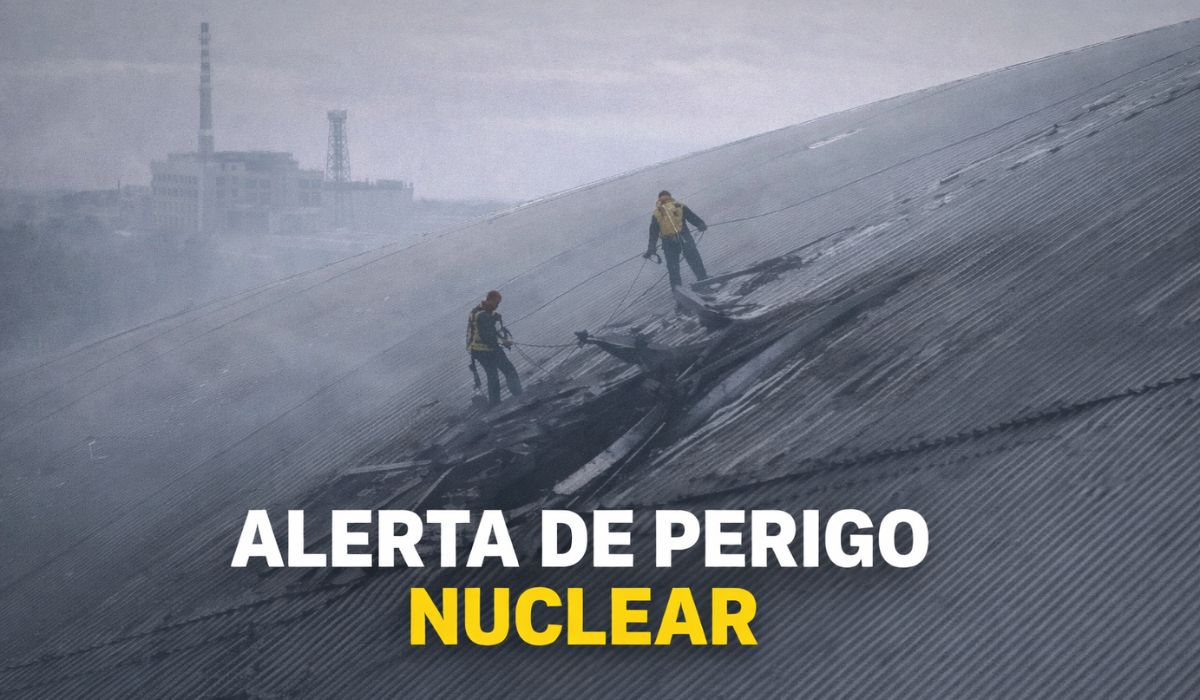
The gigantic steel shell built to contain Chernobyl for a century has been pierced by a drone, exposing a critical system and creating a hole that could cost over 500 million euros to repair.
-
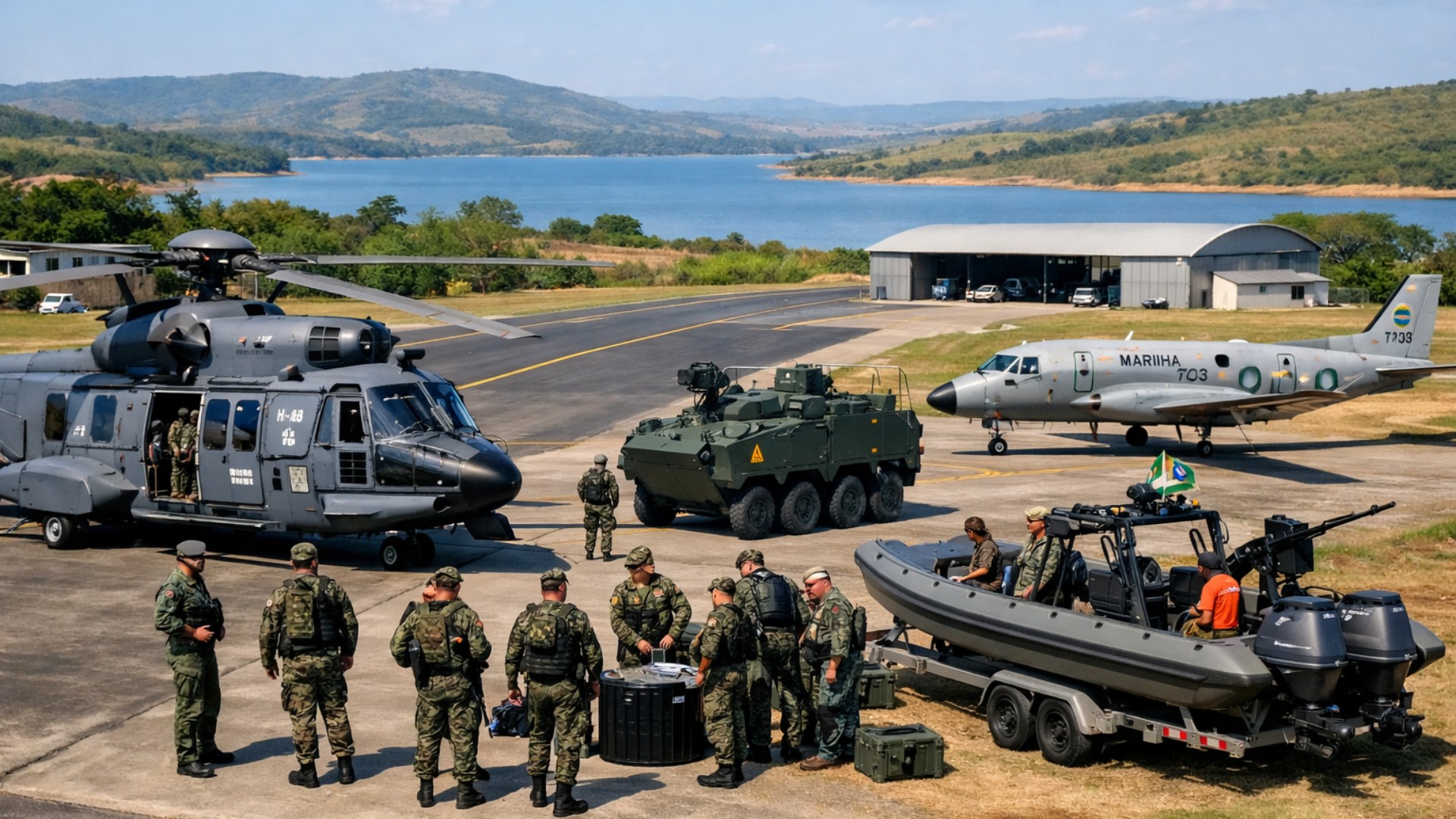
Brazilian Navy reaches a new level by taking over an airport with a 1,600-meter runway used by 1,800 military personnel and autonomous attack drone testing.
-
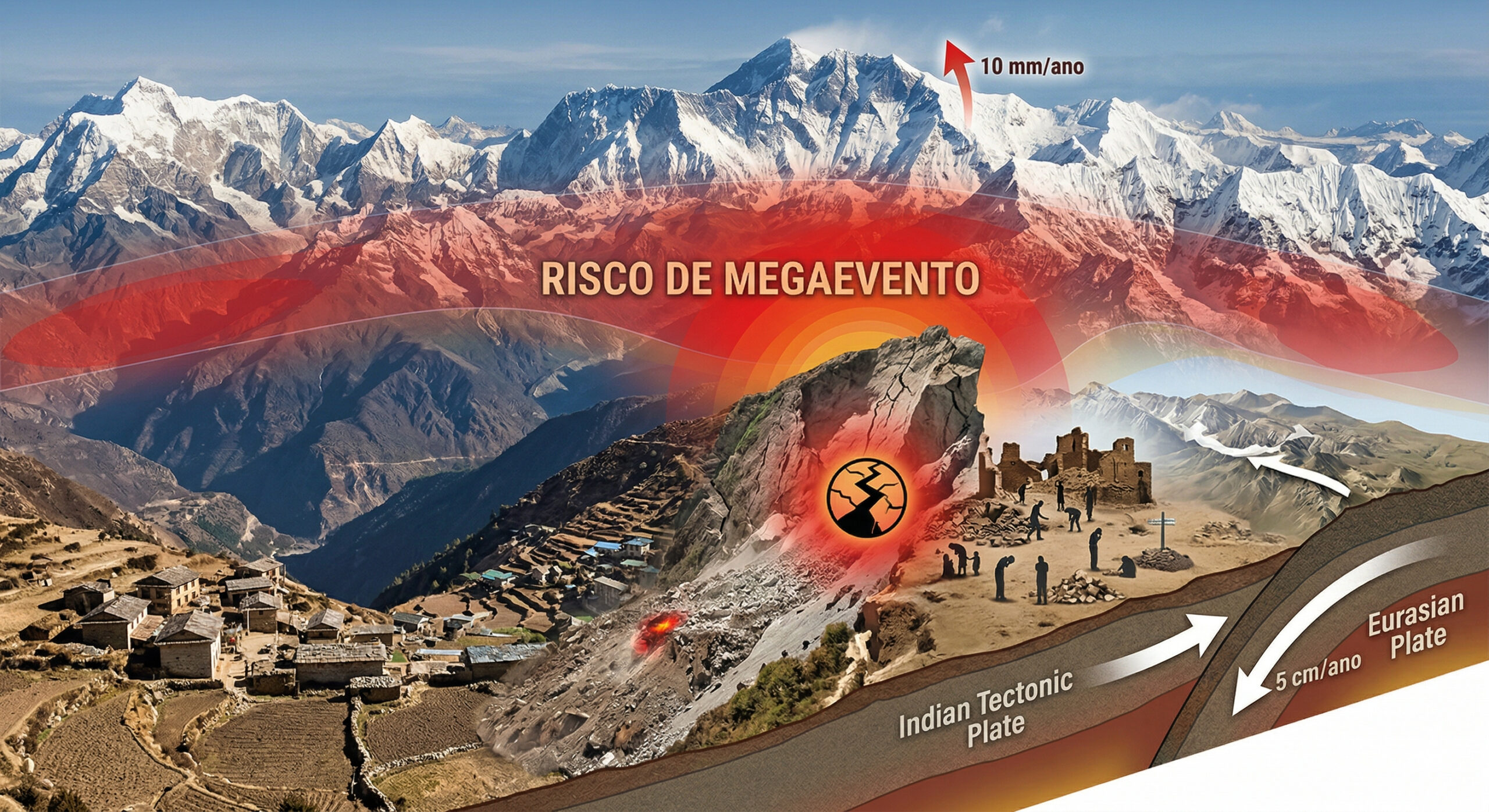
The Himalayas continue to grow to this day, with tectonic plates advancing 5 cm per year, mountains rising up to 10 mm annually, and the 2015 earthquake that killed 9,000 people may have increased the risk of an even larger seismic mega-event.
-
At an altitude of 400 km by astronauts from the International Space Station, Paris transforms at night into a golden mesh so precise that it reveals the outline of the Seine River, avenues, and entire neighborhoods like a luminous map drawn over the Earth.


In middle-income countries, this is already difficult. In a giant like China, with large metropolises concentrating tens of millions of people, the pressure is even greater.
A symbolic portrait of this crisis appeared in a documentary that followed, for years, the advance of waste around Beijing.
The filmmaker traveled through hundreds of landfills in the Chinese capital and recorded mountains of waste accumulating just a few kilometers from densely populated areas.
Children, scavengers, and animals lived daily in an unhealthy setting, surrounded by food scraps, plastic, paper, and waste of all kinds.
This contrast was troubling because Beijing was already being presented to the world as a modern metropolis, with major infrastructure works, avenues, transportation lines, and entire revitalized neighborhoods. While the city modernized on the surface, waste accumulated on an industrial scale in the surroundings.
From “World’s Landfill” to a Turning Point
The internal crisis was further aggravated by another factor. For years, China was known as the “world’s landfill.” Developed countries sent part of their waste to be recycled in Chinese territory, taking advantage of cheaper labor and lower operating costs.
Plastics, used paper, and even electronic waste arrived in large volumes. Some places became marked by this flow, with entire cities linking their economy to the sorting of foreign waste. In theory, much of this material would be recycled.
In practice, some of it ended up being discarded in landfills, exacerbating China’s internal waste problem.
At the same time, the country itself was undergoing a profound transformation. Rapid economic growth, industrialization, and rising incomes changed consumption patterns.
Industrialized products, packaged foods, and disposable items became part of urban daily life.
With more people in cities and increased consumption, the volume of household waste exploded. In just a few years, China became the largest generator of urban solid waste in the world.
Projections indicate that the annual production of urban waste in the country is expected to approach hundreds of millions of tons, more than double what was produced in the early 2000s.
The Line That Concentrates People, Waste, and Pressure on the Territory
To understand why the landfill-based model collapsed so quickly, one must look at China’s human geography. There is an imaginary line that cuts across the country from northeast to southwest, dividing the territory into two very different parts.
On one side, in the west, lies most of the territorial area, covering about 57% of the country’s surface. However, only 6% of the population lives there.
On the other side, in the east, within 43% of the territory, 94% of the Chinese population is concentrated. This means millions of people occupying relatively small areas, where every square meter is too valuable to be used as a landfill.
When a landfill fills up sooner than anticipated, as in Jiang Kungu, finding space for a new disposal site is nearly impossible.
In some cases, the overload has taken a heavy toll. In 2015, the excess waste accumulated in a landfill that had already reached its capacity caused a landslide that killed dozens of people.
Besides the direct risk to those who live and work near these locations, landfills represent a huge environmental impact.
During the decomposition of organic waste, methane gas is emitted, one of the main greenhouse gases, alongside the formation of leachate, a highly polluting liquid that contaminates soil and groundwater.
Faced with this combination of lack of space, environmental risks, and tragedies, the Chinese government began to act on two fronts: to contain the flow of imported waste and redesign the internal waste treatment policy.
The first measure was to ban the import of waste. Several countries that relied on China as a destination for their waste had to rush to find alternatives, but the change helped reduce pressure on Chinese landfills.
How China Nearly Eliminated Landfills by Transforming Waste into Energy
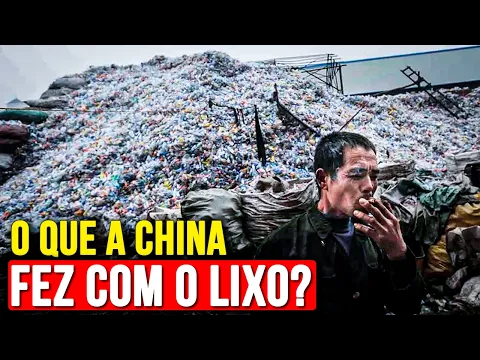

The most profound change came when the government decided it was necessary to change the central question. Instead of only discussing where to put waste, the priority shifted to what to do with the waste. This is how China nearly eliminated landfills in just a few decades.
To achieve this, the country turned to an old planning tool: five-year plans. The 12th Five-Year Plan, covering the period from 2011 to 2015, established that about 35% of the waste produced should stop going to landfills and be treated through controlled incineration.
Incineration already existed on a small scale but played a supporting role. From this plan onward, it became central to waste policy, in a model known as Waste-to-Energy (WTE), which converts waste into energy.
In this system, waste is burned in facilities that function as plants. The waste is fed into incinerators operating around 850 ºC.
The heat generated warms boilers, turning water into steam. This steam drives turbines connected to generators, producing electricity that is injected into the grid and powers homes, businesses, and industries.
The technology offers two main advantages. The first is volume reduction: incineration can diminish by about 90% the amount of waste that would need to go to a landfill. The second is energy recovery.
Each ton of processed waste generates between 340 and 350 kWh of electricity, enough to power an average household for a month.
In other words, the waste produced by five households can generate enough energy to keep one of them running.
Realizing this potential, the central government created a favorable environment for investment. Local governments and companies began to receive financial incentives, credit lines, and subsidies.
The energy generated from waste was valued, with higher tariffs, making projects economically attractive.
When this policy began, there were just over a hundred incineration plants operating in the country. In less than a decade, this number jumped to hundreds of units spread across China.
This large-scale advancement was one of the bases for China nearly eliminating landfills in various urban areas, freeing up areas previously occupied by landfills and open dumps.
The Side Effect of Speed: Now There’s a Lack of Waste
However, there is no simple solution to complex problems. The rapid growth of incineration plants created a new type of pressure.
Each unit operates as a business that earns money from both burning waste and generating energy. In this model, waste is literally the raw material for the business.
When this raw material starts to run low, the plants begin to operate below capacity. Without enough waste, energy production drops, revenue decreases, and financial sustainability is threatened.
To avoid this, some cities have started excavating old landfills in search of buried waste from the past, reopening mountains of waste that had been closed for years.
At first glance, this seems like a clever solution. However, this practice involves significant risks. The decomposition of waste in landfills over time generates large pockets of methane.
When stirring deep layers of waste, this gas can escape uncontrollably, increasing the risk of explosions, fires, and concentrated emissions of pollutants.
In extreme situations, there has even been discussion about returning to importing waste from other countries to ensure the supply for the plants, a kind of reversal of roles compared to the recent past.
The country that decided to stop being a destination for foreign waste began to consider bringing in waste from outside to keep its plants running.
What Brazil Can Learn from the Chinese Experience
While China rapidly advanced in infrastructure and planning, Brazil still faces the basic challenge of eliminating open landfills.
Since 2010, with the approval of the National Solid Waste Policy (law 12.305), the country has set deadlines for ending open landfills.
Some of the most emblematic ones, such as the Estrutural landfill in Brasília and the Gramacho landfill in the metropolitan area of Rio de Janeiro, have been deactivated.
Nevertheless, estimates suggest there are around 3,000 open landfills in operation, receiving waste without any proper treatment. Recycling is also progressing at a slow pace.
According to sector data, only about 5% of the more than 220,000 tons of waste generated daily in Brazil is recycled. The remainder goes to landfills or dumps.
In this scenario, incineration with energy recovery is not yet a consolidated reality in the country, but it is starting to become a reality.
The first Waste-to-Energy plant in Brazil is scheduled to open in the first quarter of 2027 in the city of Barueri, São Paulo.
Installed in an area of approximately 37,000 m², the facility is expected to receive waste from the municipality and nearby cities, such as Santana de Parnaíba and Carapicuíba. The expectation is to generate around 20 MW of energy, enough to supply about 40,000 households.
Studies indicate that if Brazil treated about 47% of urban waste in similar plants, it would be possible to generate energy for over 4 million households and mobilize more than 200 billion reais over 40 years. In parallel, there would be a significant reduction in the amount of waste sent to landfills.
The Chinese experience shows that with long-term planning, economic incentives, and clear goals, it is possible to change waste management in just a few years.
The way China nearly eliminated landfills can serve as inspiration, but Brazil needs to adapt the model to its own realities, considering differences in scale, income, infrastructure, and regulatory capacity.
Incineration Is Not a Magical Solution for Waste
Despite all the potential benefits, incineration does not solve everything on its own. Even reducing waste volume by up to 90%, it generates ashes that need to be treated and disposed of properly.
This maintains the need for controlled landfills, now focused on a more concentrated and often more toxic waste.
Additionally, incineration is a potentially polluting activity. During waste burning, gases and particles are produced that, if not properly filtered, can impact human health and the environment.
For this reason, the plants require advanced filtration systems and continuous monitoring. Without strict oversight, the risk of emissions exceeding allowed limits increases.
The Chinese government itself acknowledges these limits. Even having heavily invested in WTE plants to reduce landfills and generate energy, the country has been adopting complementary measures, such as the mandatory separation of household waste in various cities, the encouragement of recycling, and “zero waste city” programs.
Despite the name, zero waste cities do not mean a reality without any waste, but rather a strategy to maximize the reduction of waste sent to landfills, combining reuse, recycling, composting, and thermal treatment only for what cannot be repurposed.
Final Lesson: Plan for the End of Landfills, Not the End of Discussion
The experience of China indicates that it is possible to accelerate the transition in just a few years when there are clear goals, heavy investment in infrastructure, and coordination among the central government, local authorities, and the private sector.
The path that led to China nearly eliminating landfills involved tough decisions, such as abandoning the role of “world’s landfill,” and technological alternatives, like WTE plants, but also behavioral changes and new rules for the population.
For Brazil, the main lesson is not to copy everything China did, but rather to understand that the waste problem is not solved with one-off measures.
It is necessary to combine waste reduction at the source, improvement in recycling, inclusion of scavengers, implementation of modern plants, and, above all, constant oversight to ensure that solutions do not create new problems.
In the end, the question that remains for us is simple and straightforward: in your opinion, should Brazil follow China’s path and invest in plants that transform waste into energy to end landfills?







Sim, pois mesmo com essa tecnologia, a reciclagem de materiais não seria afetada, mantendo assim a renda das pessoas que vivem da reciclagem e também afetaria de forma positiva a economia das prefeituras em relação aos gastos que envolvem a manutenção dos resíduos sólidos urbanos.