





 Portuguese
  English
  Spanish
  5 min of reading
  0 comments



Billion-Dollar Investment Repositions Brazil on the Global Radar of the Chinese Automotive Industry, with Plans for Production Expansion, Job Creation, and a Focus on Hybrid Technology and Nationalization to Meet Domestic Market and Exports From the Second Half of the Decade.
The Chinese automaker Great Wall Motors (GWM) stated that it intends to invest about R$ 10 billion in Brazil by 2032.
The focus is on expanding local production and studying new industrial units, including cities considered strategic in the South and Southeast. The company is working with a phased schedule.
Approximately R$ 4 billion is expected to be invested by 2026, while the remainder will be concentrated in the following years.
-
A new law being voted on in Brazil proposes a minimum fare of R$ 10 per trip and R$ 2.50 per kilometer for Uber and 99 drivers, and promises to ensure they earn as well as taxi drivers did during the golden age of taxis in the country.

-
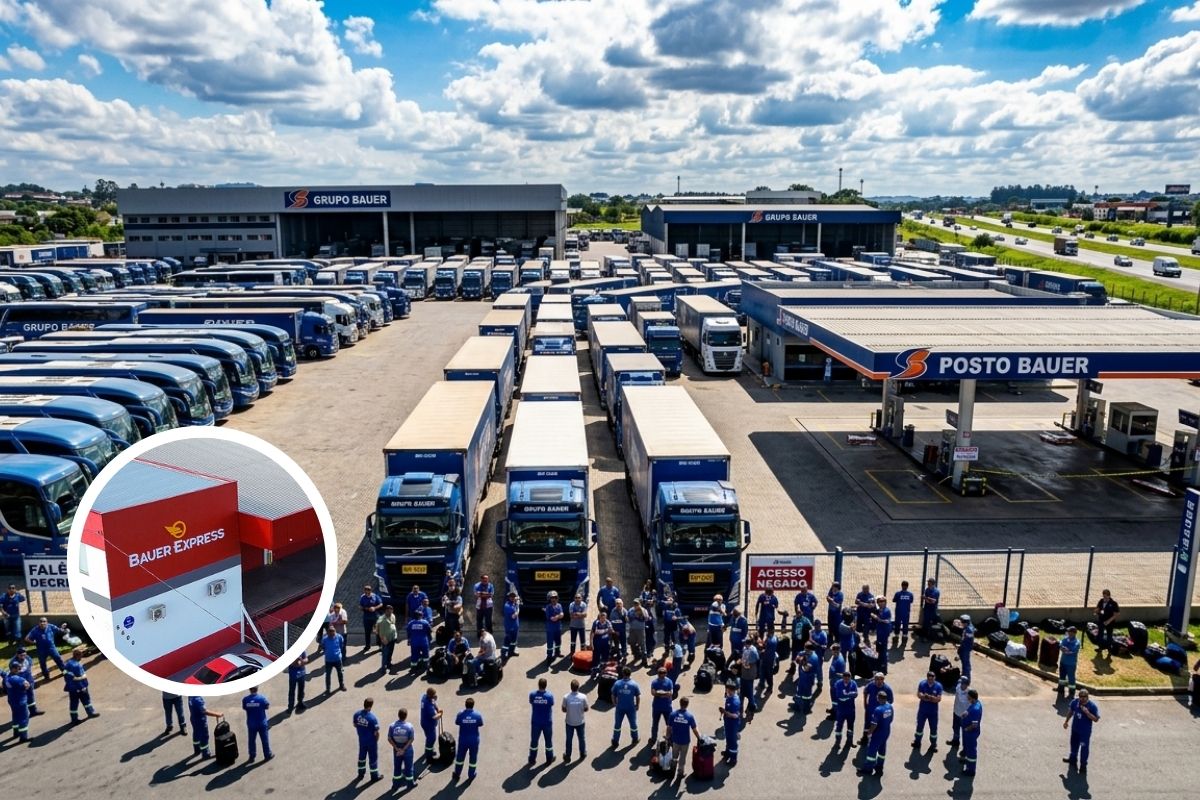
Bauer Group collapses after failed judicial recovery: 25 years, 800 vehicles, and a network of gas stations leave a debt of R$ 50 million and 100 layoffs, exposing costs, tight margins, and expensive credit in Brazil.
-
Premium Brazilian brand born during the pandemic brings fine cocoa from Bahia to Switzerland, Germany, and France, has won 9 awards, and claims to have the 2nd best milk chocolate in the world: meet Luz Cacau.

-
Júnior Friboi has just purchased one of the largest feedlots in all of Brazil, located in Goiás, with the capacity to produce 180,000 cattle per year, and the manager has already come forward to reassure employees about layoffs.


The plan is presented by the company as a long-term bet on the country.
The expected impact involves jobs, the supply chain, logistics, and technological development.
In practice, the strategy combines the already established operation in São Paulo with the search for new areas that offer efficient access to highways, consumer centers, and port infrastructure.
This factor is considered crucial for those targeting exports and regional distribution.
Factory in São Paulo Marks GWM’s Entry Into Brazil
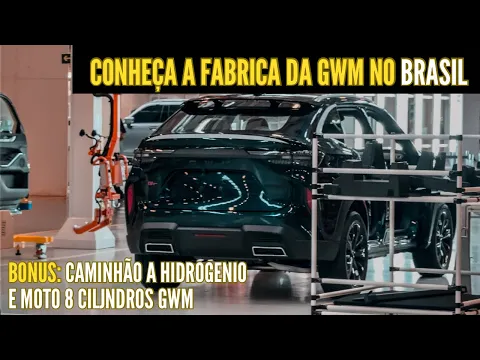
The GWM officially inaugurated, in August 2025, its factory in Iracemápolis (SP). The unit is considered the first production plant of the brand in the Americas.
According to information released by the automaker itself, the structure currently has the capacity for 50,000 vehicles per year.
Production already includes models such as Haval H6, Haval H9, and the Poer P30 pickup.

In addition to the industrial structure, the company and federal authorities highlight the project’s link to the automotive sector’s technological transition agenda.
The Ministry of Development, Industry, Commerce, and Services reported that the factory was the first certified under the Mover Program to produce plug-in hybrid vehicles in Brazil.
The project is also linked to goals for the nationalization of components.
The disclosed projection is 60% domestic content by 2026.
The Iracemápolis unit is regarded as a central piece to transform Brazil into a production base.
The strategy seeks to reduce logistical costs, shorten delivery times, and create an environment conducive to attracting suppliers.
This movement is common when automakers arrive in the country with scale and long-term planning.
South of Brazil Enters the Radar for Logistics and Industrial Structure
When considering new units, GWM began mapping regions with logistical advantages.
The goal is to efficiently integrate the automotive supply chain.
The South often appears in this type of analysis due to its consolidated industrial hubs.
The region also offers skilled labor and relative proximity to export routes.
Another point considered is the connection with structuring highways.
Access to ports capable of facilitating the flow of vehicles and components also weighs in the decision.
The company indicates that the choice does not solely depend on tax incentives.
Availability of areas, energy capacity, presence of suppliers, and personnel training are also part of the calculation.
Compatibility with the production and distribution strategy is another crucial factor.

Recent industry reports indicate a competition among states to attract the next industrial phase of the automaker.
The final design of the project, however, is still being defined.
Espírito Santo Advances in Negotiation for Second Factory
While GWM keeps its options open in the South and Southeast, a concrete movement gained prominence in the Southeast.
In January 2026, the government of Espírito Santo reported it had signed a commitment agreement with the automaker.
The agreement outlines the beginning of technical and institutional steps for the possible installation of a second factory in the state.
The document was signed during an official agenda in China.
According to the official statement, the agreement does not represent immediate authorization for construction.
It only formalizes the start of the project’s viability process. Espírito Santo’s entry into the radar reinforces the importance of logistical criteria.
The state has a coastline and a port structure considered strategic.
These factors can reduce shipping costs and enhance competitiveness in operations aimed at the domestic market and exports.
Still, the company continues to mention strategic cities in multiple regions.
This indicates that the final decision will depend on feasibility studies and local negotiations.
Jobs, Suppliers, and Technology at the Center of the Investment
The economic dimension of the investment is usually translated, in the short term, by job creation.
Another expected effect is the establishment of suppliers around industrial plants.
In the case of the São Paulo unit, the federal government stated that the operation anticipates the creation of jobs throughout the implementation.

The project has also been associated with the formation of a supply chain with greater national participation.
The automaker presents the factory as a platform for technological transfer.
The discourse includes production modernization and automated industrial processes.
This type of structure requires team training and local engineering development.
The adaptation of suppliers to global quality standards is also part of the process.
Another key point is the attempt to reconcile industrial growth with electrification.
Hybrids and electric vehicles are advancing in the Brazilian market, but still face challenges.
Costs, service network, and charging infrastructure remain barriers.
By betting on local production and component nationalization, the company seeks to reduce some of these barriers in the medium term.
National Production Targets SUV Exports
Production in Brazil aimed at other markets appears as one of the pillars of the plan.
Investments of this magnitude tend to reorganize supply routes. They also attract system suppliers and enhance production predictability.
These conditions are considered essential to enable exports from the country. The movement occurs within a broader context of Chinese expansion in Brazil.
In recent years, companies from the Asian country have increased investments in sectors such as energy, telecommunications, and infrastructure.
In the automotive sector, this advance is usually accompanied by regional competition for factories and professional qualification projects.
Each new plant has the potential to induce entire supply chains around it.
With the prospect of exporting SUVs and strengthening national production, the definition of the next location becomes strategic.
The final decision could reshape the Brazilian industrial map in the coming years.
Which states will be able to gather the most solid conditions to become the next base of GWM’s strategy in Brazil?





Seja o primeiro a reagir!