





 Portuguese
  English
  Spanish
  5 min of reading
  0 comments


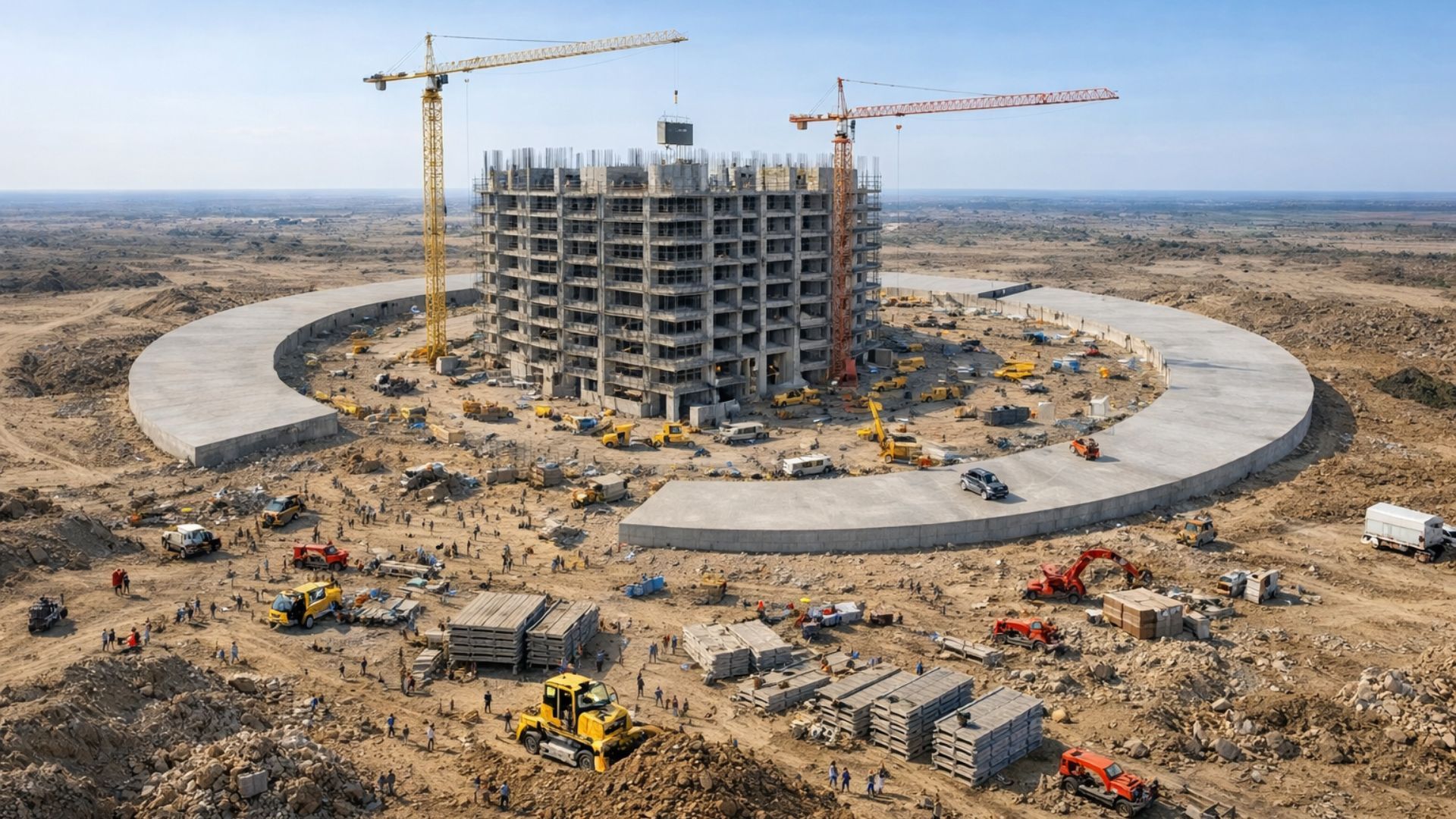
Viral Videos, Record-Time Construction, and Industrialized Systems Reignite Debate on Speed, Accuracy, and Limits of Modular Construction in China, Mixing Proven Feats, Aggressive Marketing, and Technical Gaps That Require Careful and Contextual Reading.
A video circulating on social media has drawn attention to a feat attributed to a Chinese company: the assembly of a 10-story building in 28 hours and 45 minutes, using pre-fabricated parts lifted by cranes in sequence.
The promise behind these images is that of an extremely accelerated construction, based on modules produced previously in a factory and installed on-site like an assembly process, with less improvisation and more standardization.
The central idea is simple: instead of executing almost everything on-site, as occurs in conventional construction, much of the work is shifted to controlled industrial environments.
-
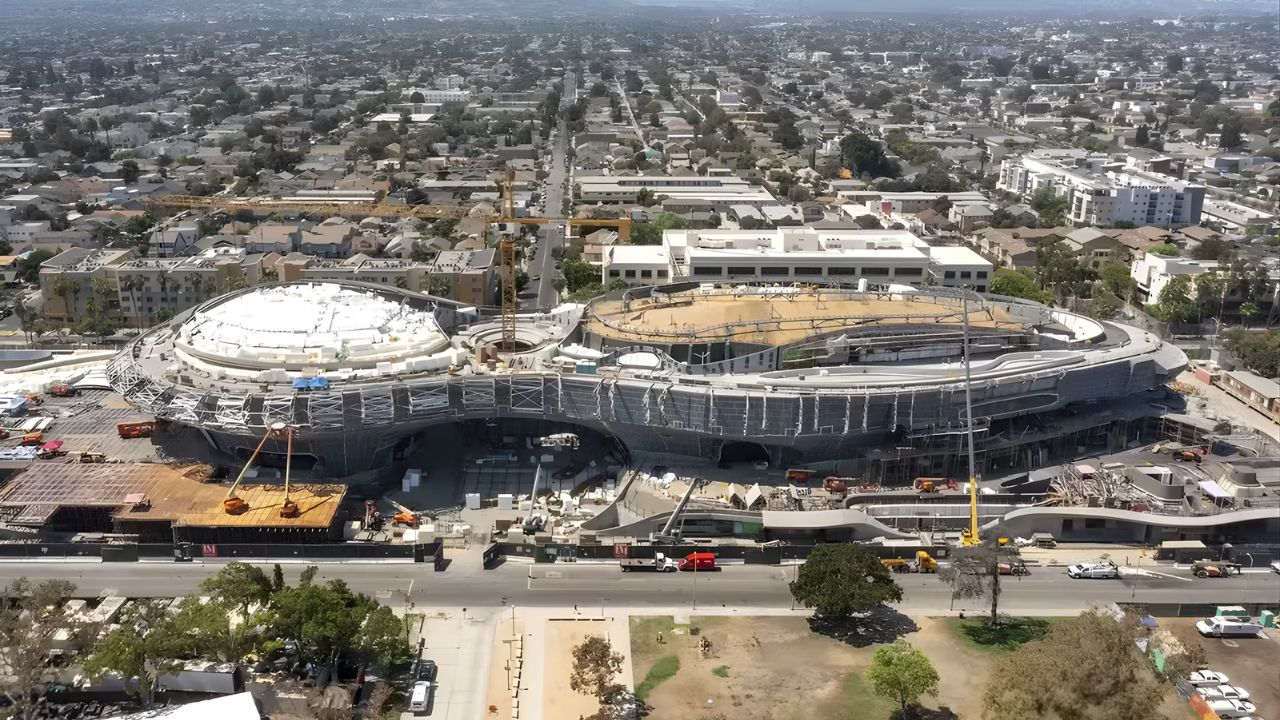
Created by George Lucas with over $1 billion, a futuristic museum in the shape of a spaceship with 1,500 curved panels is about to open in Los Angeles and will house one of the largest private collections of narrative art in the world.
-
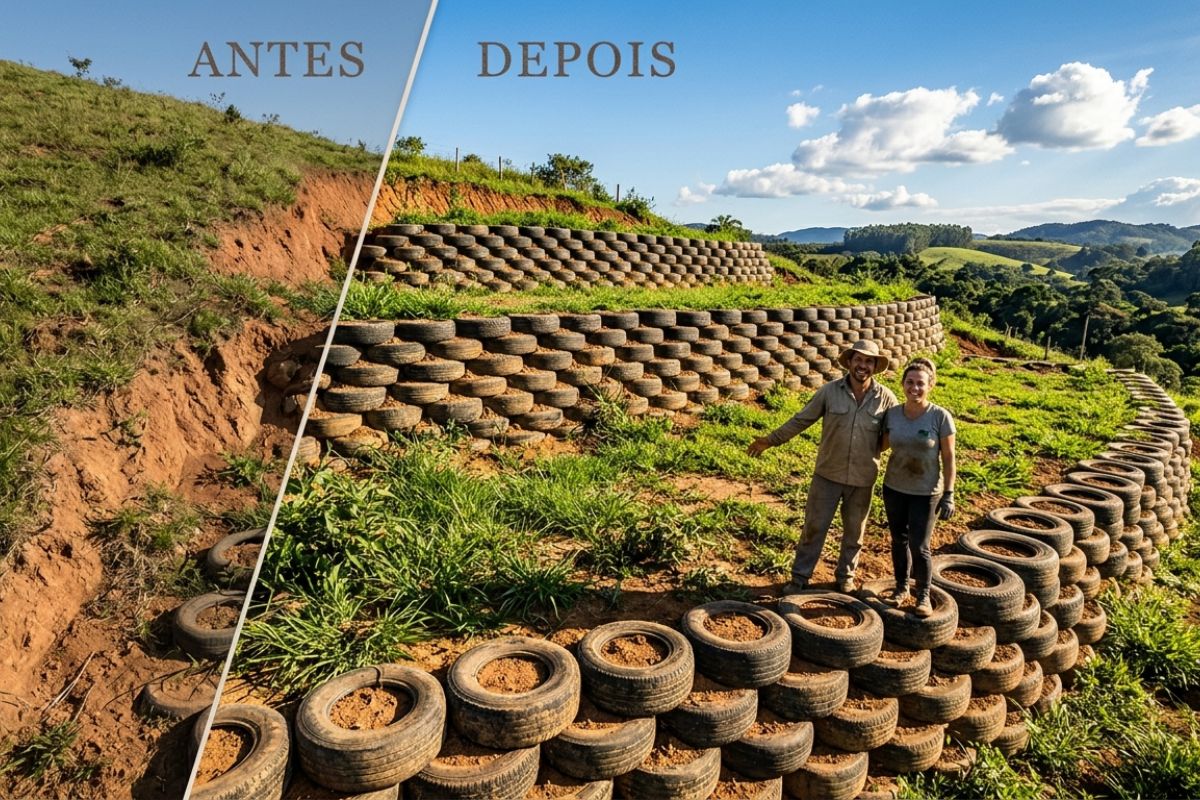
Couple shows how they built a retaining wall on their property using 400 old tires: sloped land turned into plateaus, tires are aligned, filled, and compacted with layers of soil, with grass helping in support and at almost zero cost.
-
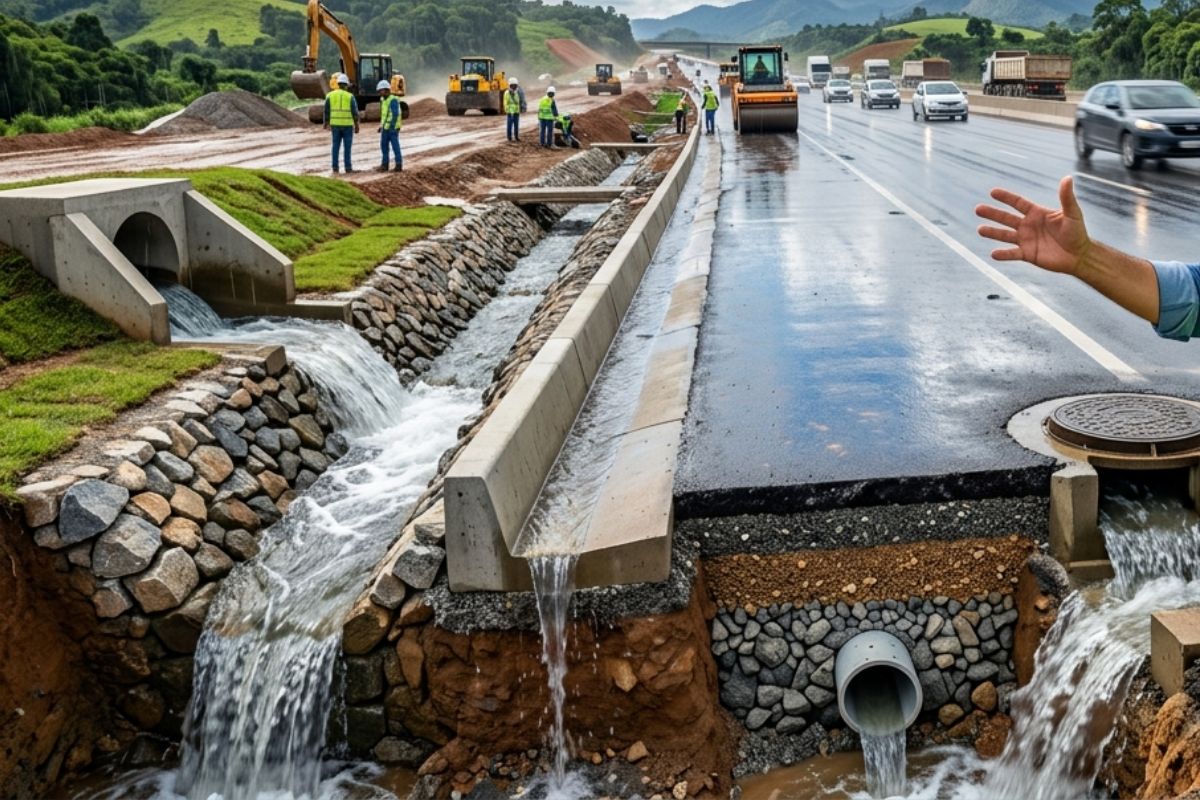
Engineer explains drainage during the rainy season: the difference between surface water and deep water, ditches, gutters, and water outlets on the road, as well as drains and drainage mattresses, to prevent erosion, aquaplaning, and flooding at the construction site today.
-
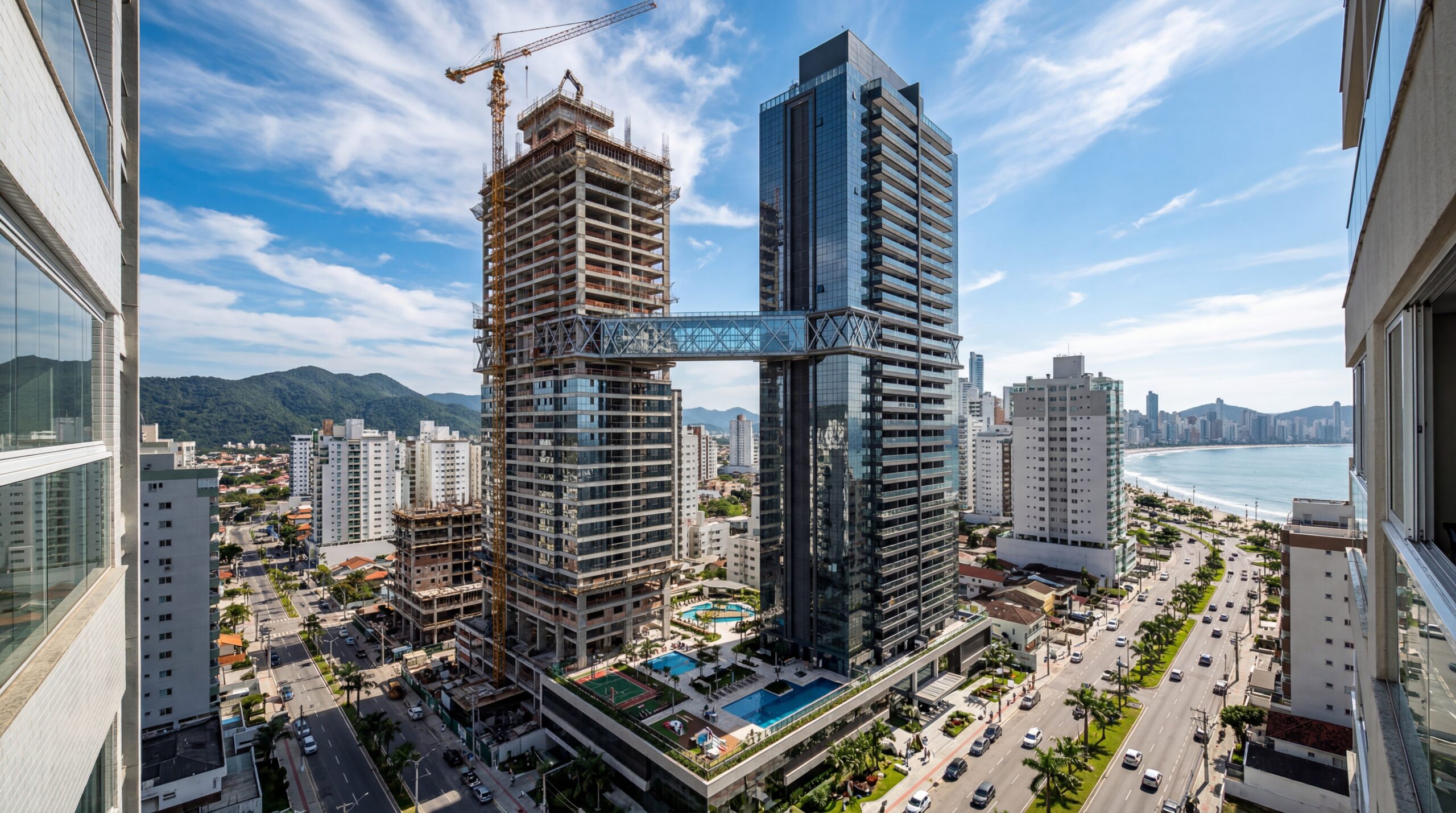
With 55 floors, 177 meters in height, a 15-meter walkway between the twin towers, ventilated facade, and 6,300 m² of leisure space, Ápice Towers already has one tower completed and another nearly at the top.

In these environments, structural components and parts of the finish can come out ready, with reduced tolerances, and proceed to the site already organized for fitting.
Despite the appeal, some descriptions accompanying this type of content tend to mix different techniques and, at times, swap materials and methods.
In the case of the building assembled in 28 hours, public information associates the project with a modular system from the Broad Group, presented by the company itself in videos, with units bolted and lifted by cranes.
In these presentations, the foundation of the system is described as modular and industrialized, but it is not possible to confirm, based on the open sources consulted, the claim that the main parts would be concrete “fitted together like Lego” nor that the assembly would completely dispense with concrete curing stages on-site.
Modular Construction and What Is Possible to Prove
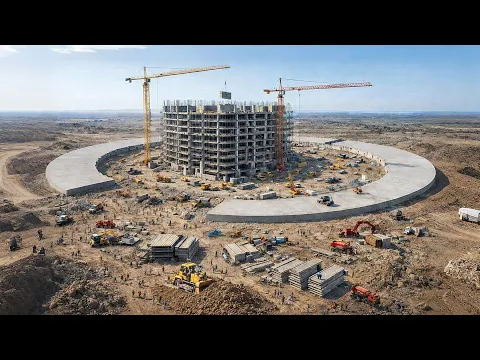

The accelerated assembly does not necessarily mean that a building “came out of nowhere” in a day.
In industrialized systems, the short time displayed on-site tends to reflect a long preparation off-site: design, module manufacturing, logistics, lifting planning, in addition to synchronized teams working in shifts.
In records that resonated internationally, the lightning construction is attributed to the Broad Group and its modular building system, with assembly through module lifting and mechanical fastening, something closer to an assembly line than a traditional site.
On the other hand, these sources do not detail, with the same degree of transparency, what infrastructure steps, inspections, and final finishes occurred before or after the interval shown as “28 hours and 45 minutes.”
Another common confusion is treating all pre-fabrication as “precast concrete.”
Industrialization can use concrete, steel, or hybrid systems, depending on the objective, supply chain, and type of construction.
The speed gain generally comes less from the material and more from standardization, repetition, and reduced rework.
Why Prefabrication Accelerates Construction Sites
When panels, slabs, or modules arrive ready, the site ceases to be a location of continuous production and becomes a hub for assembly and control.
This tends to reduce weather interferences and decrease dependence on stages that, in the conventional method, must respect curing, shoring, and serial execution schedules.
Still, industrialized constructions do not eliminate the need for precision.
The quick fitting only works if what was produced in the factory is compatible with what was executed on-site.

Small accumulated deviations can compromise alignment, sealing, acoustic performance, and installations.
Also factored in are issues of transportation and lifting.
Components weighing several tons require routes, equipment, and safety planning.
The speed shown in videos often presupposes adjusted logistics and a rehearsed assembly sequence.
Hospitals Built in Days During the Pandemic
The discussion on ultra-rapid constructions gained strength at the beginning of the Covid-19 pandemic, when Wuhan built emergency hospitals in a few days, in response to the pressure on the healthcare system.
The Huoshenshan Hospital was designed for about 1,000 beds and was completed in an approximate interval of ten days, according to reports covered by international media.
In the same phase, the Leishenshan Hospital was planned with around 1,600 beds and progressed at a similar pace, with part of the operation started before total completion.
These structures were associated with techniques of modularization and standardization, with strong logistical coordination and overlap of design and execution phases.
Technical analyses describe the case as an example of a compressed schedule, with design and construction occurring in parallel and intensive use of repeatable modules, along with digital coordination to track components and assembly sequence.
What the Text Describes About Industrial Production

The original content details a typical flow of prefabrication, with production in a factory, use of molds, checking flatness, cut and positioned reinforcements with defined spacing, vibration to reduce voids, and an initial curing period before transportation.
This logic is consistent with industrial processes of precast elements, where part of the quality control is facilitated by a controlled environment and repetition.
However, the text itself also states, in another section, that there would be “no waiting for curing” on-site.
In practice, even in precast systems, concrete curing occurs in the factory, and connections on-site may require grouting, sealings, and stages that depend on strength and inspection.
Without specific project data, it is not possible to affirm that assembly completely dispensed with curing times or that the main structure was executed only with fitted concrete parts.
Accuracy, Marketing, and International Comparisons
The promise of “millimeter precision” often appears as a marketing argument in content about industrialized construction.
Factory environments allow for tighter control of measurements and processes, which can reduce variations compared to sites exposed to weather and improvisation.
Still, precision is not synonymous with the absence of failures.
Installations, sealing, and structural performance depend on design, quality control, inspections, and maintenance over time.
The same applies to comparisons with other countries.

Stating that the speed would be “dozens or hundreds of times” greater than conventional construction requires equivalent parameters regarding the type of building, legislation, inspections, and safety criteria.
Without this equivalence, the comparison loses technical value.
Pressure for Infrastructure and Pandemic Numbers
When mentioning the impact of Covid-19, the text cites an estimate from the World Health Organization of approximately 15 million deaths associated with the pandemic.
In May 2022, the entity released an estimate of about 14.9 million excess deaths during the period from 2020 to 2021, considering direct and indirect impacts.
This context helps explain why emergency works have come to be used as a symbol of mobilization capacity.
The central point, however, is to separate what was a response to a specific crisis from what can be replicated as a permanent construction model.








-

-

-

-

15 pessoas reagiram a isso.