





 Portuguese
  English
  Spanish
  4 min of reading
  0 comments


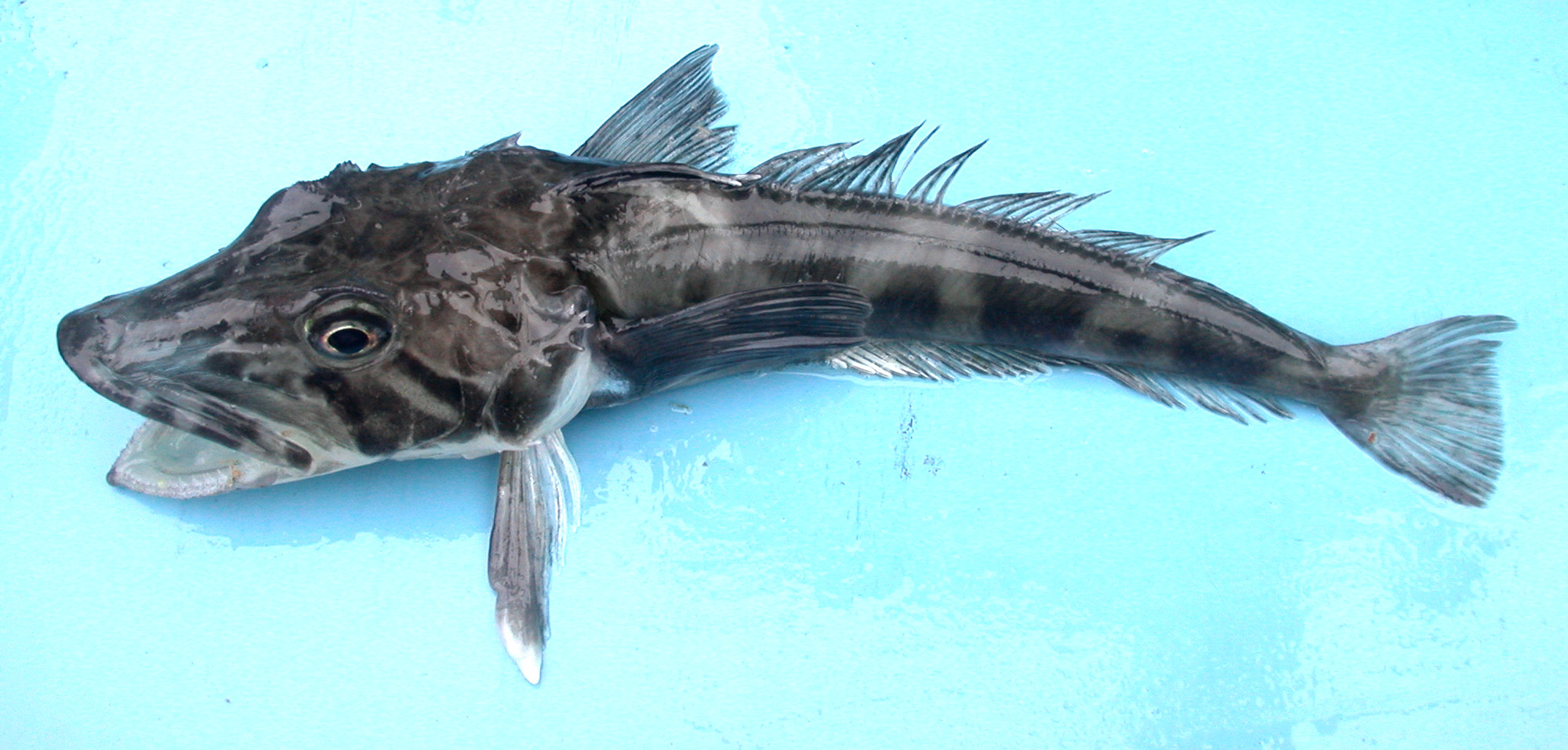
Without Hemoglobin and Living in Waters at −1.9 °C, Chionodraco Hamatus Produces Natural Antifreeze and Defies the Limits of Biology.
Chionodraco hamatus, known as the Antarctic icefish, represents one of the most extreme physiological adaptations ever observed among vertebrates. In an environment where seawater remains below zero year-round and ice dominates the landscape, this fish survives without red blood, without functional hemoglobin, and without the main mechanism that most animals use to transport oxygen. Still, it swims, feeds, grows, and reproduces in conditions that would be lethal for practically any other fish.
This biological paradox is not a result of chance. It is a direct outcome of millions of years of evolution in one of the planet’s most stable and extreme environments: the Antarctic Ocean.
Living at −1.9 °C Requires Unconventional Biological Solutions
The waters around Antarctica remain close to −1.9 °C, a temperature lower than the freezing point of most vertebrate body fluids.
-
Four humans are flying towards the Moon inside the Orion capsule launched by the SLS rocket, and on April 6, Artemis II will disappear behind the far side of the Moon without communication with Earth for nearly an hour.

-
Worlds covered by water, atmospheres filled with hydrogen, and the possibility of life beyond Earth: ocean planets are rewriting the map of cosmic search and forcing scientists to rethink where to look.

-
Argentina achieves the unimaginable after more than 110 years and reintroduces the largest native herbivore of South America to the Chaco to restore a lost link in nature.
-
Returning to the Moon now costs a billion-dollar bill and reignites the competition between the USA and China for science, technology, and rare minerals on lunar soil.


Under these conditions, ice crystals tend to form rapidly in tissues, rupturing cells and leading to almost immediate death. For Chionodraco hamatus, however, this scenario does not represent a constant threat, but rather the natural environment in which the species evolved.
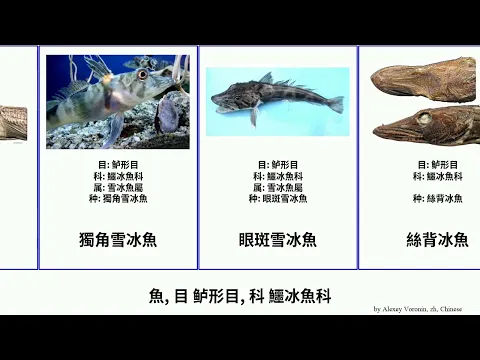

The thermal stability of the Antarctic Ocean, combined with the historical absence of large bony predators, has allowed this fish to follow a radically different evolutionary path from other aquatic vertebrates.
The Absence of Hemoglobin and Transparent Blood
The most well-known trait of Chionodraco hamatus is the almost complete absence of hemoglobin. Its blood is virtually transparent, lacking the typical red coloration caused by the protein responsible for oxygen transport in vertebrates. In many cases, genes associated with hemoglobin production are absent or inactive.
In any other environment, this condition would be fatal. However, the cold waters of Antarctica are rich in dissolved oxygen, allowing oxygen to be transported directly in the blood plasma, without the need for carrier molecules.
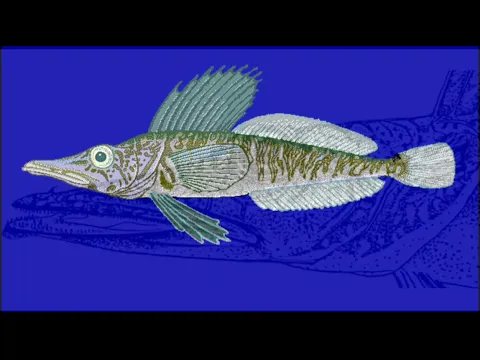
To compensate for the lower efficiency of this system, the fish has developed a proportionally larger heart, wider blood vessels, and a higher blood volume, ensuring sufficient flow to supply its tissues.
Antifreeze Proteins Prevent Ice Formation in the Body
Another pillar of Chionodraco hamatus’s survival lies in its production of antifreeze proteins. These molecules bind to ice microcrystals before they grow, preventing their expansion within tissues. Unlike mere lowering of the freezing point, these proteins act actively, blocking crystallization.
This mechanism is so effective that it allows the fish to maintain its bodily fluids in liquid form even in direct contact with water below zero. Without these proteins, survival in the Antarctic environment would be biologically impossible.
Slow Metabolism and Extremely Reduced Energy Consumption
The extreme cold has also shaped the metabolism of the icefish. Chionodraco hamatus exhibits a naturally slow metabolism, with low energy consumption and relatively smooth movements. This strategy reduces the need for oxygen and minimizes physiological wear in an environment where energy replenishment is limited.
Growth is slow, sexual maturity takes time to be reached, and longevity tends to be greater than that of temperate water fish. Everything in this organism has been adjusted for maximum efficiency in a scenario of scarce resources and permanently hostile temperatures.
Circulation Adapted to Compensate for Physiological Limitations
The absence of hemoglobin has forced Chionodraco hamatus to heavily invest in circulatory adaptations.
The heart pumps large volumes of blood with each beat, and the vessels have an enlarged diameter, reducing resistance to flow. This ensures that dissolved oxygen in the plasma continuously reaches the tissues.
Furthermore, the skin plays a complementary role in gas exchange. In cold and highly oxygenated waters, some oxygen can be absorbed directly through the body surface, further reducing dependence on conventional respiratory systems.
A Fish That Rewrites Basic Rules of Vertebrate Biology
From an evolutionary standpoint, Chionodraco hamatus is a rare example of how natural selection can eliminate structures deemed fundamental in other contexts. Hemoglobin, fast metabolism, and rapid growth have simply become disadvantageous in an extremely cold, stable, and predictable environment.
This extreme specialization, however, comes at a price. The icefish is highly dependent on the environmental conditions of Antarctica.
Rapid temperature changes, associated with global warming, pose a significant threat to species that lack the physiological flexibility to cope with warmer and less oxygenated waters.
What Science Learns from the Antarctic Icefish
The study of Chionodraco hamatus goes far beyond biological curiosity. Its antifreeze proteins are being studied for applications in organ cryopreservation, conservation of biological tissues, and even in the food industry. Meanwhile, the absence of hemoglobin provides valuable clues about circulation, oxygenation, and minimum limits for vertebrate survival.
Moreover, the icefish has become a sensitive indicator of climate change in the Antarctic Ocean, helping scientists understand how extremely specialized ecosystems respond to rapid environmental changes.
A Survivor Shaped by Absolute Cold
Chionodraco hamatus is not just a strange fish from Antarctica. It is living proof that evolution does not follow unique or predictable paths.
By surviving below zero without red blood, producing natural antifreeze, and thriving in an environment where almost no vertebrate can exist, this species redefines the known limits of animal life.
On a constantly changing planet, organisms like the Antarctic icefish remind us that nature can create extraordinary solutions, but also that these solutions are fragile when the environment that shaped them begins to disappear.







-

-

-

-

-

-

23 pessoas reagiram a isso.