





 Portuguese
  English
  Spanish
  5 min of reading
  0 comments


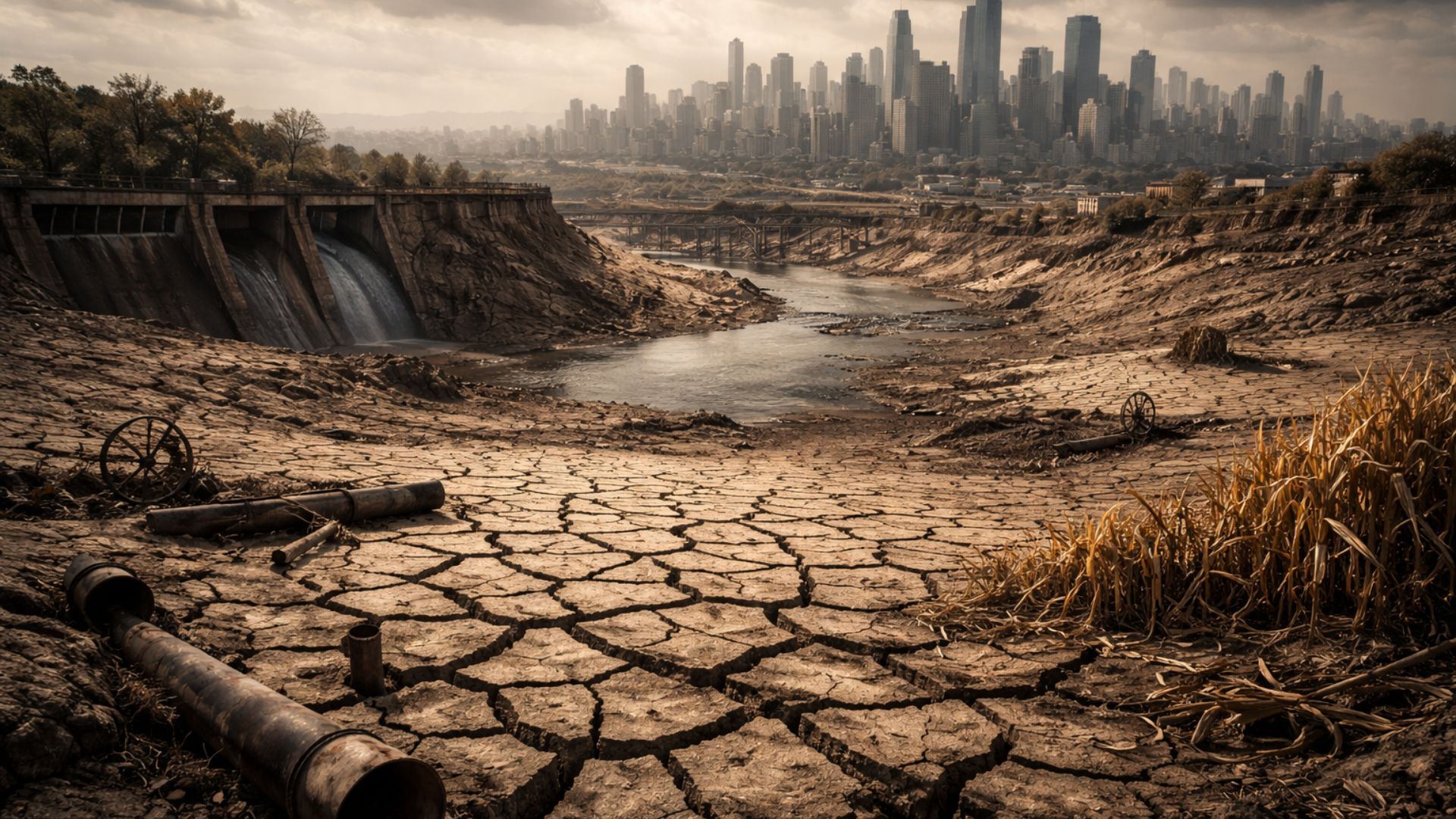
The Term “Global Water Bankruptcy” Gains Momentum in UN Report as It Points to Permanent Damage to Freshwater Sources, with Droughts, Pollution, and Overuse Pressuring Lakes, Aquifers, and Urban Systems.
Humanity has entered an era of “global water bankruptcy”, according to researchers associated with the United Nations, after decades of extraction beyond limits, pollution, and the impacts of global warming on rainfall, rivers, lakes, and aquifers.
The alert was presented this Tuesday (20) in a report from the United Nations University, which states that part of the damage to the system that generates and stores freshwater is already irreversible, and billions of people face severe shortages every year.
Financial Metaphor to Explain Freshwater Exhaustion
The document adopts a financial metaphor to describe the problem: the world is not only spending the annual “income” of renewable water, formed by precipitation and melting, but is also consuming the “savings” accumulated in aquifers, glaciers, soils, wetlands, and ecosystems.
-
Luciano Hang revealed that Havan’s air fleet has already accumulated more than 20,000 landings, 10,000 flight hours, and 6 million kilometers traveled, and he says that without the planes, the company would never have grown so quickly.

-
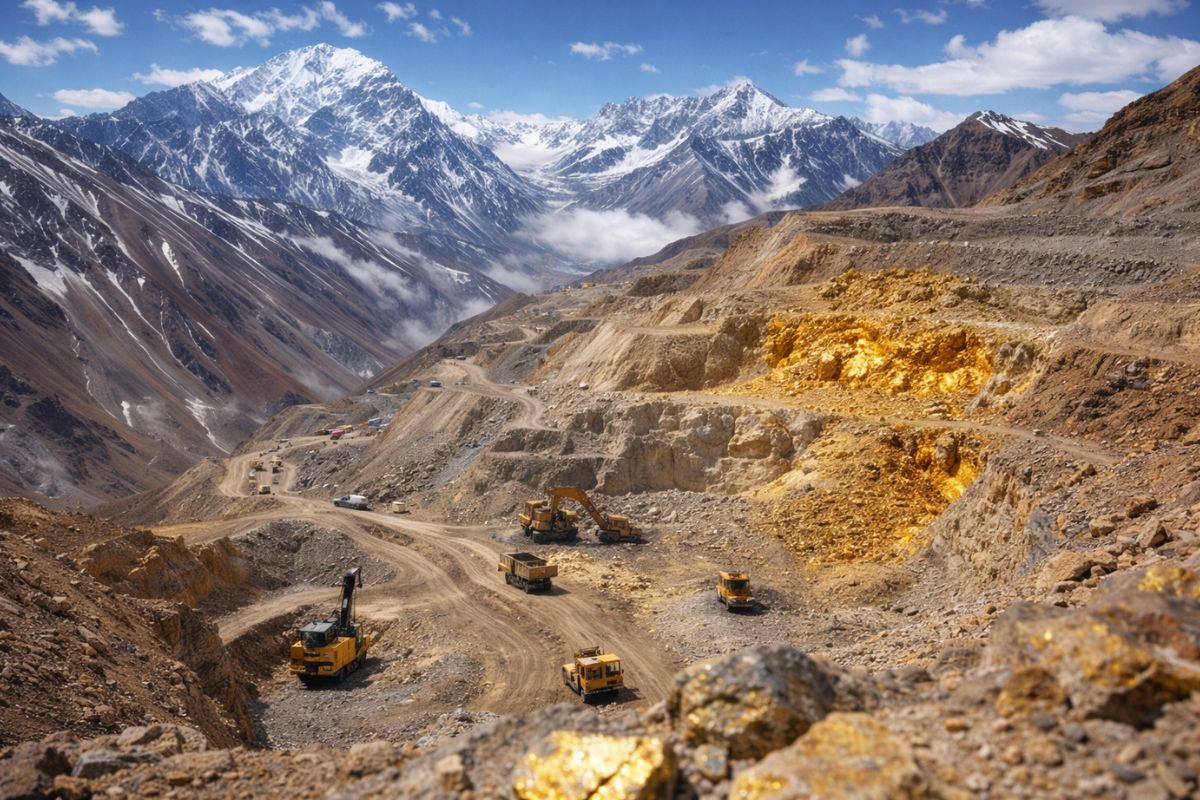
A historical discovery in the Andes Mountains reveals a gold deposit valued at 770 billion reais hidden over 4,000 meters above sea level on the border between Chile and Argentina, and the whole world is watching.
-
With just joint compound, white glue, and pigment, you can make a homemade paint that yields double the conventional amount, saves up to 70%, and leaves the wall with a finish that no one would believe wasn’t store-bought paint.

-
Home environment can influence the brain, mood, and well-being: studies indicate an increase of up to 15% in productivity, a reduction of 12% in stress with plants, and a direct impact of the circadian rhythm on the 24 hours of the day.


At the same time, contamination from sewage, agricultural waste, and industrial effluents further reduces the available volume of safe water, in a process that the authors compare to destroying what remains of resources.
Why the UN Rejects the Idea of “Temporary Crisis”

The director of the Institute for Water, Environment, and Health at the United Nations University, Kaveh Madani, argues that terms like “water stress” or “water crisis” no longer describe the extent and persistence of the scenario.
For him, calling it a crisis suggests a temporary shock, with a chance of returning to the previous level, which does not correspond to the loss of capacity for storage and regulation of freshwater in various regions.
“What appears on the surface as a crisis is, in fact, a new baseline,” the report states.
Global Indicators of Extreme Scarcity and Economic Costs
The assessment relies on global indicators that show simultaneous deterioration of different sources.
The report points out that nearly 4 billion people face severe scarcity for at least one month each year, and that nearly three-quarters of the population live in countries classified as “unsafe” or “critically unsafe” in terms of water.
The research also cites the global annual cost of droughts, estimated at US$ 307 billion, in addition to the pressure on irrigated agricultural areas.
Smaller Lakes, Declining Aquifers, and More Frequent Droughts
The deterioration is not limited to a basin, a country, or a continent, and tends to manifest in waves: less rain during critical periods, more evaporation on hot days, and greater irregularity between extremes of drought and storms.
The report describes losses in natural systems that used to function as “buffers,” including wetlands, forests, and soils capable of retaining water and releasing some of it gradually.

Metropolises Near “Zero Day” on Different Continents
In this context, large urban areas have oscillated near the so-called “zero day”, when supply drops to the point of requiring emergency measures and everyday access to water becomes unstable.
Cape Town, South Africa, faced this threat in 2018, with a forecast of interruption in household supply if reservoirs reached critical levels.
Chennai, India, experienced a reservoir collapse and episodes of dry taps in 2019, in a situation associated with insufficient monsoons and pressures on local sources.
Latin America has also entered the list of recent alerts: Mexico City faced, in 2024, the risk of worsening rationing and supply deterioration in vulnerable areas amidst drought, high dependence on aquifers, and losses in the distribution system.
São Paulo and the Recent Memory of the Cantareira Crisis
In Brazil, the São Paulo Metropolitan Region is often cited as an example of how a metropolis can approach the limit when rains fail for long periods and the infrastructure operates at capacity.
Between 2014 and 2015, the Cantareira System crisis led to contingency measures and decisions to interconnect basins to reinforce supply.
In January 2015, the National Water Agency authorized works to connect the Paraíba do Sul basin to the Cantareira, an initiative considered an alternative to reduce the vulnerability of the system.
The episode became a reference in debates about planning, demand management, and resilience, especially because it exposed how climate variations, urban growth, and land-use choices can converge and pressure water sources.
By associating the issue with other metropolises that have been close to “zero day,” the UN report tries to reinforce that the risk is not exclusive to arid regions nor limited to the Global South.
Chain Effects: Food, Energy, and Infrastructure
The report describes chain effects that go beyond domestic supply.
Droughts and water instability can affect crops, raise food costs, and pressure energy systems when hydroelectric reservoirs operate at low levels, in addition to increasing disputes over allocation in shared basins.
In parallel, intensive extraction of groundwater in some regions has been associated with subsidence, with land sinking and damage to infrastructure, which can increase vulnerability to flooding.
Old Rules for a Climate That Has Already Changed
The text also draws attention to the mismatch between old rules and the current climate.
Madani states that laws, contracts, and treaties have often been designed for a hydrological reality that has already changed, which fosters conflicts among sectors and users competing for a retreating resource.
In this logic, recurring solutions like drilling deeper wells or extracting more water from rivers may worsen the problem by accelerating the depletion of reserves and environmental degradation.
Agriculture at the Center of Changes, with 70% of Water Consumption
The main recommendation is to treat this moment as a structural reorganization: recalculating how much safe water actually exists, establishing priorities, and redesigning public policies and investments for a “smaller hydrological budget”.
The report cites actions such as protecting and restoring ecosystems that filter and store water, as well as reforms in agricultural use, since agriculture accounts for about 70% of freshwater consumption by humanity.
Debate on the Term “Bankruptcy” and the Risk of Discouragement
At the same time, the choice of the term “bankruptcy” is itself a subject of discussion.
Hydrologist Rabi Mohtar, who did not participate in the report, agrees that the era of abundance is over and advocates for “responsibility for every drop”, but fears that the term generates discouragement by suggesting an inevitable failure.
Madani, on the other hand, maintains that acknowledging the severity is a condition for difficult choices, including restrictions on new ventures in already stressed areas and limits on water-intensive activities.
Inequality in Access to Water and Sanitation Aggravates Risks
The authors also emphasize that uneven changes tend to weigh more heavily on poor and vulnerable populations, widening inequalities in access to water and sanitation.
The report itself mentions that 2.2 billion people still lack safely managed drinking water and that 3.5 billion do not have safely managed sanitation, a context that aggravates health risks when water availability declines.




Seja o primeiro a reagir!