





 Portuguese
  English
  Spanish
 3 min of reading
  1 comment


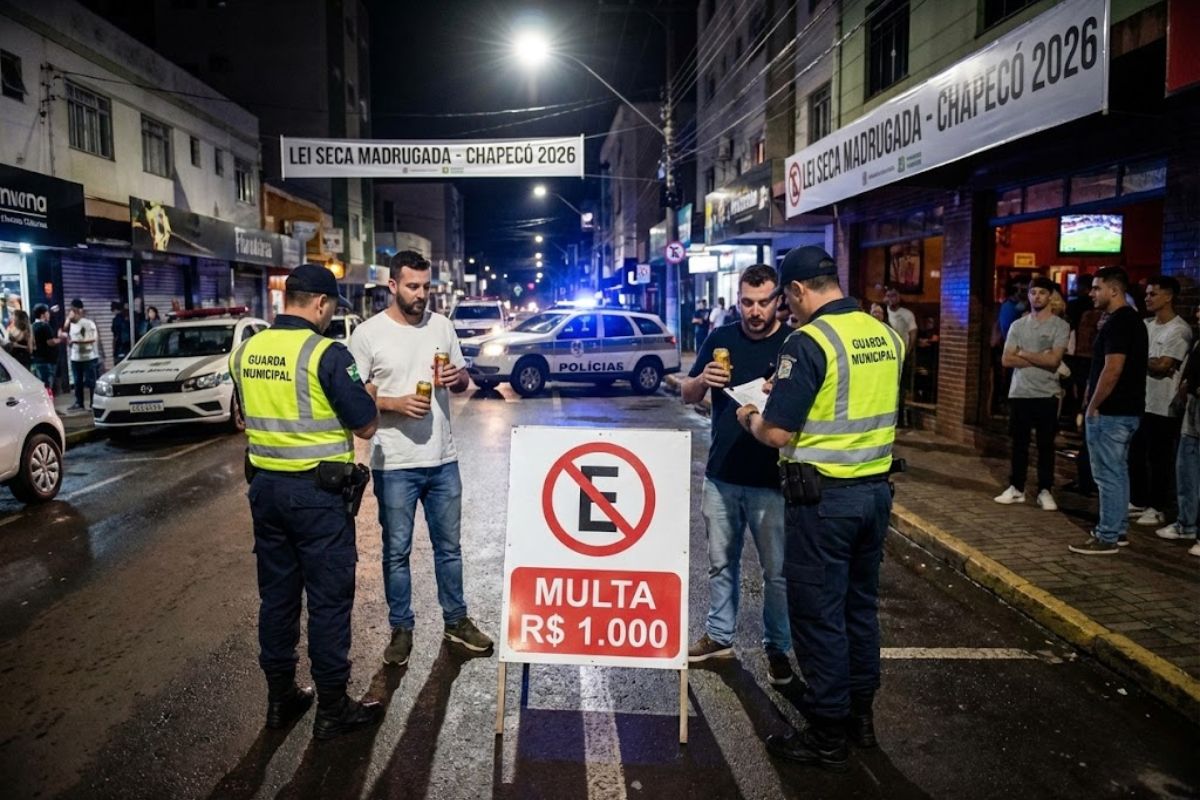


The City’s Decision in Santa Catarina Changes the Nighttime Dynamic by Prohibiting Drinking in the Street During the Night, Increasing Municipal Oversight, Harshening Financial Penalties, and Affecting Residents and Establishments with Fines That Can Exceed R$ 1,000 Starting in 2026
The city of Chapecó, in the West of Santa Catarina, has adopted stricter measures to control the consumption of alcoholic beverages in public spaces, with a direct impact on the nighttime routine. In effect since 2023, the municipal legislation establishes clear restrictions for the night, increasing oversight and raising the amount of fines projected for 2026.
According to the rules defined by the city, the objective is to enhance safety, reduce incidents of violence, and minimize disturbances to public peace during critical hours. The changes affect both individuals and commercial establishments, which will now experience more severe penalties.
City Establishes Prohibition of Alcohol Consumption at Night
The regulation of the city prohibits the consumption of alcoholic beverages between 2 AM and 7 AM in streets, squares, sidewalks, parks, bike lanes, and other public spaces.
-
India announces a plan of $3.06 billion to bring aviation to forgotten regions: 100 new airports, $1.07 billion in subsidies, and regional routes guaranteed for 10 years, from 2026 to 2036, away from the centers.

-
Brazil blocked a proposal from the United States at the WTO that would make the exemption from tariffs on digital products like streaming and ebooks permanent, favoring American tech giants at the expense of developing countries.

-
IPTU exemption for seniors in 2026: see how to secure the benefit.

-
The institute that trained the greatest aerospace engineers in Brazil has just opened its first campus outside São Paulo after 75 years: ITA Ceará will have R$ 445 million, new courses in energy and systems, and classes are expected to start in 2027.


The restriction applies to any type of beverage, regardless of alcohol content.
The decision was made following public demands for greater control during the night, a period associated with conflicts, excessive noise, and disordered alcohol consumption.
The city aims to reorganize the use of public space during this timeframe, altering established habits.
Fines Increase and Can Exceed R$ 1,000 in 2026
For individuals, an infraction in the city results in a fine equivalent to 20 Municipal Tax Reference Units, a value that currently corresponds to just over R$ 100 and doubles in cases of reoffending.
With the annual adjustment of the tax unit, the penalty is expected to increase progressively.
In the case of establishments, the rules of the city are even more strict.
Convenience stores and similar points of sale are subject to fines of 200 tax units, which already exceed R$ 1,000, in addition to the risk of having their operating license revoked after the third notification.
The financial impact becomes a central factor in complying with the law.
City Changes Operating Hours of Night Commerce
The legislation also modified the operating hours of beverage commerce in the city.
Establishments must end in-person service by midnight.
Between 12 AM and 2 AM, sales are allowed only through delivery, with closed doors and clear communication to consumers about the prohibition of drinking in the street.
After 2 AM, any sales or consumption outside of the rules can result in immediate fines.
The city has established clear operational limits to reduce nighttime circulation associated with alcohol, altering the dynamics of bars and convenience points.
Strengthened Oversight and Use of Technology
Oversight is the direct responsibility of the city, carried out by officials with administrative police authority.
The operations include photographic records, video recordings, and other technological means for proving infractions.
The more constant presence of agents during the night reinforces the preventive nature of the regulation.
The city relies on active oversight as a tool to change behaviors, especially in areas with higher nighttime traffic.
Financial Consequences Go Beyond the Fine
In addition to immediate payment, the city foresees additional sanctions for those who do not pay the fines.
The offender may have their name registered with credit protection agencies, face notarized protests, and be included in the municipal active debt.
The legislation also authorizes the seizure and disposal of beverages found in irregular situations, with no option for return.
Part of the collected amounts should be directed to educational campaigns and preventive actions related to alcohol consumption.
With stricter rules, intense oversight, and high fines, do you believe the city will be able to permanently change the nighttime routine and the behavior of residents and merchants in Santa Catarina?










Tem cidade obscura que faz qualquer coisa para aparecer e ter uma pequena relevância no cenário nacional.
Essa vila não pode fazer lei que é claramente uma competência da união.
Quem receber essa multa e recorrer,ganha fácil.