





 Portuguese
  English
  Spanish
  4 min of reading
  2 comments


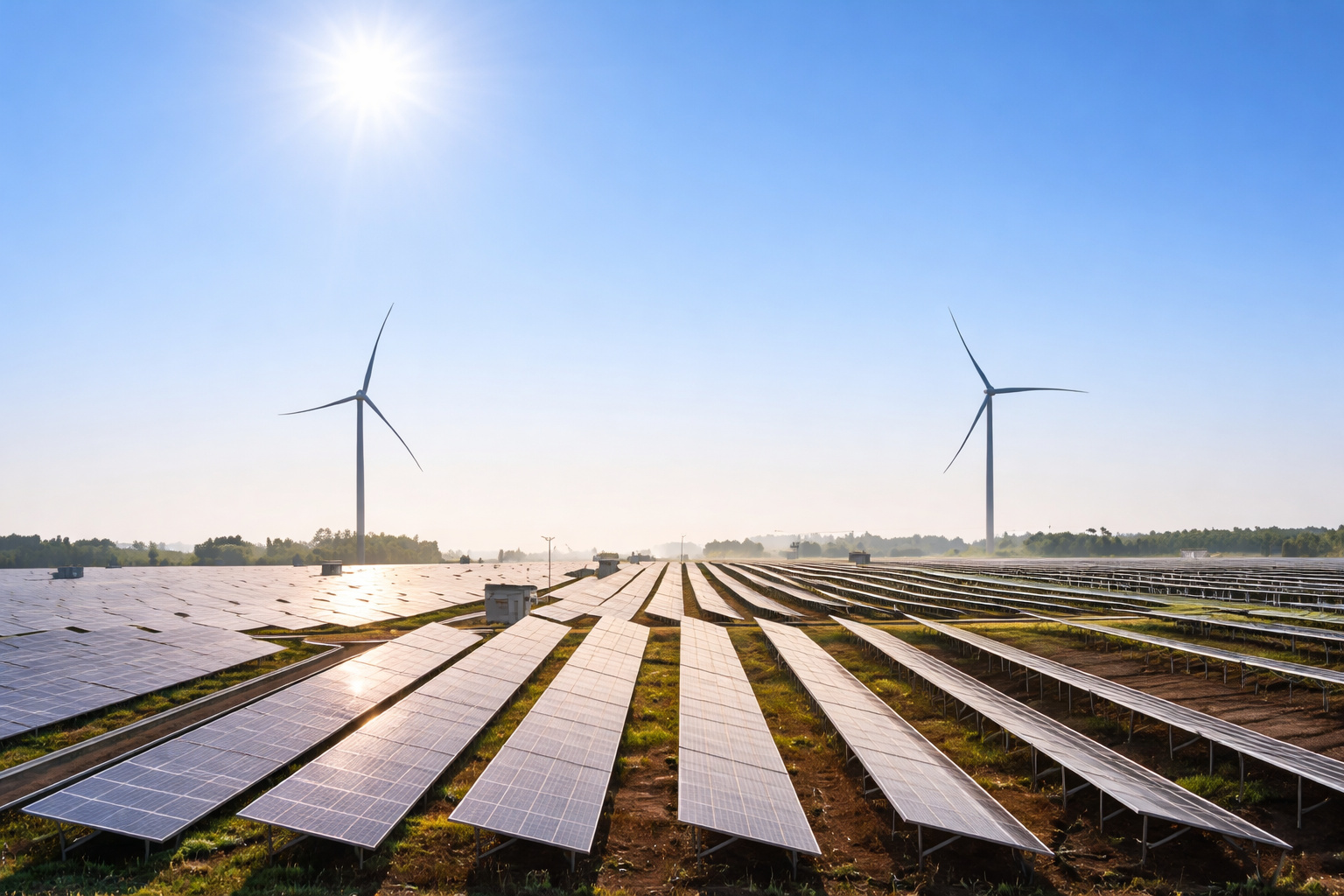

On Clean Energy Day, Renewable Technologies and Efficient Processes Show How Companies and Countries Reduce CO2 Emissions and Advance in the Energy Transition Sustainably.
Clean Energy Day, above all, plays a central role in the global discussion about climate change, energy security, and sustainable economic development. In this sense, the date reinforces the need to accelerate the transition to renewable sources, as well as to reduce greenhouse gas emissions and, at the same time, adopt production models aligned with a low-carbon economy.
In 2026, moreover, this debate gains even more strength, especially in light of technological advancement and the increasing involvement of companies, governments, and investors in cleaner energy solutions.
Throughout history, on the other hand, the energy sector has driven industrial growth and, consequently, sustained economic development. However, at the same time, it has also concentrated a large part of global CO2 emissions.
-
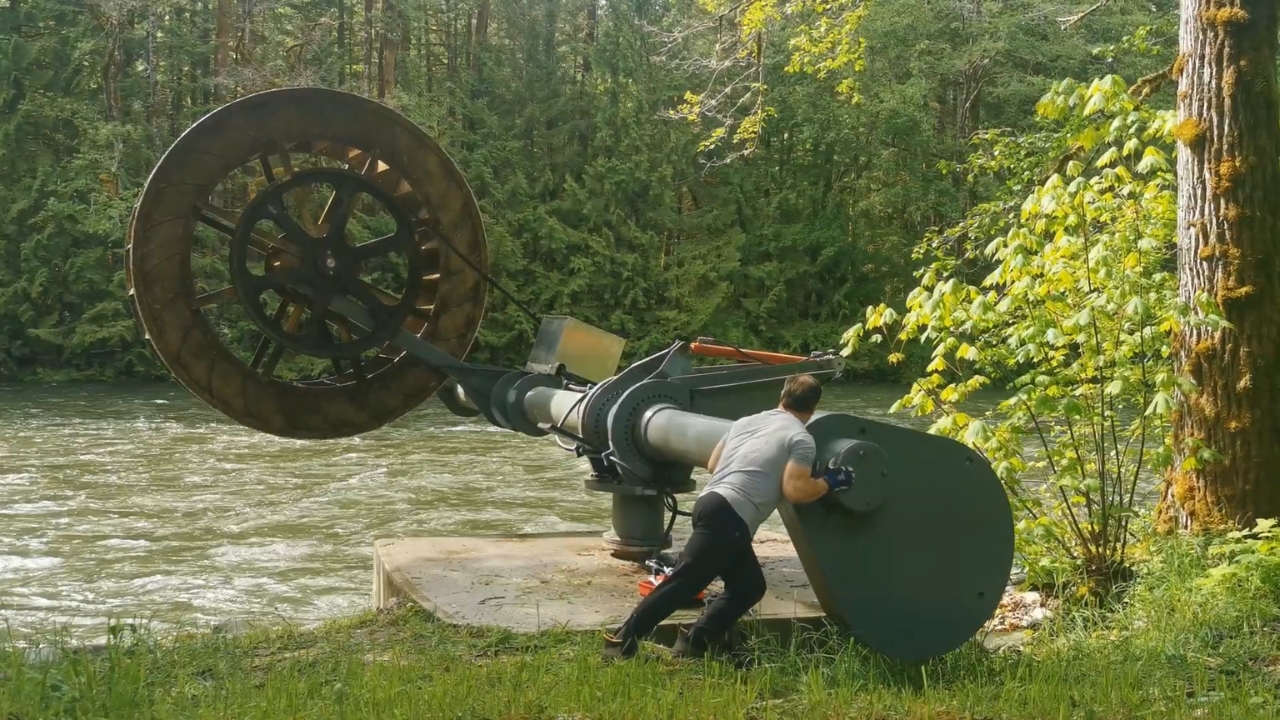
A Canadian retiree creates a hydroelectric system on a real river, generating energy continuously throughout the day and demonstrating how the power of water can supply a house with stability even in a simple structure.
-
Petrobras reaffirms its commitment to the market and ensures that it will carry out the energy transition safely to maintain national sovereignty.

-
Researchers discover a possible hydrogen deposit of up to 46 million tons beneath an ancient coal basin, and the volume could exceed half of the entire global production.

-
China bets on the Fishery-PV model and transforms fish farms into giant solar plants, covering ponds with panels that generate energy while utilizing the same space for large-scale aquaculture production.

Since the Industrial Revolution, for example, the intensive use of coal, oil, and natural gas has shaped the global energy matrix. Over time, however, this model has begun to generate severe environmental impacts, intensifying extreme weather events.
In light of this scenario, therefore, Clean Energy Day invites reflection on the past and, above all, points to the need for a structural change.
In Brazil, in turn, the debate takes on its own characteristics. This occurs because the country has built, over decades, one of the most renewable energy matrices in the world. Currently, hydropower, biomass, solar energy, and wind energy play a prominent role.
In 2024, for example, renewable sources accounted for over 88% of the national electric matrix, a result of long-term planning and the abundance of natural resources. Still, despite these advancements, strategic sectors of the economy continue to require more efficient solutions to reduce emissions.
The Role of Industry in the Consolidation of Clean Energy
Even in light of significant progress, the industrial, mineral, and transportation sectors continue to concentrate a large part of emissions. Therefore, technologies aimed at decarbonization gain prominence and, in this way, give practical meaning to Clean Energy Day by transforming environmental commitments into measurable results.
In this context, the intensive use of renewable energy in high-complexity industrial processes represents one of the most relevant solutions. Projects that integrate mining, metallurgy, and steelmaking with clean sources drastically reduce the carbon footprint.
Furthermore, they maintain high levels of productivity and competitiveness. Thus, the electrification of processes, combined with solar and wind energy, redefines industrial standards and strengthens more sustainable value chains.
Moreover, companies accelerate the modernization of industrial plants focused on energy efficiency. By replacing outdated equipment and simultaneously automating processes, industries gain better control over energy consumption.
Consequently, they reduce losses, optimize operations, and improve environmental performance, proving that economic efficiency and environmental responsibility go hand in hand.
Energy Efficiency and Innovation as Engines of Decarbonization
This set of innovations, therefore, reduces CO2 emissions, improves cost predictability, and strengthens the competitiveness of companies. On Clean Energy Day, thus, these examples consolidate the perception that the energy transition generates economic value and opens up new business opportunities.
At the same time, advanced biofuels occupy an increasingly strategic role in this process. Unlike the first generations, new technologies use more efficient feedstocks, agricultural residues, and crops adapted to the Brazilian climate. In this way, they enhance the potential for emissions reductions and integrate energy, agriculture, and environmental preservation.
In addition to replacing fossil fuels, these solutions contribute to the recovery of degraded areas, strengthen regional economies, and reduce pressure on natural resources. By 2026, therefore, biofuels consolidate as one of the main tools of the energy transition, reinforcing the principles of Clean Energy Day.
Waste, Circular Economy, and New Energy Sources
Similarly, the valorization of waste as an energy source is gaining more space. The conversion of organic waste into thermal or electric energy reduces methane emissions and consequently decreases dependence on landfills. Additionally, it strengthens the circular economy by transforming environmental liabilities into energy assets.
In Brazil, in this sense, initiatives that utilize agro-industrial and urban waste demonstrate how waste management can integrate the decarbonization strategy. At the same time, these solutions reduce environmental impacts in cities, stimulate local chains, and expand access to clean energy.
In the mineral sector, on the other hand, innovation advances with the development of inputs with higher purity and lower carbon intensity. Ores that require less energy in subsequent industrial stages, therefore, reduce emissions throughout the production chain and increase the country’s competitiveness in increasingly demanding international markets.
Planning, Social Impact, and Long-Term Vision
This transformation, therefore, responds to the global demand for materials aligned with rigorous environmental criteria and highlights that decarbonization depends on integrated strategic decisions. On Clean Energy Day, thus, this movement symbolizes a structural change in the relationship between industry, the environment, and society.
Beyond technologies, the progress observed by 2026 stems from consistent planning, effective public policies, and long-term investments. In this scenario, clear regulatory frameworks and incentives for innovation create security for clean energy projects to gain scale and continuity.
Finally, the energy transition also generates significant social impacts. Clean energy projects create jobs, strengthen regional economies, and offer new opportunities to communities historically dependent on carbon-intensive activities. In this way, Clean Energy Day represents not only an environmental milestone but also a commitment to a just, inclusive, and sustainable transition.
As 2026 progresses, therefore, decarbonization ceases to be a distant goal and begins to integrate strategic decisions of the present. Celebrating Clean Energy Day means recognizing that these technologies are already shaping a new energy model, more efficient, resilient, and prepared for the future.










I was diagnosed with Parkinson’s disease a year ago at the age of 67. For several months I had noticed tremors in my right hand and the shaking of my right foot when I was sitting. My normally beautiful cursive writing was now small, cramped printing. And I tended to lose my balance. The neurologist had me walk down the hall and said I didn’t swing my right arm. I had never noticed! I was in denial for a while, as there is no history in my family of parents and five older siblings, but I had to accept I had classic symptoms. I was taking amantadine and carbidopa/levodopa and was about to start physical therapy to strengthen muscles. I used different supplements that didn’t work, so last July, I tried the PD-5 protocol—the best decision ever! My tremors eased, my energy returned, and I sleep soundly. I feel like a new woman, and I can walk and exercise again. I got the PD-5 from www. limitlesshealthcenter. com
I was diagnosed with Parkinson’s disease four years ago. For over two years, I relied on Levodopa and several other medications, but unfortunately, the symptoms kept getting worse. The tremors became more noticeable, and my balance and mobility started to decline quickly. Last year, out of desperation and hope, I decided to try a herbal treatment program from NaturePath Herbal Clinic.
Honestly, I was skeptical at first, but within a few months of starting the treatment, I began to notice real changes. My movements became smoother, the tremors subsided, and I felt steadier on my feet. Incredibly, I also regained much of my energy and confidence. It’s been a life-changing experience I feel more like myself again, better than I’ve felt in years.If you or a loved one is struggling with Parkinson’s disease, I truly recommend looking into their natural approach. You can visit their website at www. naturepathherbalclinic .com
info@ naturepathherbalclinic .com