





 Portuguese
  English
  Spanish
  4 min of reading
  0 comments


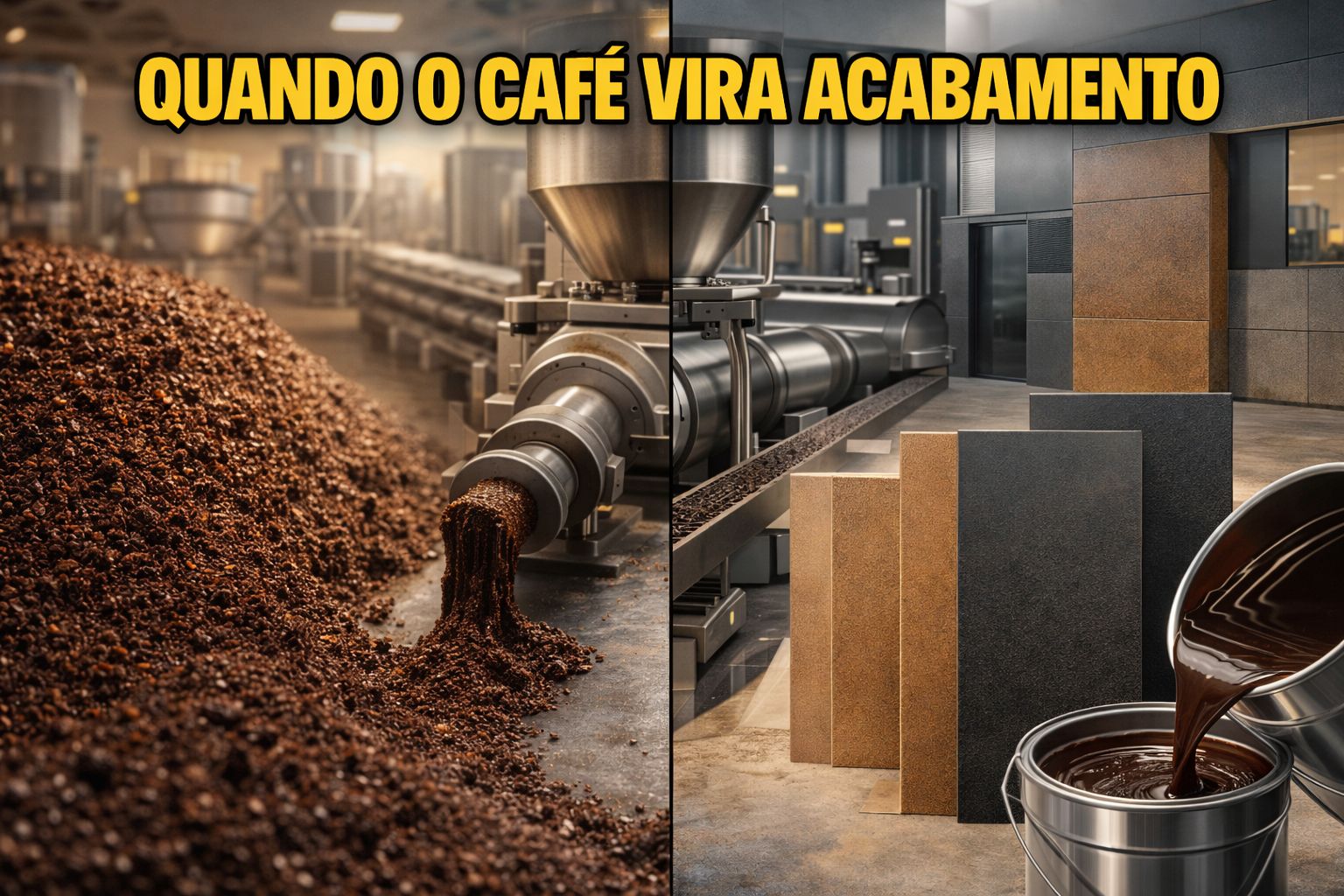
Coffee Grounds, A Waste Generated at Over 6 Million Tons Per Year, Is Becoming An Industrial Raw Material for Paints, Resins, Composites, and New Building Materials.
Coffee is one of the most consumed beverages on the planet, and its production generates a significant byproduct: coffee grounds. Technical estimates from the coffee industry indicate that approximately 6 million tons of coffee grounds are generated worldwide each year, resulting from the industrial production of instant, espresso, and filtered coffee.
Despite the enormous volume, most of this waste is still discarded in landfills or used as domestic fertilizer — a fate that ignores its high potential as industrial raw material, especially when dried and properly processed.
From Grounds to Industrial Input: Particle Size And Chemistry That Matter
Coffee grounds contain:
-
Historic bankruptcy of Centauro shocks the market, and the century-old company puts more than 500,000 products, machines, and complete infrastructure up for online auction.

-
New shoe factory in Ceará is expected to create 400 jobs and strengthen the local economy.

-
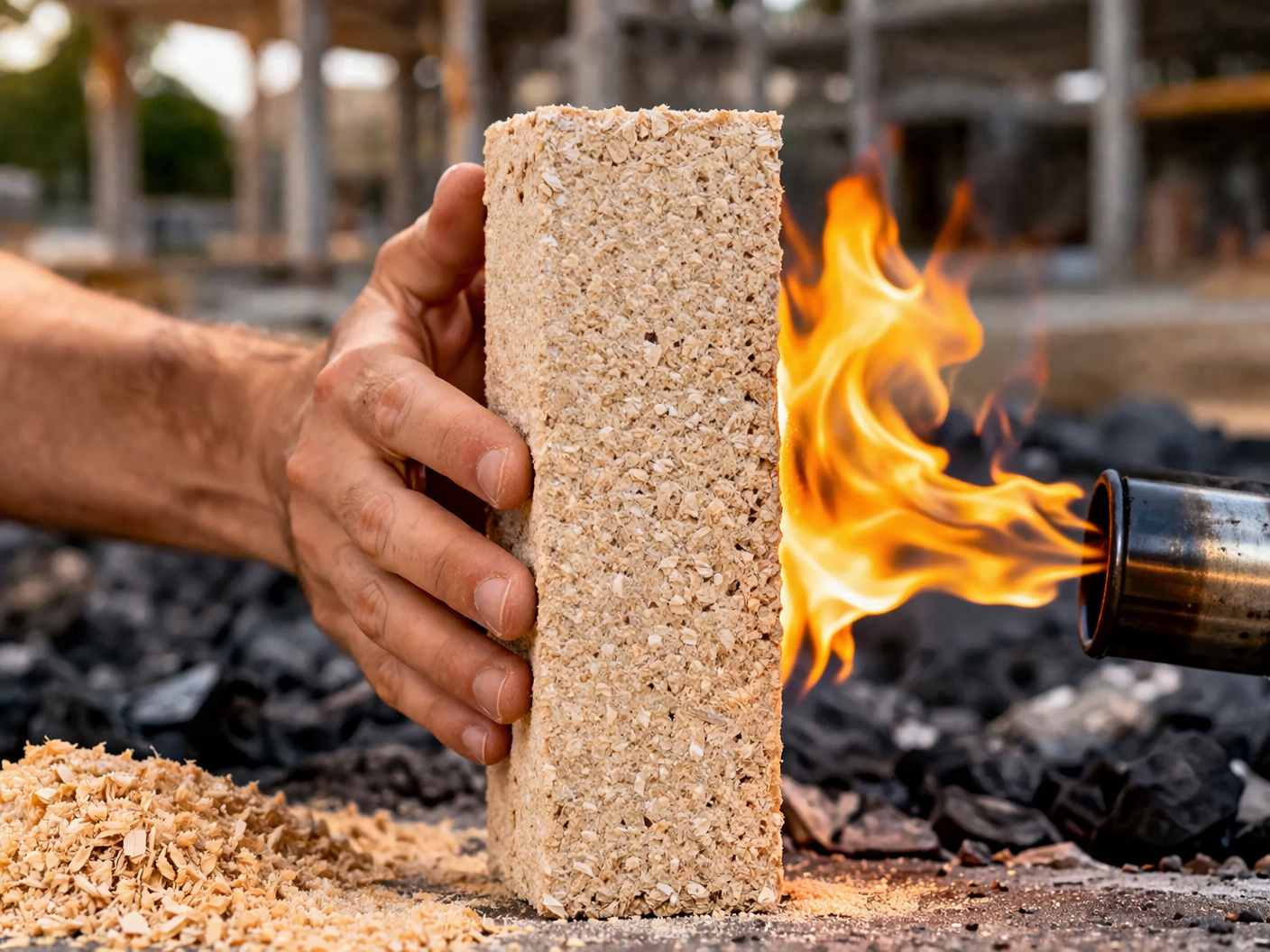
No one imagined it, but a mixture of sawdust with a mineral that fights fires surprises scientists with a result that changes the course of fire-resistant construction.
-
From empty land to a high-end house, wooden construction uses a lightweight system, metal structure for the foundation, ventilated ceramic cladding, and special windows to create an efficient and comfortable living space throughout the year.


- lignin and cellulose, which can act as reinforcement in composites;
- fine particles with interesting physical potential, capable of interacting with polymeric binders;
- aromatic compounds and essential oils, utilized in high-value chemical applications.
The controlled particle size of the grounds — obtained after drying and grinding — allows for its use as filler or additive in industrial materials, both in polymers and in high-performance resins and paints.
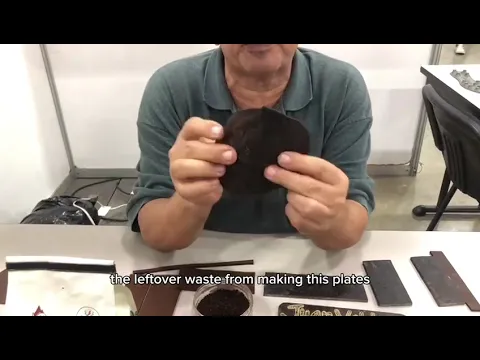

This physical treatment transforms the waste into a technical ingredient in the physics of the final material, enabling real applications in sectors where texture, adhesion, density, and composition make a difference.
Paint and Coating: When Waste Becomes Industrial Finish
One of the most advanced applications for coffee grounds is in the field of paints and coatings. In this area, the grounds can act as:
- natural pigment or reinforcing filler;
- element of texture and opacity;
- a reducer of dependence on expensive or polluting mineral fillers;
- aesthetic component for rustic and decorative surfaces.
In laboratories and startups, grounds are already being mixed with resins and polymers to produce low-emission natural paints applicable on wood, ceramic, metals, or interior walls.
This is a concrete path to reduce the use of titanium dioxide, calcite, and other non-renewable mineral fillers, opening space for organic-mineral hybrid formulations, a growing trend in the coatings industry.
Resins and Composites: Natural Reinforcement in Engineering Materials
Researchers have been testing coffee grounds as reinforcement in polymeric composites, with promising results, especially when combined with biodegradable polymers or epoxy resins.
The grounds can be incorporated into:
- thermoplastic polymers,
- thermosetting resins,
- plant-based biopolymers.
Studies indicate that coffee grounds can represent up to 40% of the volume of a composite, altering properties such as:
- elastic modulus,
- thermal conductivity,
- dimensional stability,
- acoustic absorption,
- final density.
This type of composite is already being applied in:
- acoustic panels,
- furniture,
- household utensils,
- 3D printed parts,
- decorative objects,
- automotive interiors.
Here, the waste ceases to be disposable organic matter and becomes part of engineering materials.
Adsorption and Purification: A High-Value Use
Another industrial area is the use of coffee grounds in adsorption of heavy metals and contaminants. Its porous surface and rich carbonaceous compounds make it useful in:
- wastewater treatment systems,
- water purification processes,
- retention of metal ions in industrial solutions.
This is a more technical field but highly valuable, as it replaces expensive synthetic adsorbents and has direct environmental applications.
An Emerging Industrial Value Chain
The transformation of coffee grounds into industrial input involves a chain of steps, including:
- Controlled drying — to avoid mold and extend shelf life;
- Grinding and sieving — to standardize particle size;
- Physicochemical treatment — to improve compatibility with polymers;
- Industrial formulation — integration with resins, pigments, or mineral fillers;
- Physical and chemical testing — adhesion, resistance, durability, emissions.
Each step has its own industrial value and creates economic opportunities for different sectors.
Economy and Environmental Impact In Perspective
Most coffee grounds are discarded without any industrial use, which:
- fills landfills,
- generates gas emissions during decomposition,
- wastes a material rich in lignocellulose.
When integrated into industrial chains, it reduces the use of:
- synthetic pigments,
- non-renewable mineral fillers,
- petroleum-derived polymers.
Additionally, it adds a practical layer to the circular economy, elevating a low-value waste to a high-potential input.
The Waste That Became An Industrial Resource
Coffee grounds are no longer just the leftover powder after brewing the drink. With drying, particle size control, and smart formulation, they are entering the field of materials engineering, contributing to:
- new aesthetics in facades and interiors,
- more sustainable hybrid composites,
- reduced industrial costs,
- new markets for alternative materials.
This is the type of silent transformation that changes entire production chains — moving from the coffee pot to the industry.









-

2 pessoas reagiram a isso.