





 Portuguese
  English
  Spanish
  5 min of reading
  4 comments


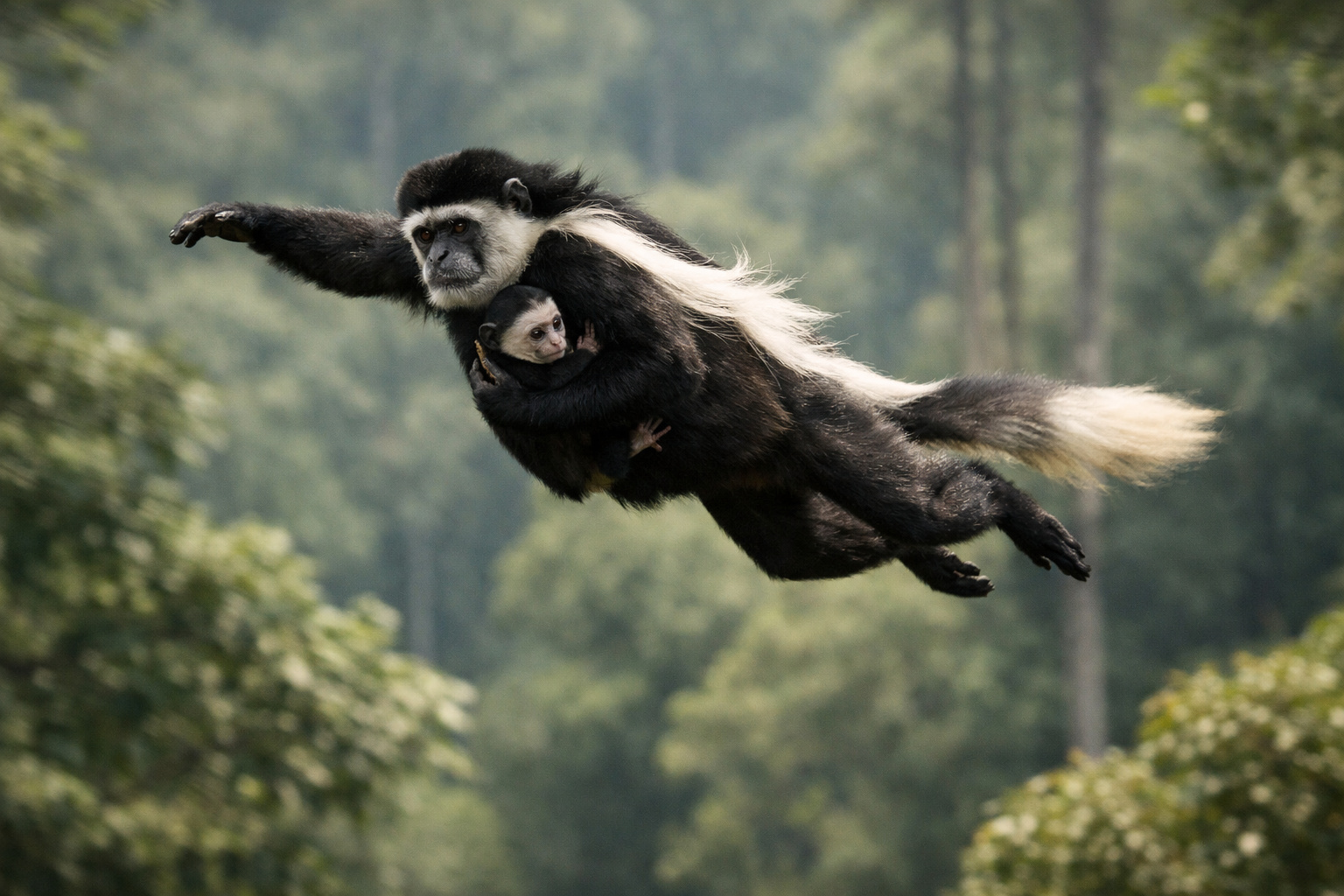


Jumping Between Trees 20 Meters High With Babies Clinging to Its Body, the Colobus Monkey Shows How Physics and Adhesion Determine Survival in the Canopy.
The colobus, an African primate recognizable by its slender body and long tail, lives in a setting where the ground is a threat and the sky is refuge. Unlike many mammals that split their time between ground and trunk, it practically never descends. Its life unfolds at more than 15 or 20 meters high, where each trunk, branch, and natural bridge is an opportunity for escape and survival. It is in this environment that the colobus executes jumps that seem choreographed, balancing mass, speed, wind, and often, the additional weight of a baby clinging to its belly or back.
This behavior is not just impressive acrobatics; it is a combination of biomechanics, parental care, and real-time environmental reading that defines the difference between perpetuating the lineage or disappearing to predation.
20-Meter Jumps and the Invisible Physics of Escape in the Canopy
When a terrestrial predator approaches — whether leopards, wild dogs, or even humans — the colobus does not fight, does not confront, does not negotiate territory. It simply disappears into the canopy. And this is only possible because its long, elastic muscles, combined with tough tendons, transform each jump into a calculated ballistic trajectory without equations but with instinctive precision.
-
The gigantic steel shell built to contain Chernobyl for a century has been pierced by a drone, exposing a critical system and creating a hole that could cost over 500 million euros to repair.

-
Brazilian Navy reaches a new level by taking over an airport with a 1,600-meter runway used by 1,800 military personnel and autonomous attack drone testing.
-
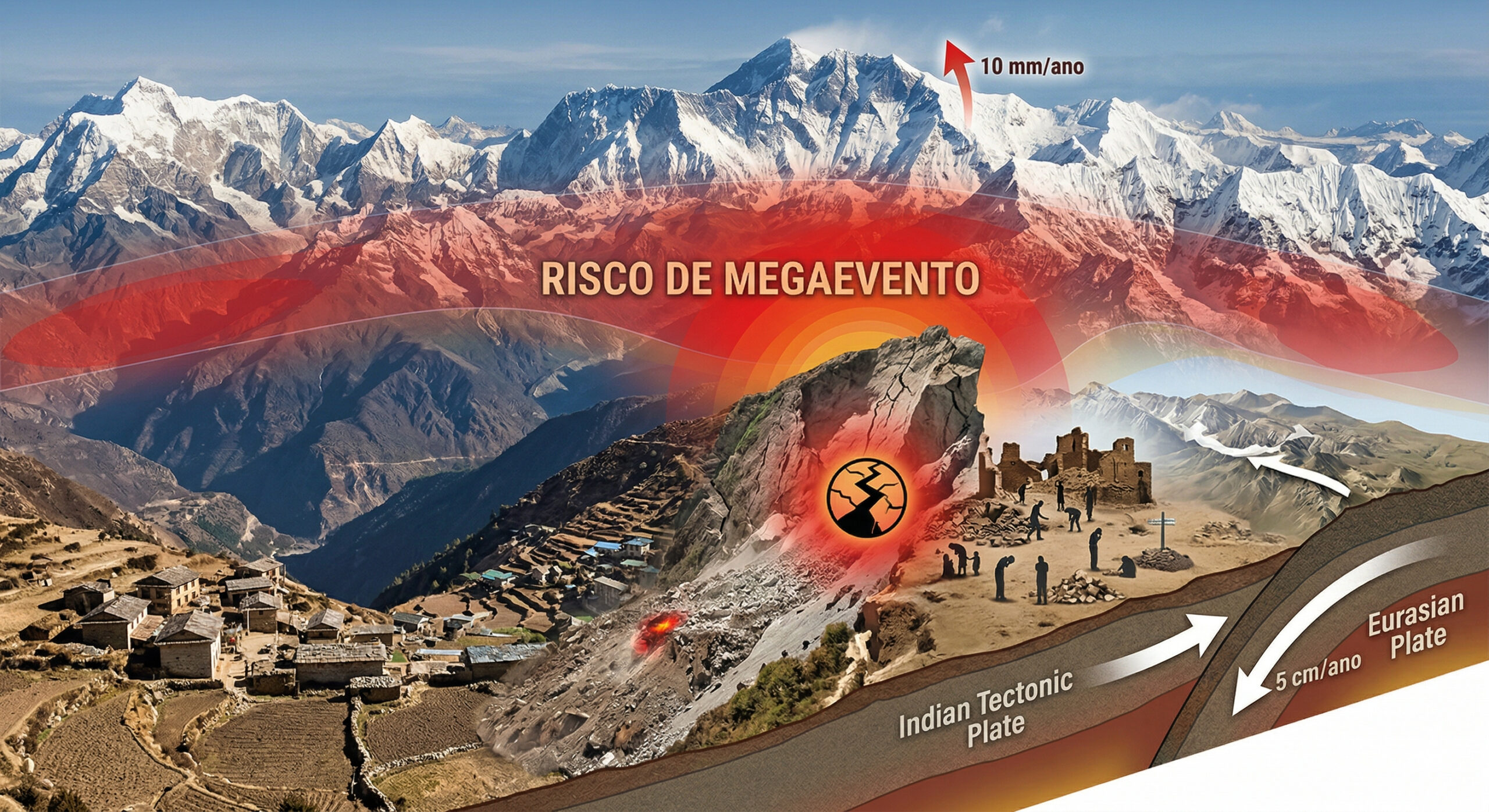
The Himalayas continue to grow to this day, with tectonic plates advancing 5 cm per year, mountains rising up to 10 mm annually, and the 2015 earthquake that killed 9,000 people may have increased the risk of an even larger seismic mega-event.
-
At an altitude of 400 km by astronauts from the International Space Station, Paris transforms at night into a golden mesh so precise that it reveals the outline of the Seine River, avenues, and entire neighborhoods like a luminous map drawn over the Earth.



At heights ranging from 10 to 20 meters, the trajectory requires the animal to assess horizontal distance, branch density, and the elasticity of the landing branch. An incorrect calculation means falling, fracturing, and death. A perfect calculation means disappearing from the predator’s line of sight in seconds.
The biomechanics here are crucial: the colobus does not jump like a cat or a human. It uses the thrust from flexible branches, angling its body to transform plant elasticity into propulsion. The trunk acts as an improvised trampoline, and the tail, although not prehensile like that of South American monkeys, acts as an aerodynamic stabilizer during flight.
Adhesion and Anatomy: Fingers That Function as Natural Braces
The colobus has specialized hands for the canopy. Its long, sturdy fingers form a kind of gripping claw that wraps around narrow trunks and irregular branches. The palm’s skin is thick and rough, increasing friction against wet or moss-covered surfaces.
This adhesion serves not only to support its weight. During risky jumps, it is the first point of contact that prevents slipping and absorbs part of the impact energy. Unlike primates that use their tails or opposable thumbs for fine manipulation, the colobus “embraces the forest” with its whole hand, prioritizing strength over precision.
This specialization comes with an evolutionary cost: the colobus monkey does not descend well to the ground, does not hunt, does not manipulate tools, and does not run on two legs. It is, in essence, an animal designed for the canopy, and this dependence transforms the forest into a shield, food source, and escape route all at once.
Parental Care: The Jump With Baby and the Weight That Changes Physics
The most impressive scene involving the colobus is not the solitary escape but the jump with a baby attached to its back or belly. This alters the entire center of mass of the body, changes the launching angle, and reduces the margin for error. Even so, females execute long jumps with almost absolute precision.
The baby, in turn, is born with a highly developed grasp reflex. While human primates rely on mothers who hold their babies with their arms, the colobus depends on babies who hold their mothers with their fingers and fur. The gripping strength in these infants is disproportionate to their body size, a direct adaptation to the risk of falling.

This biomechanical cooperation creates a literal bond between mother and child: if the baby lets go, it falls; if the mother miscalculates the jump, both fall. This type of behavior adds an evolutionary layer to parental care — it is not enough to nurture; it is necessary to carry, balance, and protect in motion.
Predators Shape Strategies: The Canopy as an Airbridge of Survival
Leopards, harpy eagles (in some regions), and large snakes do capture colobus, but the weak point of the chain is always height. The longer the colobus spends in the canopy, the lower the chance of encountering terrestrial predators. Therefore, the animal rarely descends — and when it does, it is usually for short, silent movements.
The forest, therefore, is not a backdrop but an infrastructure. Each trunk is a route, each branch is a bridge, and each gap in the canopy is a calculated risk. The species transforms the woods into a three-dimensional maze that only it knows how to navigate fully, something that no terrestrial predator can replicate efficiently.
A Relationship Between Physics, Ecology, and Survival
The jumps of the colobus are not just an expression of brute strength; they are the result of three combined variables:
- physics of movement — force, thrust, damping
- geometry of the environment — angle of branches, distance between canopies
- ecology of risk — infants, predators, access to food
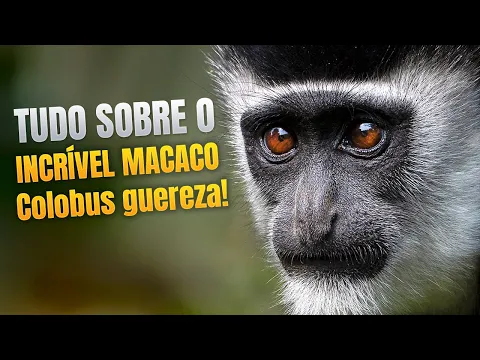
It is this combination that explains why this primate does not “jump for the sake of jumping.” It values energy, calculates risk, and chooses routes with the lowest biomechanical cost and the highest survival return. Its relationship with the forest is less acrobatic and more strategic than it appears at first glance.
The Colobus as a Reminder of the Invisible Architecture of Forests
The story of the colobus reveals something that does not appear in documentaries: forests are not just collections of trees, but habitable architectures that shape species over millions of years. In a setting where the ground kills and the sky protects, evolution created a primate that makes height its defense and jumping its language.
When a colobus “challenges the void” between two 20-meter trees, it is not just showcasing skill. It is navigating an invisible aerial city, built by branches, winds, and decisions that define who lives and who does not live in the African canopy.








Enquanto isso os bonomia ficam na cabarelagem, todos na cachaça e tome procurar as fêmeas. Só querem saber de …..
The photo shows the manoeuvre being executed on three limbs. Her left arm is occupied with the baby.
Evolution does & cannot not create. Sometimes, it seems evolution is just another convenient or preferred name for a Creator. Preferred by evolutionists who don’t want to acknowledge God.