





 Portuguese
  English
  Spanish
  3 min of reading
  0 comments


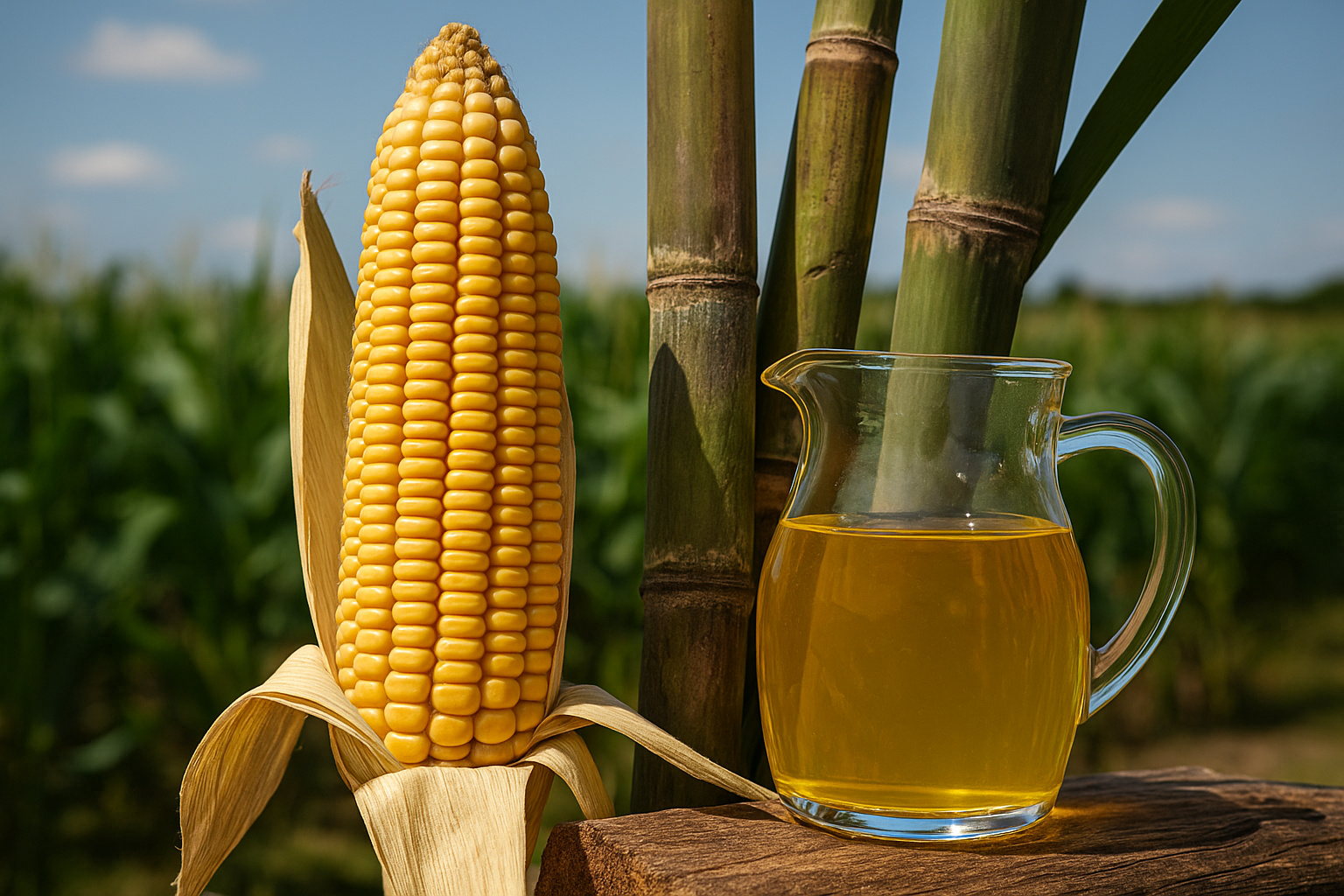
Corn Ethanol Production Is Set to Reach New Levels in Less Than a Decade
Brazil’s corn ethanol production is expected to reach 24.72 billion liters by 2034/35, matching the current volume of sugarcane ethanol, according to a forecast from Datagro, presented by Plinio Nastari during the 25th Sugar and Ethanol Conference in 2025.
According to the study, the sector is heading for a structural transformation driven by the advancement of new plants and efficiency gains.
Production Capacity and Plant Expansion
Currently, the country has 25 plants in operation, 18 under construction, and 19 in the project phase, numbers similar to those anticipated by The AgriBiz at the beginning of the month.
The installed capacity of corn plants is estimated at 11.14 billion liters, with an effective production of 10.2 billion liters in the 2025/26 harvest.
With the entry of new plants by 2026, supply is expected to grow between 3 and 3.5 billion liters, consolidating the projection of 24.7 billion liters by 2034, which matches the volume of sugarcane ethanol, estimated by Datagro at 25.99 billion liters.
Regional Expansion and Domestic Consumption
Moreover, the expansion of plants in the Northeast is expected to reduce the regional ethanol deficit. According to Datagro, the region should report a decline of over 400 million liters between the harvests of 2024/25 and 2025/26, which represents a 10% reduction.
By 2030, the deficit could drop by 85%, thanks to the interiorization of production and reduced dependence on biofuel from the Center-South. Nastari emphasized that the expansion to new states increases local availability and stimulates regional consumption.
-
Brazil accelerates hydrogen and biofuel projects to consolidate the fuel of the future and reduce dependence on oil by 2026.

-
CNPE strengthens policy and prevents imported biodiesel from being mixed with diesel, aiming to strengthen the Brazilian industry and protect jobs by reducing external dependence amid tensions in the global market.
-
Revolution in public transport: Goiânia puts into circulation the first articulated buses powered by biomethane in Brazil and promises to drastically reduce pollution on the Anhanguera Corridor.

-
From the field to the pipelines: Mato Grosso do Sul accelerates the energy transition and consolidates a new axis in renewable energy with the arrival of a giant biogas plant.


Competitiveness and Production Costs
According to Datagro, corn ethanol remains competitive.
The cost per liter is expected to range from R$ 2.02 to R$ 2.30 in the upcoming harvest, while sugarcane ethanol is expected to cost R$ 2.86. Despite the increase in the price of eucalyptus biomass, the main energy source for plants, currently valued at R$ 7.71 per sack, the sector maintains its competitive margin.
Nastari noted that six years ago, wood chips cost R$ 120 per ton, and now vary between R$ 240 and R$ 500, depending on the distance to the plants. Nonetheless, the low operational cost continues to be a differential that ensures profitability and expansion.
Market Pressures and International Scenario
In the United States, the exportable surplus of ethanol is expected to increase in 2025, driven by high corn prices and lower gasoline demand.
This trend reflects the electrification of the fleet, which is expected to represent 21.6% of car sales in 2025, compared to 18.4% in 2024, according to Datagro. In Brazil, the share of electrified vehicles is expected to rise from 7.4% to 10.2%, while in China, the figure will reach 51.3% and, in Europe, 61.2%. These factors reduce global ethanol demand and may pressure prices.
Additionally, Petrobras reduced gasoline prices by R$ 0.14 per liter on October 21, 2025, a decrease of 4.9%, which also affects the competitiveness of biofuels.
In this context, Brazil is expected to import ethanol between December 2025 and March 2026, the period of off-season for sugarcane, and some ships have already been named in the U.S. to serve the Brazilian market.
2025/26 Harvest and Perspectives
The 2025/26 harvest is expected to be heterogeneous, impacted by the drought and fires of 2024.
The sugarcane production is expected to fall 2.3%, totaling 607.38 million tons, while the ATR should decline 2.6%. On the other hand, the sugar-ethanol mix is expected to rise to 52.1% aimed at sugar, resulting in a 3.1% increase in sugar production, which is expected to reach 41.42 million tons, and a 4.9% decrease in ethanol production, to 33.23 billion liters.
According to Nastari, the sector still shows resilience, with gradual recovery in less affected areas and regular productivity levels in some producing regions.










Seja o primeiro a reagir!