





 Portuguese
  English
  Spanish
 4 min of reading
  1 comment


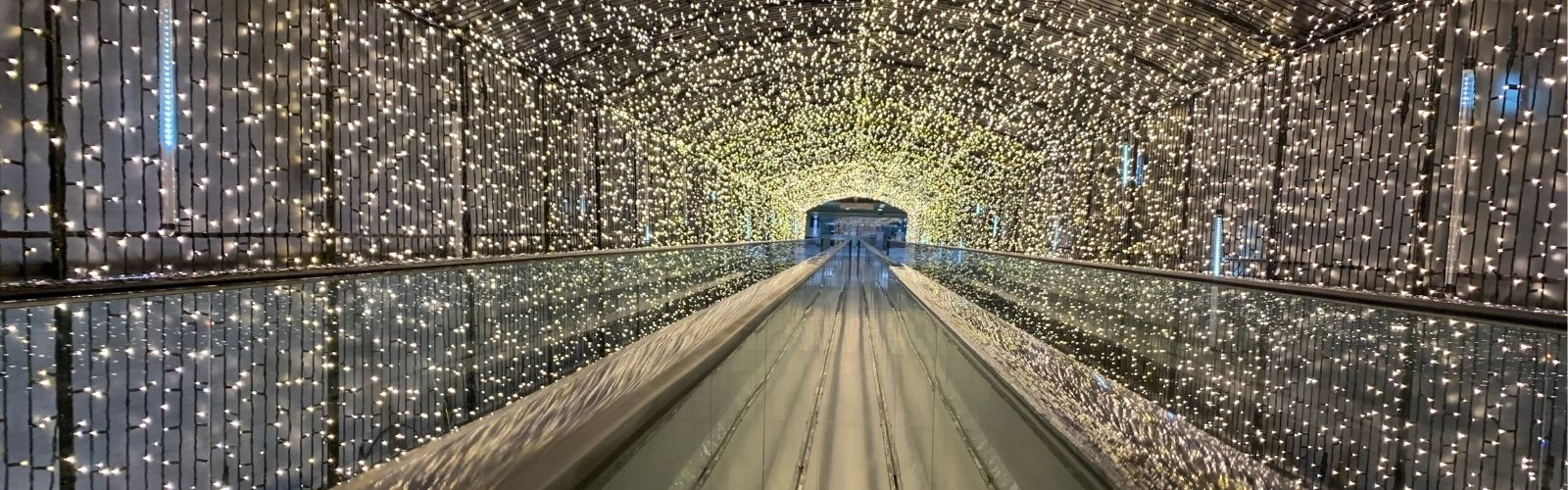


With Over 1 Million LED Lights, the Light Tunnel in Curitiba Stands Out as One of the Largest Artistically Public Lighting Projects in Brazil, Connecting Technology, Engineering, and Cultural Impact in an Immersive and Sustainable Urban Structure.
In the heart of Curitiba, a luminous engineering project impresses with its scale, precision, and visual impact: it is the light tunnel on Avenida Cândido de Abreu — a temporary structure that, year after year, has become permanent in the collective memory of the city. With more than 1 million LED lights spread over approximately 70 meters in length, the tunnel has established itself as one of the most complex and captivating public light installations in Brazil.
Beyond the visual appeal, the tunnel represents a combination of urban planning, artistic expression, and efficient use of technology, making end-of-year lighting a language of public celebration and local identity.
An Urban Structure That Challenges Standards
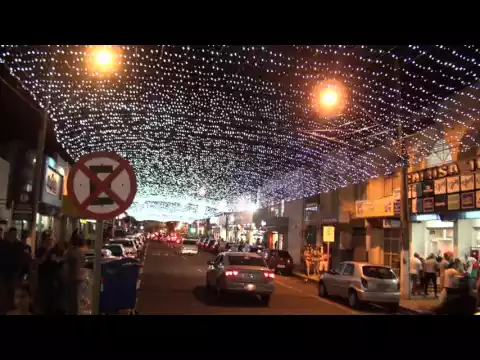

The tunnel is formed by a sequence of metal arches covered with programmable LED panels. The technology allows for the display of moving effects, chromatic variations, and visual compositions synchronized with Christmas soundtracks.
-
He started running at 66 years old, broke records at 82, and is now a subject of study for having a metabolic age comparable to that of a 20-year-old, in a case that is intriguing scientists and inspiring the world.

-
Oldest tree on the planet reappears after 130 years of searches: Wattieza, 385 million years old, was 10 meters tall and had no leaves or seeds; Gilboa fossils in New York solved the mystery in 2007.

-
A 48-square-meter house assembled in hours with 4,000 bricks made of recycled plastic that does not absorb moisture, has natural thermal insulation, and costs less than 90,000 reais in a complete kit.
-
Luciano Hang revealed that Havan’s air fleet has already accumulated more than 20,000 landings, 10,000 flight hours, and 6 million kilometers traveled, and he says that without the planes, the company would never have grown so quickly.


It is an immersive and sensory experience, where light not only illuminates but narrates, envelops, and transforms public space. The project takes into account pedestrian flow, integration with the architectural surroundings, and structural safety, functioning as a symbolic corridor that connects tradition, technology, and emotion.
The Birth of a Contemporary Urban Symbol
The installation emerged as part of the annual programming of “Christmas in Curitiba – Light of the Pine Trees”, but quickly ceased to be just a pinpoint attraction to become one of the most recognizable symbols of the city. The recurrence of the tunnel, its technical quality, and its cultural impact make it an urban icon, comparable to other fixed references in Curitiba’s landscape.
With each edition, engineers, technicians, and designers refine the setup based on new LED technologies, energy efficiency, and remote control of lighting patterns. It is a project that evolves year after year, like a living organism, reflecting Curitiba’s ability to innovate within public space.
Technology, Sustainability, and Scale – Light Tunnel in Curitiba
The choice of LED is not merely aesthetic: it represents a commitment to conscious energy use and environmental sustainability. Even with over 1 million light points, energy consumption is controlled and optimized, thanks to intelligent management systems and low thermal impact.
Furthermore, the structure is designed to be modular and reusable, allowing it to be dismantled and reconfigured, which reduces long-term costs and facilitates installation logistics.
Luminous Culture as Urban Language
The light tunnel serves as a visual metaphor for the very collective spirit of Curitiba. It occupies public space in an inclusive, accessible, and symbolic way. The lighting is not merely decorative — it intervenes, marks territory, invites contemplation, and establishes a new type of relationship between people and the city.
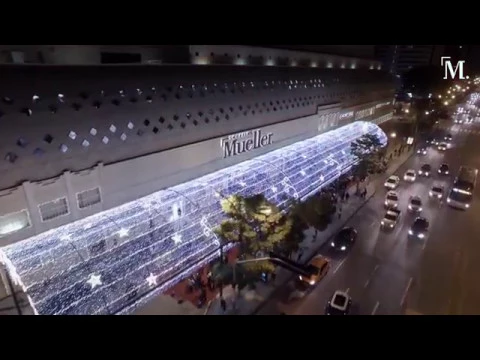
The tradition that has developed around the tunnel is already part of the city’s cultural calendar, but the most notable aspect is the role that light has come to play as an element of urban belonging. In a time of year marked by symbolism, the city finds in technology a way to express itself.
Valorization of Public Space and Engineering as Spectacle
Projects like this demonstrate how engineering, design, and public management can converge to transform a simple urban roadway into an immersive large-scale setting. The success of the light tunnel is due not only to the aesthetic outcome but to the degree of articulation between different areas: civil engineering, electrical, visual arts, sound design, and urbanism.
It is a model of urban intervention with low structural impact but high symbolic impact — a lesson on how to create memorable experiences without permanently altering the urban fabric.
More Than a Light Tunnel — a National Reference in Creative Public Lighting
In recent years, the light tunnel in Curitiba has become one of the most emblematic installations in Brazil when it comes to large-scale lighting. Without relying on fixed equipment or permanent constructions, it shows how creativity, technical mastery, and the appreciation of urban space can create transformative collective experiences.
Curitiba is right to invest in symbols that unite innovation, art, and engineering with energy efficiency and community integration. And the light tunnel is, today, one of the best examples in the country of how light can illuminate not only streets but also ideas.









I really like reading through a post that can make men and women think. Also, thank you for allowing me to comment!