





 Portuguese
  English
  Spanish
  4 min of reading
  0 comments


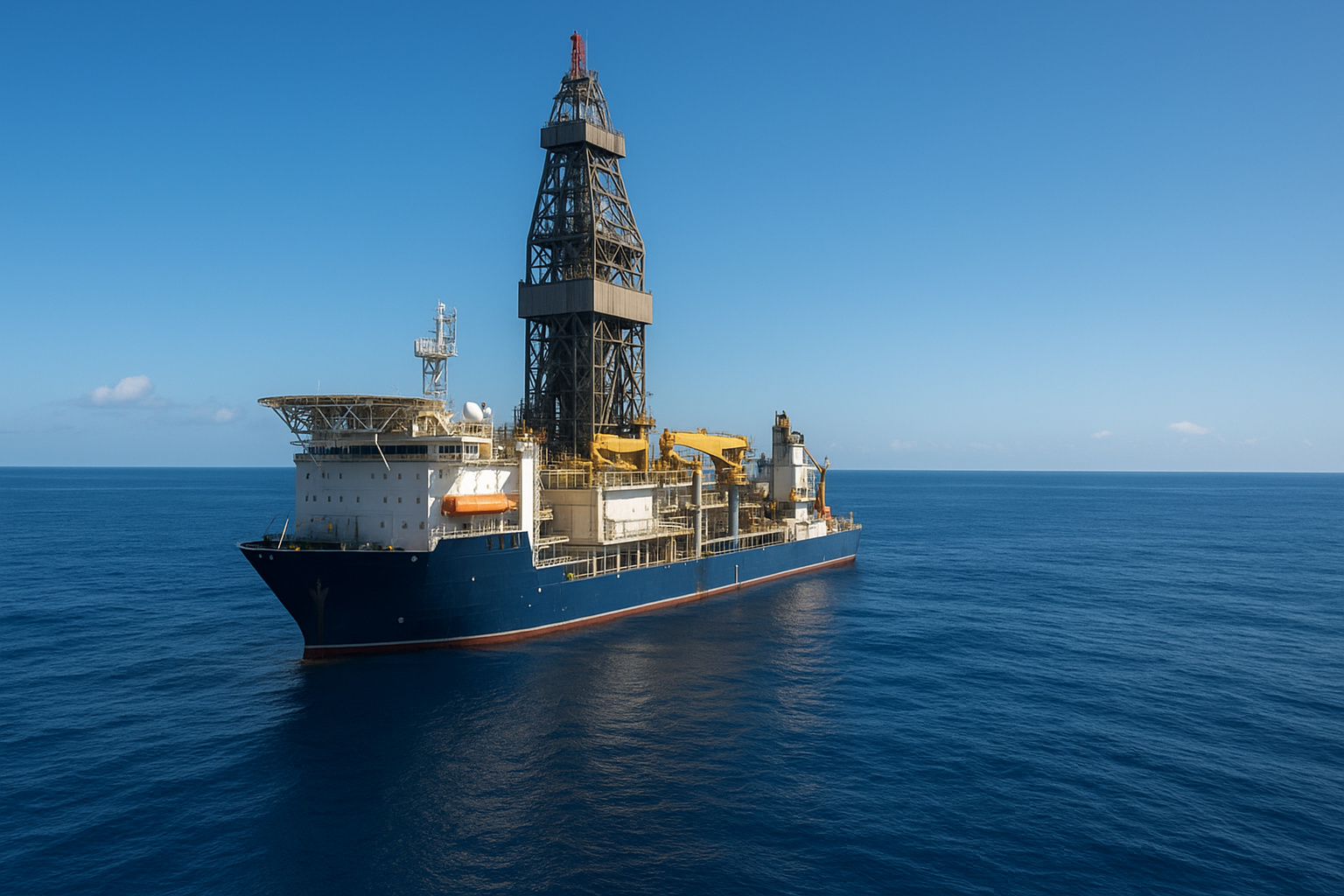
Drilling Ship of R$ 3 Billion Uses DP3 Technology to Maintain Centimeter Position and Drill Wells 3 Thousand Meters Deep in the Pre-salt, Facing Extreme Waves and Winds.
The 7th generation drilling ships represent the maximum limit of modern offshore operation, combining naval engineering, advanced automation, and stability systems so precise that they can work for weeks at sea right over the same point of the ocean — even under intense waves, strong winds, and unpredictable currents. In 2024, platforms like West Saturn, Ensco DS-10, Valaris DS-16, Ocean Rig Mylos, and other vessels contracted by Petrobras in the Brazilian pre-salt consolidated a technology that seemed impossible a few decades ago: the ability to remain stationary, with variations in the order of centimeters, over wells located at more than 3 thousand meters deep.
Manufactured at a cost exceeding R$ 3 billion, these drilling ships utilize the most advanced dynamic positioning system in the industry — DP3, which stands for Dynamic Positioning Class 3. This feature, now considered essential for exploration in ultra-deep waters, operates 24 hours a day with full redundancy: three independent computers, duplicated or triplicated sensors, multiple power sources, and even 18 thrusters distributed around the hull, capable of making micro-corrections hundreds of times per minute.
DP3 Technology: How the Ship “Floats Still” in a Sea in Constant Motion
To understand the scale of this advancement, just imagine the technical challenge: maintaining a vessel of 200 meters in length and over 50 thousand tons exactly aligned with the drilled well in the ocean floor, without allowing lateral deviations that would compromise the operation. At sea, the ship faces:
-
With Announcement for ROV Course in Partnership with Zen, Rio das Ostras Aims to Transform Technical Qualification into Real Jobs in the Competitive Offshore Market
-
Free Offshore Steward Course in São Gonçalo Emerges as a Strategic Opportunity for Those Seeking Qualified Work at Sea
-
Messer Gases Reopens Branch in Macaé to Serve Offshore Oil and Gas Market in Northern Fluminense with Supply of Oxygen, Argon, and CO₂
-
Offshore Profession Simplified: Comprehensive Guide Reveals How to Trade Common Routine for High Salaries and Long Breaks in Life Aboard in the Oil Sector
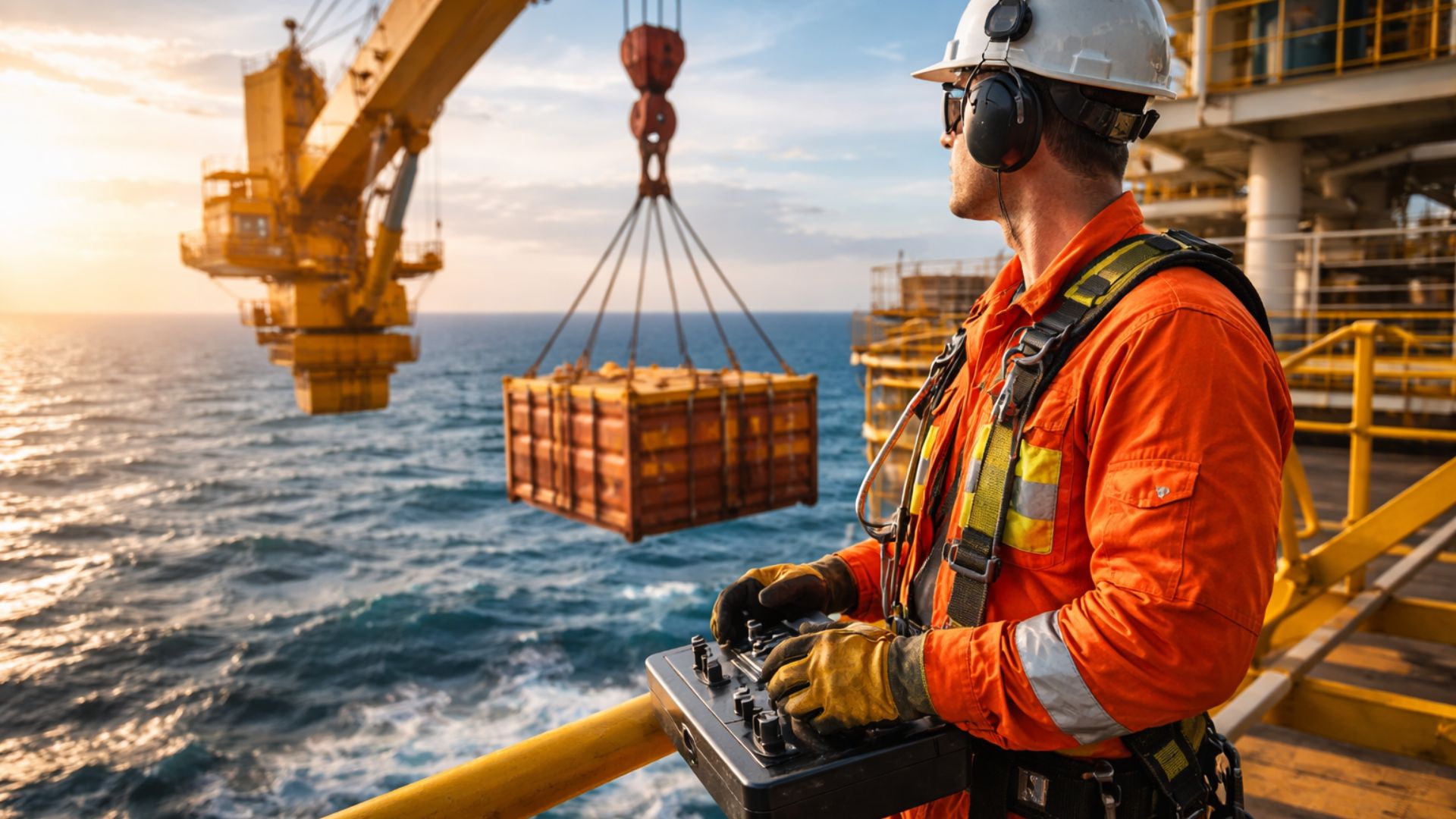

- gusts of 20 to 30 knots of wind
- surface and subsurface currents
- waves exceeding 5 meters
- variations in water density
- movements inherent to large vessels
The DP3 processes all this in real-time. It uses a combination of:
- High-Precision Differential GPS
- positioning radars
- state-of-the-art gyroscopes
- wind and current sensors
- distance lasers (in operations close to structures)
With this data, the system calculates the exact forces needed to neutralize the movement caused by the sea. Each azimuth thruster — capable of rotating 360° — receives independent commands to correct tiny displacements, keeping the ship “anchored in the air,” since it does not use physical anchors.
This level of precision is not just a matter of engineering; it is a safety requirement. Any deviation can stress the riser (the tube connecting the ship to the well), cause structural damage, or interrupt the operation.
Extreme Drilling: Crossing 7 Km of Rock, Salt, and High Pressures
The other half of this story is the drilling itself. To access the pre-salt, the drilling ships need to cross:
- 2,000 to 3,000 meters of water
- 2,000 meters of unstable sediments
- 1,500 meters of carbonate rock
- thick layers of highly plastic salt, which moves under pressure
All of this demands special drill bits, downhole motors, high-pressure BOPs (blowout preventers) weighing 300 tons, and fluid circulation systems capable of withstanding temperature variations reaching 200°C in deep zones.
Meanwhile, the DP3 keeps the ship perfectly aligned so that the riser, weighing hundreds of tons, does not suffer lateral loads that could compromise the integrity of the well.
Why Brazil Depends on These Ships for the Pre-salt
The Brazilian model of offshore exploration has become a global reference precisely because of the combination of:
- extreme depth,
- high pressure,
- giant reservoirs,
- distance from the coast, and
- the need for high daily productivity.
Fields like Búzios, Mero, Sépia, and Tupi depend on 6th and 7th generation drilling ships because only they can handle drilling environments above 2,400 meters of water depth and safely reach ultra-deep geological targets.
These vessels are contracted on a charter basis for values ranging from US$ 350 thousand to US$ 450 thousand per day, reflecting the extremely high cost of the embedded technology. In contrast, each completed well can produce 15 thousand to 30 thousand barrels per day, depending on the pressure and quality of the reservoir.
Inside the “Floating City”: Life and Work at Sea
A drilling ship is more than a drilling machine — it is a small floating city.
It features:
- accommodations for 180 to 220 people
- hospital
- emergency room
- industrial kitchen
- water treatment station
- internal power plants
- digitized control rooms
- gyms and relaxation areas
The shifts follow the 14 on 21 off system, with helicopters flying more than 150 km offshore daily to conduct crew changes.
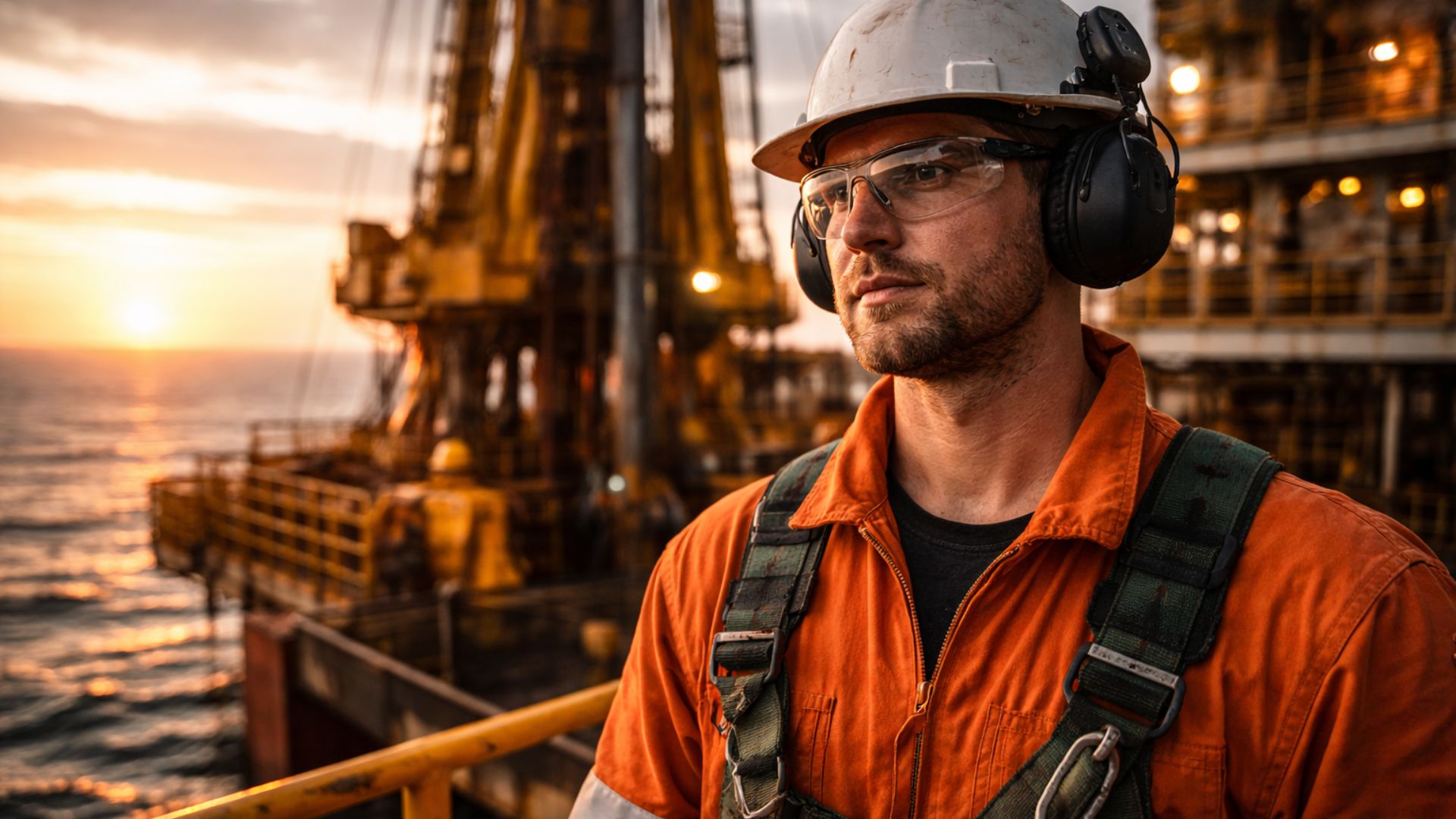
The onboard professionals include engineers, geologists, divers, ROV (remotely operated vehicle) operators, drilling technicians, safety teams, and DP system specialists. The interaction is intense, and the environment is isolated — which makes offshore operation one of the most specific and complex jobs in Brazil.
Drilling Ships and the Future of Brazilian Offshore Exploration
Today, Brazil operates one of the largest fleets of drilling ships in the world — and this is not expected to change anytime soon. Reports from ANP and projections from Petrobras indicate that drilling new high-productivity wells will be the main driver for maintaining production above 4 million barrels per day over the next decade.
At the same time, automation is advancing: AI-guided drilling systems, autonomous ROVs, and real-time pressure sensors are already reducing risks and increasing operational precision. However, nothing replaces the heart of the operation: the ship capable of staying still in the ocean for weeks, facing hostile conditions and maintaining its millimetric alignment over the well.
Therefore, DP3 represents not only a positioning technology but the foundation that supports the entire pre-salt ecosystem.






Seja o primeiro a reagir!