Portuguese
  Spanish


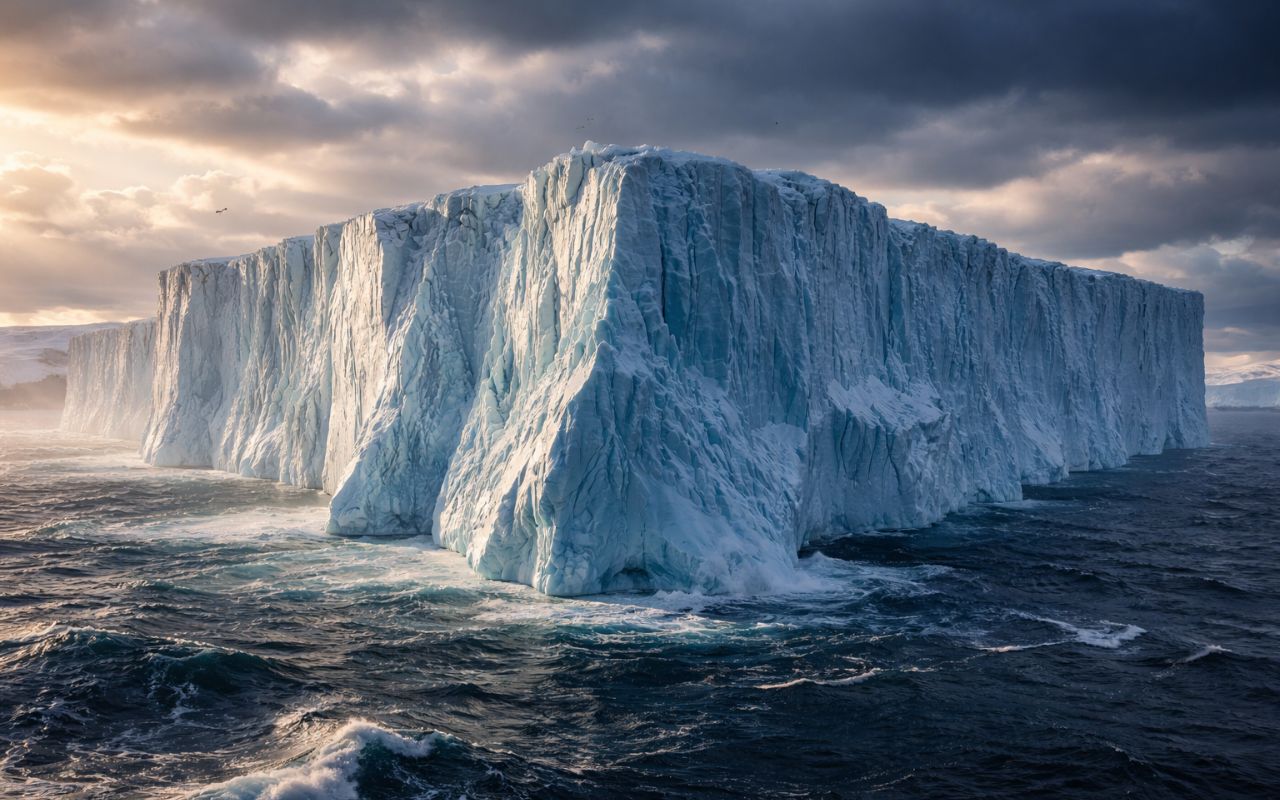

The iceberg A23a, one of the largest in the world, is rapidly disintegrating in the South Atlantic. Understand what is happening.
After nearly four decades since its detachment, the iceberg A23a, one of the largest ever recorded, has entered an accelerated phase of disintegration in the South Atlantic. The phenomenon is currently occurring after the block left the Antarctic region and moved into warmer waters, where it began to fragment rapidly.
The process has intensified in recent months, according to satellite observations, and could lead to the complete disappearance of the iceberg in the coming weeks. The change is due to the increase in water temperature and the ocean currents that have driven its movement northward.
Iceberg A23a: origin and the beginning of the movement
The iceberg A23a broke away from the Filchner-Ronne ice shelf in Antarctica in 1986. Since then, it remained practically stationary in the Weddell Sea for over 30 years.
-
Workers near the Vatican uncover lead pipe revealing Emperor Caligula’s name and site of his opulent garden from nearly 2,000 years ago

-
Workers renovating a playground in northern England uncover 176 World War II bombs buried underground; training artifacts still contained explosives.

-
Brazilian Architect Transforms Waste into Sustainable Homes with Solar Power and Rainwater Systems for 40 Years

-
Security Guard Becomes Doctor at Louisiana Hospital Where He Once Worked, Studied Chemistry Between Shifts





This happened because its base was stuck to the ocean floor, preventing movement. During this period, the block became an important object of scientific study.
When it was still intact, the iceberg A23a was about 4,000 square kilometers. For comparison, this area is almost three times larger than the city of São Paulo.
The change in the behavior of iceberg A23a began to be recorded from 2020. At that moment, it finally detached from the ocean floor and started a slow movement.
This movement was driven by ocean currents that carried it northward. As a result, the iceberg began to face completely different environmental conditions.
Meanwhile, as it left the extremely cold waters of Antarctica, the block entered warmer regions. This transition marked the beginning of its accelerated deterioration.
Why has the melting accelerated?
The melting of iceberg A23a is directly linked to the increase in the temperature of the water around it. As it moves away from Antarctica, the ice comes into contact with less cold waters.
This factor causes erosion both on the surface and at the submerged base. Additionally, it promotes the detachment of large fragments.
In recent months, this process has intensified significantly. Large pieces, covering hundreds of square kilometers, have separated from the main structure.
Satellite images have also revealed bluish areas on the ice. This detail indicates the accumulation of meltwater, a clear sign of advanced deterioration.
Iceberg A23a and the debate on climate change
Although the melting of icebergs is considered a natural phenomenon, the case of iceberg A23a raises discussions among experts. This is because the speed of fragmentation draws attention.
Researchers point out that the last few years have recorded above-average ocean temperatures. This scenario may have contributed to accelerating the process.
On the other hand, scientists emphasize that not every event can be directly attributed to climate change. The natural dynamics of the oceans also play an important role.
Impacts on the marine ecosystem
In addition to climate issues, the end of iceberg A23a also brings local environmental impacts. The melting temporarily alters the temperature of the water.
This can affect the food chain of marine species. Penguins, seals, and other animals depend on specific conditions to feed.
Meanwhile, the release of freshwater into the ocean can modify the balance of the ecosystem. Still, these effects tend to be temporary.
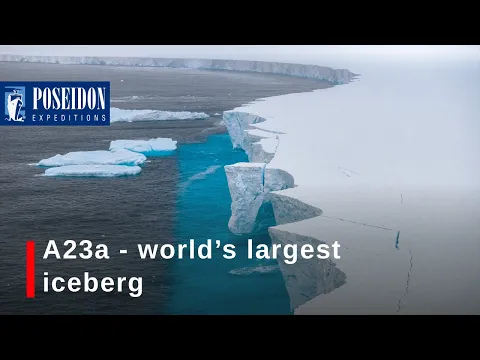

Iceberg A23a evidences rapid changes in natural systems
The rapid disintegration of iceberg A23a after decades of stability highlights the complexity of ocean systems. In just a few years, a block that remained practically intact lost a significant part of its structure.
This behavior reinforces the importance of continuous monitoring of polar regions. Furthermore, it demonstrates how small environmental changes can generate significant effects.
More than an isolated event, the case of iceberg A23a becomes a relevant indicator for scientists studying the dynamics of the oceans and their recent transformations.
With information from Aventuras na História