





 Portuguese
  English
  Spanish
  6 min of reading
  2 comments


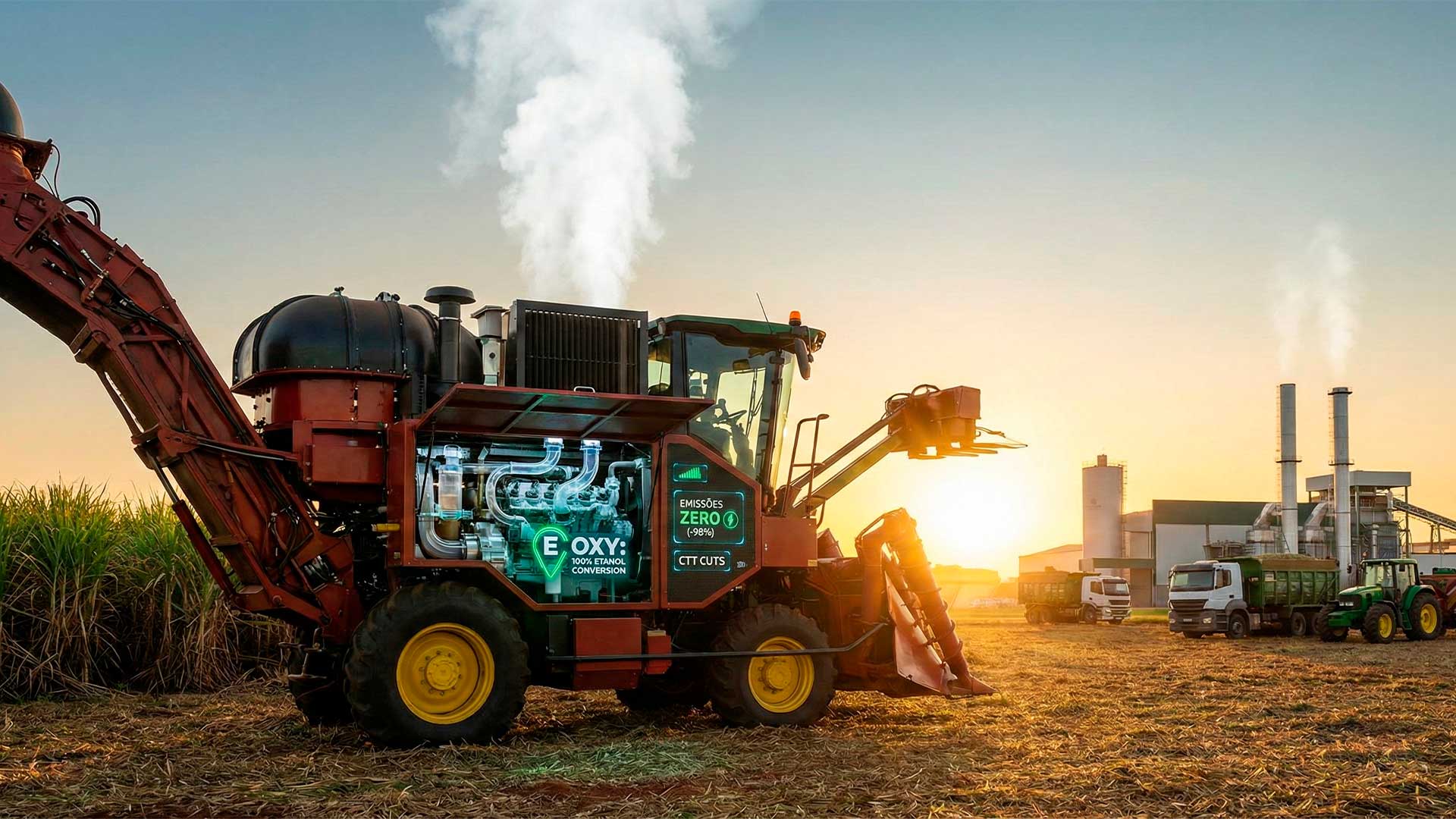

Startup E OXY Presents Solution To Convert Diesel Engines Of Harvesters, Trucks And Tractors To Operate Only With Hydrated Ethanol, Promising To Cut Costs And Reduce Emissions In Sugarcane Mills
The diesel cost in the sugarcane sector remains high and is putting pressure on margins. In many mills in the Central South, fossil fuel accounts for almost one-third of the cost of Cutting, Transshipment, and Transportation. In this scenario, E OXY, a Brazilian startup wants to replace diesel with hydrated ethanol produced within the mill itself.
The proposal is ambitious and places Brazil at the center of the debate on decarbonization of heavy transport.
The company developed a technology for converting diesel engines to Otto Cycle, allowing operation with 100 percent hydrated ethanol, without mixing and without additives.
-
The water that almost everyone throws away after cooking potatoes carries nutrients released during the preparation and can be reused to help in the development of plants when used correctly at the base of gardens and pots, at no additional cost and without changing the routine.

-
The sea water temperature rose from 28 to 34 degrees in Santa Catarina and killed up to 90% of the oysters: producers who planted over 1 million seeds lost practically everything and say that if it happens again, production is doomed to end.

-
An Indian tree that grows in the Brazilian Northeast produces an oil capable of acting against more than 200 species of pests and interrupting the insect cycle, gaining ground as a natural alternative in soybean, cotton, and vegetable crops.

-
The rise in oil prices in the Middle East is already affecting Brazilian sugar: mills in the Central-South are seeing their margins shrink just as ethanol gains strength.
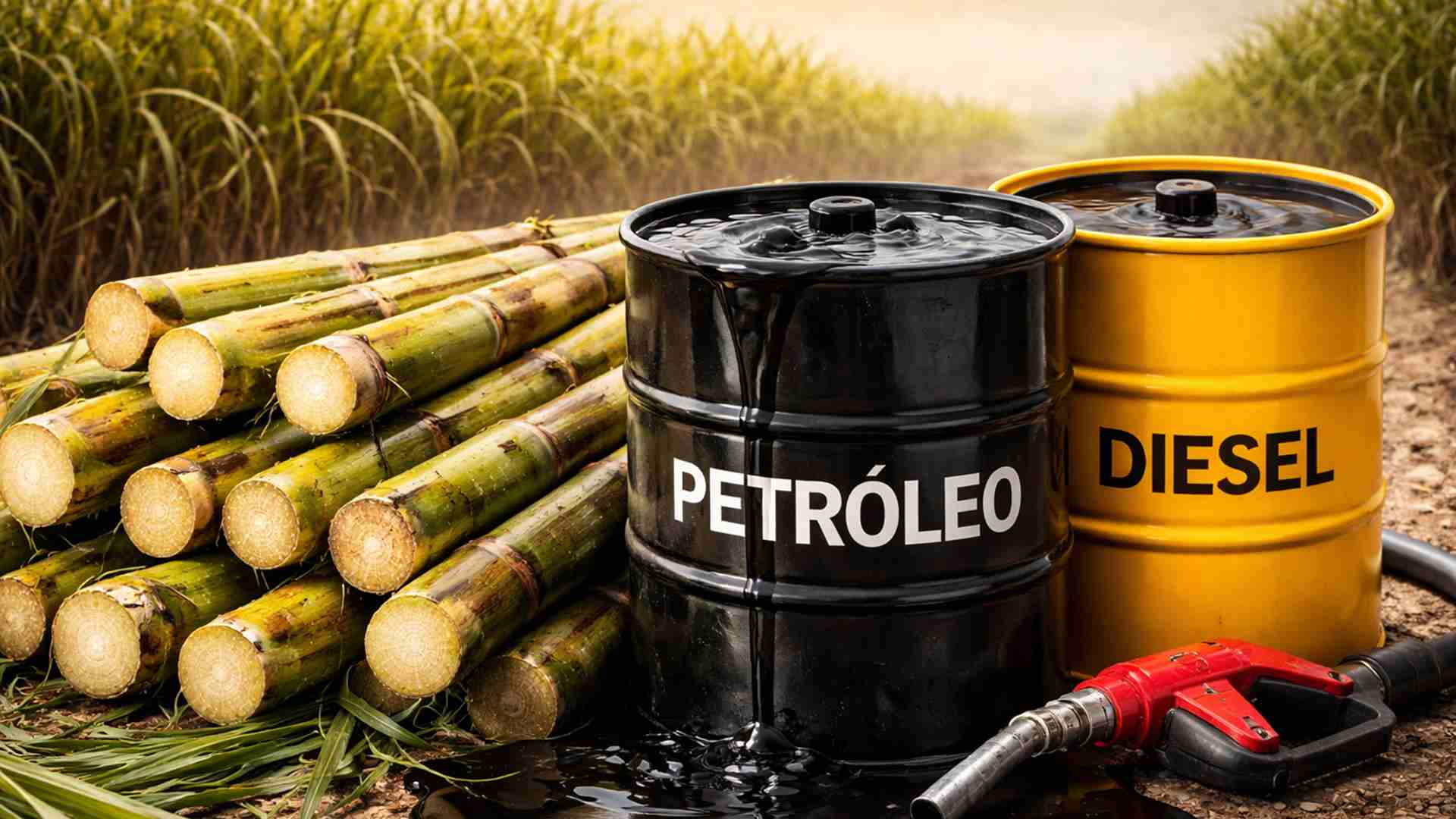

The idea is for sugarcane harvesters, tractors, and trucks to start operating with the same biofuel that comes from the fermentation tanks. According to E OXY, tests indicate reductions of 40 to 60 percent in total fuel costs and up to 60 percent in maintenance.
The appeal goes beyond immediate savings. The startup talks about “real energy autonomy” for mills, which would no longer depend on expensive, imported diesel subject to currency fluctuations. Instead, they could plan the harvest based on their own ethanol, adjusting stock and price according to the dynamics of processing. For a sector cyclically pressured by logistical costs, this change could alter the way to think about CTT.
The first pilot projects are being negotiated with Central South mills, focusing on the 2026-27 harvest. The technology is also being presented to urban and road fleets interested in reducing emissions and exposure to diesel.
If field results confirm the laboratory numbers, this conversion could usher in a new phase for the use of ethanol as fuel in heavy engines in Brazil.
How E OXY Technology Converts Diesel Engines To Hydrated Ethanol
E OXY’s solution is based on a well-known engineering concept but little explored at a commercial scale: transforming a Diesel Cycle engine into an Otto Cycle engine, with spark ignition. In practice, the injection system is redesigned, and the combustion chamber now works with an air-fuel mixture suitable for hydrated ethanol. Electronic modules control ignition point and temperature to ensure stability even under heavy load.
According to the company, the technology is currently validated for engines between 150 and 500 horsepower, a typical range for harvesters, trucks, and agricultural machines. Internal components receive specific adjustments to withstand the new thermal regime, and the electronic management is dedicated to ethanol, allowing it to compensate for variations in purity and alcohol content throughout the harvest.
The conversion is reversible, providing a sort of insurance for the mill to revert to diesel if necessary.
Brazilian academic research has been testing Diesel engines converted to operate with hydrated ethyl alcohol in Otto Cycle since the 1980s, with positive results in performance and emissions. The difference now is to take this solution to a scalable industrial package, with technical support, safety protocols, and a direct focus on high-demand applications in the field and on the road.
Economy Of CTT And Reduction Of Logistical Cost In Sugarcane Mills
In sugarcane fields, diesel typically accounts for between 28 and 34 percent of CTT, which includes the stages of cutting, transshipment, and transportation of cane to the mill. Any savings of 10 percent in fuel costs already reduces total CTT by approximately 3 percent, which makes a difference in tight margins.
However, E OXY’s tests indicate cuts of 40 to 60 percent in total fuel costs, significantly impacting the competitiveness of the ton of harvested cane.
Even with a higher volumetric consumption, estimated at about 1 liter of equivalent diesel for 1.37 liters of ethanol, the final cost is still likely to be lower for mills that produce their own biofuel.
The engine operates cleaner, without soot and sulfur, which decreases wear on pistons, rings, and seats and reduces maintenance downtime. The startup claims that the cumulative savings in fuel and parts could significantly shorten the payback period for converting each machine.
Ethanol As Brazilian Biofuel To Decarbonize Heavy Transport
Cane ethanol is already a central piece of the renewable energy matrix in Brazil, directly competing with gasoline in the light Otto cycle. Studies by the Energy Research Company indicate that, combining ethanol and biodiesel, biofuels accounted for around 22.5 percent of the energy consumed in transport in 2023, an unusual share for large countries.
Bioenergy experts highlight that Brazilian cane ethanol is one of the fuels with the lowest carbon footprint in the world, thanks to high agricultural productivity, cogeneration of bioelectricity, and improvements in management over the past decades.
Reports from entities like UNICA and CNPEM show that the expansion to second-generation ethanol reinforces this strategic role. Converting heavy engines for direct use of hydrated ethanol further amplifies this advantage.
Other initiatives in the country are testing ethanol in heavy vehicles, such as urban buses dedicated to the fuel and “green diesel” projects that use hydrated ethanol as a substitute for diesel without altering the engine. What differentiates E OXY is the deep conversion of the mechanical set to Otto Cycle, which theoretically allows for greater efficiency gains and emission control, albeit with greater engineering complexity.
According to the startup, the complete replacement of diesel with ethanol reduces CO₂ equivalent emissions by over 98 percent in the “well to wheel” analysis. In large agricultural fleets, this means hundreds of tons of emissions avoided per harvest, with a direct impact on corporate ESG goals and decarbonization programs.
The converted engines also emit fewer particulates and sulfur oxides, which has public health implications, especially in regions with heavy cargo traffic.
Economically, operating with certified hydrated ethanol generates decarbonization credits under RenovaBio, the CBios. E OXY estimates around 20,000 reais in CBios for every 100,000 liters of diesel replaced, which can add up to tens of millions in large-scale projects. For sugarcane producers, this reinforces ethanol as a national energy vector and an additional source of income.
Limitations, Regulation, And Next Steps For E OXY Technology
Not everything, however, is resolved. For now, the technology is focused on medium-sized engines, and versions for smaller powers require specific development and calibration. In marine applications, international regulations still prohibit the use of ethanol as the primary fuel, which hinders immediate adoption in coastal and inland waterways vessels.
In agricultural machines and trucks, there is currently no formal certification requirement from ANP or Inmetro for this type of conversion, but E OXY claims to be structuring technical dockets and safety protocols focusing on future approvals.
Each conversion process currently takes four to six weeks, with a goal of reducing this to a few days at industrial scale, including utilizing the tank that previously held the ARLA reagent. The big question will be proving, in the field and on the road, that the solution is robust, safe, and financially advantageous even for fleets that do not produce their own ethanol.
Do you believe that mills and carriers should take the risk and switch their engines to ethanol, even with regulatory uncertainties and initial costs? Share your opinion in the comments and join the discussion on which path the country should take to decarbonize heavy transport.










Tem q investir em EDUCAÇÃO, CIÊNCIA E TECNOLOGIA. Não adianta ficar se lamentando e esperar q os outros vão resolver n/problemas. Os países desenvolvidos só evoluíram porque investiram em TECNOLOGIAS. Não vão passar nada de “GRACA”. para o Brasil, por exemplo, que para ser uma potência de fato, só precisa investir em CONHECIMENTO e acabar com a politicagem de baixo nível ni Brasil e uma política TRIBUTÁRIA E FISCAL DE VERGONHA!!!
Ótimo. Se considerar que cada refinaria do álcool se utilize de sua própria produção, desde que o governo não resolva taxar a produção do etanol, então a refinarias utilizariam a preço de produção e não dos postos de combustíveis. Sabemos que no país a maioria dos produtos são carregados de impostos e taxas, e a produção deve equivaler a 40 % do preço do varejo. A redução do custo de produção vai acabar também reduzindo o preço final de vendas nos postos de combustíveis.