





 Portuguese
  English
  Spanish
  4 min of reading
  0 comments


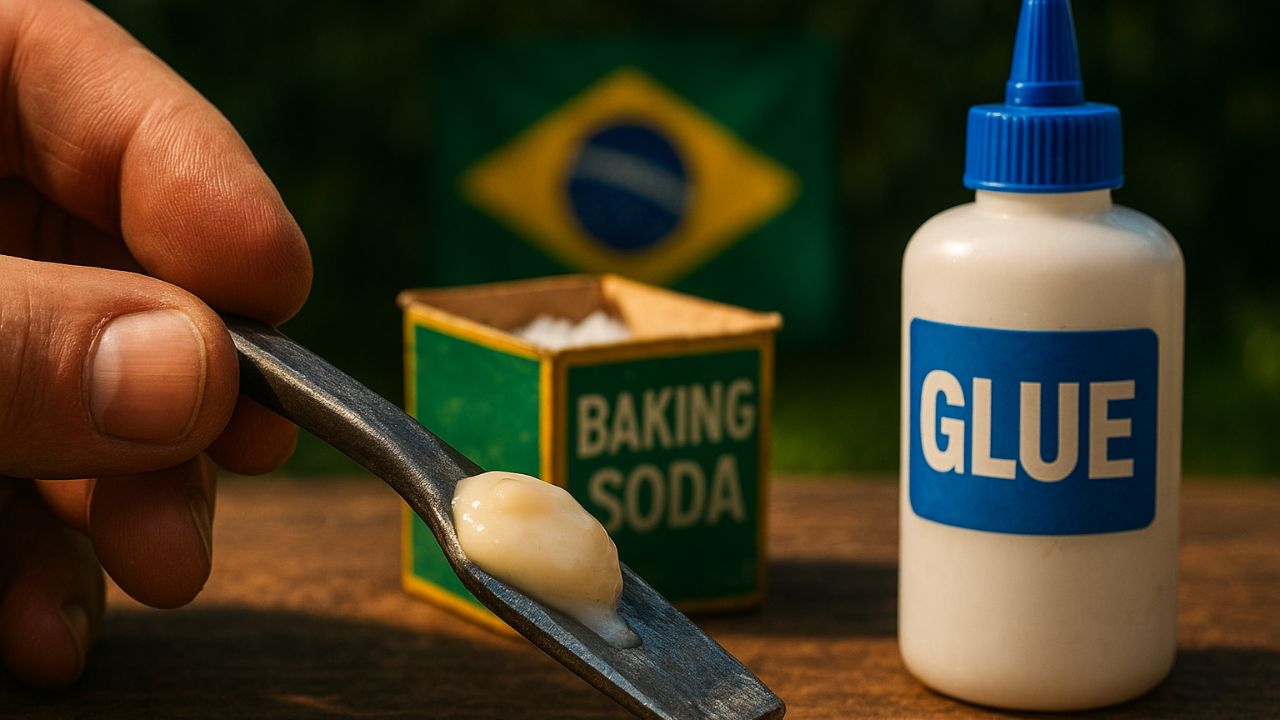
Understand How the Exothermic Reaction Creates an Instant Rigid Matrix and See Why Manufacturers Warn About the Ineffectiveness of the Technique in Automotive Plastics.
The internet has been flooded with tutorials promising a miraculous solution for broken objects, popularly called ‘Homemade Super Glue’. The technique consists of joining damaged parts using a simple mixture of cyanoacrylate (the famous super glue) and baking soda. The visual result is the immediate filling of gaps and the creation of an extremely hard surface, which can be sanded and painted in seconds, attracting the attention of DIY enthusiasts and repair professionals.
However, although the result seems magical, it is pure applied chemistry. To understand whether ‘Homemade Super Glue’ is really permanent or just an aesthetic band-aid, it is necessary to analyze how these components react on a molecular level. Contrary to what the name suggests, experts and manufacturers of industrial adhesives point out that the process has significant physical limitations, especially when applied to materials that undergo vibration or twisting, requiring caution before applying the mixture to any valuable part.
The Chemistry of the Reaction: Heat and Instant Hardening
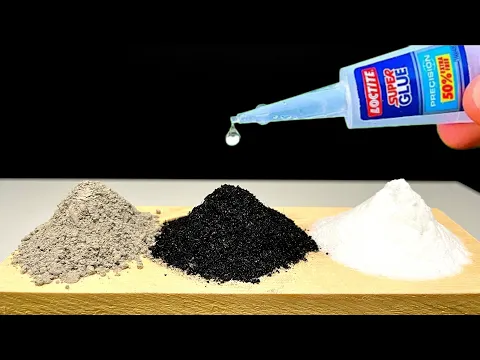

The secret to the impressive speed of this repair lies in the aggressive chemical interaction between the two components. According to information from ScienceLine, associated with the University of California, Santa Barbara (UCSB), the process is not a simple drying, but rather a rapid anionic polymerization. The baking soda acts as a catalyst that drastically accelerates the hardening of the glue. This reaction is described as exothermic, meaning that there is an intense release of heat during the process.
-
With 1,066 acrylic panels, the building known as the friendly alien is supported by a steel skeleton, has a façade that functions as a giant screen, and impresses the world without any internal columns.

-
Scientists warn that a comet about 1 km in size that has started to release gases may actually change direction in space. It was spotted by NASA and surprises with potential impacts near Earth.

-
These living root bridges and ladders are over 700 years old and help indigenous people survive in one of the rainiest regions in the world.

-
From sertanejo star to international investor: Ana Castela invests millions in a mansion in the USA, creates a themed accommodation in Orlando, and shows that the “boiadeira” also wants to grow away from the stage.


ScienceLine explains that this heating is the physical sign that the glue’s polymer chains are closing rapidly. The result of this accelerated reaction is a rigid and often brittle bond. Unlike the original plastic of the part, which may have some flexibility, the area repaired with the mixture tends to behave more like glass: it is extremely hard but can shatter under impact or stress, precisely because the rapid polymerization prevents the formation of long, flexible molecular chains.
Mechanical Composite Versus Chemical Welding
One of the biggest misconceptions spread about this technique is the idea that it “welds” plastic. According to Aron Alpha (Toagosei America), a manufacturer of industrial adhesives, baking soda acts chemically as an accelerator and physically as a reinforcing filler. What is actually created is a “cement-like consistency matrix”. The baking soda powder gets trapped inside the hardened glue, creating a high-hardness composite material.
Aron Alpha clarifies that this confirms that the resulting material is a mechanical composite, think of it as a kind of “concrete” made of hard glue and fine sand. This is radically different from a real “chemical weld.” In a true plastic weld, the solvent would melt the edges of the original plastic, fusing the two parts into a single piece. In ‘Homemade Super Glue’, the mixture merely fills the space and adheres to the surface, without melting the base material, functioning more like a rigid seal than a structural fusion.
The Adhesion Problem in Automotive Plastics
Many users attempt to apply this technique to car bumpers and motorcycle fairings, but end up frustrated when the repair comes loose shortly afterward. The explanation for this failure lies in the composition of these materials. According to the Henkel Loctite Plastic Bonding Design Guide, cyanoacrylates (the base of super glue) have an inherent difficulty of adhesion to polyolefins, such as Polypropylene (PP), a plastic widely used in the automotive industry.
The technical documentation from Henkel Loctite details that, without the use of a specific chemical “Primer” to prepare the surface, the glue fails to create molecular adhesion with this type of plastic. This validates the information that the mixture of baking soda and glue tends to easily detach from bumpers. Since there is no fusion (welding) or proper chemical adhesion without industrial preparation (Primer), the rigid “crust” formed by the mixture ends up coming loose with the vehicle’s vibration, functioning only as a temporary superficial filling.
‘Homemade Super Glue’ is an interesting emergency resource for quick rigid fillings in porous or compatible materials, but it does not replace professional plastic welding, especially in automotive parts or those subject to bending. Understanding the chemistry avoids losses and frustrated expectations.
Have you tried using this mixture on any part of your car or at home and it ended up coming loose after a while? Share your experience in the comments; we want to know if the repair held up to daily use or if it was just a temporary solution!







Seja o primeiro a reagir!