





 Portuguese
  English
  Spanish
  4 min of reading
  0 comments


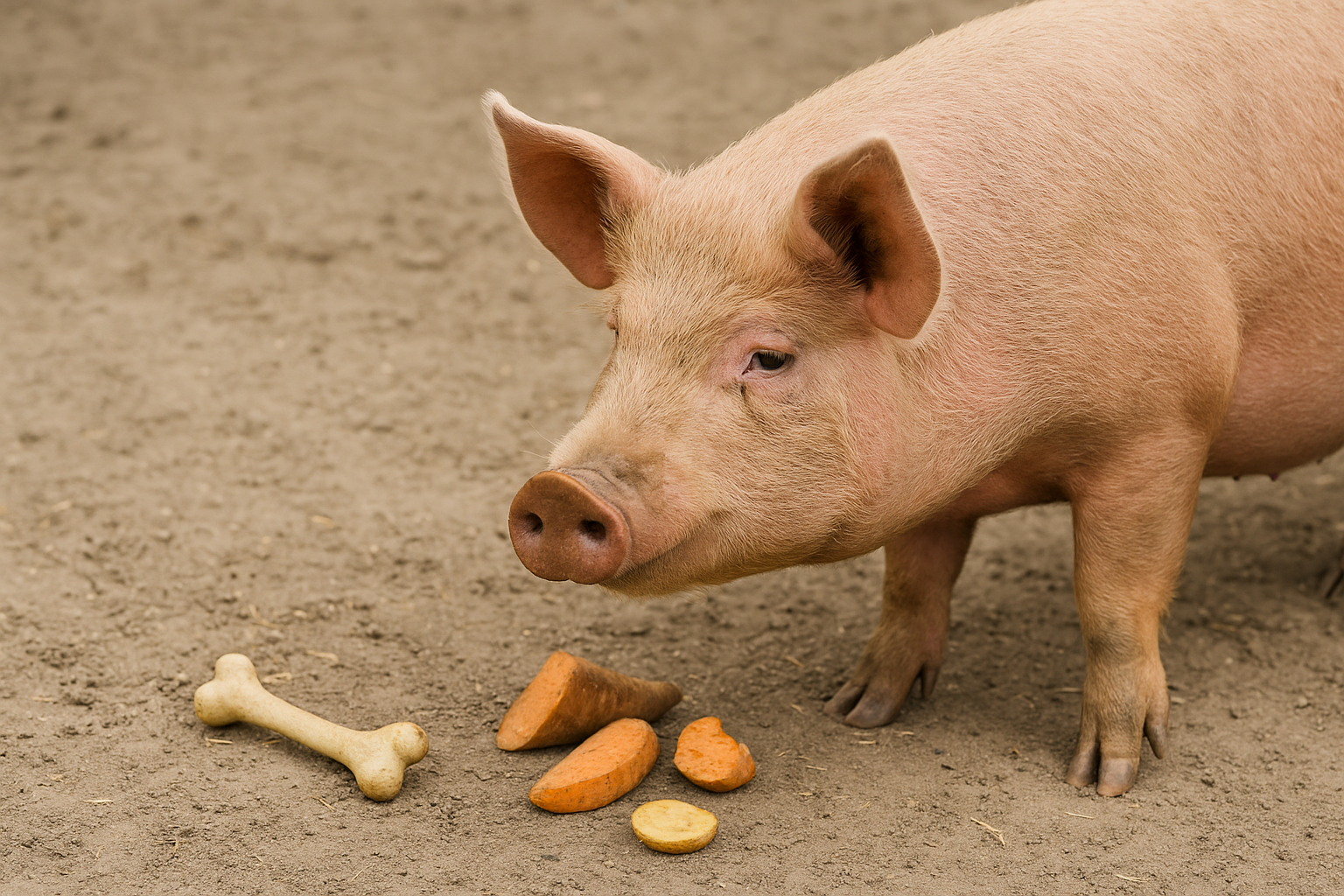
New Analysis of Fossil Teeth Reveals That Early Domesticated Pigs Lived Among Humans and Ate Leftovers Over 8,000 Years Ago.
The relationship between humans and pigs may have started in an unusual way: food scraps and dirt scattered across the first settlements.
A new archaeological study identified evidence that wild boars began to approach human communities in southern China over 8,000 years ago. Over time, these animals became the domesticated pigs we know today.
Pigs That Ate What Humans Left Behind
Researchers analyzed dental calculus from 32 pigs found at two Neolithic sites in the Lower Yangtze River region: Jingtoushan, dated from 8,300 to 7,800 years ago, and Kuahuqiao, from 8,200 to 7,000 years ago. The dental calculus, a type of hardened plaque that forms on teeth, preserved small traces of what the animals were eating.
-
The eggshell that almost everyone throws away is made up of about 95% calcium carbonate and can help enrich the soil when crushed, slowly releasing nutrients and being reused in home gardens and vegetable patches.

-
This farm in the United States does not use sunlight, does not use soil, and produces 500 times more food per square meter than traditional agriculture: the secret lies in 42,000 LEDs, hydroponics, and a system that recycles even the heat from the lamps.

-
The water that almost everyone throws away after cooking potatoes carries nutrients released during the preparation and can be reused to help in the development of plants when used correctly at the base of gardens and pots, at no additional cost and without changing the routine.

-
The sea water temperature rose from 28 to 34 degrees in Santa Catarina and killed up to 90% of the oysters: producers who planted over 1 million seeds lost practically everything and say that if it happens again, production is doomed to end.


Granules of rice starch, yam, and other cooked plants were found. There were also acorns and grasses. Since pigs do not cook, it is almost certain that they were consuming leftovers prepared by humans. This indicates a close coexistence between the two species.
Docile Behavior Before Physical Changes
The domestication of pigs has always been a challenge to trace. Usually, archaeologists look for changes in the skeleton, such as reduction in body size and brain size. But these alterations may have occurred later.
According to Dr. Jiajing Wang of Dartmouth College, the first step was likely a change in behavior: some wild boars became less aggressive and more tolerant of human presence.
“Living with humans gave them easy access to food, so they no longer needed to maintain their robust physiques,” explains Wang. Natural selection favored the more docile. Over time, their bodies shrank, and their brains became up to one-third smaller.
Microfossils Reveal Diet and Coexistence
To go beyond skeletal analysis, the researchers studied microfossils in the pigs’ teeth. The presence of cooked food reinforces that these animals were in direct contact with human settlements. In Kuahuqiao, for instance, there are records of intensive rice cultivation and the use of grinding stones and ceramics that also had starch residues.
In addition to food, scientists found human parasite eggs in the pigs’ teeth. Eggs of Trichuris trichiura — a type of worm that develops in the human intestine — were identified in 16 specimens. The presence of these eggs indicates that the pigs may have ingested human feces or food contaminated by it.
“Pigs are known to eat human waste,” says Wang. “This is further evidence that they lived close to people, likely in the same spaces.”
Physical Transformations Already Visible in Teeth
The statistical analysis of dental structures also showed that some pigs from Kuahuqiao and Jingtoushan had smaller teeth, similar to those of modern domesticated pigs. This indicates that domestication was already underway at that time.
Wild boars, typically large and aggressive animals, began frequenting human settlements in search of easy food. These environments, filled with food waste and excrement, created ideal conditions for the onset of domestication.
The Commensal Path of Domestication
The study suggests that the domestication of pigs followed the so-called commensal pathway. That is, the animals were spontaneously attracted to humans because of the waste they produced.
This was not a direct act of forced domestication but a process in which the more tolerant wild boars benefited from living close to people.
As coexistence increased, pigs began to be actively managed by humans. This represents what researchers call the prey pathway, in which the animal is intentionally raised. The analyzed data show that these two phases overlapped in the case of pigs.
From Garbage to Domestication — and Parasites
The discovery also raises another question: disease transmission. The presence of human parasite eggs in the pigs’ teeth shows that this close coexistence may have favored the emergence of diseases in early agricultural communities.
“Our study shows that some wild boars took the first step toward domestication by foraging for human waste,” says Wang. “The research also sheds light on the likely relationship between pig domestication and the transmission of parasitic diseases in early sedentary communities.
The findings were made possible thanks to data obtained from two of the oldest sites ever discovered with signs of human life in southern China.
Based on what was found in the teeth of pigs from Jingtoushan and Kuahuqiao, the study offers a new perspective on the origin of domesticated pigs and how the relationship with humans may have begun with a simple search for food.
The work was published in the scientific journal Proceedings of the National Academy of Sciences and represents a step forward in understanding the history of animal domestication — revealing that sometimes, it all begins with food scraps on the ground.










Seja o primeiro a reagir!