





 Portuguese
  English
  Spanish
  3 min of reading
  0 comments


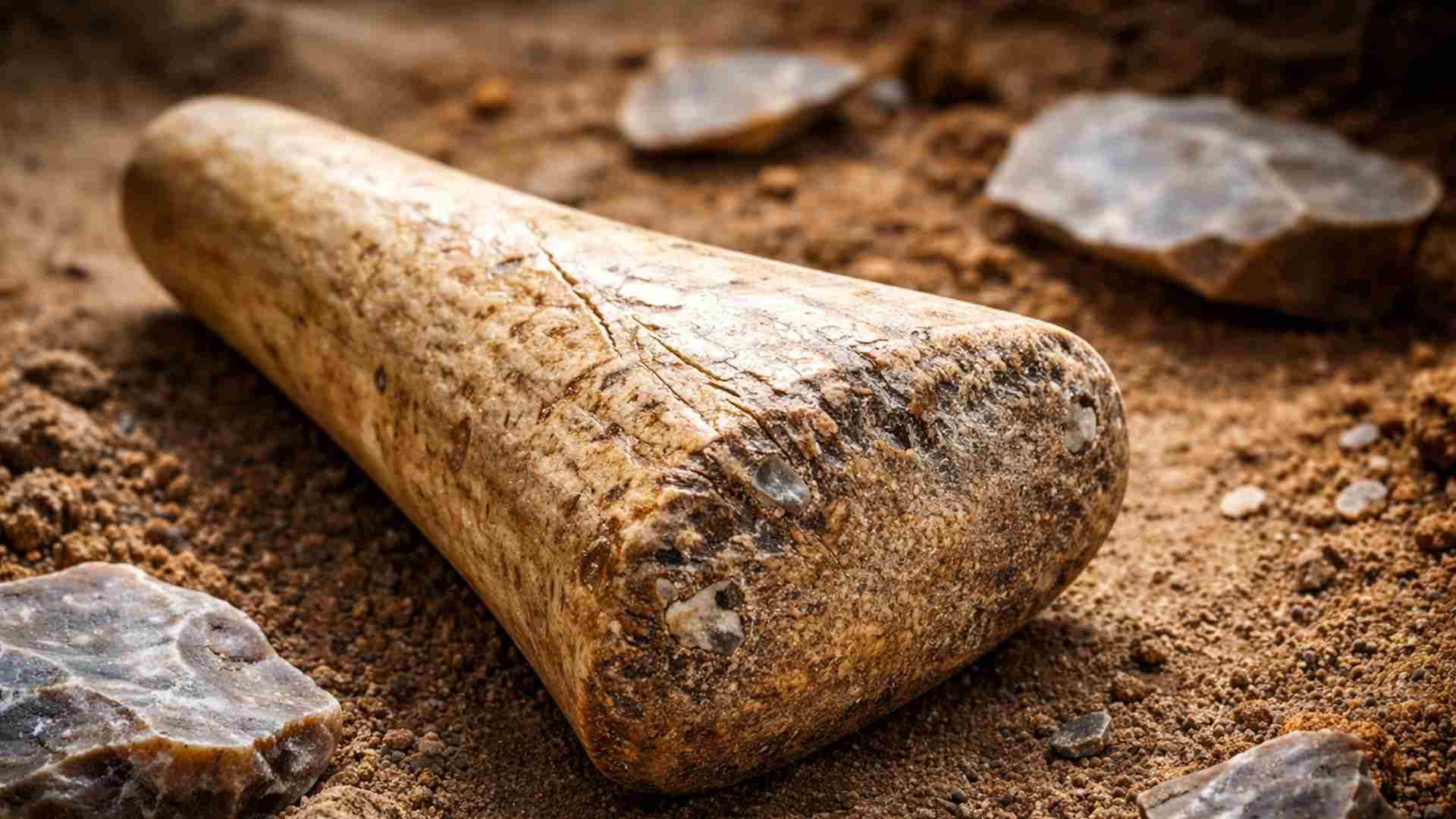
Discovery of an Elephant Bone Hammer About 500 Thousand Years Old in Boxgrove, England, Provides New Evidence About Specialized Tool Use, The Intentional Selection of Rare Materials, and The Cognitive Advancement of Human Ancestors in Prehistoric Europe
An elephant bone hammer, approximately 500,000 years old, was identified at the archaeological site of Boxgrove, England, as the oldest tool of its kind ever found in Europe, revealing sophisticated technical practices among human ancestors of the period.
Discovery in Boxgrove Expands Record of Bone Tools in Europe
The artifact was originally unearthed in the 1990s during excavations at the archaeological site of Boxgrove but remained functionally unidentified for several decades. Only recent analyses have confirmed its use as a specialized tool.
Researchers from University College London and the Natural History Museum indicate that the object functioned as a soft hammer resharpening tool, an instrument used to revive and sharpen flint axes that had lost their edge over continuous use.
-
With a cost per shot close to zero, the DragonFire laser could change naval warfare in 2027 and provide British ships with nearly unlimited defense against drones.

-
A British startup creates tires that generate electricity in electric vehicles when passing over potholes, speed bumps, and cracks.

-
Scientists have created robots made with living cells that have their own nervous system, swim on their own, explore the environment, and self-organize without any genetic engineering, and now they want to do the same with human cells.

-
Students create a solar-powered ambulance that operates without a plug, without fuel, and still keeps medical equipment running in remote areas.


The discovery provides new data on the technological repertoire available to the first humans who occupied the region, associating the elephant bone hammer with recurring practices of tool maintenance in the Lower Paleolithic.
Physical Characteristics Confirm Intentional Modification of the Artifact
The object consists of a triangular fragment of dense cortical bone, measuring approximately 11 cm in length, 6 cm in width, and 3 cm in thickness. The surfaces exhibit marks consistent with repeated impacts and deliberate control of the shape.
The extreme density of the material indicates that the bone belonged to an elephant or mammoth, although the size of the fragment does not allow for the identification of the exact species or the specific part of the skeleton used.
High-resolution analyses revealed microscopic fragments of flint embedded in the impact marks, demonstrating that the instrument was used multiple times for the work of flaking and finishing stone tools.
Technical Function of The Elephant Bone Hammer in The Flaking Process
The elephant bone hammer allowed for controlled removal of dull edges from flint through precise strikes, a process known as flaking. This method required technical mastery to avoid unwanted fractures in the blades.
The choice of cortical elephant bone offered greater structural resilience during impact, surpassing thinner, more fragile bones of smaller animals that would easily break under repeated blows.
This type of soft tool enabled a high degree of refinement of the cutting edges, indicating that the makers mastered not only the use of flint but also the strategic selection of auxiliary materials.
Cognitive Implications for Early European Humans
Mammoths and elephants were rare in prehistoric England, reinforcing the interpretation that human groups recognized the value of this material and preserved it for future use, rather than relying solely on immediate resources.
According to the researchers, the repeated use of a specialized resharpening tool demonstrates planning, working memory, and abstract thinking, capabilities associated with Homo heidelbergensis and early Neanderthals of the region.
The artifact represents the first example of an elephant bone tool identified among the extensive collection of flint and horn implements from Boxgrove, expanding the understanding of the technological diversity of the site.
Although similar bone technologies have existed in Africa for about 1.5 million years, records of this type remain extremely rare in Europe, especially in periods as ancient as that associated with the elephant bone hammer.
The study detailing the analysis of the artifact was published in the journal Science Advances on January 21, consolidating Boxgrove as one of the key references for understanding technological development in human prehistory in Europe.








Seja o primeiro a reagir!