





 Portuguese
  English
  Spanish
  5 min of reading
  0 comments


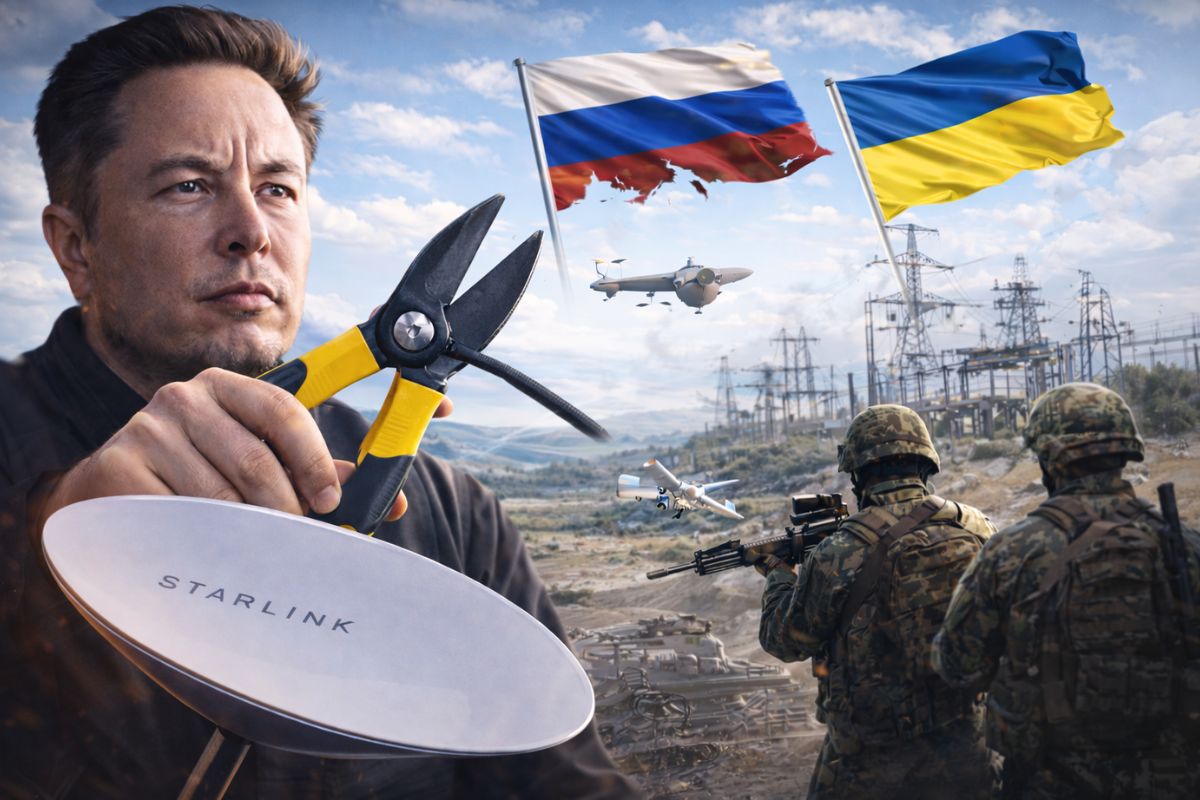
Elon Musk’s Decision To Block Clandestine Starlink From Russian Troops In The War In Ukraine Takes Down Drones, Breaks Communications And Opens Space For Ukrainian Advancement In Zaporijia
Being without internet in daily life is already a hassle. Now imagine that in the middle of a war, with troops spread across the front, drones in the air, and decisions that need to be made in seconds. This is exactly what happened when Elon Musk decided to block the clandestine use of Starlink by Russian military forces in Ukraine, leaving parts of the Moscow army literally blind on the battlefield.
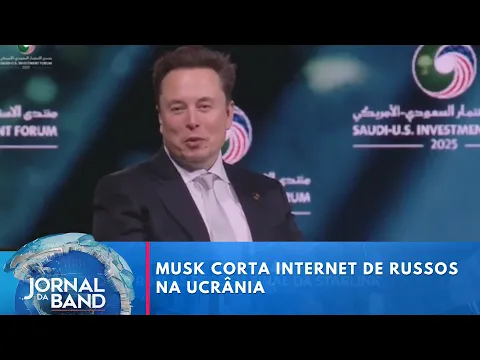
According to Ukrainian authorities, the Starlink satellite network had been used by Russian troops without authorization, in attack operations against Ukraine. In response to a request from President Volodymyr Zelensky, Elon Musk authorized the cut of this access, which not only interrupted communications in frontline sectors but also hindered the launch of Russian drones. This move opened up space for the Ukrainian army to retake cities in the south of the country and register new advances in the Zaporijia region.
How Elon Musk Entered The Digital Frontline Of The War
Starlink, the satellite internet system created by SpaceX, was initially born as a solution to connect remote areas, but it has become a strategic tool since the beginning of the Russian invasion.
-
USA and China compete for Brazil over resources that could be worth trillions — rare earths put the country at the center of a global dispute

-
Global summit with over 40 countries pressures Iran for a blockade in the Strait of Hormuz and warns of direct impact on oil, food, and the global economy.
-
Russia has broken the U.S. maritime blockade to send oil to Cuba and is now loading a second ship while Trump says that “Cuba is next” in a possible military action against the island.

-
Spain challenges the USA and closes its airspace for operations against Iran, raising global tension and provoking the threat of a trade rupture.

For Ukraine, private satellites have become crucial for ensuring secure communication in almost real-time, even with part of the ground infrastructure destroyed.
In this context, the fact that Russian troops began to use the same system, clandestinely, created a paradox: the technology that helped Kyiv was also being exploited by Moscow.
Upon being informed of this irregular use, Elon Musk became an active piece on the board, choosing to cut off Russian access and reposition Starlink as a primarily Ukrainian advantage on the battlefield.
This decision demonstrates how, in the current war, a technology entrepreneur can directly influence military operations, even thousands of kilometers from the frontline.
Musk’s gesture was not merely commercial or technical, but had an immediate impact on one of the most sensitive fronts of the conflict: the connectivity of troops and drones.
Russian Troops Without Signal, Drones On The Ground And Advancement In Zaporijia
With the blockade, hundreds of Russian soldiers were left without communication for several days, relying on the Starlink network to coordinate positions, attacks, and tactical movements.
Besides voice and data contact, the cut directly affected the use of drones, which depend on stable links for navigation, surveillance, and attack.
The result appeared quickly on the map. Ukrainian forces managed to retake cities in the south of the country and advance in strategic sectors of the Zaporijia region, a sensitive point on the front.
Analysts classified this move as the largest territorial gain for Kyiv since the counteroffensive launched in mid-2023, reinforcing the idea that connectivity is today as important as ammunition and armored vehicles.
In this scenario, Musk’s gesture functioned as a kind of “selective blackout” on Russian units, opening a window of opportunity that the Ukrainian army knew how to exploit.
When one side loses the ability to coordinate troops and drones, every decision becomes slower, every response more risky, and the terrain begins to favor the opponent who can still see the battlefield in real-time.
Starlink And The Strategic Role Of Technology On The Battlefield

This case reinforces a trend that has been emerging: modern wars depend not only on tanks, planes, and missiles but also on data networks, satellites, and private technology services.
Starlink has, in practice, become part of Ukraine’s military infrastructure, ensuring communication even when antennas, cables, and towers on the ground are destroyed by attacks.
By cutting off the clandestine use of the network by the Russians, Elon Musk highlighted the power of technology companies in international conflicts.
Today, a decision regarding satellite configuration or access blockade can be as impactful as moving an entire battalion.
For Ukraine, keeping this channel active means continuing to coordinate operations in real-time, adjusting artillery attacks based on field images and data, and keeping commands connected across different fronts.
For Russia, being cut off from this resource means relying on its own systems, which are under constant attack and monitoring.
Russia Responds With Missiles Against Electric Infrastructure
Even with the internet network impaired in some areas, Russia maintained the pace of heavy bombings against Ukraine.
Missiles hit the Ukrainian power system, in a clear strategy: to use the intense cold of the European winter as a weapon of war.
By targeting substations, transmission lines, and power plants directly, Moscow attempts to leave entire cities without heating, light, and basic services, pressuring the population and the Ukrainian government for wear.
This tactic is not new but gains strength when combined with simultaneous attacks on communications and critical infrastructure.
In this context, Musk’s decision regarding Starlink intersects with Russian military calculations. While one side tries to maintain minimal connectivity and energy to resist, the other seeks to cut these same pillars, turning cold and darkness into silent weapons.
Negotiations In Geneva Try To Move Forward Amid The Connected War
As drones are affected by Elon Musk’s decisions and missiles fall on the electrical grid, delegations from Russia, Ukraine, and the United States are meeting in Geneva in yet another attempt to find a way out of the war, which is approaching four years of duration.
The meeting, held in Switzerland, began a few hours after the new attacks against the Ukrainian power system. The talks are expected to continue over the following days amid growing pressure.
On one side, Ukraine seeks to consolidate territorial gains and maintain international support. On the other, Russia tries to balance military actions on the ground with diplomatic movements at negotiation tables.
In the midst of this board, technology companies and figures like Elon Musk have become indirect actors, influencing how the war is fought and perceived.
Decisions regarding satellites, connectivity, and digital infrastructure today weigh as much as resolutions and official statements.
In a scenario where a click can turn off the internet for troops on the very front lines, do you think decisions made by businesspeople like Elon Musk should be more regulated by governments and international agreements, or is this kind of private power inevitable in modern wars?







Seja o primeiro a reagir!