





 Portuguese
  English
  Spanish
  3 min of reading
  0 comments


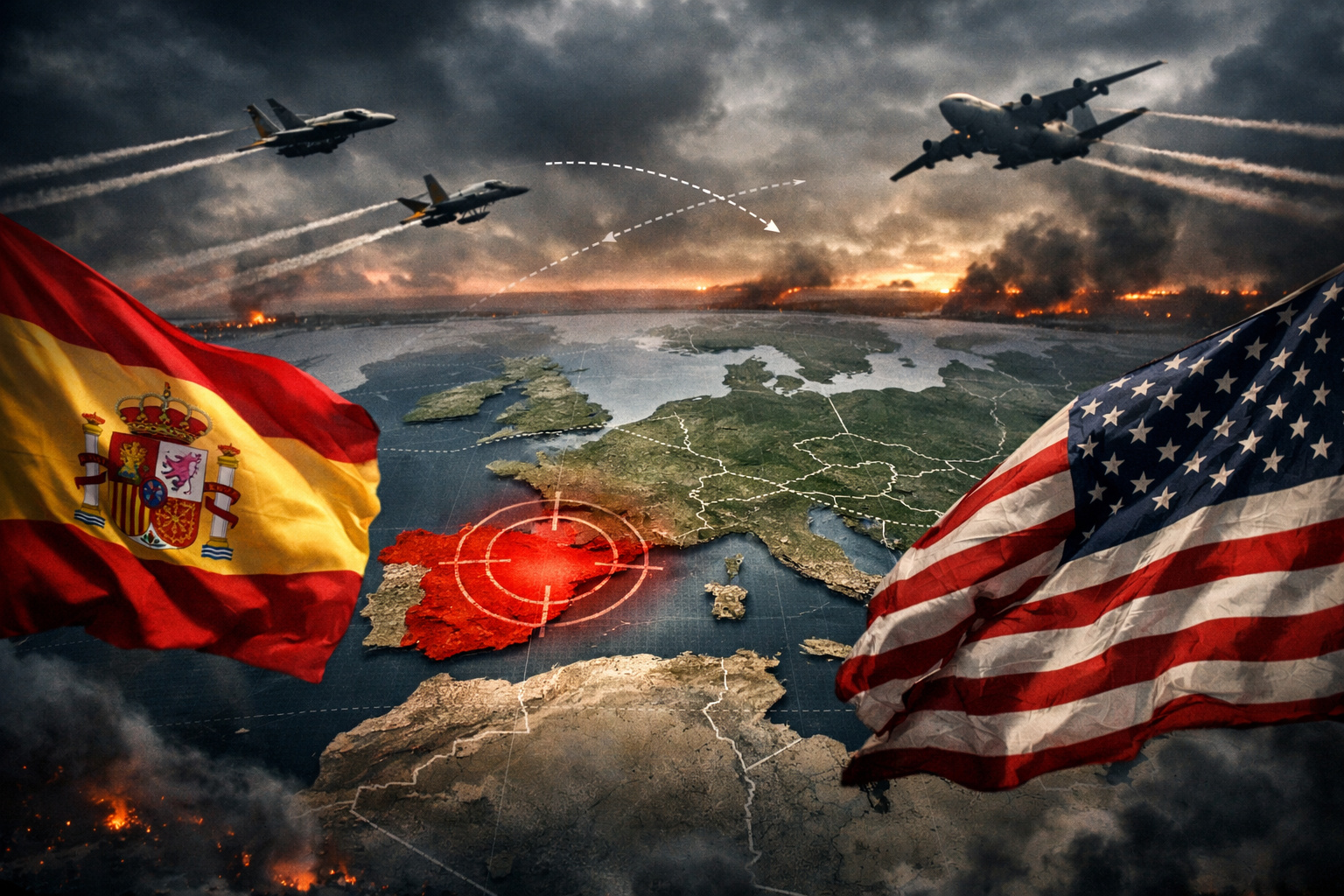
Strategic decision of Madrid prevents logistical support and redraws military routes amid international escalation involving Washington and Tehran
Spain’s decision to close its airspace to U.S. military planes involved in attacks on Iran marks a new chapter in global geopolitical tensions. In an increasingly delicate scenario, the Spanish positioning not only surprises allies but also reinforces a firm stance against controversial international conflicts.
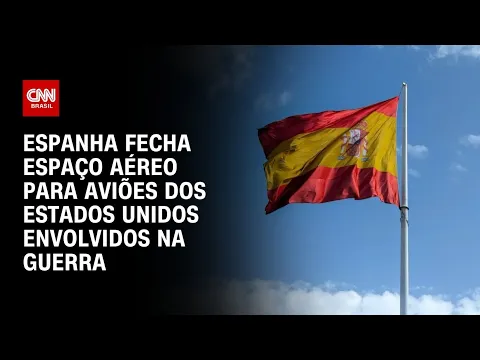
The information was disclosed by “El País,” according to military sources, and later confirmed by Defense Minister Margarita Robles on Monday (30). According to the official, the European country will not allow any type of logistical support for U.S. operations related to the war against Iran.
According to Robles, the measure is clear and without loopholes: “We do not authorize either the use of military bases or the use of airspace for actions related to the war in Iran.” Thus, Spain positions itself directly against the use of its territory in military actions that could escalate the conflict in the Middle East.
-
More than 100 Chinese ships are surrounding Taiwan, warns the head of the country’s National Security Council.

-
Trump’s announcement about sending 5,000 American soldiers to Poland was received with relief by European allies, but it also raised doubts within NATO about the United States’ strategy, the permanence of the troops, and the division of defense costs on the continent.

-
Yesterday, on the 21st, President Lula stated that he fears an incursion by Donald Trump into the Amazon: while the Brazilian Army advances in a transformation policy that includes troop reorganization, use of technology, and 20% of the forces in a high state of readiness.
-
The war that doesn’t appear on the front: the silent bomb of demographic collapse threatens Russia as Putin loses young people in Ukraine, babies in statistics, and talents in exile.



Spanish government reinforces stance against the war and refuses participation in conflict deemed illegal
Moreover, the decision does not arise in isolation. On the contrary, it expands a stance already previously adopted by the Spanish government, which had denied the use of military bases operated jointly with the United States. Thus, the airspace blockade represents another firm step in that direction.
According to disclosed information, the restriction forces U.S. aircraft to circumvent Spanish territory during movements towards the Middle East. However, it is worth noting that the prohibition does not apply to emergency situations, demonstrating a balance between political firmness and operational responsibility.
In this context, the Minister of Economy, Carlos Cuerpo, reinforced the official position of the country by stating that the measure is aligned with international legal principles. In an interview with Radio Cadena Ser, he declared that Spain does not intend to support a war initiated unilaterally and considered contrary to international law.
Therefore, the decision goes beyond a strategic issue: it is a political and ethical stance that puts Spain in the spotlight on the global stage, especially among European countries.

Criticism from Pedro Sánchez and U.S. reaction intensify diplomatic crisis between allies
Meanwhile, Prime Minister Pedro Sánchez has adopted an even more incisive discourse against the military actions of the United States and Israel. In recent statements, he classified the attacks on Iran as “reckless” and “illegal,” reinforcing Madrid’s critical position.
Earlier this month, Sánchez even stated that Donald Trump was “playing Russian roulette” with the fate of millions of people by escalating the conflict. Furthermore, he made it clear that Spain will not be complicit in U.S. actions, even in the face of possible retaliation.
As a direct consequence, diplomatic tension between Spain and the United States has significantly increased. In response to the Spanish decision, Trump threatened to cut trade relations with Madrid, escalating the level of confrontation between two historical allies.
In this scenario, experts point out that the decision may generate impacts not only militarily but also economically and politically, affecting strategic alliances in the West. Still, Spain seems willing to maintain its position, prioritizing international principles and avoiding direct involvement in the conflict.
Source: ICL Noticias





Be the first to react!