





 Portuguese
  English
  Spanish
  4 min of reading
  0 comments


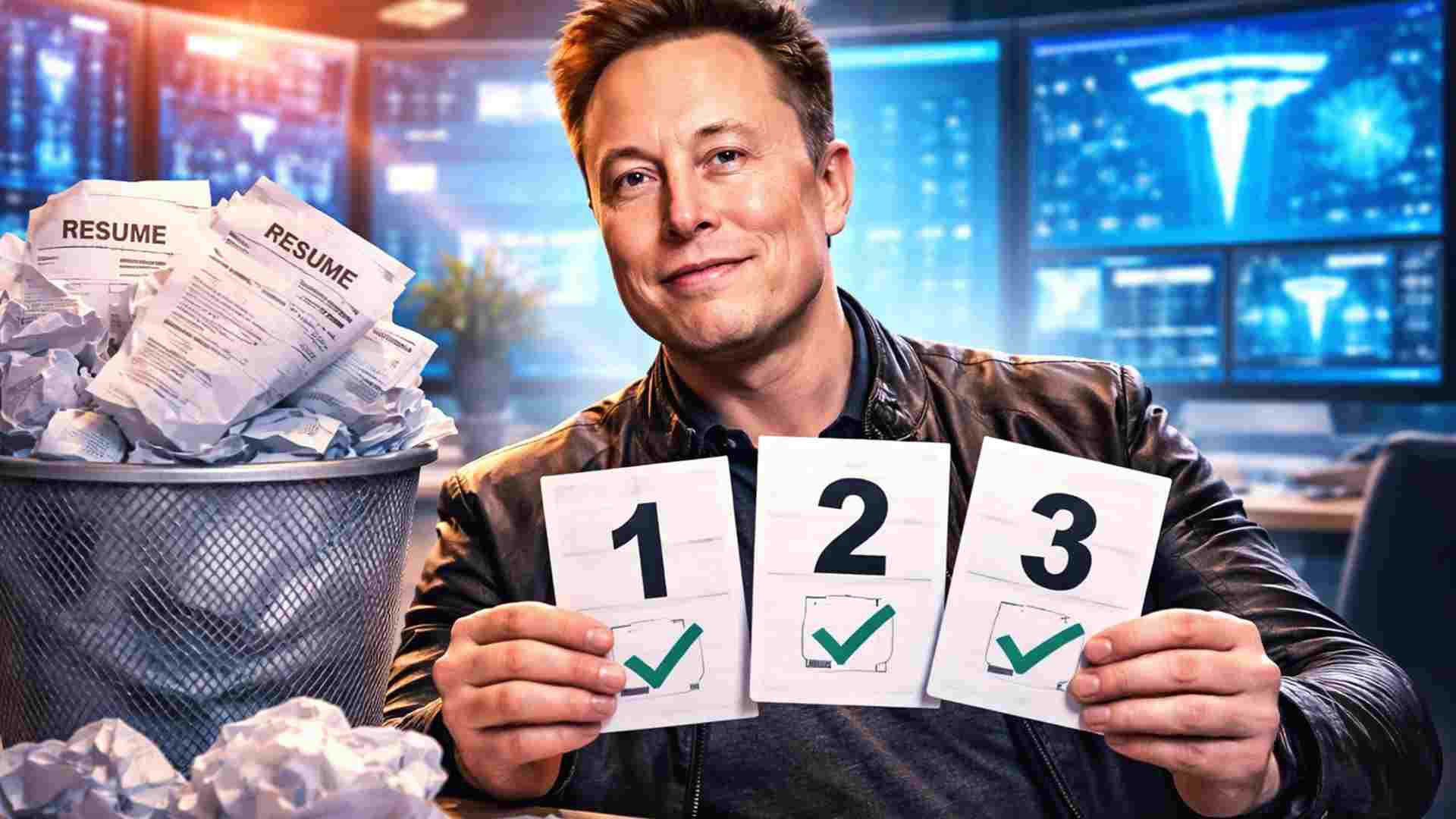
Elon Musk’s Requirement for Only Three Objective Descriptions of Technical Problems Solved in Jobs Related to Tesla’s Dojo3 AI Chip Signals a Turning Point in Technology Sector Recruitment by Reducing the Centrality of Traditional Resumes and Prioritizing Direct Evidence of Practical Ability
Tesla’s CEO, Elon Musk, requested this week that candidates for the Dojo3 AI chip email three complex technical problems they have solved, prioritizing results over traditional resumes in a strategy aimed at filtering real skills in a more restrictive technology market.
Direct Request and Focus on Problems Solved
The request was disclosed in a post on X, in which Musk advises interested parties to describe, in three bullet points, the hardest technical problems they have been able to solve. The requirement bypasses lengthy resumes or detailed cover letters.
According to the proposal, the central criterion is the demonstrated ability to solve concrete challenges, not how the professional trajectory is presented in traditional documents. The approach seeks to reduce the common noise in the sector’s selection processes.
-
How to build a 35,000-liter cistern with 60 by 50 cm panels and rainwater for drinking and cooking without relying on water trucks or the city hall.

-
A woman went out for a regular walk and ended up finding a treasure buried for over 900 years, with more than 2,000 medieval silver coins compared by archaeologists to a lottery prize and considered one of the most significant finds in recent years in the country.

-
Scientists revealed 11 signs that very intelligent people exhibit in their daily lives, and most people have no idea that some of these common behaviors are directly linked to an above-average brain.

-
From space, Buenos Aires appears as a colossal spot of light surrounded by kilometers of darkness, revealing at a single glance the exact boundary between the metropolis and the countryside, seen from 400 km altitude.


The initiative is linked to the hiring related to the Dojo3 artificial intelligence chip, a strategic project of Tesla aimed at processing large volumes of data for advanced AI systems.
Reactions from Recruiters and Market Reading
Michelle Volberg, a long-time recruiter and founder of the startup Twill, stated to Business Insider that Musk’s proposal attempts to cut through the excess of little useful information in today’s job market.
She explained that resumes and LinkedIn profiles do not always make it clear where a candidate’s real skills lie. By asking for objective examples of problems solved, managers can quickly access the core of the skills.
Volberg believes that this model is likely to expand, particularly in technology companies pressured by high costs on AI projects and the downturn following the hiring boom during the pandemic.
For her, the movement indicates a broader transition, where practical results gain emphasis over formal titles or generic descriptions of functions performed.
Effect of Artificial Intelligence on Recruitment
The recruiter highlighted that managers are tired of excessively tailored resumes for specific positions, which end up revealing little about the candidate. The growing use of automated tools exacerbates this problem.
“They don’t want to see resumes filled with generic terms written by ChatGPT,” said Volberg. The request for concrete examples would help separate real experience from artificial presentations.
The preference for objective bullet points represents a break from the classic model based on highlighted positions, years of experience, and extensive lists of skills. The focus shifts to how the candidate reached a solution.
This logic aligns with what human resources professionals call “skills-based hiring,” an approach that values proven deliverables over academic background or institutional history.
Continuation of an Already Known Attitude
The initiative reinforces Musk’s previous statements about accepting candidates from non-traditional backgrounds. For years, he has stated that a college degree is not a requirement to work at Tesla.
The executive has declared that he seeks evidence of skill or exceptional achievements, regardless of formal education. The current model maintains this line by prioritizing verifiable technical accomplishments.
In 2025, Musk adopted a similar request when overseeing efforts by the Department of Government Efficiency group, responsible for restructuring initiatives in the federal government of the United States.
At that time, a post on X informed that the group was looking for world-class software engineers, product managers, and data scientists, requesting two or three bullet points that demonstrated exceptional capability, along with the submission of a resume.
Emphasis on Results and Associated Risks
Volberg stated that the bullet points method reflects guidance already given by her company to candidates, focusing on results rather than adjectives. For managers, the central question is whether the professional solves real problems.
She warned that exaggerations can be easily detected. Candidates who claim to have solved significant challenges need to support their statements with technical details during interviews.
According to the recruiter, it’s common for evaluators to quickly identify when someone has actually performed the described work. Cases of fabrication or exaggeration can result in future exclusions from processes.
Limitations of the Model for Certain Profiles
David Murray, CEO of the startup Confirm, which specializes in performance evaluation, pointed out potential risks in the strategy. He told Business Insider that the method may favor those who promote themselves better.
According to Murray, more subtle or introverted collaborators may have difficulties summarizing their achievements in an impactful way, despite contributing significantly in technical teams.
He also mentioned the so-called Dunning-Kruger effect, where less competent people tend to overestimate their abilities, while highly qualified professionals may underestimate the complexity of their own achievements.
For Murray, by asking candidates to “sell” their own work, the approach can distort the real perception of ability. Nevertheless, the model signals a significant change in contemporary technological recruitment.








-

-

3 pessoas reagiram a isso.