





 Portuguese
  English
  Spanish
  5 min of reading
  0 comments


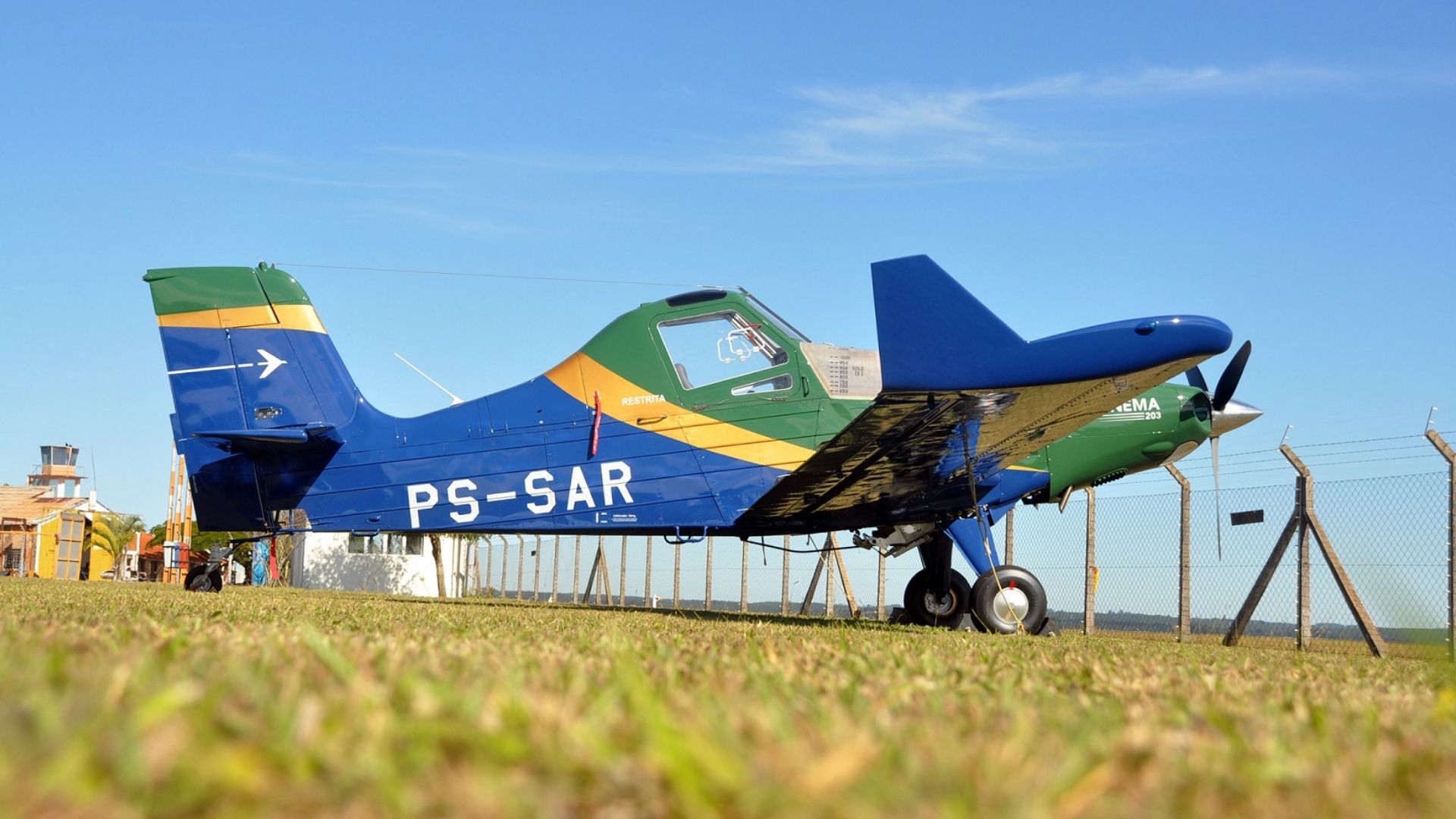
Embraer Expands Its Sustainable Operations by Studying the Operation of Ethanol-Powered Agricultural Aircraft Outside Brazil, Connecting Bioeconomy, Technological Innovation, and Efficiency in the Latin American Agribusiness
Embraer has taken a strategic step to internationalize its agricultural aviation business by entering into an agreement with a biofuel producer in Argentina. According to an article published by Globo Rural this Monday (26), the initiative involves the Ipanema agricultural aircraft, powered exclusively by ethanol, and reinforces the Brazilian manufacturer’s commitment to innovation, sustainability, and international expansion.
This move positions Embraer as one of the leaders in sustainable aerospace solutions, linking aviation, bioeconomy, and agribusiness in a single project. The partnership includes detailed studies on market, supply infrastructure, and operational feasibility of the model in the neighboring country, opening doors to new opportunities in Latin America.
Embraer Signs Agreement to Bring Ethanol-Powered Agricultural Aircraft to Argentina
Since 2004, the Ipanema has established itself as one of the most widely used agricultural aircraft in Brazil. Now, the challenge is to take this technology beyond national borders, adapting it to the energy and regulatory realities of other countries.
-
CNPE strengthens policy and prevents imported biodiesel from being mixed with diesel, aiming to strengthen the Brazilian industry and protect jobs by reducing external dependence amid tensions in the global market.

-
Revolution in public transport: Goiânia puts into circulation the first articulated buses powered by biomethane in Brazil and promises to drastically reduce pollution on the Anhanguera Corridor.

-
From the field to the pipelines: Mato Grosso do Sul accelerates the energy transition and consolidates a new axis in renewable energy with the arrival of a giant biogas plant.

-
The Economist states that Brazil has a “secret weapon” against expensive oil and highlights how the country can reduce economic impacts even in international scenarios of high volatility.


Embraer has signed a memorandum of understanding with the group Essential Energy Holding, which controls Bioenergías Agropecuarias, a distillery located in northern Santa Fe province, Argentina. The industrial plant produces ethanol from sugarcane and corn, strategic raw materials for the regional energy sector.
The main focus of the agreement is to evaluate the market potential of the Ipanema agricultural aircraft in Argentina, including supply conditions, logistical costs, distribution infrastructure, and acceptance by local farmers.
According to executives involved in the project, the idea is to create a viable ecosystem that allows for the continuous operation of the aircraft without relying on imports or makeshift fuel solutions, which is essential to ensure competitiveness and operational safety.
Embraer’s Agricultural Aircraft Becomes a Reference in Sustainability
The Ipanema agricultural aircraft has been produced by Embraer since 2004. In 2015, the company decided to permanently cease production of the gasoline model and focus all manufacturing on the ethanol-powered version, becoming one of the first aircraft in the world to be mass-produced using this type of fuel.
Initially, the strategy was primarily focused on reducing costs for farmers, as ethanol is cheaper than gasoline in Brazil. Over time, the environmental factor gained strategic weight, aligning the product with the growing demand for sustainable solutions in agribusiness.
The use of ethanol reduces greenhouse gas emissions throughout the fuel’s lifecycle, as well as strengthening productive chains linked to energy agriculture, amplifying the positive impacts of the bioeconomy.


Bioeconomy and Agribusiness Drive a New Phase of Agricultural Aviation
The partnership established by Embraer occurs within a context of strengthening the bioeconomy in Latin America. Countries like Argentina and Brazil have significant biofuel production capacity, creating favorable conditions to integrate renewable energy and agricultural technology.
According to Federico Pucciariello, CEO of Essential Energy, the agreement with Embraer aims to improve the economic equation for Argentine producers, facilitating access to aviation technology and locally produced ethanol. This results in lower operational costs and higher productivity in the field, especially in large agricultural areas.
This integration of aviation, clean energy, and rural production is seen as a strategic way to enhance agribusiness competitiveness without increasing environmental impacts.
Ethanol Has Always Been the Biggest Challenge for International Expansion
Despite the Ipanema’s success in Brazil, Embraer has faced historical challenges in expanding the model to other countries. The main hurdle has always been the availability of ethanol on a national scale, something that few countries have outside Brazil.
According to Sany Onofre, director of business and production for Embraer’s agricultural aviation, the company viewed regional expansion as complex or even unfeasible. The lack of supply infrastructure made operations economically risky.
This scenario began to change as neighboring countries started to invest more heavily in biofuels, creating new opportunities for the ethanol-powered agricultural aircraft.
Embraer Connects Latin American Countries to Its Agricultural Aviation
In 2025, Embraer hosted representatives from companies and industrial leaders from Argentina, Paraguay, Uruguay, and Mexico at its factory in Botucatu, São Paulo. The goal was to present the production line of the agricultural aircraft, its technical features, and operational advantages.
The initiative resulted in a series of commercial and institutional contacts. According to the company, the interest shown by visitors was high, especially in the sustainable model and the operational history of the Ipanema in Brazil. From these meetings, concrete negotiations emerged, such as the agreement recently signed with the Argentine group, as well as regulatory discussions in other countries in the region.
Embraer’s Agricultural Aviation Has Low Revenue but High Potential
Currently, Embraer’s agricultural aviation segment generates about US$ 60 million per year, equivalent to approximately R$ 300 million. Although this amount represents a fraction of the company’s total revenue, which reached R$ 35 billion in 2024, the growth potential is significant.
With the opening of markets in Latin America, the company’s expectation is for growth between 20% and 30% in revenue for this segment in the coming years. The internationalization of the agricultural aircraft could transform a niche business into a strategic expansion vector.

Real Cases Show the Viability of Agricultural Aircraft Outside Brazil
Even before progress in Argentina, the Ipanema began operating outside Brazil. In 2025, Embraer sold an aircraft to a Brazilian distributor, who resold it to a farmer in Paraguay.
Initially, the customer obtained a special permit to operate the agricultural aircraft. Later, the Paraguayan aviation authority officially approved the aircraft’s use throughout the national territory, consolidating the model’s viability in the country. In Argentina, the authorization process with the aviation authority is still ongoing.
The average price of an Ipanema agricultural aircraft in Brazil is around R$ 4 million. In Argentina, the price is expected to be similar, considering the exchange rate. According to Embraer, the aircraft’s operational capacity justifies the investment.
While the Ipanema can carry up to 700 kilograms per flight, the largest agricultural drones currently available can carry about 50 kilograms. This makes the plane more efficient in large areas, especially when ground sprayers cannot meet the demand. The company acknowledges, however, that drones are rapidly evolving and is following the development of this technology.
Sustainability, Technology, and Agribusiness at the Core of the Strategy
The international expansion of the ethanol-powered agricultural aircraft represents a strategic advancement for Embraer and the future of bioeconomy. By integrating aerospace technology, renewable energy, and rural production, the project creates a sustainable and economically viable model.
The first step taken in January 2026 signals a new phase for Brazilian agricultural aviation, with the potential to positively impact Latin American agribusiness. This initiative combines innovation, competitiveness, and environmental responsibility, reinforcing Embraer’s leadership in sustainable solutions for the field.









Seja o primeiro a reagir!