





 Portuguese
  English
  Spanish
  5 min of reading
  0 comments


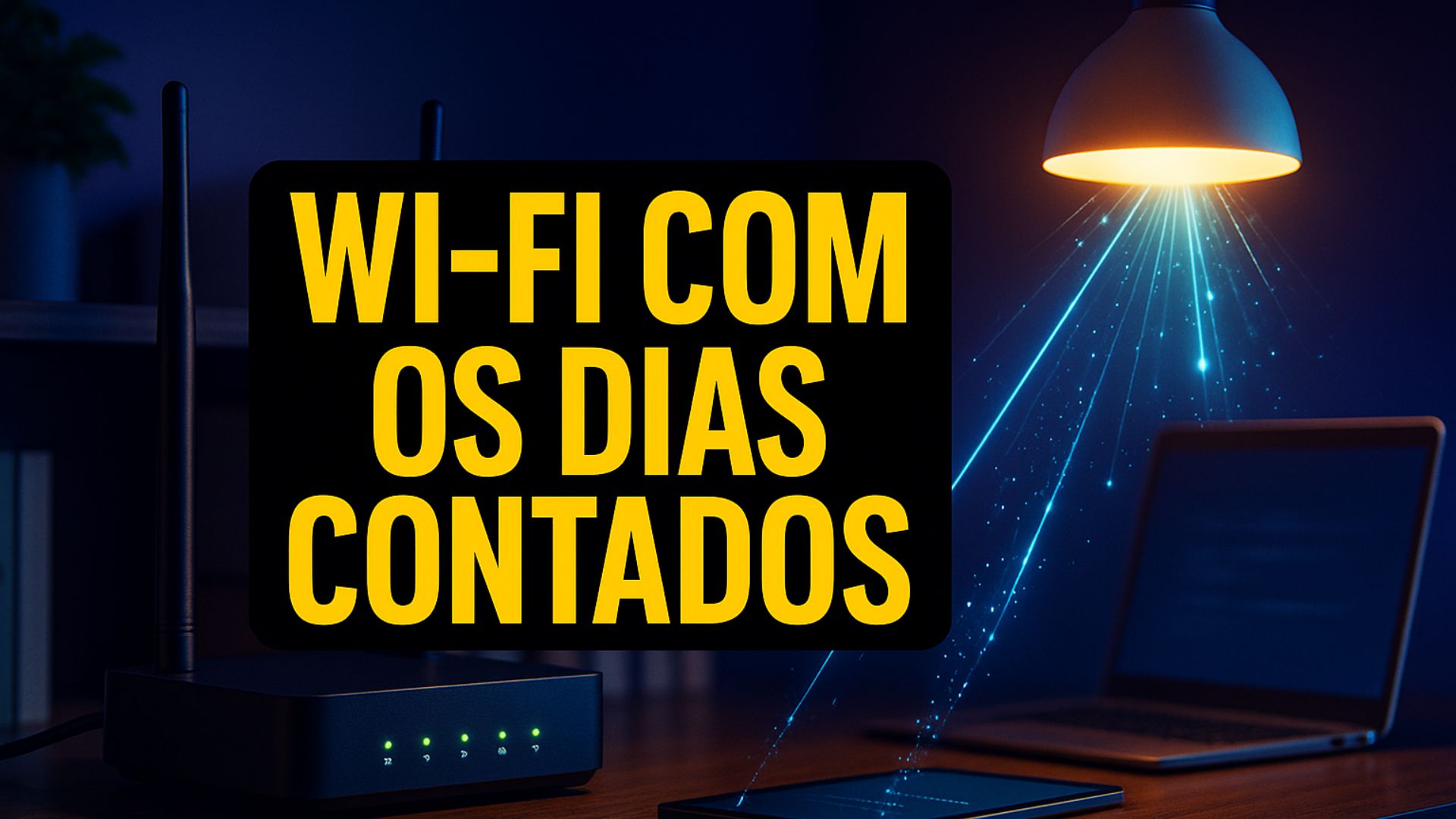
Li-Fi Technology Promises Connections Up to One Hundred Times Faster Than Wi-Fi, with More Security, Stability, and Energy Efficiency, Potentially Transforming the Way Homes, Businesses, and Transport Access the Internet.
The Li-Fi, a wireless communication system based on light, emerges as an alternative to Wi-Fi by using visible or infrared beams to transmit data.
In laboratory tests, the technology achieved significantly higher rates than conventional home networks.
Standardized by IEEE 802.11bb since 2023, the solution has been developed by companies and research centers with the promise of greater speed, stability, and energy efficiency.
-
How the terraforming of Mars can transform the planet: artificial aerosols can increase the temperature by up to 35°C in 15 years, creating conditions for liquid water.

-
Scientists drilled nearly 8,000 meters into the ocean floor above the fault that caused the 2011 tsunami in Japan and discovered that a layer of clay 130 million years old was responsible for making the wave much worse than any model had predicted.

-
Thousands of years after causing the largest eruption of the Holocene, one of the world’s largest supervolcanoes is rebuilding itself beneath the sea south of Japan, receiving new magma and alarming scientists with its transformation.

-
China has activated a magnet 700,000 times more powerful than the Earth’s magnetic field that operates for over 200 consecutive hours while consuming little energy, and now the world wants to know what Beijing plans to do with this technology in 2026.


How Li-Fi Technology Works
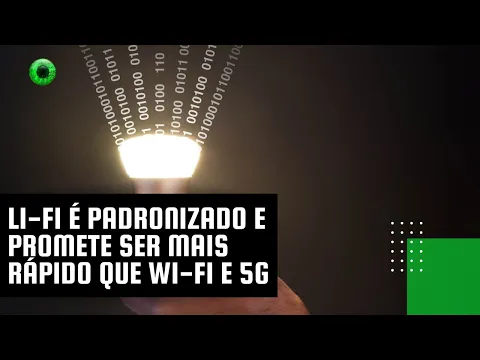
Unlike Wi-Fi, which operates with radio waves, Li-Fi modulates the intensity of LEDs at frequencies imperceptible to the human eye.
Light fixtures equipped with transmitters encode data packets, while sensors installed in receiving devices convert these light variations into digital signals.
According to researchers in the field, using light as a transmission medium makes the channel more predictable than radio, which is often affected by electromagnetic interference, noise, and frequency conflicts.
The energy efficiency of LEDs allows the same lighting system to also function as a communication network.
In experimental projects, the light structure acts as a access cell, where each fixture covers an area and the user can move with handover between points, maintaining an active connection.
This integration, according to developers, tends to reduce deployment costs and facilitate the use of existing installations.
Speed and Performance in High-User Environments
Tests conducted by companies and laboratories indicate that Li-Fi can achieve speeds up to one hundred times greater than traditional Wi-Fi under ideal conditions.
The 802.11bb standard establishes interoperability for rates ranging from tens of megabits to multiple gigabits per second in near-infrared light.
Manufacturers claim that, in practical applications, current commercial solutions already offer connections in the hundreds of megabits range with low latency, even in environments with a large number of connected users.
In places with high device density, the directed light beam tends to reduce interference and maintain consistent performance.
Since light does not pass through walls, the signal remains confined to the illuminated environment, which, according to experts, reduces the risk of external noise and contributes to greater stability.

Security and Privacy in Light Transmission
Optical confinement is pointed out by researchers as one of Li-Fi’s differentiators compared to traditional networks.
Since light does not propagate easily beyond physical barriers, the coverage area remains limited, which can difficult unauthorized access from outside the environment.
Even so, experts emphasize that encryption and authentication layers remain essential, just as they do in radio networks.
Infrastructure and Requirements for Adoption
Implementing the technology requires compatible fixtures and optical receivers integrated into computers, mobile phones, televisions, and industrial sensors.
While Wi-Fi routers are widely used, Li-Fi modules are still less common in the consumer market.
According to IEEE, the standardization of 802.11bb seeks to ensure interoperability between equipment from different manufacturers, but the replacement of the technological landscape is expected to occur gradually, following investment cycles from companies and public bodies.
In offices and industries, experts assess that adoption should begin in areas with higher densities of people and performance requirements.
In homes, Li-Fi is expected to be initially applied in home office areas, studios, or entertainment spaces that demand high bandwidth.
Sectors Testing the Use of Li-Fi
Environments with restrictions on radio waves are among the primary candidates for Li-Fi use.
Hospitals and clinics are testing the system to connect monitors, tablets, and electronic records without interfering with sensitive equipment.
In transportation, companies are evaluating the use of cabin lights in airplanes, trains, and subways as access points, leveraging existing infrastructure.
The goal is to provide a more stable connection even with many connected passengers.
Museums and exhibition centers are also studying the use of the technology for immersive experiences.
The lighting in the rooms could transmit multimedia content directly to visitors’ mobile phones without overloading local radio networks.
Technical Limits and Challenges of Li-Fi
Although it presents performance gains, Li-Fi still faces limitations.
Transmission by light requires line of sight or sufficient reflection to reach the receiver.
Obstacles and moving objects can affect connection quality.
In poorly lit areas, the use of infrared beams is necessary to keep communication active without compromising visual comfort.
Experts highlight that, due to the difficulty of the signal passing through walls, coverage depends on careful planning, with multiple light points distributed strategically.
Another challenge is the availability of compatible devices.
Most household equipment still relies on additional modules to receive Li-Fi signals.
According to industry companies, mass adoption depends on the incorporation of the technology by hardware manufacturers and the consolidation of global standards.
Costs and Coexistence with Wi-Fi
The replacement of Wi-Fi by optical networks is not expected to happen immediately.
Experts point out that companies and providers plan networks in investment cycles, which makes migration gradual.
Connectivity researchers assess that the trend is for Li-Fi to coexist with Wi-Fi and mobile networks, being applied in scenarios that require physical security of the signal and low latency.
In the meantime, pilot projects continue to expand in areas such as health, aviation, rail transport, education, and exhibition spaces.
As the cost of components decreases and solutions become more mature, commercial use is expected to grow.
Prospects for Daily Use
In homes, Li-Fi is expected to first reach specific environments, such as remote work rooms and entertainment spaces.
In companies, implementation by sectors or floors allows for performance assessment and return before full expansion.
Industry analysts point out that the integration of connectivity and smart lighting should become a central axis of projects, with power control, direction, and automatic handover between fixtures.
With the increase in data traffic and the saturation of the radio spectrum in large urban centers, the use of light as a communication medium emerges, according to experts, as an alternative to alleviate congestion in traditional networks.
Based on these transformations, technology professionals assess that the main question is where Li-Fi offers more advantages relative to cost and implementation complexity.









-

Uma pessoa reagiu a isso.