





 Portuguese
  English
  Spanish
  5 min of reading
  0 comments


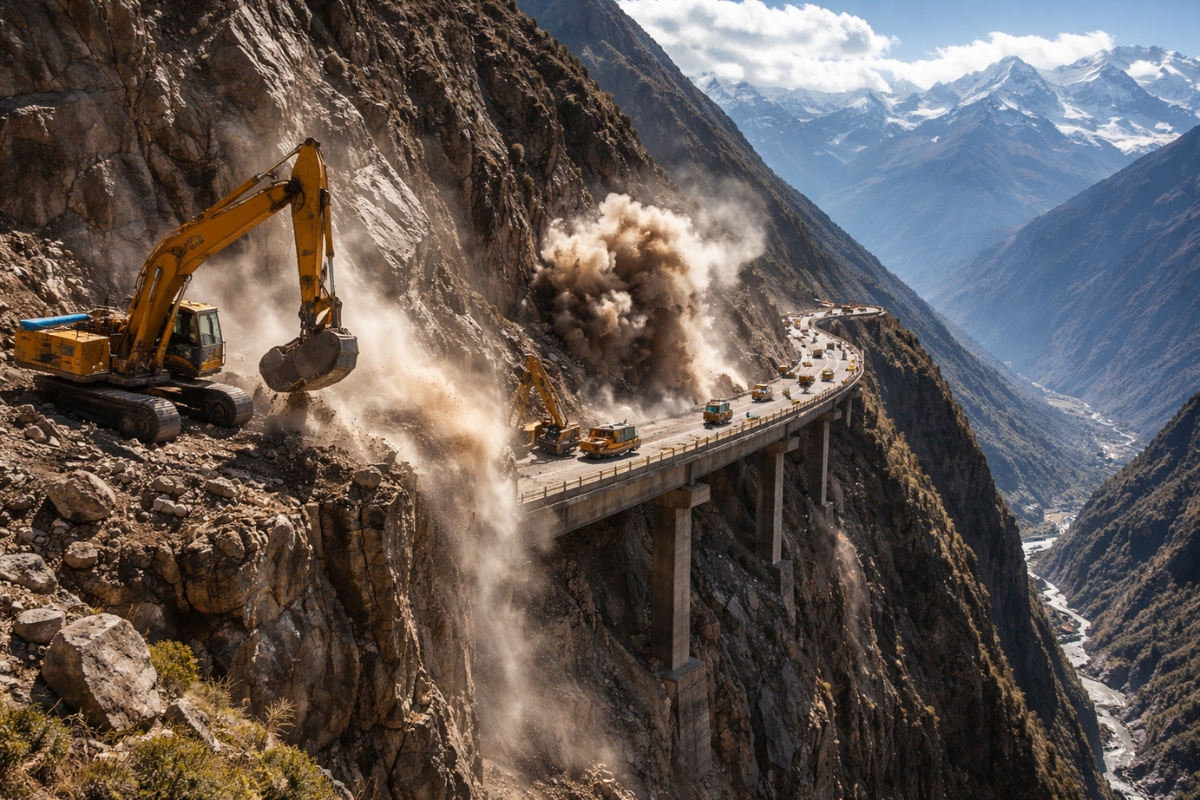
In the Andes Mountains, Engineers Overcame Hostile Terrain with Controlled Explosions and Heavy Machinery to Build Roads at Extreme Altitudes, Connecting Isolated Regions.
Building roads in the Andes is not just a technical challenge – it is a true battle against nature. When working in a region of steep mountains, where the slightest mistake can cost lives or destroy a project, precision is necessary in every movement. And that is exactly what the engineers managed to do, creating winding paths that challenged the possibilities in high-altitude terrain and extreme conditions. It is no exaggeration to say that this feat surprised everyone and defied expectations.
The construction of the roads begins with a fundamental task: ensuring that the mountain, with its heavy rocks and nearly vertical slopes, can support the road. How is this possible? The answer lies in a combination of controlled explosives, heavy machinery, and creative solutions, such as excavations that cut through entire mountains. The most impressive thing is that, with the use of advanced technology, these works have been carried out efficiently and safely, connecting previously isolated regions.
This ability to transform cliffs into accessible roads reflects the evolution of engineering in one of the planet’s most challenging terrains.
-
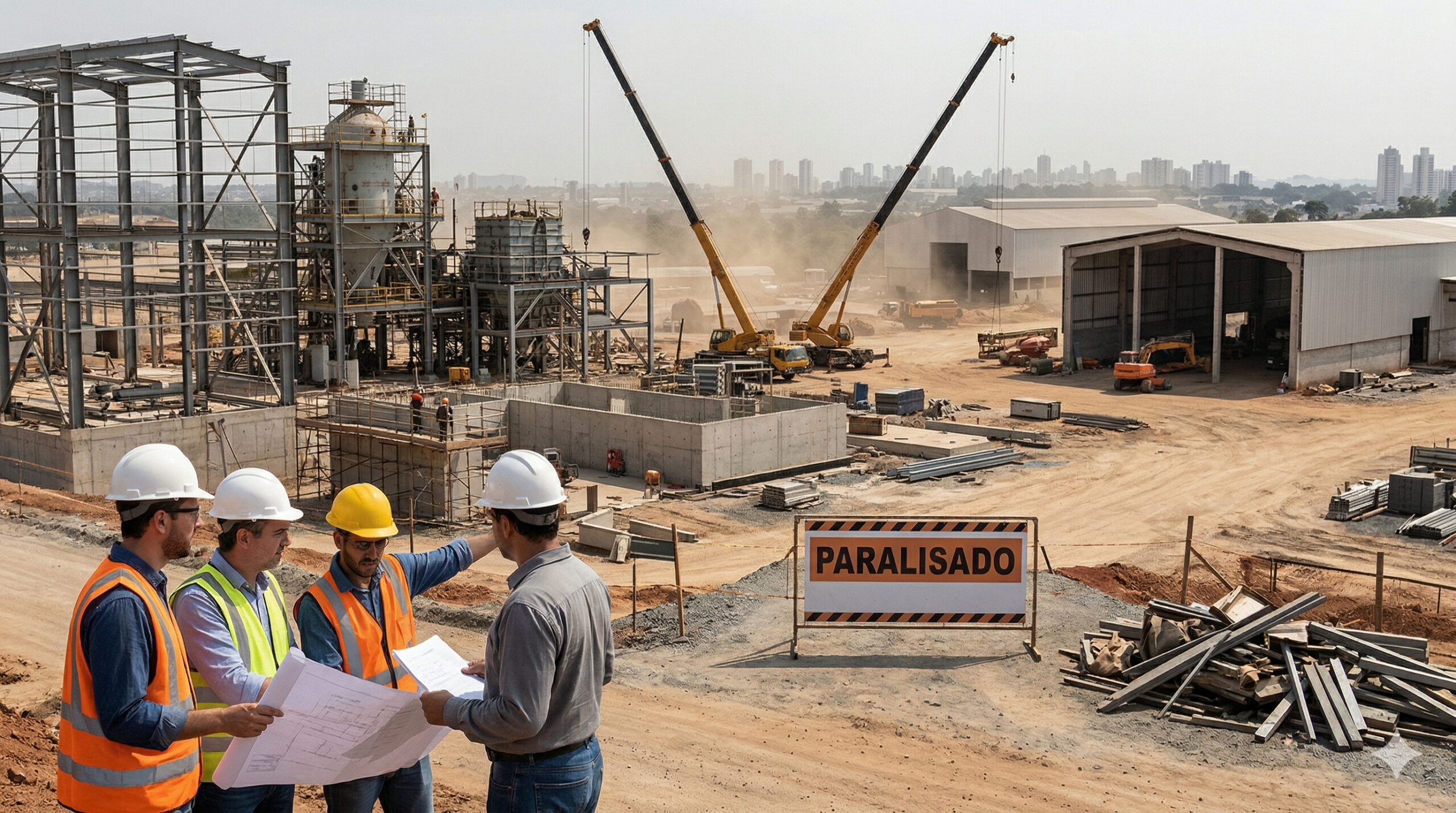
The lack of welders, electricians, and operators becomes a structural threat in 2025, with the construction industry and manufacturing already suffering from delays, cost pressures, and labor shortages in Brazil.
-
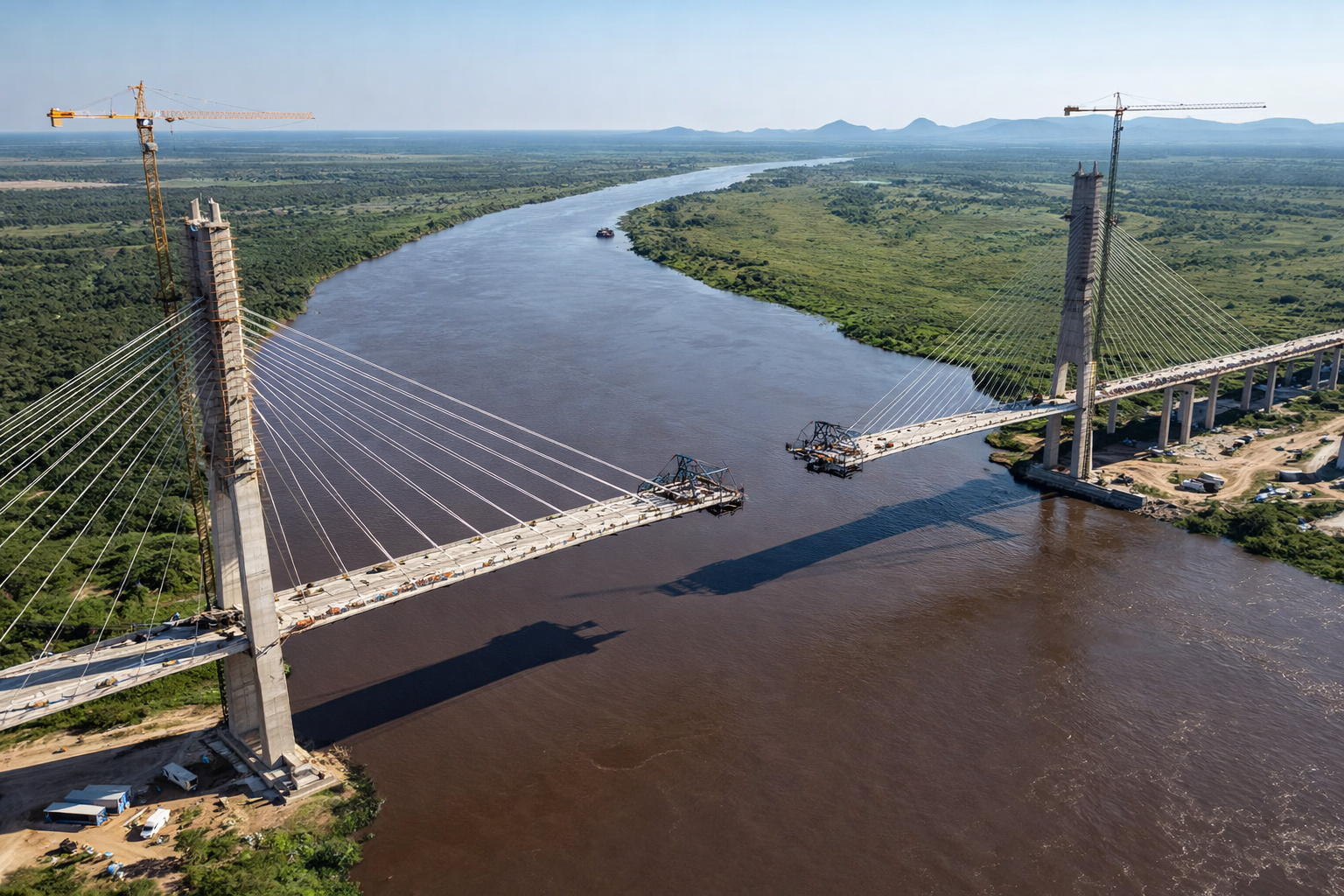
Brazil and Paraguay are just 46 meters away from a historic union on the bioceanic bridge that promises to revolutionize trade between the Atlantic and the Pacific.
-
With 55 km over the sea, a cost of US$ 20 billion, and enough steel to build 60 Eiffel Towers, China’s largest project has connected Hong Kong, Zhuhai, and Macau in a colossal bridge that defies the logic of engineering.

-
A trick with joint compound transforms a Styrofoam ceiling into a plaster-like ceiling: leveled panels, wires and mesh at the joints, sand, paint, and change the environment while spending little today.

The Initial Challenge: Preparing the Ground for Drilling and Detonation

When engineers start a project in the Andes, the first mission is to ensure that the mountain does not collapse onto the work site. The solution to this is the controlled detonation of rocks. The first step is to fragment the rock with explosives, and precision is essential – each explosion needs to be meticulously calculated to not compromise the stability of the terrain.
After the detonation, excavators come into action to remove the fragmented material. These heavy machines work on terrain that is often unstable and slippery. This requires a coordinated effort between machines and operators, who must work efficiently to ensure that the work proceeds without interruptions.
The consequence of this work is an initial opening in the terrain, but the most important aspect is that the risk of landslides is minimized. With proper care, excavations can be made without compromising the stability of the site.
Stabilizing the Mountain: Ensuring Road Safety

After the initial excavation, the next task is to stabilize the mountain to ensure that it does not collapse. To do this, engineers install anchors and containment structures directly into the rock. These structures are designed to withstand the pressures that will be exerted by the construction of the road and, subsequently, by the traffic that will traverse it.
The stabilization work is one of the most delicate stages of the process. Precision is crucial, as any failure can lead to a landslide or even the collapse of part of the work. Once stabilization is complete, the road begins to take shape, with the base being built and prepared to receive the asphalt.
This stabilization not only ensures that the road will be safe, but also prevents the construction from becoming a constant concern by eliminating the risk of landslides as work continues.
Paving and Surface Creation: The Asphalt Process

With the terrain prepared and stabilized, it is time to pave the road. The application of asphalt is a critical step, and it begins with the application of an initial layer of liquid asphalt. This ensures that the base of the road connects efficiently to the subsequent layer of asphalt.
Paving machines, with their precise control, spread the asphalt evenly along the road. The pace needs to be just right, as the asphalt must be at the correct temperature to be laid. During paving, operators also continuously monitor the application to ensure that there are no flaws.
The completion of paving is an important moment, as the road begins to take the shape that will allow for traffic. With a smooth and even surface, the road prepares for use, but final adjustments are still made to ensure that it remains safe and stable.
Creative Solutions: The Construction of Suspended Roads for Steep Terrain
In some parts of the project, where the terrain is practically vertical, excavations are not viable. In this case, engineers adopt an innovative solution: suspended roads. To do this, concrete columns are installed over the rock, creating a structural base that supports the road without the need to excavate further into the terrain.
The construction of these columns is not simple. They are prefabricated and positioned with extreme precision, using heavy cranes and specialized equipment. This ensures that the road is constructed safely, even in locations where excavation would be impossible.
This approach not only allows the road to be built, but also represents a true solution to the problem of extremely steep terrain. Adapting to the environment and using creative solutions are what make these roads possible.
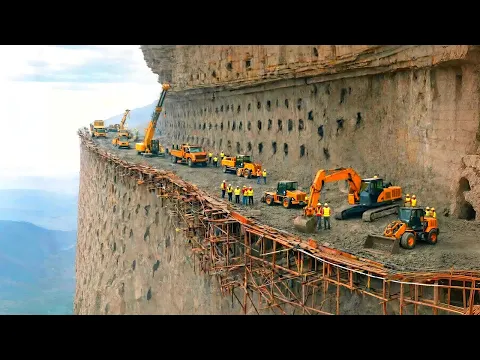

Overcoming Barriers, Connecting Regions, and Transforming Engineering
The construction of roads in the Andes is a true testament to modern engineering. With techniques such as controlled detonation, terrain stabilization, and creative solutions like suspended roads, engineers have managed to overcome challenges that, just a few decades ago, seemed impossible to solve. The result is not just a road, but a new connection between regions that were once inaccessible.
These works are a reflection of how technology and technical knowledge can transform the environment around us. What once seemed like an unbeatable terrain is now a vital pathway for transportation and the development of remote areas. The construction of roads in the Andes not only connects places but also opens doors to the future of entire regions, showcasing what is possible when engineering takes on great challenges.
If you were impressed by what these engineers have accomplished, share this article and leave your comment below on what else you think can be done to overcome these challenges!










-

-

2 pessoas reagiram a isso.