





 Portuguese
  English
  Spanish
  6 min of reading
  7 comments


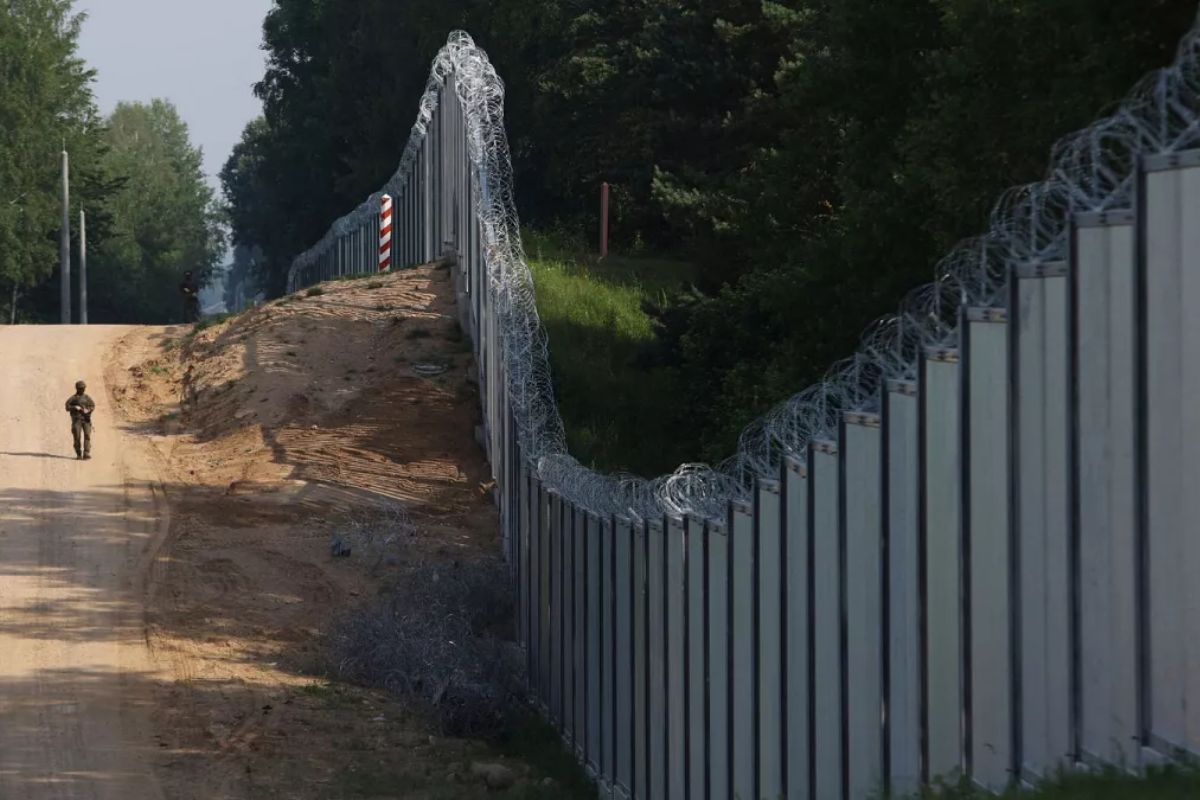


Erected in 2021 to Block Asylum Seekers, the EU Border Crosses the Millennial Forest of Białowieża Between Poland and Belarus, with 50 km Patrolled by 5,000 Guards, Barbed Wire, Cameras, and Dragon Teeth, Causing Collisions, Trash, and Genetic Isolation Threatening Bison, Wolves, and Lynxes in Silence
The border between Poland and Belarus has become a laboratory of permanent tension, where security policy materializes in steel, concrete, and patrols, and the environmental cost falls on a millennial forest that was once a symbol of ecological continuity on the continent.
Within the Białowieża National Park, on the Polish side, the fence built to contain asylum seekers has begun to reshape animal routes, alter areas of species presence, and create a militarized corridor that fragments the last virgin forest in Europe, described as having an area of 100 km².
Where the European Union Ends and the Forest Begins

The breaking point is precisely where the European Union ends and the contact line with Belarus begins. The border fence was built in 2021 to prevent the entry of people from Syria, Afghanistan, and Africa, who, according to reports, appeared by the thousands at the border. The layout crosses a nature reserve and cuts through the Białowieża forest, a mass described as the last virgin forest in Europe.
-
How to build a 35,000-liter cistern with 60 by 50 cm panels and rainwater for drinking and cooking without relying on water trucks or the city hall.
-
A woman went out for a regular walk and ended up finding a treasure buried for over 900 years, with more than 2,000 medieval silver coins compared by archaeologists to a lottery prize and considered one of the most significant finds in recent years in the country.
-
Scientists revealed 11 signs that very intelligent people exhibit in their daily lives, and most people have no idea that some of these common behaviors are directly linked to an above-average brain.

-
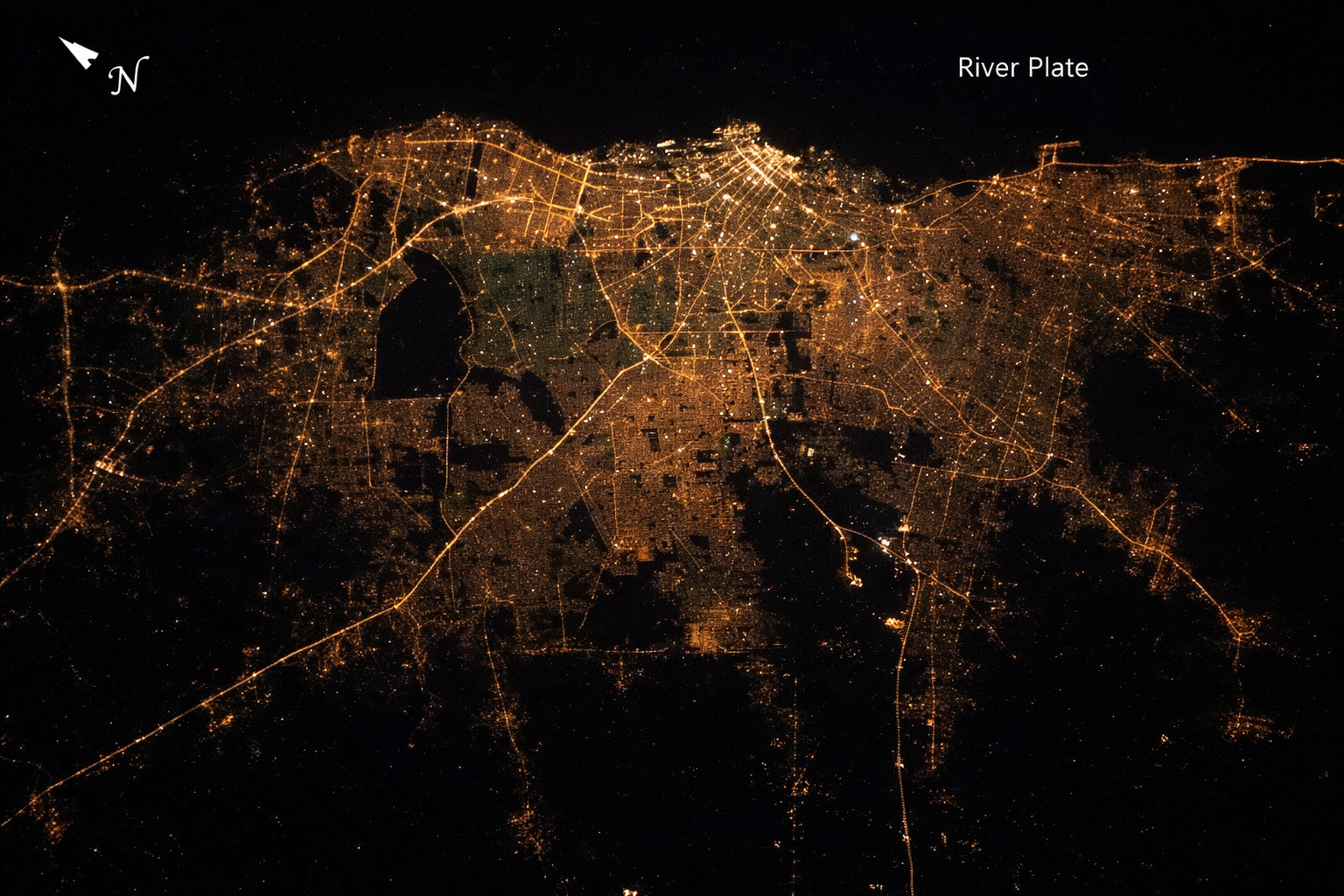
From space, Buenos Aires appears as a colossal spot of light surrounded by kilometers of darkness, revealing at a single glance the exact boundary between the metropolis and the countryside, seen from 400 km altitude.

The region is mentioned as a space where people are present year-round in the forest, which increases pressure on trails, clearings, and crossing points. Polish authorities classify the phenomenon as a “hybrid war,” attributing to Russia the practice of smuggling migrants through Belarus to destabilize the bloc. In this environment, the millennial forest ceases to be merely a natural heritage and becomes part of the border mechanism.
The Millennial Forest of Białowieża and the Risk of Losing UNESCO Status

Białowieża is described as being around 10,000 years old and as the oldest existing forest in Europe. It is located in Poland and Belarus, with a proportion indicated of 2/3 in Belarus. In 1979, it was declared a UNESCO World Heritage Site, and the concern expressed is that it may lose this title in the context of the migration crisis and the interventions associated with the fence.
On the Polish side, the area of the Białowieża Park mentioned as strictly protected includes the northern region of the National Park, where there are huge oaks and multiple species of trees. The report emphasizes that the most important element for biodiversity is dead and dying trees, because they support decomposition cycles, provide shelter and food for insects and fungi, and release minerals into the soil over time.
What the Fence Changed in the Ecological Functioning of the Forest

The dynamic described in the millennial forest depends on slow and cumulative processes. A fallen tree, for example, can take around 40 years to decompose, remaining in the cycle as a source of minerals in the soil and as support for organisms that maintain the trophic chain. Moss is noted as a functional piece by storing moisture and helping to prevent wildfires.
Within this context, the fence is not described merely as a physical line. It comes with continuous maintenance, additional fortifications, and the presence of large construction machines, even after the main structure was completed in July 2022. The impact is not isolated; it extends over time, because the barrier becomes a construction site, road, surveillance, and operational routine.
Machines, Barbed Wire, and Dragon Teeth Along the 50 km Line


The highlighted section is the transformation of the fence into a system of multiple barriers. In addition to the wall and closure, barbed wire has been added to the middle of the structure, rows of “dragon teeth,” and road paving, amplifying the fragmentation effect and increasing the flow of vehicles and maintenance teams.
To access the fence up close, special authorization was required from the local border authorities. It is cited that 5,000 guards and soldiers patrol the 50 km of fence that crosses the forest. The expansion is also described as recent, with more barbed wire, more cameras, and more surveillance. The number of successful crossings is said to have dropped dramatically in 2025, coinciding with the Polish government suspending the right to asylum there, with migrants and humanitarian organizations reporting illegal expulsions to Belarus.
Isolated Animals, Genetic Risk, and Signs of Disappearance
The most sensitive ecological effect described is the interruption of biological circulation. Wolves and lynxes would no longer be able to mate with partners from Belarus, increasing the risk of genetic isolation. The cited biologist documents destroyed trees, animals hit by cars, plastic garbage, and the case of a bison separated from its herd behind the fence.
There is also a sign of spatial change: in certain places where animals used to be found, they have now disappeared, associated with the increased presence of humans and migrants at specific points. When the landscape gains a continuous obstacle, the territory ceases to be continuous for the fauna, and this is likely to alter distribution, reproduction, and survival over the coming decades.
European Bison, Tourism, and a Genetic Bottleneck Already Underway
The forest receives around 200,000 visitors a year, many of whom go to see the European bison. In the late 20th century, the species was nearly extinct, and the current European population was recreated from a few specimens in Białowieża. The associated fact is direct: one in every four bison in the world comes from Poland.
In the Polish part of the forest, there are now said to be 880 European bison. Veterinarians and biologists monitor health and reproduction, and the ecological role of the bison is described as central, because its grazing behavior sustains the survival of many other species. At the same time, the reduced genetic diversity is presented as a structural problem: a male named Pleas has reportedly fathered approximately 36 descendants, and his genotype would represent a large proportion of the population, increasing inbreeding and confirming a genetic bottleneck. With the fence blocking movements, the chance of genetic recombination decreases even further.
Physical Borders Around the World and the Polish Decision to Keep the Barrier Closed
The report connects the case to a global pattern: physical borders restrict the movement of animals and people in various places. The border between Mexico and the United States is cited, with around 100 km dividing a habitat with high biodiversity in North America, where large predators are particularly threatened. A fence on the Balkan route between Slovenia and Croatia is also mentioned, which ended up being dismantled and did not prevent migration.
In Poland, the conclusion presented is that no one is considering tearing down the fence. Passages built for wild animals are never opened. National security is prioritized over environmental rights, and the path advocated by experts would be to enhance practical cooperation between border guards and environmentalists, with transparent environmental monitoring.
Health, Pathogens, and the Friction Between Wildlife, People, and Domestic Animals
In addition to the physical blockade, there is an indirect risk described: artificial concentrations of animals and people along the border may facilitate the transmission of pathogens. The cited recommendation is to stop feeding wild animals in this area to avoid gatherings. Additionally, the presence of domestic animals at outposts, with soldiers keeping cats for companionship, creates interactions among domestic animals, wild animals, and people.
This detail transforms the fence into something greater than just a metal line. It becomes a living system of contact, pressure, and circulation of biological agents, in a millennial forest whose balance depends on slow and unpredictable processes. The very vision of conservation presented is one of scientific humility: the forest is changing, and no one can predict how it will be in decades or centuries, as it adapts to future climate conditions, which remain unknown.
Do you find it acceptable to maintain an armed fence crossing a millennial forest if it reduces crossings, even with bison, wolves, and lynxes paying the ecological price?








Não podemos criticar, temos que respeitar a soberania deles.
Acho inacreditável que animais paguem pelo egoísmo humano.
Esse muro reflete a **** **** da homofobia da europa. A civilização que se tornou **** e desumana.